
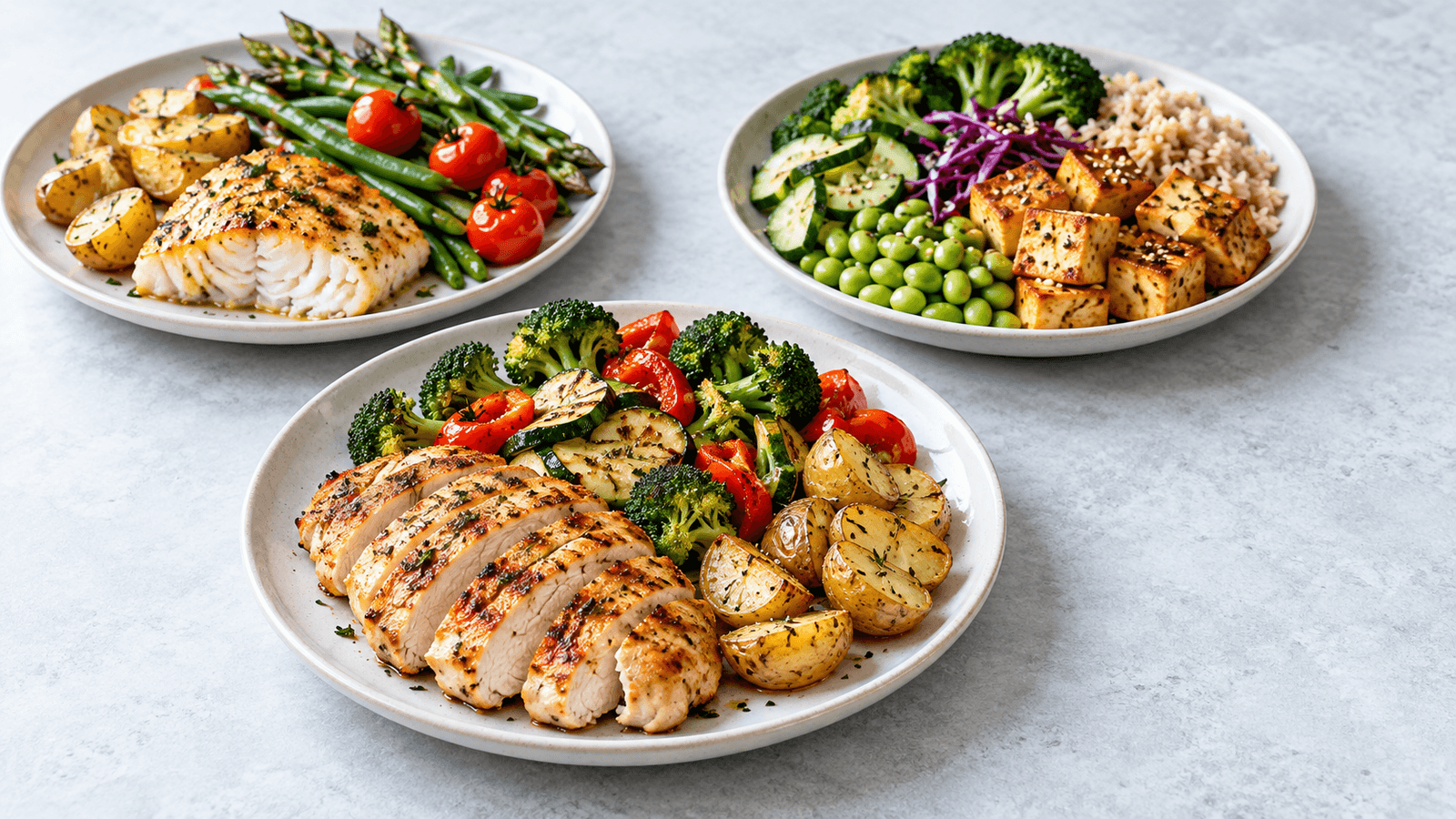
High-protein foods can be particularly useful when you are trying to lose weight.
Protein helps support muscle maintenance, contributes to satiety and generally requires more energy to digest than carbohydrate or fat. But simply adding protein to your current diet does not automatically cause weight loss.
The practical goal is to choose foods that help you get enough protein within a calorie intake that supports your weight-loss goal.
That makes protein density important.
A food providing 25 g of protein for 130 calories affects your calorie budget very differently from a food providing the same protein for 400 calories.
This guide focuses on 25 practical high-protein foods that can fit well into a weight-loss diet, plus examples of how to use them in breakfasts, lunches, dinners and snacks.
Nutrition values are approximate and vary by brand, cut, serving size and preparation.
25 high-protein foods for weight loss at a glance
| Food | Example serving | Approx. protein | Approx. calories |
|---|---|---|---|
| Chicken breast | 150 g cooked | ~45 g | ~250 kcal |
| Turkey breast | 150 g cooked | ~40–45 g | ~200–250 kcal |
| Cod | 180 g cooked | ~38–42 g | ~180–220 kcal |
| Tuna in water | 150 g drained | ~35–40 g | ~170–200 kcal |
| Shrimp | 150 g cooked | ~30–35 g | ~150–180 kcal |
| Lean white fish | 180 g cooked | ~35–40 g | ~180–230 kcal |
| Salmon | 150 g cooked | ~30–35 g | ~300–350 kcal |
| Lean beef | 150 g cooked | ~35–40 g | ~280–350 kcal |
| Eggs | 3 large | ~18–21 g | ~210–240 kcal |
| Egg whites | 200 g | ~20–22 g | ~90–110 kcal |
| Low-fat cottage cheese | 200 g | ~22–26 g | ~150–200 kcal |
| Skyr | 200 g | ~20–22 g | ~120–160 kcal |
| Low-fat quark | 200 g | ~20–26 g | ~130–170 kcal |
| High-protein Greek yogurt | 200 g | ~18–20 g | ~120–180 kcal |
| Firm tofu | 150 g | ~18–24 g | ~180–250 kcal |
| Tempeh | 100 g | ~18–20 g | ~180–220 kcal |
| Seitan | 100 g | ~20–25 g | ~120–180 kcal |
| Edamame | 150 g cooked | ~16–18 g | ~180–220 kcal |
| Lentils | 200 g cooked | ~16–18 g | ~220–250 kcal |
| Lupini beans | 100 g | ~15–16 g | ~110–140 kcal |
| TVP | 50 g dry | ~24–27 g | ~160–190 kcal |
| Lentil pasta | 75 g dry | ~18–22 g | ~250–280 kcal |
| High-protein soy yogurt | 200 g | ~10–16 g | ~100–170 kcal |
| Unsweetened soy milk | 300 ml | ~9–11 g | ~90–130 kcal |
| Protein powder | 30 g | ~20–25 g | ~100–130 kcal |
The table is not a ranking.
The best choices depend on your diet, preferences, budget, calorie needs and whether you eat animal products.
Why protein can help during weight loss
Weight loss requires an energy deficit over time.
Protein does not override that basic requirement.
However, adequate protein can make a calorie deficit easier to manage for several reasons. (EFSA — Dietary Reference Values for protein)
Protein can help with satiety
Protein-rich meals can be filling, which may make it easier for some people to manage hunger while eating fewer calories.
Protein supports lean mass
When body weight decreases, the goal is usually to lose mostly body fat while preserving as much lean tissue as practical.
Adequate protein becomes particularly important when dieting, especially when combined with resistance training.
Protein has a higher thermic effect
The body uses energy to digest, absorb and process food.
Protein generally has a higher thermic effect than carbohydrate or fat.
This does not turn protein into a weight-loss shortcut, but it is one reason protein can be useful in a calorie-controlled diet.
How much protein should you eat to lose weight?
There is no single protein number that is correct for everyone.
Your target depends on factors such as:
- body weight
- activity
- resistance training
- calorie deficit
- body composition
- overall diet
A practical range for many adults losing weight can be around 1.2–1.6 g of protein per kg of body weight per day.
People who regularly perform resistance training may often benefit from being toward the higher end of an appropriate range.
For example:
| Body weight | 1.2 g/kg | 1.4 g/kg | 1.6 g/kg |
|---|---|---|---|
| 60 kg | 72 g | 84 g | 96 g |
| 70 kg | 84 g | 98 g | 112 g |
| 80 kg | 96 g | 112 g | 128 g |
| 90 kg | 108 g | 126 g | 144 g |
| 100 kg | 120 g | 140 g | 160 g |
These are examples, not prescriptions.
Read How Much Protein Should You Eat to Lose Weight? for a more detailed explanation.
You can also use the Mealisa Protein Calculator.
Protein density matters when calories are limited
Suppose two foods both provide protein.
Food A provides:
- 25 g protein
- 130 calories
Food B provides:
- 25 g protein
- 350 calories
Both can fit into a healthy diet.
But Food A leaves substantially more room in your calorie budget for vegetables, carbohydrates, fats, fruit or another meal.
This is why lean protein sources can be particularly useful during weight loss.
You do not need every food to be extremely lean.
Instead, combine protein-dense foods with other foods you enjoy.
1. Chicken breast
Chicken breast is one of the easiest foods for increasing protein without adding excessive calories.
A 150 g cooked serving can provide approximately:
- 45 g protein
- 250 calories
Use it in:
- salads
- rice bowls
- wraps
- stir-fries
- tray bakes
- soups
Chicken becomes much more calorie-dense when heavily breaded, fried or covered in creamy sauces.
The preparation method matters.
2. Turkey breast
Turkey breast provides a similar protein-to-calorie ratio.
A 150 g cooked serving may provide approximately:
- 40–45 g protein
- 200–250 calories
Turkey works well in:
- sandwiches
- wraps
- salads
- bowls
- hot meals
Whole cooked turkey is generally preferable as an everyday option to relying heavily on processed deli meat.
3. Cod
Cod is a particularly lean protein source.
A 180 g cooked serving may provide approximately:
- 38–42 g protein
- 180–220 calories
That leaves plenty of room for:
- potatoes
- vegetables
- rice
- sauce
while still keeping the total meal moderate in calories.
4. Tuna in water
A 150 g drained serving of tuna in water can provide around:
- 35–40 g protein
- 170–200 calories
Tuna is convenient for quick meals.
Use it with:
- salad
- potatoes
- beans
- whole-grain bread
- vegetables
Choose variety among fish and other protein sources rather than relying on tuna every day.
5. Shrimp
A 150 g cooked serving of shrimp can provide approximately:
- 30–35 g protein
- 150–180 calories
Shrimp works well in:
- stir-fries
- salads
- rice bowls
- pasta dishes
Breading, frying and rich sauces can substantially increase calories.
6. Lean white fish
Other lean white fish can provide around 35–40 g of protein in a 180 g serving for relatively few calories.
Examples vary by region but may include:
- pollock
- haddock
- hake
This gives you more variety than relying on cod alone.
7. Salmon
Salmon is more calorie-dense than lean white fish but remains a valuable high-protein food.
A 150 g serving can provide approximately:
- 30–35 g protein
- 300–350 calories
Salmon also provides omega-3 fatty acids.
There is no reason to avoid salmon simply because cod has fewer calories.
Instead, use both depending on the rest of your diet.
8. Lean beef
A 150 g serving of lean cooked beef can provide approximately:
- 35–40 g protein
- 280–350 calories
Fat content varies significantly by cut.
When weight loss is the goal, choosing leaner cuts can help you obtain substantial protein for fewer calories.
9. Eggs
Three large eggs provide roughly:
- 18–21 g protein
- 210–240 calories
Eggs can be filling and convenient.
However, if you need substantially more protein, adding more and more whole eggs also adds more fat and calories.
A useful alternative is combining whole eggs with egg whites.
10. Egg whites
Around 200 g of egg whites can provide approximately:
- 20–22 g protein
- 90–110 calories
This makes egg whites one of the most protein-dense foods available.
For example:
2 whole eggs + 150 g egg whites
provides more protein than two eggs alone while keeping calories moderate.
11. Low-fat cottage cheese
A 200 g serving can provide approximately:
- 22–26 g protein
- 150–200 calories
Cottage cheese works well for:
- breakfast
- snacks
- baked potatoes
- savory bowls
- toast
Compare labels because fat and protein content vary.
12. Skyr
A 200 g serving of plain skyr commonly provides:
- 20–22 g protein
- 120–160 calories
This makes it an easy high-protein snack or breakfast base.
Add:
- berries
- fruit
- oats
according to your calorie needs.
Plain varieties usually contain less added sugar than sweetened versions.
13. Low-fat quark
Low-fat quark can provide approximately:
- 20–26 g protein per 200 g
- 130–170 calories
It is especially convenient in Germany and parts of Europe.
Use it:
- with fruit
- with herbs
- as a dip
- in savory meals
- in desserts
14. High-protein Greek yogurt
A 200 g serving may provide approximately:
- 18–20 g protein
- 120–180 calories
Not every Greek-style yogurt is equally high in protein.
Check the label.
Some products contain considerably more fat and calories while providing only moderate protein.
15. Firm tofu
A 150 g serving of firm tofu can provide approximately:
- 18–24 g protein
- 180–250 calories
Values vary significantly by product.
Tofu is useful in:
- stir-fries
- curries
- bowls
- salads
- tofu scramble
Be aware of cooking oil. Tofu can absorb substantial oil during frying, increasing calories quickly.
16. Tempeh
A 100 g serving of tempeh can provide roughly:
- 18–20 g protein
- 180–220 calories
Tempeh is more calorie-dense than some lean protein sources but provides protein, fiber and a satisfying texture.
Use it in:
- stir-fries
- wraps
- bowls
- salads
17. Seitan
Seitan is one of the most protein-dense plant-based foods.
A 100 g serving may provide approximately:
- 20–25 g protein
- 120–180 calories
This can make it especially useful for vegetarian and vegan weight-loss diets.
Seitan is made from wheat gluten and is not appropriate for people who need to avoid gluten.
18. Edamame
A 150 g cooked serving of edamame can provide roughly:
- 16–18 g protein
- 180–220 calories
Edamame also provides fiber.
Use it:
- as a snack
- with tofu
- in salads
- in bowls
19. Lentils
A 200 g serving of cooked lentils can provide approximately:
- 16–18 g protein
- 220–250 calories
Lentils are less protein-dense than chicken or fish, but they also provide:
- fiber
- carbohydrate
- substantial food volume
That can make them useful in filling meals.
Combine lentils with tofu, chicken, fish or another protein source when you need more protein per meal.
20. Lupini beans
Lupini beans can provide around:
- 15–16 g protein per 100 g
- 110–140 calories
Values vary by product.
Their relatively high protein content can make them useful in salads and snacks.
Prepared products may contain substantial sodium.
21. Textured vegetable protein
Around 50 g dry TVP can provide approximately:
- 24–27 g protein
- 160–190 calories
TVP is useful in:
- chili
- pasta sauce
- tacos
- burrito bowls
- soups
It can be particularly helpful when you want an inexpensive plant-based protein source.
22. Lentil pasta
A 75 g dry serving of lentil pasta may provide approximately:
- 18–22 g protein
- 250–280 calories
It provides more protein than many conventional pastas.
Combine it with:
- chicken
- tuna
- tofu
- TVP
if you want a meal containing 30–40 g or more of protein.
23. High-protein soy yogurt
A 200 g serving can provide approximately:
- 10–16 g protein
- 100–170 calories
The nutritional profile varies widely between brands.
Unsweetened high-protein versions can be useful dairy-free alternatives to skyr or Greek yogurt.
24. Unsweetened soy milk
A 300 ml serving may provide approximately:
- 9–11 g protein
- 90–130 calories
Soy milk can be an easy way to add protein to:
- coffee
- oats
- smoothies
- cereal
Many other plant-based drinks contain considerably less protein.
25. Protein powder
A typical serving can provide approximately:
- 20–25 g protein
- 100–130 calories
Protein powder is not necessary for weight loss.
It is simply a convenient way to increase protein without preparing another full meal.
Food should still provide the foundation of your overall diet.
Best high-protein low-calorie foods
If protein relative to calories is your priority, particularly useful options include:
- chicken breast
- turkey breast
- cod
- tuna in water
- shrimp
- other lean white fish
- egg whites
- low-fat cottage cheese
- skyr
- low-fat quark
- seitan
- some high-protein soy products
- protein powder
For a dedicated comparison, see Low-Calorie High-Protein Foods: 30 Foods for More Protein With Fewer Calories.
High-protein foods that are healthy but easy to overeat
Some foods contain protein but also provide many calories in relatively small portions.
Examples include:
- nuts
- nut butter
- seeds
- full-fat cheese
- fatty cuts of meat
These foods can absolutely fit into a weight-loss diet.
The issue is simply protein efficiency.
For example, peanut butter contains protein, but obtaining 25–30 g of protein from peanut butter alone would require a large calorie intake.
Use these foods primarily for their overall nutritional value and taste rather than as your only protein source.
High-protein breakfast for weight loss
A useful breakfast often combines protein with fruit, vegetables or another source of fiber.
Skyr bowl
Use:
- 200–250 g skyr
- berries
- modest oats
Protein: approximately 20–25 g
Eggs and egg whites
Combine:
- 2 whole eggs
- 150–200 g egg whites
- vegetables
Protein: approximately 30 g or more
Cottage cheese bowl
Use:
- 200 g cottage cheese
- fruit or vegetables
Protein: approximately 22–26 g
Tofu scramble
Use:
- 200–250 g firm tofu
- vegetables
Protein depends on the tofu but can reach 25–30 g or more.
See High-Protein Breakfast: 15 Easy Ideas to Start Your Day.
High-protein lunch for weight loss
Chicken rice bowl
Use:
- chicken breast
- moderate rice portion
- plenty of vegetables
- light sauce
Tuna potato salad
Use:
- tuna
- boiled potatoes
- cucumber
- tomatoes
- yogurt-based dressing
Chicken lentil bowl
Use a moderate amount of chicken plus lentils and vegetables.
Tofu edamame bowl
Combine tofu, edamame, vegetables and a carbohydrate portion appropriate for your calorie needs.
See High-Protein Lunch: 20 Easy Ideas for a Protein-Rich Meal.
High-protein dinner for weight loss
Cod and potatoes
A large lean cod portion leaves room for potatoes and vegetables while keeping calories moderate.
Chicken tray bake
Use chicken breast with a large amount of roasted vegetables and potatoes.
Salmon and vegetables
Salmon is higher in calories than cod but can still fit comfortably into a calorie deficit.
Lean beef bowl
Use lean beef, vegetables and a moderate rice portion.
Tofu stir-fry
Use firm tofu, plenty of vegetables and measured cooking oil.
See High-Protein Dinner: 20 Easy Ideas for a Protein-Rich Meal.
High-protein snacks for weight loss
Useful options include:
- skyr
- low-fat cottage cheese
- quark
- boiled eggs
- egg whites
- tuna
- chicken pieces
- edamame
- high-protein soy yogurt
- protein shake
A snack is optional.
If you prefer larger meals and are not hungry between them, you do not need to add snacks simply to eat more protein.
See High-Protein Snacks: 20 Easy Ideas to Keep You Satisfied.
Vegetarian high-protein foods for weight loss
Useful vegetarian choices include:
- egg whites
- eggs
- low-fat cottage cheese
- skyr
- quark
- high-protein Greek yogurt
- tofu
- tempeh
- seitan
- edamame
- lentils
- TVP
For more options, see 25 High-Protein Vegetarian Foods.
Vegan high-protein foods for weight loss
Useful vegan choices include:
- seitan
- TVP
- tofu
- tempeh
- edamame
- lentils
- lupini beans
- high-protein soy yogurt
- unsweetened soy milk
- vegan protein powder
If calorie efficiency is particularly important, relying heavily on nuts, seeds and nut butter for protein can make a calorie deficit harder because these foods are energy-dense.
See 25 High-Protein Vegan Foods.
High-protein low-carb foods for weight loss
You do not need to follow a low-carbohydrate diet to lose weight.
But if you prefer lower-carb meals, useful protein sources include:
- chicken
- turkey
- lean beef
- fish
- shrimp
- eggs
- egg whites
- cottage cheese
- skyr
- tofu
- seitan
See High-Protein Low-Carb Foods: 25 Best Options.
Cheap high-protein foods for weight loss
Affordable choices can include:
- eggs
- cottage cheese
- quark
- chicken
- canned tuna
- lentils
- beans
- tofu
- TVP
Price varies by country, supermarket and season.
Buying the cheapest product is not always the same as getting the cheapest protein.
Compare how much protein you receive for the price.
See Cheap High-Protein Foods: 30 Budget-Friendly Protein Sources.
How to build a high-protein weight-loss meal
A simple structure is:
1. Start with protein
Choose a substantial portion of:
- chicken
- fish
- turkey
- lean beef
- eggs + egg whites
- cottage cheese
- tofu
- seitan
- TVP
2. Add vegetables
Examples include:
- broccoli
- peppers
- zucchini
- carrots
- spinach
- green beans
- mushrooms
- salad vegetables
Vegetables can increase food volume for relatively few calories.
3. Add a carbohydrate source
Depending on your needs:
- potatoes
- rice
- pasta
- bread
- legumes
- couscous
Carbohydrates do not prevent fat loss.
Portion size matters more than eliminating them automatically.
4. Add fat or sauce deliberately
Examples include:
- olive oil
- avocado
- cheese
- nuts
- dressing
- sauce
These can make meals more enjoyable, but calorie-dense additions are easy to underestimate.
Example 120 g protein weight-loss day
Here is one possible structure:
| Meal | Example | Approx. protein |
|---|---|---|
| Breakfast | Skyr + berries + oats | ~25 g |
| Lunch | Chicken rice vegetable bowl | ~40 g |
| Snack | Cottage cheese | ~20 g |
| Dinner | Cod + potatoes + vegetables | ~35 g |
| Total | ~120 g |
The appropriate calorie intake is different for each person.
The example demonstrates protein distribution, not a universal weight-loss meal plan.
What if you only eat two or three meals per day?
You do not need to eat six times per day to reach a high protein target.
For example, 120 g could be distributed as:
Three meals
- breakfast: 35 g
- lunch: 40 g
- dinner: 45 g
Or:
Two meals plus a snack
- meal 1: 45 g
- snack: 25 g
- meal 2: 50 g
Choose a structure that fits your appetite and schedule.
Can eating more protein make you gain weight?
Any diet can lead to weight gain if it consistently provides more energy than your body uses.
Protein still contains calories.
If you simply add:
- protein shakes
- protein bars
- extra cheese
- larger meat portions
on top of everything you already eat, total calories may increase.
A better approach during weight loss is often to replace some lower-satiety or calorie-dense foods with protein-rich foods rather than endlessly adding protein.
Do you need protein powder to lose weight?
No.
Protein powder does not burn body fat.
It can simply make it easier to reach a protein target.
For example, a shake containing 25 g of protein may be convenient when you do not have time to prepare food.
But if you already obtain enough protein from food, there is no need to add it.
Are protein bars good for weight loss?
They can be convenient, but they vary widely.
Some provide:
- 20 g protein
- around 180–220 calories
Others are closer to confectionery products with added protein and considerably more calories.
Compare:
- protein
- calories
- added sugar
- serving size
A protein bar is a convenience food, not a requirement.
Should you cut carbohydrates and increase protein?
Not necessarily.
Increasing protein and reducing carbohydrates are separate decisions.
You can lose weight while eating:
- rice
- potatoes
- oats
- fruit
- bread
- pasta
- legumes
A high-protein diet can contain moderate or even relatively high amounts of carbohydrate.
Your total calorie intake and ability to maintain the diet matter more than removing one macronutrient.
Should you cut fat to increase protein?
You also do not need to eliminate fat.
Dietary fat provides essential fatty acids and helps with the absorption of fat-soluble vitamins.
The goal is balance.
If calories are limited, you may choose leaner protein sources more often so there is still room for appropriate amounts of dietary fat.
Is 100 g of protein enough for weight loss?
It depends on the person.
For a 60 kg adult, 100 g equals approximately 1.67 g/kg.
For a 100 kg adult, 100 g equals 1.0 g/kg.
The same number can therefore represent very different protein intakes relative to body weight.
Use body weight and individual context rather than assuming everyone needs 100 g.
Is 150 g of protein too much?
Again, body size and circumstances matter.
For someone weighing 100 kg, 150 g equals 1.5 g/kg.
For someone weighing 50 kg, it equals 3 g/kg.
More protein is not automatically better.
Once your intake adequately supports your needs, increasing it further may simply use calories that could have gone toward other nutritious foods.
Does protein preserve muscle while losing weight?
Adequate protein can help support lean-mass retention during a calorie deficit.
Resistance training is also important.
If preserving or building muscle is a major goal, combine adequate protein with an appropriate resistance-training program rather than relying on protein alone.
High-protein meal prep for weight loss
Meal prep can make calorie and protein targets easier to manage because portions are decided in advance.
Useful options include:
- chicken + rice + broccoli
- turkey chili
- cod + potatoes + vegetables
- chicken + lentils
- tofu + edamame + rice
- lean beef + vegetables + potatoes
You do not need five identical containers.
Prepare flexible components and create several combinations.
See High-Protein Meal Prep: 15 Easy Ideas for the Week.
Common mistakes when eating high protein for weight loss
1. Adding protein without reducing anything else
Extra protein still adds calories.
2. Assuming all high-protein foods are low calorie
Cheese, nuts and fatty meat can provide substantial protein and substantial calories.
3. Drinking calories without noticing
Large shakes can contain protein but also:
- milk
- nut butter
- oats
- fruit
- sweeteners
A shake can easily become a full meal.
4. Ignoring cooking oil
A lean chicken breast can become much more calorie-dense when cooked with large amounts of oil.
5. Removing all carbohydrates
Carbohydrate restriction is not required for weight loss.
6. Eating too little fiber
Protein should not replace vegetables, fruit, legumes and other useful fiber sources.
7. Choosing a protein target that is unnecessarily high
You do not need to maximize protein at the expense of everything else.
8. Expecting protein to compensate for excessive calories
A high-protein calorie surplus is still a calorie surplus.
9. Relying entirely on supplements
Protein powder and bars can be convenient, but normal food can provide most or all of your protein.
10. Ignoring resistance training
If preserving muscle matters to you, training provides a stimulus that protein alone cannot replace.
Frequently asked questions
What are the best high-protein foods for weight loss?
Useful options include chicken breast, turkey, cod, tuna, shrimp, egg whites, low-fat cottage cheese, skyr, quark, tofu, seitan and TVP.
The best choices depend on your dietary preferences and total calorie needs.
What protein food has the fewest calories?
Egg whites and lean fish are among the most protein-dense common whole foods.
Chicken breast, turkey breast, shrimp, skyr and low-fat quark are also efficient choices.
What should I eat to get more protein and lose weight?
Build meals around a substantial protein source, add vegetables, then choose carbohydrate and fat portions that fit your calorie needs.
Can I lose weight eating high-protein foods?
Yes, if your overall diet creates a calorie deficit.
High-protein foods can help make that diet easier to structure but do not independently cause weight loss.
Is chicken good for weight loss?
Chicken breast provides substantial protein for moderate calories and can fit well into a weight-loss diet.
Preparation and portion size still matter.
Are eggs good for weight loss?
Eggs can fit well into a weight-loss diet.
Combining whole eggs with egg whites is one way to increase protein while keeping calories moderate.
Is cottage cheese good for weight loss?
Low-fat cottage cheese can provide more than 20 g of protein in a typical serving for relatively few calories.
Is Greek yogurt good for weight loss?
Plain high-protein Greek yogurt can be a convenient protein source.
Compare labels because protein, sugar and fat vary between products.
Is tofu good for weight loss?
Yes.
Firm tofu can provide substantial protein and can fit well into calorie-controlled vegetarian or vegan diets.
What vegan protein is best for weight loss?
Seitan, TVP, tofu, edamame and high-protein soy products can be useful because they provide substantial protein without relying entirely on calorie-dense nuts and seeds.
How much protein should I eat at each meal for weight loss?
There is no universal amount.
For someone targeting 100–140 g per day, roughly 25–45 g at each main meal can be a practical way to distribute protein.
Do high-protein diets burn more calories?
Protein has a higher thermic effect than carbohydrate or fat, meaning more energy is used during digestion and processing.
However, the effect does not eliminate the need for an overall calorie deficit when weight loss is the goal.
Bottom line
The most useful high-protein foods for weight loss are foods that help you reach your protein target without using an unnecessarily large share of your calorie budget.
That often means regularly choosing foods such as:
- chicken breast
- turkey
- lean fish
- tuna
- shrimp
- egg whites
- cottage cheese
- skyr
- quark
- tofu
- seitan
- TVP
But you do not need to eat only ultra-lean foods.
Salmon, eggs, tempeh, lentils and other more calorie-dense protein foods can still fit into a balanced weight-loss diet.
The goal is not to maximize protein or minimize calories at every meal.
The goal is to create an eating pattern that provides enough protein, appropriate calories, satisfying meals and enough variety to maintain over time.
Start by estimating your target with the Mealisa Protein Calculator.
Then read How Much Protein Should You Eat to Lose Weight? for a deeper explanation of protein during a calorie deficit.
For the most calorie-efficient options, see Low-Calorie High-Protein Foods.
For a larger protein-food list, see High-Protein Foods: 30 Foods to Help You Eat More Protein.
Nutrition values are approximate and vary by product, serving size and preparation. This article provides general nutrition information for healthy adults and is not individualized medical or dietetic advice.