
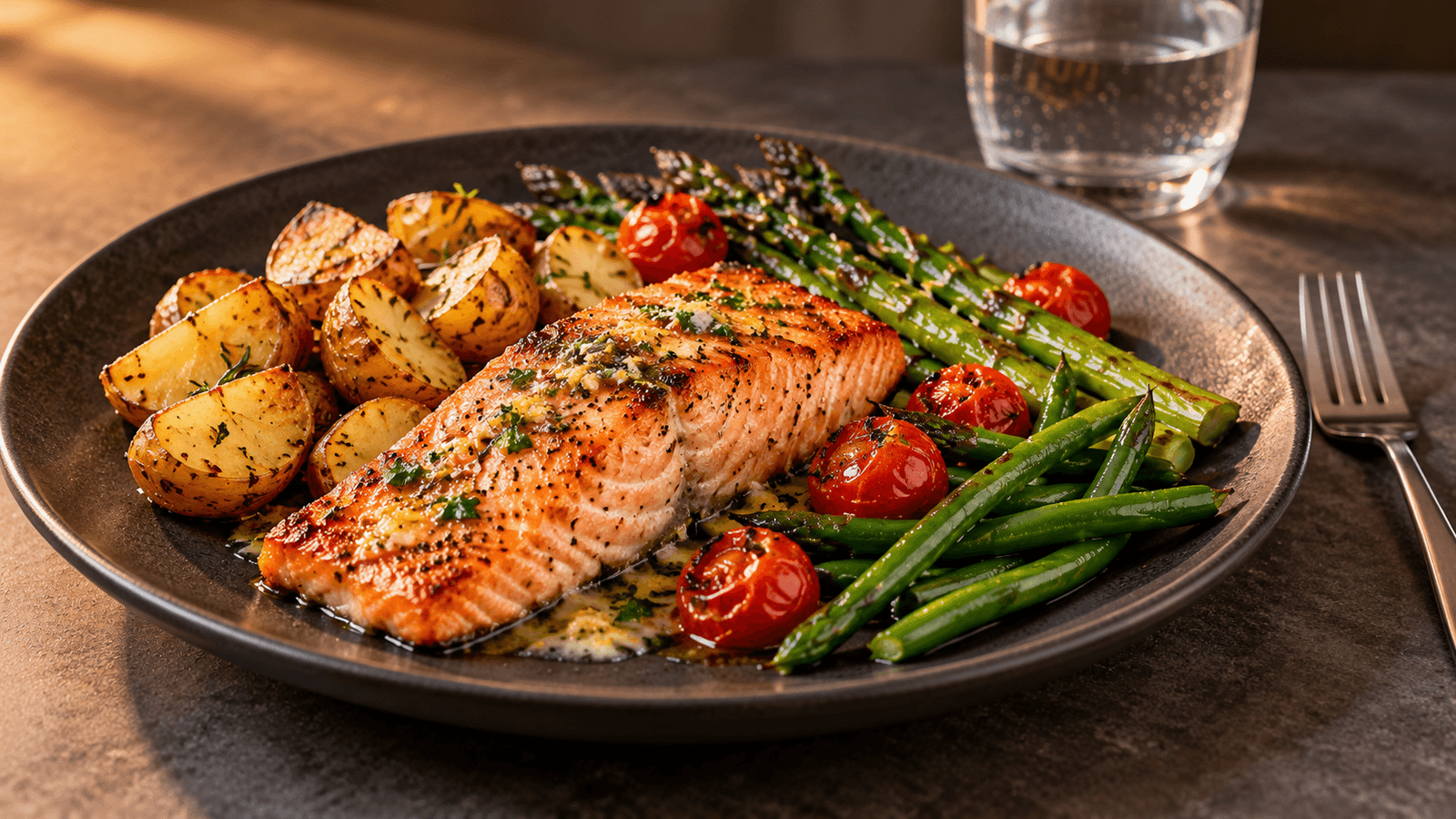
A high-protein dinner can be simple, satisfying and built from ordinary foods.
You do not need a separate "fitness meal." Chicken, fish, lean beef, turkey, eggs, tofu, lentils, beans and dairy can all form the protein base of dinner.
For many people, roughly 30–45 g of protein at dinner can be a practical amount, especially when protein is also distributed across breakfast, lunch and snacks. Your own target may be lower or higher depending on body weight, activity, goals and the rest of your diet.
Below are 20 realistic high-protein dinner ideas, including quick meals, lower-calorie options, budget meals, vegetarian dinners and meals suitable for batch cooking.
Protein and calorie values are approximate. Exact nutrition depends on ingredients, brands, serving sizes and cooking methods.
20 high-protein dinner ideas at a glance
| Dinner | Approx. protein | Approx. calories |
|---|---|---|
| Chicken, potatoes and broccoli | ~40–45 g | ~450–550 kcal |
| Salmon, rice and asparagus | ~35–40 g | ~500–600 kcal |
| Turkey chili | ~35–40 g | ~450–550 kcal |
| Cod, potatoes and vegetables | ~40–45 g | ~400–500 kcal |
| Lean beef rice bowl | ~35–40 g | ~500–600 kcal |
| Chicken fajita bowl | ~40 g | ~500–600 kcal |
| Turkey meatballs with pasta | ~35–40 g | ~500–600 kcal |
| Chicken and lentil curry | ~35–40 g | ~500–600 kcal |
| Tofu and edamame stir-fry | ~30–35 g | ~450–550 kcal |
| Shrimp rice bowl | ~35–40 g | ~450–550 kcal |
| Chicken tray bake | ~40–45 g | ~450–550 kcal |
| Lean beef chili | ~35–40 g | ~500–600 kcal |
| White fish tacos | ~30–35 g | ~450–550 kcal |
| Cottage cheese baked potato | ~30–35 g | ~400–500 kcal |
| Chicken pasta with tomato sauce | ~40 g | ~500–600 kcal |
| Turkey and bean stuffed peppers | ~35–40 g | ~400–500 kcal |
| Tofu curry | ~25–30 g | ~450–550 kcal |
| Lentil and chicken soup | ~30–35 g | ~350–450 kcal |
| Egg, cottage cheese and potato plate | ~30–35 g | ~450–550 kcal |
| High-protein leftovers bowl | ~30–45 g | varies |
The numbers are examples rather than targets. Adjust portions to fit your own protein and calorie needs.
How much protein should you eat at dinner?
There is no single amount that everyone needs at dinner.
Your total daily protein intake matters more than hitting an identical number at every meal.
For example, someone aiming for 120 g per day might eat:
| Meal | Example protein |
|---|---|
| Breakfast | 30 g |
| Lunch | 35 g |
| Snack | 20 g |
| Dinner | 35 g |
| Total | 120 g |
Another person may naturally eat a larger dinner:
| Meal | Example protein |
|---|---|
| Breakfast | 25 g |
| Lunch | 30 g |
| Snack | 20 g |
| Dinner | 45 g |
| Total | 120 g |
Both structures can work.
If you do not yet know your daily target, use the Mealisa Protein Calculator or read How Much Protein Do You Need per kg of Body Weight?.
1. Chicken, potatoes and broccoli
A simple chicken dinner does not need many ingredients.
Use:
- 130–150 g cooked chicken breast
- roasted or boiled potatoes
- broccoli
- herbs and spices
- a moderate amount of cooking oil
Approximate protein: 40–45 g
Potatoes and vegetables make the meal substantial while chicken provides most of the protein.
If you need more calories, increase potatoes or add another energy source. If you need fewer calories, measure oils and sauces rather than automatically reducing the chicken.
2. Salmon, rice and asparagus
Combine:
- 150–170 g salmon
- cooked rice
- asparagus or another green vegetable
- lemon and herbs
Approximate protein: 35–40 g
Salmon contains more fat and calories than lean white fish, but it also provides omega-3 fatty acids.
Adjust the rice and added fats according to your energy needs.
3. Turkey chili
Prepare chili with:
- lean ground turkey
- kidney or black beans
- tomatoes
- onion
- peppers
- spices
A suitable serving can provide approximately 35–40 g of protein.
Turkey chili works especially well for batch cooking because one pot can provide several dinners or lunches.
4. Cod, potatoes and vegetables
Use:
- 180–200 g cod or another lean white fish
- potatoes
- mixed vegetables
- lemon
- herbs
Approximate protein: 40–45 g
Lean white fish provides a large amount of protein for relatively few calories.
This makes it useful when you want a substantial dinner while keeping overall energy intake moderate.
5. Lean beef rice bowl
Combine:
- 120–150 g lean beef
- rice
- broccoli, peppers or other vegetables
- a simple sauce
Approximate protein: 35–40 g
Lean ground beef can also work.
The calorie content can change significantly depending on the fat percentage of the beef and the amount of oil and sauce used.
6. Chicken fajita bowl
Build the bowl with:
- 120–140 g chicken
- peppers
- onions
- rice
- beans
- salsa
- optional yogurt
Approximate protein: 40 g
Beans add additional protein and fiber.
Cheese, avocado and sour cream can also fit, but they increase the calorie content quickly, so use portions that match your needs.
7. Turkey meatballs with pasta
Prepare meatballs using lean ground turkey and serve them with:
- pasta
- tomato sauce
- vegetables
Approximate protein: 35–40 g
This is an easy way to turn a familiar pasta dinner into a protein-rich meal without relying on protein supplements or specialty foods.
8. Chicken and lentil curry
Combine:
- 80–100 g cooked chicken
- cooked lentils
- tomatoes
- vegetables
- curry spices
- a moderate amount of sauce
- rice if desired
Approximate protein: 35–40 g
Lentils add protein, carbohydrate and fiber while allowing you to use a smaller amount of chicken.
9. Tofu and edamame stir-fry
For a plant-based dinner, combine:
- 200 g firm tofu
- 100 g edamame
- mixed vegetables
- rice or noodles
- soy sauce and spices
Approximate protein: 30–35 g
Tofu varies significantly in protein content, so check the label.
Edamame is useful for increasing protein without simply making the tofu portion very large.
10. Shrimp rice bowl
Use:
- 150–180 g cooked shrimp
- rice
- vegetables
- lemon, garlic or spices
Approximate protein: 35–40 g
Shrimp is a relatively lean protein source.
The final calorie content depends mainly on the amount of rice, oil and sauce added.
11. Chicken tray bake
Place on one tray:
- 130–150 g chicken per serving
- potatoes
- broccoli
- peppers
- onions
- herbs and spices
Approximate protein: 40–45 g
A tray bake is useful when you want minimal washing up or several portions at once.
Measure cooking oil if accurate calorie tracking matters.
12. Lean beef chili
Prepare chili with:
- lean ground beef
- beans
- tomatoes
- peppers
- onions
- spices
Approximate protein: 35–40 g
Using beans allows the dish to remain protein-rich without requiring a very large meat portion.
Leftovers can be used for lunch the following day.
13. White fish tacos
Use:
- 150–180 g white fish
- 2–3 small tortillas
- cabbage
- tomato
- salsa
- yogurt-based sauce
Approximate protein: 30–35 g
Keep the fish as the main protein source and adjust tortillas and toppings according to your energy needs.
14. Cottage cheese baked potato
For a meat-free dinner, use:
- one large baked potato
- 200–250 g cottage cheese
- salad or cooked vegetables
- herbs and spices
Approximate protein: 30–35 g
This is inexpensive, simple and requires very little active cooking.
15. Chicken pasta with tomato sauce
Combine:
- 120–140 g cooked chicken
- pasta
- tomato-based sauce
- vegetables
Approximate protein: 40 g
If you want a lighter version, use slightly less pasta and keep the chicken portion substantial.
If you need more energy, increase the pasta rather than dramatically increasing the protein.
16. Turkey and bean stuffed peppers
Fill bell peppers with:
- lean ground turkey
- beans
- tomatoes
- onion
- a moderate amount of rice
Approximate protein: 35–40 g
This provides both animal and plant protein in one meal.
You can prepare several portions at once.
17. Tofu curry
Use:
- 200–250 g firm tofu
- mixed vegetables
- curry spices
- tomato-based or lighter coconut-based sauce
- rice
Approximate protein: 25–30 g
For more protein, add edamame or increase the tofu portion.
Coconut milk can make curry significantly more calorie-dense, so portion size matters when calories are limited.
18. Lentil and chicken soup
Prepare with:
- lentils
- chicken
- carrots
- celery
- onion
- tomatoes or broth
- herbs
A substantial serving can provide approximately 30–35 g of protein.
Soup is useful for batch cooking and can be frozen in individual portions.
19. Egg, cottage cheese and potato plate
Combine:
- 2 eggs
- 150–200 g cottage cheese
- potatoes
- vegetables
Approximate protein: 30–35 g
This is a simple dinner for days when you do not want meat or fish.
20. High-protein leftovers bowl
Dinner does not need to be a new recipe every evening.
Start with leftover:
- chicken
- turkey
- beef
- fish
- tofu
- lentils
Then add:
- vegetables
- rice, potatoes or another carbohydrate
- a suitable sauce
Aim for a protein portion that fits your remaining daily target.
Using leftovers can save time, reduce food waste and make consistent meal planning easier.
Quick high-protein dinners
A protein-rich dinner does not need an hour of preparation.
Chicken stir-fry
Use pre-cut vegetables, cooked chicken and a simple sauce.
Tuna pasta
Combine pasta, tuna, tomato sauce and vegetables.
Eggs and cottage cheese
Serve with potatoes, bread or vegetables.
Shrimp and rice
Frozen cooked shrimp and microwaveable rice can create a fast meal.
Tofu stir-fry
Use firm tofu with frozen vegetables and rice.
Leftovers bowl
Reheat protein and carbohydrate components from earlier meals.
Keeping a few quick protein foods available can make it easier to avoid relying entirely on takeaway food when time is limited.
High-protein dinner for weight loss
A high-protein dinner can fit into a calorie deficit, but simply adding more protein to an already large dinner may increase calories rather than reduce them.
A practical structure is:
- choose a substantial lean protein source
- add plenty of vegetables
- include a suitable carbohydrate portion
- control calorie-dense oils and sauces
Useful protein choices include:
- chicken breast
- turkey
- white fish
- shrimp
- lean beef
- low-fat cottage cheese
- tofu
Examples include:
- cod + potatoes + vegetables
- chicken + broccoli + potatoes
- shrimp + vegetables + rice
- turkey chili
- cottage cheese + baked potato + salad
For more options, see Low-Calorie High-Protein Foods: 30 Foods for More Protein With Fewer Calories.
For protein targets during a calorie deficit, read How Much Protein Should You Eat to Lose Weight?.
High-protein dinner for muscle building
A muscle-building dinner can use exactly the same foods.
You may simply need a larger overall meal if your energy needs are higher.
For example, keep a suitable protein portion and increase:
- rice
- potatoes
- pasta
- bread
- olive oil
- fruit
- another side dish
Eating an enormous amount of protein at dinner is not a substitute for sufficient protein across the day, adequate total energy and effective resistance training.
Read How Much Protein Do You Need to Build Muscle?.
Low-calorie high-protein dinners
If you want more protein for fewer calories, lean protein sources make meal planning easier.
Examples include:
Cod + potatoes + vegetables
A large serving of lean white fish can provide substantial protein.
Chicken + vegetables + rice
Keep the chicken portion substantial and adjust the rice and oil.
Shrimp stir-fry
Use shrimp, plenty of vegetables and a moderate amount of rice or noodles.
Turkey chili
Choose lean turkey and use beans and vegetables for volume.
Cottage cheese baked potato
Use lower-fat cottage cheese if preferred.
Remember that a dinner does not have to be extremely low in calories to support weight management. The full day's energy intake matters.
Cheap high-protein dinners
Protein does not need to come from expensive steak or fresh salmon every evening.
Budget-friendly options can include:
- chicken thighs
- eggs
- cottage cheese
- quark
- lentils
- beans
- split peas
- tofu
- canned fish
- TVP
Examples:
- chicken and lentil curry
- bean and turkey chili
- lentil soup with chicken
- tofu and rice
- eggs, cottage cheese and potatoes
- TVP chili
Combining legumes with a smaller portion of meat can reduce cost while keeping protein high.
See Cheap High-Protein Foods: 30 Budget-Friendly Protein Sources for more ideas.
Vegetarian high-protein dinners
Vegetarian options include:
- cottage cheese baked potato
- eggs and cottage cheese with potatoes
- tofu and edamame stir-fry
- lentil curry with high-protein dairy on the side
- bean and TVP chili
- tofu curry
- lentil pasta with cottage cheese
If you eat dairy and eggs, they can make higher protein targets considerably easier to reach.
Vegan high-protein dinners
Useful vegan protein sources include:
- tofu
- tempeh
- seitan
- TVP
- lentils
- beans
- chickpeas
- edamame
Example dinners include:
Tofu and edamame stir-fry
Use tofu and edamame with vegetables and rice.
TVP chili
Combine TVP with beans, tomatoes and vegetables.
Seitan bowl
Serve seitan with potatoes or rice and vegetables.
Lentil and tofu curry
Combine two protein sources rather than relying on a small amount of lentils alone.
Plant-based products vary significantly in protein content, so check labels when precise tracking matters.
High-protein dinners for the whole family
You do not necessarily need to cook separate meals for different family members.
Prepare the same base meal and adjust portions.
For example, serve:
- chicken
- rice
- vegetables
- sauce
Someone with higher energy needs can take more rice or add another side.
Someone prioritizing protein can take a larger chicken portion.
Someone with lower energy needs can use more vegetables and a smaller amount of calorie-dense additions.
This is often easier than cooking separate "diet" meals.
High-protein dinner meal prep
Dinner meal prep does not need to mean seven identical containers.
Prepare flexible components instead.
Protein
Cook one or two:
- chicken
- turkey
- lean beef
- tofu
- lentils
Carbohydrate
Prepare:
- rice
- potatoes
- pasta
Vegetables
Roast a large tray or keep frozen vegetables available.
Then change the flavor.
For example, cooked chicken can become:
- chicken rice bowl
- chicken curry
- chicken pasta
- chicken fajita bowl
- chicken salad
The same ingredients can create several different dinners.
For a full weekly example, see the 7-Day High-Protein Meal Plan.
How to build your own high-protein dinner
A simple dinner can be built in four steps.
Step 1: Choose the main protein
Examples:
- chicken
- turkey
- fish
- shrimp
- lean beef
- eggs
- cottage cheese
- tofu
- lentils
- beans
Step 2: Add vegetables
Use whatever is practical:
- broccoli
- peppers
- carrots
- green beans
- spinach
- salad
- frozen vegetables
Step 3: Add carbohydrate according to your needs
Examples:
- potatoes
- rice
- pasta
- bread
- tortillas
- couscous
Step 4: Add flavor
Use:
- herbs
- spices
- salsa
- mustard
- yogurt-based sauce
- lemon
- tomato sauce
- soy sauce
High-protein food does not need to be bland.
How to increase protein in your usual dinner
You may not need a completely new recipe.
Pasta
Add more lean meat, chicken, tuna, lentils or TVP.
Curry
Add chicken, tofu, lentils or edamame.
Salad
Add chicken, tuna, eggs, cottage cheese or tofu.
Soup
Add chicken, lentils, beans or lean meat.
Rice bowl
Increase the main protein portion and adjust rice if necessary.
Baked potato
Add cottage cheese, tuna, chili or beans.
Small changes can substantially increase protein without changing the entire meal.
Should dinner be your biggest meal?
It can be, but it does not have to be.
Some people naturally prefer a larger evening meal. Others feel better eating more earlier in the day.
There is no requirement that dinner must be the largest or smallest meal.
The best structure is one that fits your schedule, appetite and overall nutrition needs.
Is eating protein at night bad?
For most healthy adults, there is no general reason to avoid protein simply because it is evening.
Your overall daily intake is more important than treating protein as a food that must be avoided after a certain hour.
If large meals close to bedtime cause discomfort, changing meal size or timing may be useful for practical reasons.
Is 40 grams of protein too much for dinner?
Not necessarily.
Someone with a daily target of 120–160 g may reasonably eat 40 g at dinner.
The idea that the body simply wastes all protein above a very small fixed amount per meal is an oversimplification.
That does not mean more protein is always better. Your total needs still matter.
Is 50 grams of protein at dinner too much?
It depends on the person and the rest of the day.
Someone with a high daily protein target may comfortably include 50 g in a meal.
Someone with a much lower target may not need that amount.
Rather than choosing a dinner number in isolation, calculate your daily target and see how dinner fits into it.
Do you need protein before bed?
No.
You do not need to eat an additional protein serving before bed if you already meet your daily needs.
Some people may find an evening protein-rich food convenient, but it is optional rather than mandatory.
Common mistakes with high-protein dinners
1. Saving nearly all protein for dinner
A huge evening protein portion can be inconvenient if breakfast and lunch contain almost none.
2. Assuming high protein means low calorie
Fatty meat, cheese, large amounts of oil and creamy sauces can make a protein-rich dinner very calorie-dense.
3. Removing carbohydrates automatically
Rice, potatoes, pasta and bread can all fit a high-protein dinner.
4. Making portions unnecessarily large
Your dinner does not need 70 or 80 g of protein simply because protein is useful.
5. Ignoring vegetables and fiber
Protein is only one part of a balanced diet.
6. Making every dinner a separate complicated recipe
Flexible meal components can save substantial time.
7. Depending on expensive protein foods
Eggs, legumes, cottage cheese, tofu and lower-cost poultry can help control food costs.
Frequently asked questions
What is a good high-protein dinner?
A practical high-protein dinner includes a substantial protein source, vegetables and enough carbohydrate and fat to match your energy needs.
Examples include chicken with potatoes and broccoli, salmon with rice, turkey chili, cod with vegetables or tofu and edamame stir-fry.
What can I eat for 30 grams of protein at dinner?
Depending on portions, examples include:
- tofu and edamame
- cottage cheese with potatoes
- eggs and cottage cheese
- white fish tacos
- turkey chili
What can I eat for 40 grams of protein at dinner?
Examples can include:
- chicken with potatoes
- cod with vegetables
- chicken pasta
- lean beef bowl
- chicken fajita bowl
Exact protein depends on serving size.
What is a good high-protein dinner for weight loss?
Lean chicken, turkey, white fish, shrimp, lean beef, lower-fat cottage cheese and tofu can make it easier to build protein-rich meals with moderate calories.
What is a quick high-protein dinner?
Chicken stir-fry, tuna pasta, shrimp and rice, eggs with cottage cheese, tofu stir-fry and reheated leftovers can all be prepared quickly.
What is a cheap high-protein dinner?
Chicken and lentils, bean chili, eggs with cottage cheese, tofu with rice and lentil soup are inexpensive options in many places.
What is a vegetarian high-protein dinner?
Try cottage cheese with a baked potato, eggs with cottage cheese, tofu and edamame, TVP chili or tofu curry.
Can I eat a high-protein dinner without meat?
Yes.
Eggs, dairy, tofu, tempeh, seitan, TVP, lentils, beans and edamame can all contribute substantial protein.
Do I need protein powder with dinner?
No.
A normal meal can easily provide a substantial amount of protein without supplements.
Bottom line
A high-protein dinner does not need to be complicated.
Start with a protein source such as:
- chicken
- turkey
- fish
- shrimp
- lean beef
- eggs
- cottage cheese
- tofu
- lentils
- beans
Add vegetables, a carbohydrate source and enough flavor to make the meal enjoyable.
For many people, approximately 30–45 g of protein at dinner can fit comfortably into a protein-rich day, but your daily target is more important than any fixed dinner number.
Use the Mealisa Protein Calculator to estimate your needs.
For earlier meals, see High-Protein Breakfast: 15 Easy Ideas to Start Your Day and High-Protein Lunch: 20 Easy Ideas for a Protein-Rich Meal.
For between-meal options, see High-Protein Snacks: 20 Easy Ideas to Keep You Satisfied.
For a complete week, see the 7-Day High-Protein Meal Plan.
Nutrition values are approximate and vary by product, serving size and preparation. This article provides general nutrition information for healthy adults and is not individualized medical or dietetic advice.