
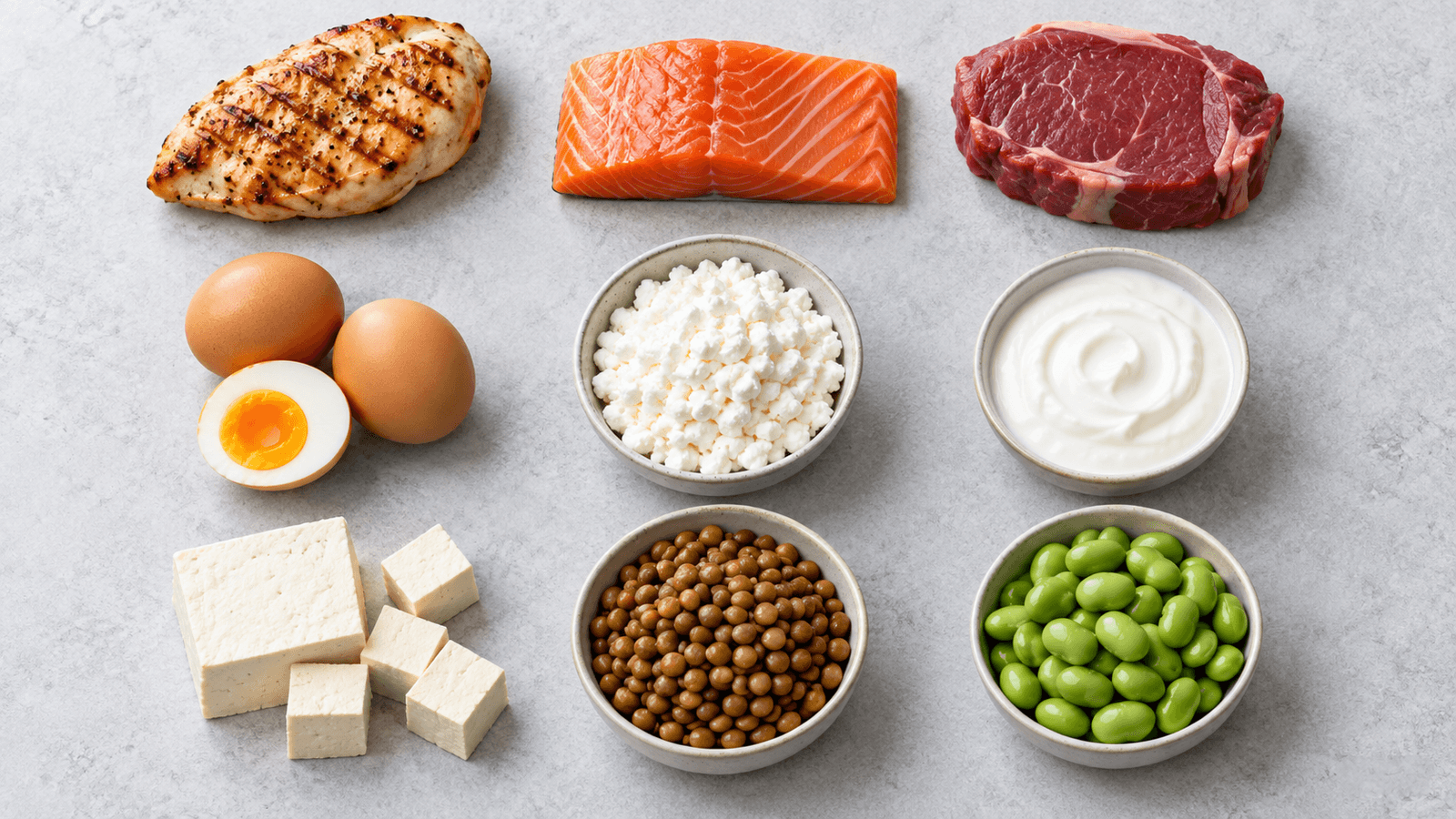
Eating more protein becomes much easier when you know which foods provide a meaningful amount without requiring unusually large portions.
High-protein foods include meat, fish, eggs, dairy products, soy foods, legumes and several other plant foods. The best choices depend on your calorie needs, budget, dietary preferences and how much protein you are trying to eat.
This guide compares practical protein sources and shows how they can fit into everyday meals.
Protein values below are approximate. Exact amounts vary by product, brand, preparation method and serving size.
High-protein foods at a glance
| Food | Example serving | Approx. protein |
|---|---|---|
| Chicken breast, cooked | 100 g | ~31 g |
| Turkey breast, cooked | 100 g | ~29 g |
| Lean beef, cooked | 100 g | ~26 g |
| Tuna | 100 g | ~25–29 g |
| Salmon, cooked | 100 g | ~22–25 g |
| Shrimp, cooked | 100 g | ~20–24 g |
| Eggs | 2 large | ~12–13 g |
| Skyr | 200 g | ~20–22 g |
| Greek yogurt | 200 g | ~18–20 g |
| Cottage cheese | 200 g | ~22–26 g |
| Milk | 250 ml | ~8–9 g |
| Tofu | 150 g | ~18–24 g |
| Tempeh | 100 g | ~18–20 g |
| Edamame, cooked | 150 g | ~16–18 g |
| Lentils, cooked | 200 g | ~17–18 g |
| Chickpeas, cooked | 200 g | ~16–18 g |
| Beans, cooked | 200 g | ~14–18 g |
| Seitan | 100 g | ~20–25 g |
Rather than choosing foods only because they are labeled "high protein," consider the entire meal: calories, fiber, fats, carbohydrates, micronutrients, cost and how filling the food is for you.
If you do not yet know your daily target, use the Mealisa Protein Calculator.
Best high-protein foods
There is no single best protein food for everyone.
A useful protein source generally combines several qualities:
- a meaningful amount of protein per serving
- a portion size you can realistically eat
- nutrients that fit your overall diet
- a calorie level appropriate for your goal
- reasonable cost and availability
- taste and convenience that make it sustainable
For someone trying to increase protein without dramatically increasing calories, lean meat, fish, skyr, Greek yogurt, cottage cheese and some soy foods can be particularly useful.
Someone following a plant-based diet may instead rely more heavily on tofu, tempeh, seitan, lentils, beans, chickpeas and edamame.
High-protein meat and poultry
Chicken breast
Cooked chicken breast is one of the most protein-dense everyday foods.
A 100 g cooked portion commonly provides around 30 g of protein.
It works well in:
- salads
- wraps
- rice bowls
- pasta dishes
- sandwiches
- meal-prep meals
Because skinless chicken breast is relatively lean, it can provide substantial protein without requiring a very high-calorie serving.
Turkey
Turkey breast has a nutritional profile similar to other lean poultry and can provide roughly 29 g of protein per 100 g cooked, depending on preparation.
It can be used in sandwiches, salads, bowls and hot meals.
Lean beef
Lean beef generally provides around 25–27 g of protein per 100 g cooked.
It also provides nutrients such as iron and vitamin B12.
The calorie content can vary substantially depending on the cut and fat content, so two beef portions with similar protein can have quite different calorie totals.
High-protein fish and seafood
Tuna
Tuna is a concentrated source of protein, commonly providing roughly 25–29 g per 100 g depending on the product.
Canned tuna can also be convenient because it requires little preparation.
If using canned products, check whether the tuna is packed in water or oil because this changes the calorie content.
Salmon
Cooked salmon typically provides roughly 22–25 g of protein per 100 g.
Unlike very lean fish, salmon also contains substantial fat, including omega-3 fatty acids.
That makes salmon nutritious and protein-rich, but generally more calorie-dense than lean white fish.
Shrimp
Cooked shrimp can provide approximately 20–24 g of protein per 100 g while remaining relatively lean.
It works well in salads, pasta, rice dishes and stir-fries.
Are eggs high in protein?
Eggs are useful protein foods, although they are less protein-dense by weight than chicken breast or tuna.
One large egg typically contains roughly 6–7 g of protein.
That means:
- 2 eggs → about 12–13 g
- 3 eggs → about 18–20 g
- 4 eggs → about 24–26 g
Eggs can become part of a higher-protein meal when combined with foods such as cottage cheese, skyr or Greek yogurt.
High-protein dairy foods
Skyr
Skyr is particularly useful when you want a large amount of protein in a convenient serving.
A 200 g portion commonly contains approximately 20–22 g of protein, although brands vary.
It works as breakfast, a snack or part of a dessert.
Greek yogurt
Greek yogurt often provides approximately 9–10 g of protein per 100 g, depending on the product.
A 200 g bowl can therefore provide around 18–20 g.
Always check the label because regular yogurt and Greek-style products can differ considerably in protein content.
Cottage cheese
Cottage cheese commonly provides around 11–13 g of protein per 100 g.
A 200 g portion can therefore contribute roughly 22–26 g of protein.
It can be eaten sweet or savory and works well as breakfast, a snack or part of a meal.
Milk
Milk is not as protein-dense as meat or concentrated dairy foods, but it still contributes.
A 250 ml glass typically provides around 8–9 g of protein.
Several servings across a day can therefore make a noticeable contribution to total protein intake.
High-protein plant foods
You do not need meat to build a high-protein diet.
Plant-based diets can provide substantial protein, but choosing protein-rich foods intentionally becomes more important.
Tofu
The protein content of tofu varies significantly with firmness and brand.
A 150 g serving may provide roughly 18–24 g of protein.
Tofu can be used in stir-fries, bowls, curries, salads and sandwiches.
Tempeh
Tempeh is a fermented soy product that typically contains around 18–20 g of protein per 100 g.
Its relatively dense texture makes it easy to use as the main protein source in a meal.
Edamame
Cooked edamame provides both protein and fiber.
A 150 g serving can provide approximately 16–18 g of protein.
It can be added to bowls, salads and snacks.
Lentils
Cooked lentils provide roughly 8–9 g of protein per 100 g.
A 200 g serving can therefore provide around 17–18 g.
Lentils also provide carbohydrates and fiber, so they play a different nutritional role from very lean animal proteins.
Chickpeas
A 200 g serving of cooked chickpeas can provide roughly 16–18 g of protein.
They work well in salads, curries, bowls, soups and hummus.
Beans
Depending on the variety, a 200 g serving of cooked beans may provide roughly 14–18 g of protein.
Beans can be especially useful when protein, fiber and affordability are all priorities.
Seitan
Seitan is made primarily from wheat gluten and can be particularly protein-dense.
Many products provide approximately 20–25 g of protein per 100 g, although recipes and commercial products vary substantially.
It is not suitable for people who need to avoid gluten.
High-protein foods that are relatively low in calories
If your goal is to increase protein while controlling total calorie intake, protein density becomes useful.
Examples can include:
- skinless chicken breast
- turkey breast
- tuna in water
- shrimp
- lean white fish
- low-fat skyr
- low-fat Greek yogurt
- low-fat cottage cheese
- egg whites
- some tofu products
This does not mean higher-fat protein foods are unhealthy.
Salmon, whole eggs, nuts and full-fat dairy can all fit into a nutritious diet. They simply provide more calories alongside their protein.
We will cover this topic in more detail in our guide to low-calorie high-protein foods.
Cheap high-protein foods
Protein does not have to come from expensive meat or supplements.
Budget-friendly options can include:
- eggs
- dried lentils
- dried beans
- chickpeas
- canned tuna
- cottage cheese
- skyr when purchased in larger tubs
- milk
- tofu
- frozen poultry when competitively priced
The cheapest option depends heavily on local food prices.
A useful comparison is not simply price per package, but cost per meaningful amount of protein.
Mealisa is designed to help connect food choices with both nutrition and food spending.
A dedicated guide to cheap high-protein foods will compare this in more detail.
High-protein foods for breakfast
Breakfast can become much higher in protein without needing an unusually large meal.
Examples include:
- eggs with cottage cheese
- skyr with oats
- Greek yogurt with fruit
- cottage cheese on whole-grain toast
- eggs with smoked salmon
- tofu scramble
- milk added to oats
- a yogurt-based smoothie
For example, combining three eggs with 150 g of cottage cheese can provide substantially more protein than eating the eggs alone.
High-protein snacks
Useful high-protein snacks include:
- skyr
- Greek yogurt
- cottage cheese
- boiled eggs
- edamame
- tuna with crackers or vegetables
- milk
- a protein shake
A snack does not have to contain huge amounts of protein.
Adding 15–25 g between meals can make a large daily target much easier to reach.
How to reach 100 grams of protein per day
You do not need to eat 100 grams in one or two meals.
For example:
- Breakfast: 25 g
- Lunch: 30 g
- Snack: 15 g
- Dinner: 30 g
Total: 100 g
This can be achieved with ordinary foods rather than relying on supplements.
How to reach 120 grams of protein per day
A simple distribution might be:
- Breakfast: 30 g
- Lunch: 35 g
- Snack: 20 g
- Dinner: 35 g
Total: 120 g
Someone eating three meals could instead average around 40 g per meal.
How to reach 150 grams of protein per day
A larger target becomes easier when protein is included in every meal.
For example:
- Breakfast: 35 g
- Lunch: 40 g
- Snack: 30 g
- Dinner: 45 g
Total: 150 g
If you are unsure whether you actually need this much, first calculate an appropriate target rather than choosing a high number arbitrarily.
Read How Much Protein Do You Need per kg of Body Weight? or use the Protein Calculator.
Animal vs plant protein
Both animal and plant foods can contribute meaningfully to daily protein intake.
Animal proteins often provide all essential amino acids in proportions that readily support human protein needs.
Plant-based diets can also provide adequate protein when total intake is sufficient and a variety of protein-rich foods are consumed.
Soy foods such as tofu, tempeh and edamame can be especially useful because they provide substantial protein in practical serving sizes.
Rather than treating one category as universally better, consider your overall dietary pattern, preferences and nutritional needs.
Do you need protein powder?
No.
Protein powder is a convenient way to increase protein intake, but it is not required.
Whole foods can provide all the protein many people need.
Protein powder may be useful when:
- you struggle to reach your target with meals
- you need something quick after training
- you want a portable protein source
- adding another full meal would be inconvenient
A typical protein powder serving often provides around 20–30 g of protein, depending on the product.
Check the nutrition label rather than assuming every scoop contains the same amount.
Is a food automatically healthy because it is high in protein?
No.
Protein content is only one part of a food's nutritional profile.
A high-protein food can also contain large amounts of:
- calories
- saturated fat
- sodium
- added sugar
Likewise, many nutritious foods are not particularly high in protein.
Vegetables, fruits, whole grains, nuts and seeds can provide fiber, vitamins, minerals and other useful nutrients even when protein is not their main strength.
The goal is not to maximize protein at the expense of the rest of your diet.
How much protein do you actually need?
Your target depends on body weight, activity and goals.
For healthy exercising individuals, sports-nutrition guidance commonly uses a range of approximately 1.4–2.0 g of protein per kilogram of body weight per day.
People who are not exercising heavily may need less.
For a broader explanation, read How Much Protein Do You Need Per Day?.
For muscle-focused goals, see How Much Protein Do You Need to Build Muscle?.
For weight loss, see How Much Protein Should You Eat to Lose Weight?.
Frequently asked questions
What food is highest in protein?
Several lean animal foods and concentrated protein products provide large amounts of protein relative to their serving size.
Chicken breast, turkey, tuna and some seafood commonly provide around 20–30 g or more per 100 g.
Some plant foods such as seitan and tempeh are also relatively protein-dense.
What foods have 20 grams of protein?
Depending on the exact product and serving size, approximately 20 g of protein can come from:
- around 65–75 g cooked chicken breast
- around 70–90 g tuna
- roughly 200 g high-protein Greek yogurt or skyr
- roughly 150 g firm tofu
- around 100 g tempeh
Always check the actual nutrition information when precision matters.
What foods have 30 grams of protein?
Approximately 100 g of cooked chicken breast can provide around 30 g of protein.
Other ways to reach roughly 30 g include combining several foods, such as eggs with cottage cheese or yogurt with another protein source.
Can you get enough protein without meat?
Yes.
Protein can come from dairy, eggs, soy foods, legumes, seitan and other plant foods.
A fully plant-based diet requires more deliberate food selection, but it can still provide adequate protein.
Are nuts high in protein?
Nuts contain protein, but they also contain substantial fat and calories.
They can contribute to protein intake, but they are usually less efficient when the goal is to obtain a large amount of protein for relatively few calories.
Are beans a good source of protein?
Yes.
Beans provide protein along with carbohydrates, fiber and several micronutrients.
They are generally less protein-dense than lean meat or concentrated dairy products, so larger portions may be needed to obtain the same amount of protein.
Bottom line
The easiest way to eat more protein is to include a meaningful protein source in each meal rather than trying to make up a large deficit at the end of the day.
Useful high-protein foods include:
- chicken and turkey
- fish and seafood
- eggs
- skyr and Greek yogurt
- cottage cheese
- tofu and tempeh
- lentils
- beans and chickpeas
- edamame
- seitan
The best choices depend on your calorie needs, budget, dietary preferences and protein target.
Use the Mealisa Protein Calculator to estimate your daily target, then choose foods that make that amount realistic within your normal diet.
Protein values in this article are approximate and can vary by product and preparation. This article provides general nutrition information for healthy adults and is not individualized medical or dietetic advice.