
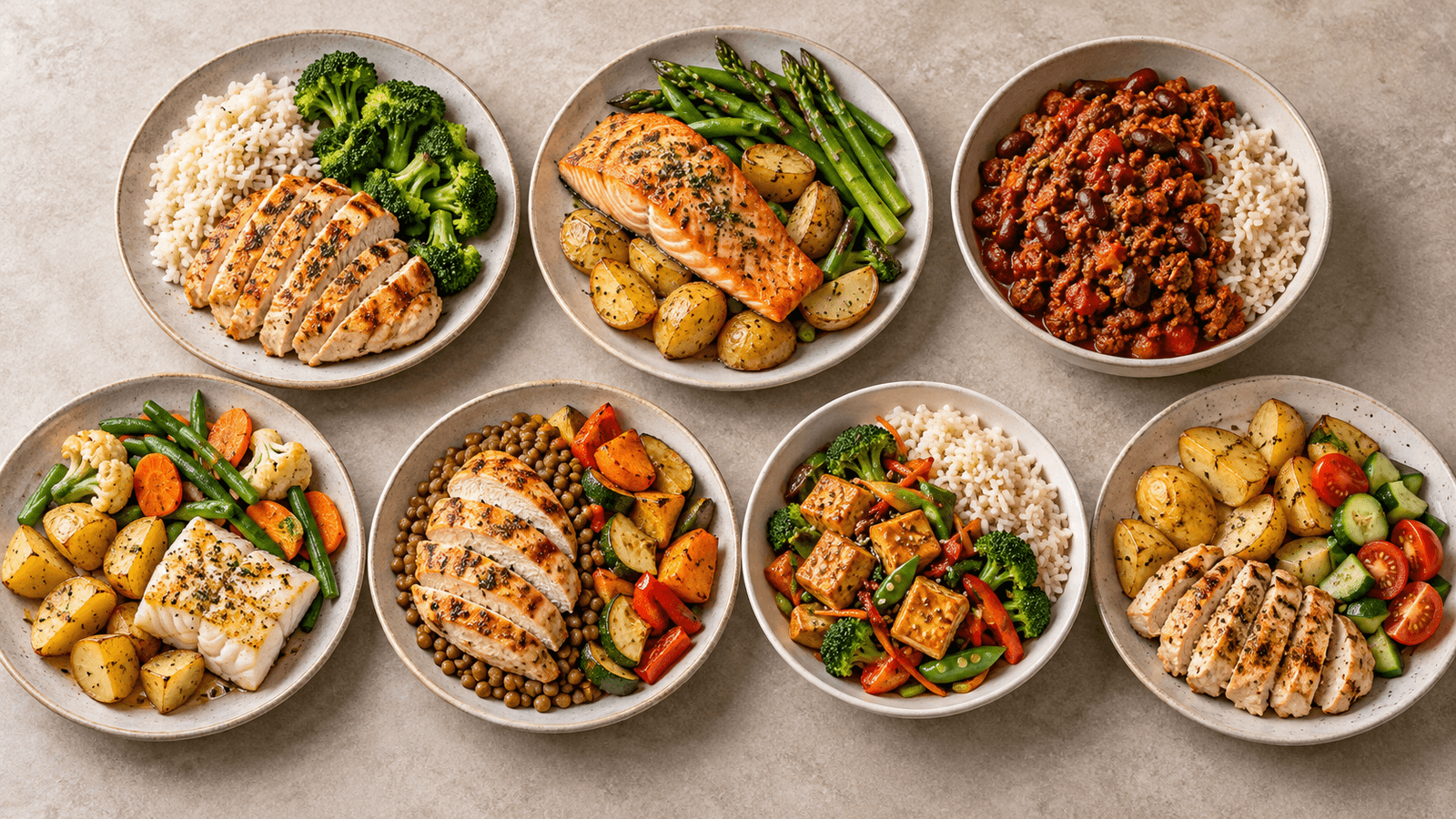
Eating enough protein becomes much easier when you plan it across the day instead of trying to make up a large deficit at dinner.
This 7-day high-protein meal plan provides practical examples of breakfasts, lunches, dinners and snacks built around everyday foods such as eggs, skyr, cottage cheese, chicken, fish, lean meat, tofu, beans and lentils.
The plan is designed as a flexible template rather than a prescription. Portion sizes can be adjusted according to your calorie needs, body weight, activity level, preferences and appetite.
The example days provide roughly 110–130 g of protein. Calories and protein are approximate because brands, recipes, cooking methods and portion sizes vary. You may need more or less food than shown here.
7-day high-protein meal plan at a glance
| Day | Breakfast | Lunch | Dinner | Snack | Approx. protein |
|---|---|---|---|---|---|
| Day 1 | Skyr, oats and berries | Chicken rice bowl | Salmon, potatoes and vegetables | Cottage cheese | ~125 g |
| Day 2 | Eggs, egg whites and toast | Tuna potato salad | Turkey chili | Greek yogurt | ~120 g |
| Day 3 | Quark, banana and oats | Chicken wrap | Cod, rice and vegetables | Skyr | ~125 g |
| Day 4 | Protein oatmeal | Lentil chicken bowl | Lean beef and potatoes | Cottage cheese | ~120 g |
| Day 5 | Cottage cheese breakfast bowl | Turkey rice bowl | Tofu stir-fry | Greek yogurt | ~115 g |
| Day 6 | Eggs and cottage cheese toast | Tuna pasta salad | Chicken tray bake | Skyr | ~125 g |
| Day 7 | Greek yogurt, oats and fruit | Lentil and chicken soup | White fish, potatoes and vegetables | Quark | ~120 g |
You do not need to follow these meals exactly. The purpose is to show how a substantial protein intake can be distributed across ordinary meals.
How much protein do you need?
Before following a high-protein meal plan, it helps to estimate an appropriate daily target.
Protein requirements are not identical for everyone. Relevant factors include:
- body weight
- activity level
- resistance training
- calorie intake
- age
- goals
- individual circumstances
For healthy adults, a general reference intake is lower than the amounts commonly used by people who train regularly or deliberately follow a higher-protein diet.
If you are active, losing weight or training to build muscle, your practical target may be higher than the basic reference intake.
Read How Much Protein Do You Need per kg of Body Weight? for a detailed explanation or use the Mealisa Protein Calculator to estimate a practical range.
How this meal plan works
Instead of concentrating most protein into one meal, the plan includes a meaningful protein source several times during the day.
A day might look roughly like this:
| Meal | Example protein |
|---|---|
| Breakfast | 25–30 g |
| Lunch | 30–35 g |
| Snack | 20–25 g |
| Dinner | 35–40 g |
| Daily total | 110–130 g |
The distribution does not need to be exact.
If your target is lower, reduce some protein portions.
If your target is higher, increase portions or add another protein-rich snack.
Day 1
Breakfast: Skyr, oats and berries
Combine:
- 250 g plain skyr
- 50 g oats
- berries
- cinnamon
Approximate protein: 30 g
Skyr provides most of the protein while oats add carbohydrate and fiber.
If you need more calories, add nuts or seeds. If you need fewer calories, keep the protein portion and reduce calorie-dense toppings first.
Lunch: Chicken rice bowl
Use:
- 120–140 g cooked chicken breast
- cooked rice
- mixed vegetables
- herbs or spices
- a moderate amount of sauce
Approximate protein: 35–40 g
Adjust the rice portion according to your energy needs rather than reducing the chicken automatically.
Snack: Cottage cheese
Have:
- 200 g cottage cheese
- fruit if desired
Approximate protein: 22–26 g
Dinner: Salmon, potatoes and vegetables
Use:
- 150 g salmon
- potatoes
- a large vegetable portion
Approximate protein: 30–35 g
Salmon is more calorie-dense than lean white fish but provides omega-3 fats in addition to protein.
Approximate Day 1 protein: 120–130 g
Day 2
Breakfast: Eggs, egg whites and toast
Try:
- 2 whole eggs
- 150 g egg whites
- 1–2 slices whole-grain toast
- tomatoes or spinach
Approximate protein: 30 g
Combining whole eggs with egg whites increases protein without requiring several additional yolks.
Lunch: Tuna potato salad
Combine:
- one can tuna in water, drained
- cooked potatoes
- cucumber
- tomatoes
- leafy vegetables
- yogurt-based dressing
Approximate protein: 30–35 g
Snack: Greek yogurt
Choose:
- 250 g high-protein Greek yogurt
Add fruit if desired.
Approximate protein: 22–25 g
Dinner: Turkey chili
Prepare with:
- lean ground turkey
- kidney beans
- tomatoes
- onion
- peppers
- spices
A suitable portion can provide approximately 35–40 g of protein.
Beans contribute additional protein and fiber while allowing you to use less meat.
Approximate Day 2 protein: 115–125 g
Day 3
Breakfast: Quark, banana and oats
Combine:
- 250 g low-fat quark
- 40 g oats
- banana
- cinnamon
Approximate protein: 30–35 g
Quark can be especially useful in countries where it is inexpensive and widely available.
Lunch: Chicken wrap
Use:
- 100–120 g cooked chicken
- whole-grain tortilla
- lettuce
- tomato
- cucumber
- yogurt-based sauce
Approximate protein: 30–35 g
Snack: Skyr
Have:
- 200–250 g skyr
Approximate protein: 20–27 g
Dinner: Cod, rice and vegetables
Use:
- 170–200 g cod or another lean white fish
- rice
- mixed vegetables
Approximate protein: 35–40 g
Lean white fish provides substantial protein for relatively few calories.
Approximate Day 3 protein: 120–130 g
Day 4
Breakfast: Protein oatmeal
Prepare:
- 50 g oats
- milk
- 150–200 g skyr or Greek yogurt
- berries
Approximate protein: 25–30 g
You can also use protein powder if desired, but it is not necessary.
Lunch: Lentil chicken bowl
Combine:
- cooked lentils
- 80–100 g cooked chicken
- vegetables
- herbs
- lemon juice or a simple dressing
Approximate protein: 30–35 g
Combining animal and plant protein can reduce the amount of meat needed while keeping the meal protein-rich.
Snack: Cottage cheese
Have:
- 200 g cottage cheese
Approximate protein: 22–26 g
Dinner: Lean beef and potatoes
Use:
- 150 g lean beef
- potatoes
- green vegetables
Approximate protein: 35–40 g
Choose a leaner cut if you want to keep calories lower.
Approximate Day 4 protein: 115–125 g
Day 5
Breakfast: Cottage cheese breakfast bowl
Combine:
- 250 g cottage cheese
- fruit
- 30–40 g oats
Approximate protein: 30 g
Lunch: Turkey rice bowl
Use:
- 120–150 g turkey
- rice
- vegetables
- salsa or another simple sauce
Approximate protein: 35–40 g
Snack: Greek yogurt
Have:
- 200–250 g high-protein Greek yogurt
Approximate protein: 20–25 g
Dinner: Tofu stir-fry
Use:
- 200–250 g firm tofu
- mixed vegetables
- rice or noodles
- soy sauce and spices
Approximate protein: 25–30 g
Protein content varies significantly between tofu products, so check the label.
Approximate Day 5 protein: 110–125 g
Day 6
Breakfast: Eggs and cottage cheese toast
Use:
- 2 eggs
- 150 g cottage cheese
- whole-grain toast
- tomato or cucumber
Approximate protein: 30 g
Lunch: Tuna pasta salad
Combine:
- one can tuna in water
- cooked pasta
- tomatoes
- cucumber
- leafy vegetables
- yogurt-based dressing
Approximate protein: 30–35 g
Snack: Skyr
Have:
- 250 g skyr
Approximate protein: 25–28 g
Dinner: Chicken tray bake
Use:
- 120–150 g chicken
- potatoes
- broccoli, peppers or other vegetables
- a measured amount of oil
- herbs and spices
Approximate protein: 35–40 g
Approximate Day 6 protein: 120–130 g
Day 7
Breakfast: Greek yogurt, oats and fruit
Combine:
- 300 g high-protein Greek yogurt
- 40 g oats
- fruit
Approximate protein: 28–32 g
Lunch: Lentil and chicken soup
Prepare a soup with:
- lentils
- chicken
- carrots
- celery
- onions
- tomatoes or broth
- herbs
A substantial serving can provide approximately 30–35 g of protein.
Snack: Quark
Have:
- 200 g quark
- fruit if desired
Approximate protein: 20–25 g
Dinner: White fish, potatoes and vegetables
Use:
- 180–200 g white fish
- potatoes
- vegetables
Approximate protein: 35–40 g
Approximate Day 7 protein: 115–125 g
High-protein meal plan shopping list
You do not need every item below. Choose foods based on your preferences and local prices.
Protein foods
- chicken breast or thighs
- turkey
- lean beef
- salmon
- cod or another white fish
- canned tuna
- eggs
- egg whites
- skyr
- Greek yogurt
- cottage cheese
- quark
- firm tofu
- lentils
- beans
Carbohydrate foods
- oats
- rice
- potatoes
- whole-grain bread
- tortillas
- pasta
- fruit
Vegetables
Choose a mixture such as:
- broccoli
- peppers
- tomatoes
- cucumber
- spinach
- carrots
- onions
- leafy greens
- frozen mixed vegetables
Frozen vegetables can be particularly convenient because they last longer and reduce food waste.
Flavor and cooking ingredients
- herbs
- spices
- mustard
- salsa
- lemon
- vinegar
- yogurt-based sauces
- soy sauce
- cooking oil
A high-protein diet does not need to consist of plain chicken and rice.
Flavor makes a meal plan easier to follow.
How to adjust this meal plan for your protein target
The example plan provides roughly 110–130 g of protein per day.
That does not mean 120 g is the correct amount for everyone.
If you need around 90 g per day
Reduce one or more protein portions.
For example:
- use a smaller yogurt serving
- reduce meat or fish slightly
- skip the protein snack when unnecessary
If you need around 120 g per day
The example plan can be used with relatively few adjustments.
If you need around 150 g per day
Increase protein portions moderately.
For example:
- add 100–150 g skyr
- increase chicken or fish portions
- add egg whites at breakfast
- include another dairy or soy snack
If you need more than 150 g per day
Do not simply make every meal enormous.
Distributing additional protein across four or five eating occasions may be more comfortable.
Use the Mealisa Protein Calculator before deciding on a target.
How to adjust calories without changing protein too much
Protein and calories are related, but you can adjust energy intake separately to some extent.
To reduce calories
Keep the main lean protein source and reduce some of:
- cooking oil
- sauces
- cheese
- nuts
- nut butter
- large grain portions
- large bread portions
Choose leaner protein foods more often.
See Low-Calorie High-Protein Foods: 30 Foods for More Protein With Fewer Calories.
To increase calories
Keep the protein serving and add more:
- rice
- oats
- potatoes
- pasta
- bread
- olive oil
- nuts
- seeds
- avocado
This is useful when two people need similar protein but different total energy intake.
High-protein meal plan for weight loss
A higher-protein meal plan can fit a calorie deficit, but protein does not override energy balance.
For weight loss, adjust portions so that the overall plan fits an appropriate calorie target.
A practical approach is to keep substantial servings of lean protein while controlling more calorie-dense additions.
For example:
- choose lean chicken or white fish more often
- use lower-fat dairy if preferred
- measure cooking oils
- include plenty of vegetables
- adjust rice, pasta and bread portions
- use fruit or low-fat dairy for snacks
Avoid reducing calories so aggressively that the diet becomes difficult to sustain or nutritionally inadequate.
Read How Much Protein Should You Eat to Lose Weight? for more detail.
High-protein meal plan for muscle building
If your goal is building muscle, adequate resistance training and total energy intake are important alongside protein.
A meal plan for muscle gain may use the same protein structure as this plan while increasing overall calories through:
- larger grain portions
- additional potatoes
- oats
- bread
- fruit
- olive oil
- nuts
- additional snacks
You do not necessarily need dramatically more protein simply because you are eating more calories.
Read How Much Protein Do You Need to Build Muscle? for a detailed guide.
Budget high-protein meal planning
Protein can become expensive when every meal relies on premium meat, fresh fish or branded protein products.
Lower-cost options include:
- eggs
- chicken thighs
- canned tuna
- cottage cheese
- quark
- large tubs of skyr or yogurt
- lentils
- beans
- split peas
- tofu
- TVP
Use more expensive foods strategically rather than at every meal.
For example, combine:
- chicken + lentils
- beef + beans
- tuna + white beans
- eggs + cottage cheese
Read Cheap High-Protein Foods: 30 Budget-Friendly Protein Sources for more ideas.
Vegetarian high-protein meal plan swaps
You can adapt the plan without meat or fish.
Replace animal proteins with combinations of:
- eggs
- cottage cheese
- skyr
- Greek yogurt
- quark
- tofu
- tempeh
- seitan
- lentils
- beans
- edamame
- TVP
For example:
Chicken rice bowl → tofu and edamame rice bowl
Tuna salad → egg and cottage cheese salad
Turkey chili → bean and TVP chili
Fish dinner → tofu, lentils and vegetables
Protein amounts vary, so adjust portions based on the actual nutrition labels.
Vegan high-protein meal plan swaps
Useful vegan protein foods include:
- tofu
- tempeh
- seitan
- TVP
- lentils
- beans
- chickpeas
- edamame
- soy milk
- higher-protein soy yogurt
- plant-based protein powder if desired
Plant-based meals often contain protein alongside more carbohydrate or fat than very lean animal proteins.
That is not a problem, but it means meal structure and portion sizes may need to be adjusted if calories are limited.
Meal prep for the week
You do not need to cook seven completely different days from scratch.
A practical meal-prep system might include:
Cook two protein bases
For example:
- chicken
- lentils
Cook two carbohydrate bases
For example:
- rice
- potatoes
Prepare vegetables
Use:
- roasted vegetables
- chopped salad vegetables
- frozen vegetables
Keep quick protein foods available
Examples:
- eggs
- canned tuna
- skyr
- cottage cheese
- quark
You can then create different meals from the same ingredients by changing seasonings, vegetables and sauces.
Example two-hour meal prep
You could prepare:
- a tray of chicken
- a pot of rice
- roasted potatoes
- cooked lentils
- several boiled eggs
- chopped vegetables
During the week, combine these with ready-to-eat foods such as yogurt, cottage cheese and canned fish.
This is often easier than preparing seven complete days in individual containers.
How to avoid getting bored
A high-protein meal plan becomes difficult to maintain if every meal tastes the same.
Change:
- spices
- sauces
- vegetables
- carbohydrate sources
- cooking methods
For example, the same chicken can become:
- Mediterranean chicken bowl
- chicken curry
- chicken wrap
- chicken pasta
- chicken salad
The protein source can remain similar while the meal feels different.
Common mistakes with high-protein meal plans
1. Setting protein unnecessarily high
More is not automatically better.
Start with a reasonable target.
2. Ignoring calories
High-protein foods still contain calories.
Protein bars, cheese, nuts, fatty meat and shakes can make calorie intake rise quickly.
3. Eating too little fiber
Do not remove fruit, vegetables, legumes and whole grains just to increase protein.
4. Depending entirely on supplements
Protein powder can be convenient but is not necessary.
Ordinary foods can provide substantial protein.
5. Making every meal complicated
Simple repeatable meals are usually easier to maintain than elaborate recipes.
6. Forgetting cost
A plan that is too expensive is unlikely to be sustainable.
7. Ignoring personal preferences
The best meal plan is one you can realistically follow.
Can you eat the same high-protein meals every day?
You can repeat meals, but dietary variety has practical advantages.
Different foods provide different combinations of:
- vitamins
- minerals
- fatty acids
- fiber
- other nutrients
You do not need a completely different menu every day, but rotating protein sources and plant foods is sensible.
Do you need protein at every meal?
No rule requires protein at every meal.
However, including protein several times during the day can make a higher daily target easier to reach.
Someone targeting 120 g may find four meals containing around 30 g much easier than eating 20 g throughout the day and needing 100 g at dinner.
Distribution is a practical tool, not a requirement to eat at exact times.
Do you need protein snacks?
Not necessarily.
If breakfast, lunch and dinner already provide your target, there is no reason to add a protein snack solely because it appears in a meal plan.
Snacks are useful when they help:
- reach protein targets
- manage hunger
- fit food around training
- make meal portions more comfortable
Is 120 g of protein a day enough?
It depends on the individual.
For a 60 kg person, 120 g equals 2.0 g/kg.
For a 75 kg person, it equals 1.6 g/kg.
For a 100 kg person, it equals 1.2 g/kg.
The same number therefore represents very different intakes relative to body weight.
Use body weight and your goal rather than copying someone else's protein target.
How to create your own high-protein meal plan
You can build your own plan in five steps.
Step 1: Estimate your daily protein target
Use the Mealisa Protein Calculator.
Step 2: Decide how many times you normally eat
For example:
- 3 meals
- 3 meals + 1 snack
- 4 meals
Do not force extra meals unless they are useful.
Step 3: Divide protein approximately
If your target is 120 g and you eat four times:
120 ÷ 4 = about 30 g per eating occasion
The actual meals do not need to be identical.
Step 4: Choose your protein foods
Use foods you enjoy and can afford.
For more options, see High-Protein Foods: 30 Foods to Help You Eat More Protein.
Step 5: Add the rest of the meal
Add:
- vegetables
- fruit
- grains or potatoes
- appropriate fats
- sauces and seasonings
Adjust these portions according to your calorie needs.
Frequently asked questions
What can I eat in a day for high protein?
A simple day could include skyr and oats for breakfast, a chicken rice bowl for lunch, cottage cheese as a snack and fish with potatoes and vegetables for dinner.
The exact portions should match your own protein and calorie needs.
How can I get 100 g of protein per day?
One example could be:
- breakfast: 25 g
- lunch: 30 g
- snack: 15 g
- dinner: 30 g
That totals approximately 100 g.
You do not need one enormous protein meal.
How can I get 120 g of protein per day?
Four eating occasions containing roughly 30 g each is one simple structure.
Another could be:
- breakfast: 25 g
- lunch: 35 g
- snack: 20 g
- dinner: 40 g
Both reach approximately 120 g.
How can I get 150 g of protein per day?
A possible distribution is:
- breakfast: 35 g
- lunch: 40 g
- snack: 30 g
- dinner: 45 g
Whether 150 g is appropriate depends on your body weight and goals.
Can I follow a high-protein meal plan without protein powder?
Yes.
Meat, fish, eggs, dairy, soy foods and legumes can provide all of the protein in the plan.
Protein powder is optional.
What are the best foods for high-protein meal prep?
Chicken, turkey, lean beef, tofu, lentils, beans and boiled eggs work well for prepared meals.
Skyr, cottage cheese, quark and canned tuna are useful because they require little or no cooking.
Can a high-protein meal plan help with weight loss?
It can be structured to fit a calorie deficit and may help some people manage hunger, but weight loss still requires an appropriate energy deficit over time.
Protein does not make calories irrelevant.
Is a high-protein diet safe for everyone?
A general high-protein meal plan is not appropriate for every medical situation.
People with kidney disease or other conditions requiring individualized nutrition management should follow advice from an appropriate healthcare professional rather than a generic online meal plan.
Bottom line
A high-protein meal plan does not need to be complicated.
The easiest approach is to:
- estimate a reasonable daily protein target
- include a meaningful protein source at several meals
- use ordinary foods you enjoy
- adjust carbohydrates and fats to your energy needs
- include fruit, vegetables and other nutrient-rich foods
- plan meals that fit your budget and schedule
The 7-day example above provides roughly 110–130 g of protein per day, but that number is only an example.
Your appropriate intake may be lower or higher.
Start with the Mealisa Protein Calculator, then adjust the portions in this plan to fit your own target.
If you want more individual food options, see High-Protein Foods: 30 Foods to Help You Eat More Protein.
Protein and calorie values are approximate and vary by product, recipe, serving size and preparation. This meal plan provides general nutrition information for healthy adults and is not individualized medical or dietetic advice.