
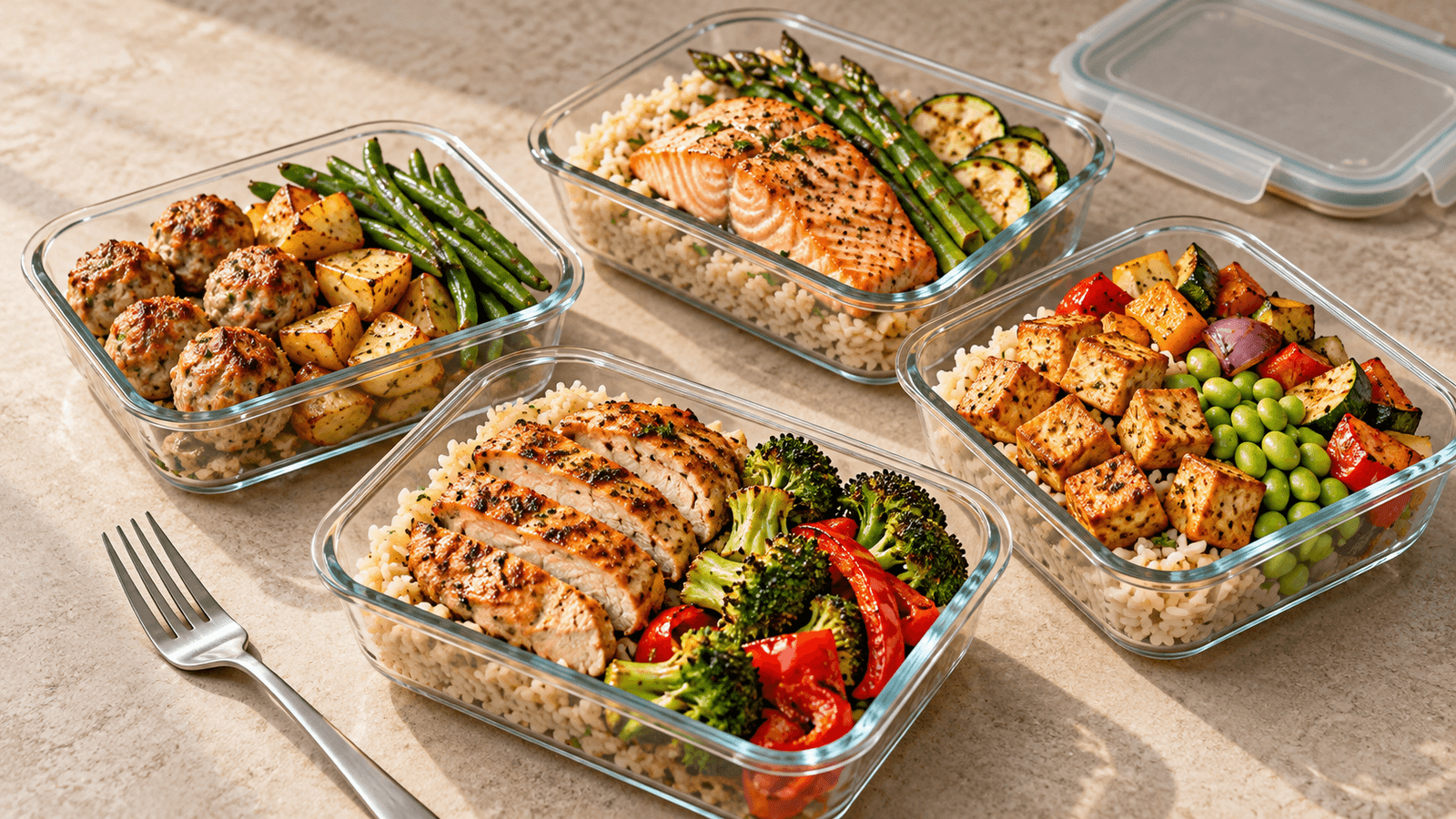
High-protein meal prep does not have to mean eating the same chicken, rice and broccoli from identical containers all week.
A more flexible approach is to prepare a few protein sources, carbohydrates, vegetables and sauces, then combine them into different meals.
This can reduce cooking time while making it easier to reach your daily protein target.
The key is to plan around protein first.
Instead of cooking five finished meals that all taste the same, you can prepare components such as chicken, turkey, tofu, rice, potatoes and vegetables and use them in different combinations throughout the week.
Below are practical high-protein meal-prep ideas, a simple preparation system, storage guidance and example meal plans.
Protein and calorie estimates are approximate. Exact values depend on ingredients, brands, portions and cooking methods.
15 high-protein meal-prep ideas
| Meal-prep idea | Approx. protein per serving | Approx. calories |
|---|---|---|
| Chicken rice and broccoli | ~40–45 g | ~450–550 kcal |
| Turkey chili | ~35–40 g | ~450–550 kcal |
| Salmon potatoes and green beans | ~35–40 g | ~500–600 kcal |
| Chicken fajita bowl | ~40 g | ~500–600 kcal |
| Lean beef rice bowl | ~35–40 g | ~500–600 kcal |
| Chicken pasta with tomato sauce | ~40 g | ~500–600 kcal |
| Turkey meatballs with potatoes | ~35–40 g | ~450–550 kcal |
| Chicken and lentil bowl | ~35–40 g | ~450–550 kcal |
| Tofu and edamame rice bowl | ~30–35 g | ~450–550 kcal |
| Cod potatoes and vegetables | ~40 g | ~400–500 kcal |
| Turkey and bean burrito bowl | ~35–40 g | ~500–600 kcal |
| Tofu stir-fry | ~25–30 g | ~450–550 kcal |
| Chicken couscous bowl | ~35–40 g | ~450–550 kcal |
| Lentil and chicken soup | ~30–35 g | ~350–450 kcal |
| High-protein breakfast box | ~30–35 g | ~400–500 kcal |
You do not need to prepare all 15 meals.
Choose two or three combinations that fit your week.
How much protein should you meal prep?
Start with your daily protein target rather than choosing an arbitrary amount for each container.
For example, someone aiming for 120 g of protein per day might distribute it like this:
| Meal | Example protein |
|---|---|
| Breakfast | 30 g |
| Lunch | 35 g |
| Snack | 20 g |
| Dinner | 35 g |
| Total | 120 g |
In that case, preparing lunches containing roughly 35 g of protein would make sense.
Someone targeting 150 g per day may prefer meal-prep portions containing 40–45 g.
Someone with a lower target may need less.
Use the Mealisa Protein Calculator if you do not yet know your approximate daily target.
You can also read How Much Protein Do You Need per kg of Body Weight?.
The easiest high-protein meal-prep system
Instead of thinking in terms of complete recipes, think in four components:
- protein
- carbohydrate
- vegetables
- flavor
Prepare several components once and combine them differently.
Step 1: Choose 2 protein sources
For example:
- chicken
- turkey
- lean beef
- salmon
- white fish
- eggs
- cottage cheese
- tofu
- tempeh
- lentils
- beans
You do not need six different proteins.
Two are usually enough to create variety for several days.
For example:
Protein 1: chicken breast
Protein 2: tofu
From those two ingredients you could make:
- chicken rice bowl
- chicken pasta
- chicken fajita bowl
- tofu rice bowl
- tofu stir-fry
That already creates five different meals.
Step 2: Choose 2 carbohydrate sources
Useful meal-prep carbohydrates include:
- rice
- potatoes
- pasta
- couscous
- quinoa
- bread
- tortillas
You can also use legumes as a source of both carbohydrate and protein.
Choose portions based on your energy needs.
Someone trying to increase calories may use larger rice or pasta portions.
Someone trying to reduce calories may keep the protein portion substantial while using a smaller carbohydrate portion and more vegetables.
Step 3: Prepare vegetables
Meal prep becomes much easier when vegetables require almost no additional work.
Options include:
- broccoli
- peppers
- carrots
- zucchini
- green beans
- cauliflower
- spinach
- mixed frozen vegetables
Roasting a large tray of vegetables is one simple method.
Frozen vegetables can be even faster.
You do not need to prepare every vegetable from scratch.
Step 4: Use different flavors
The same chicken and rice can taste completely different depending on seasoning and sauce.
Examples include:
- yogurt-herb sauce
- salsa
- tomato sauce
- curry spices
- soy sauce
- mustard dressing
- lemon and herbs
- garlic and paprika
Keep sauces separate when that helps the meal maintain a better texture.
1. Chicken, rice and broccoli
This is a meal-prep classic because it is simple and easy to portion.
Use per serving:
- 130–150 g cooked chicken breast
- cooked rice
- broccoli
- herbs and spices
- a moderate amount of sauce
Approximate protein: 40–45 g
You can vary the flavor with:
- curry spices
- paprika
- salsa
- yogurt sauce
- soy-based sauce
The meal does not need to taste identical every day.
2. Turkey chili
Prepare one large pot using:
- lean ground turkey
- kidney or black beans
- tomatoes
- onion
- peppers
- spices
Approximate protein per substantial serving: 35–40 g
Chili works particularly well for batch cooking because it can be portioned easily and often reheats well.
It can also be served differently:
- alone
- with rice
- over potatoes
- in a tortilla
3. Salmon, potatoes and green beans
Use:
- 150–170 g salmon
- roasted potatoes
- green beans
- lemon and herbs
Approximate protein: 35–40 g
Salmon is useful for adding variety when most of your meal prep uses poultry.
Because cooked fish can be more sensitive to storage time and texture, consider preparing fewer fish portions at once or freezing appropriate portions.
4. Chicken fajita bowl
Prepare:
- chicken
- peppers
- onions
- rice
- beans
- salsa
Approximate protein: 40 g
Keep salsa or yogurt sauce separate until serving if preferred.
This meal can also become a wrap on another day using the same prepared ingredients.
5. Lean beef rice bowl
Combine:
- 120–150 g lean beef
- rice
- broccoli or peppers
- simple sauce
Approximate protein: 35–40 g
Lean ground beef is particularly easy to cook in a large batch.
Check the fat percentage because it can significantly change calories.
6. Chicken pasta with tomato sauce
Use:
- 120–140 g chicken
- pasta
- tomato-based sauce
- vegetables
Approximate protein: 40 g
Pasta can be prepared in advance, although slightly undercooking it may help prevent it becoming too soft after reheating.
7. Turkey meatballs with potatoes
Prepare meatballs using lean ground turkey.
Serve with:
- potatoes
- vegetables
- tomato or yogurt-based sauce
Approximate protein: 35–40 g
Meatballs can also be frozen, making them useful for longer-term meal prep.
8. Chicken and lentil bowl
Combine:
- 80–100 g chicken
- cooked lentils
- vegetables
- herbs
- dressing
Approximate protein: 35–40 g
Using both chicken and lentils allows you to reduce the meat portion while still keeping protein high.
Lentils also contribute fiber.
9. Tofu and edamame rice bowl
For a vegetarian or vegan option, combine:
- 180–200 g firm tofu
- 100 g edamame
- rice
- vegetables
Approximate protein: 30–35 g
Tofu protein varies considerably by product, so check the label.
Extra-firm tofu is often particularly useful for meal prep because it holds its texture well.
10. Cod, potatoes and vegetables
Use:
- 180–200 g cod
- potatoes
- mixed vegetables
- herbs and lemon
Approximate protein: 40 g
Cod is a lean protein source, making this useful when you want substantial protein with moderate calories.
11. Turkey and bean burrito bowl
Combine:
- lean ground turkey
- black or kidney beans
- rice
- peppers
- salsa
- lettuce added fresh when serving
Approximate protein: 35–40 g
Keep fresh salad ingredients separate from the heated portion.
12. Tofu stir-fry
Use:
- 200–250 g firm tofu
- mixed vegetables
- rice or noodles
- soy-based sauce
Approximate protein: 25–30 g
Add edamame if you need more protein.
Cooking oil can increase calories quickly, so measure it if accurate calorie tracking matters.
13. Chicken couscous bowl
Combine:
- 120 g chicken
- couscous
- peppers
- cucumber
- tomatoes
- herbs
Approximate protein: 35–40 g
This works particularly well as a cold meal-prep lunch.
Keep watery vegetables or dressing separate if storing for several days.
14. Lentil and chicken soup
Prepare a large pot using:
- chicken
- lentils
- carrots
- celery
- onion
- broth or tomatoes
Approximate protein per substantial serving: 30–35 g
Soup is easy to portion and freeze.
15. High-protein breakfast box
Meal prep is not only for lunch and dinner.
Prepare a breakfast with:
- 200 g skyr or Greek yogurt
- 2 boiled eggs
- a modest amount of oats
- berries
Approximate protein: 30–35 g
Keep dry ingredients separate until eating if you prefer a firmer texture.
For more ideas, see High-Protein Breakfast: 15 Easy Ideas to Start Your Day.
High-protein meal prep for weight loss
Meal prep can be particularly useful during weight loss because portions are decided before you become hungry.
But "meal prep" does not automatically mean low calorie.
A container with:
- fatty meat
- large amounts of rice
- cheese
- oil
- creamy sauce
can still contain many calories.
A simple weight-loss structure is:
Protein
Choose a substantial portion of:
- chicken breast
- turkey
- cod
- tuna
- shrimp
- lean beef
- lower-fat cottage cheese
- tofu
Vegetables
Fill a substantial part of the meal with vegetables.
Carbohydrate
Use a portion appropriate for your calorie needs.
Examples:
- potatoes
- rice
- pasta
- couscous
Sauce or fat
Include enough for flavor, but measure calorie-dense additions if needed.
For more options, see Low-Calorie High-Protein Foods.
For protein targets during a calorie deficit, read How Much Protein Should You Eat to Lose Weight?.
High-protein meal prep for muscle building
Meal prep can make higher protein and calorie targets easier to reach consistently.
The meals themselves do not need to be different from ordinary healthy meals.
For example:
- chicken + rice + vegetables
- beef + potatoes + vegetables
- salmon + rice + asparagus
- turkey pasta
- tofu + edamame + rice
If you need more energy, increase portions of:
- rice
- potatoes
- pasta
- oats
- bread
- healthy fats
You do not need to turn every container into an enormous serving of meat.
Your total protein intake, overall energy intake, resistance training and recovery matter more.
See How Much Protein Do You Need to Build Muscle?.
Cheap high-protein meal prep
Meal prep can reduce food costs when you choose ingredients strategically.
Budget-friendly protein sources can include:
- chicken thighs
- eggs
- cottage cheese
- quark
- canned tuna
- lentils
- beans
- tofu
- TVP
Buying larger packs can sometimes reduce the price per serving, but only if you can safely store and use the food.
Useful inexpensive combinations include:
Chicken and lentils
Use a smaller amount of chicken and increase lentils.
Turkey or TVP chili
Beans help increase both volume and protein.
Eggs and cottage cheese
Useful for breakfast or a simple cold meal.
Tofu and rice
Add frozen vegetables for an inexpensive complete meal.
Lentil soup
Add chicken or TVP when you want more protein.
See Cheap High-Protein Foods for more budget options.
Vegetarian high-protein meal prep
Vegetarian meal prep can be built around:
- eggs
- skyr
- Greek yogurt
- cottage cheese
- quark
- tofu
- tempeh
- seitan
- TVP
- edamame
- lentils
- beans
Example combinations include:
- tofu + edamame + rice
- tempeh + vegetables + noodles
- seitan + potatoes + vegetables
- TVP chili
- cottage cheese + baked potato
- eggs + cottage cheese + vegetables
For a full list, see 25 High-Protein Vegetarian Foods.
Vegan high-protein meal prep
Useful vegan meal-prep proteins include:
- tofu
- tempeh
- seitan
- TVP
- edamame
- lentils
- beans
A simple combination might be:
Protein: tofu + edamame
Carbohydrate: rice
Vegetables: broccoli + peppers
Flavor: soy sauce + garlic + spices
Another option:
Protein: TVP + beans
Carbohydrate: rice or potatoes
Vegetables: tomatoes + peppers + onions
Flavor: chili spices
Plant-based products vary significantly in protein content, so check labels when precise tracking matters.
Low-carb high-protein meal prep
If you prefer lower-carbohydrate meals, keep the protein portion substantial and replace some of the starch with vegetables.
Examples include:
- chicken + broccoli + zucchini
- salmon + asparagus + green beans
- turkey + cauliflower + peppers
- beef + broccoli
- tofu + mushrooms + vegetables
You do not need to remove all carbohydrates.
For a broader guide, see High-Protein Low-Carb Foods: 25 Best Options.
High-protein meal prep for work
Work lunches should be practical as well as nutritious.
Good options include:
- chicken couscous salad
- turkey burrito bowl
- chicken pasta salad
- tofu and edamame bowl
- chicken and lentil bowl
- turkey chili
If you have no microwave, choose meals designed to be eaten cold.
Examples include:
- chicken couscous salad
- tuna and bean salad
- turkey wrap
- egg and cottage cheese box
- tofu salad
Keep foods appropriately chilled when refrigeration is required.
A simple 3-day high-protein meal-prep example
You do not need to prepare seven days of food at once.
A three-day batch can be easier.
Prepare
- chicken breast
- tofu
- rice
- potatoes
- roasted broccoli and peppers
- yogurt-herb sauce
- salsa
Then assemble:
Day 1
Lunch: chicken + rice + broccoli + yogurt sauce
Dinner: tofu + potatoes + peppers
Day 2
Lunch: chicken fajita rice bowl + salsa
Dinner: tofu + rice + broccoli
Day 3
Lunch: chicken + potatoes + vegetables
Dinner: tofu stir-fry + rice
The same ingredients create six different combinations.
A simple 5-day high-protein lunch prep
If you specifically want five work lunches, try:
| Day | Lunch | Approx. protein |
|---|---|---|
| Monday | Chicken rice bowl | ~40 g |
| Tuesday | Turkey chili | ~35–40 g |
| Wednesday | Chicken couscous salad | ~35–40 g |
| Thursday | Tofu edamame bowl | ~30–35 g |
| Friday | Chicken lentil bowl | ~35–40 g |
This creates more variety than five identical containers.
For additional lunch options, see High-Protein Lunch: 20 Easy Ideas for a Protein-Rich Meal.
How to meal prep without eating the same thing every day
This is one of the biggest advantages of component-based meal prep.
Instead of preparing:
5 × chicken + rice + broccoli
prepare:
- chicken
- turkey or tofu
- rice
- potatoes
- two or three vegetables
- two sauces
Then combine them differently.
For example:
Meal 1: chicken + rice + broccoli
Meal 2: chicken + potatoes + peppers
Meal 3: tofu + rice + broccoli
Meal 4: chicken fajita bowl
Meal 5: tofu + potatoes + vegetables
Changing sauces and spices creates even more variety.
How long does meal-prep food last?
Storage time depends on the food, preparation method and refrigerator temperature.
As a conservative practical rule, many cooked leftovers are best used within approximately 3–4 days when refrigerated promptly and kept at 4°C / 40°F or below.
If you are preparing food for longer than that, freezing later portions is often a better approach than keeping an entire week's cooked meals in the refrigerator.
Some foods may have different storage recommendations, so follow product-specific guidance when available.
Cool meal-prep food safely
Do not leave cooked food sitting at room temperature for long periods before refrigeration.
Divide large batches into smaller or shallow containers so they cool more quickly.
Refrigerate perishable food promptly.
Keeping your refrigerator at 4°C / 40°F or below helps slow bacterial growth.
Reheating meal-prep food
When reheating cooked leftovers, heat them thoroughly.
For foods where temperature measurement is appropriate, reheating leftovers to 74°C / 165°F is a commonly recommended food-safety target.
Avoid repeatedly warming the entire batch.
Instead, reheat only the portion you intend to eat.
Should you meal prep for seven days?
You can plan seven days of meals without keeping seven days of cooked food in the refrigerator.
A better approach may be:
Option 1
Prepare food twice per week.
For example:
- Sunday
- Wednesday
Option 2
Refrigerate the next few days and freeze later portions.
Option 3
Prepare ingredients rather than complete meals.
For example, keep some ingredients frozen or uncooked until later in the week.
This can improve both food quality and food safety.
Best containers for meal prep
You do not need specialized bodybuilding containers.
Useful characteristics include:
- food-safe material
- secure lids
- appropriate size
- freezer-safe if you plan to freeze meals
- microwave-safe if you plan to reheat in the container
Glass containers can be useful for reheating, while lighter reusable containers may be more convenient for transport.
Follow the manufacturer's instructions for heating and freezing.
How to keep meal prep from becoming soggy
Some ingredients store better separately.
Consider keeping these separate until serving:
- salad leaves
- cucumber
- crunchy vegetables
- sauces
- dressings
- toasted ingredients
For bowls, store the cooked base together and add fresh ingredients later.
How to calculate protein in meal prep
You can estimate protein by adding the protein from each ingredient.
For example:
Chicken rice bowl
- chicken: ~38 g protein
- rice: ~4 g
- broccoli: ~3 g
Total: approximately 45 g protein
Exact values depend on portions and products.
If you prepare four identical portions, calculate the nutrition for the entire recipe and divide by four.
Mealisa can also help you track meals and understand calories and macros without manually calculating every ingredient repeatedly.
Do you need a food scale for meal prep?
No, but it can make portioning more consistent.
A food scale is particularly useful when:
- you are learning portion sizes
- you track calories
- you want similar portions across containers
- you cook one large recipe and divide it into servings
You do not need to weigh every meal forever.
Should every meal-prep meal have the same calories?
No.
Your lunch and dinner do not need to be identical.
For example:
- lunch: 450 kcal
- dinner: 600 kcal
may fit someone better than two 525 kcal meals.
Meal size should fit your appetite, schedule and overall energy needs.
Should every meal contain the same amount of protein?
No.
Protein distribution can be reasonably balanced without being mathematically identical.
For example:
- breakfast: 30 g
- lunch: 40 g
- snack: 15 g
- dinner: 35 g
still provides 120 g per day.
Common high-protein meal-prep mistakes
1. Preparing too much food at once
Seven days of refrigerated cooked food may not be the best plan.
Prepare smaller batches or freeze later portions.
2. Making every meal identical
This can make meal prep difficult to maintain.
Use flexible ingredients instead.
3. Focusing only on protein
A useful meal can also include vegetables, fiber, carbohydrates and appropriate fats.
4. Using huge meat portions
You do not need an enormous chicken breast in every container.
Choose a portion that fits your daily protein target.
5. Ignoring sauces and cooking oil
These can significantly change calorie totals.
6. Making meal prep too complicated
Five different recipes can create more work than simply cooking fresh each day.
Two proteins, two carbohydrate sources and several vegetables are often enough.
7. Keeping everything in the refrigerator for too long
Freeze later portions when appropriate.
8. Forgetting convenience
A meal plan only works if you can realistically store, transport, reheat and eat the food.
Frequently asked questions
What is the best high-protein meal prep?
There is no single best meal.
Chicken rice bowls, turkey chili, salmon with potatoes, tofu and edamame bowls, lean beef bowls and chicken lentil meals are all practical options.
How much protein should a meal-prep meal have?
It depends on your daily target.
For many people, approximately 30–45 g per main meal can be practical, but individual needs vary.
What can I meal prep for 40 g of protein?
Examples include:
- chicken rice bowl
- chicken and potatoes
- cod with potatoes
- chicken pasta
- turkey chili
- lean beef rice bowl
Exact portions determine the final protein amount.
Is chicken and rice good for meal prep?
Yes.
Chicken and rice are easy to prepare and portion, but you do not need to eat them every day.
Add different vegetables, sauces and alternative protein sources for variety.
Can I meal prep for weight loss?
Yes.
Meal prep can make portions easier to plan, but weight loss still depends on overall calorie intake rather than meal prep itself.
Can I meal prep for muscle gain?
Yes.
Meal prep can make it easier to consistently eat enough protein and total calories to support resistance training.
What are cheap high-protein meal-prep foods?
Chicken thighs, eggs, lentils, beans, cottage cheese, quark, tofu and TVP can be economical choices depending on local prices.
What vegetarian foods work well for meal prep?
Tofu, tempeh, seitan, TVP, lentils, beans, eggs and cottage cheese are practical options.
Can I meal prep high-protein food without meat?
Yes.
Tofu, tempeh, seitan, TVP, eggs, dairy, lentils, beans and edamame can all be used.
How many days should I meal prep at once?
Many cooked foods can be refrigerated for around 3–4 days when stored safely. For longer periods, freezing portions or preparing a second batch later in the week can be a better approach.
Can I freeze high-protein meal-prep meals?
Many meals freeze well, including chili, soups, meatballs, cooked chicken dishes and some rice-based meals.
Texture after thawing varies by ingredient.
Bottom line
High-protein meal prep does not require eating identical meals all week.
A simple system is:
2 protein sources + 2 carbohydrate sources + vegetables + 2–3 flavors
From those components, you can create several different meals while cooking only a few times.
Start with your daily protein target, decide how much protein you want from each main meal, and build portions around that number.
Use the Mealisa Protein Calculator to estimate your target.
For individual meal ideas, see:
For an example of an entire week, see the 7-Day High-Protein Meal Plan.
For a broader ingredient guide, see High-Protein Foods: 30 Foods to Help You Eat More Protein.
Nutrition values are approximate and vary by product, serving size and preparation. Food-storage guidance is general and assumes appropriate food handling and refrigeration. This article provides general nutrition information for healthy adults and is not individualized medical or dietetic advice.