
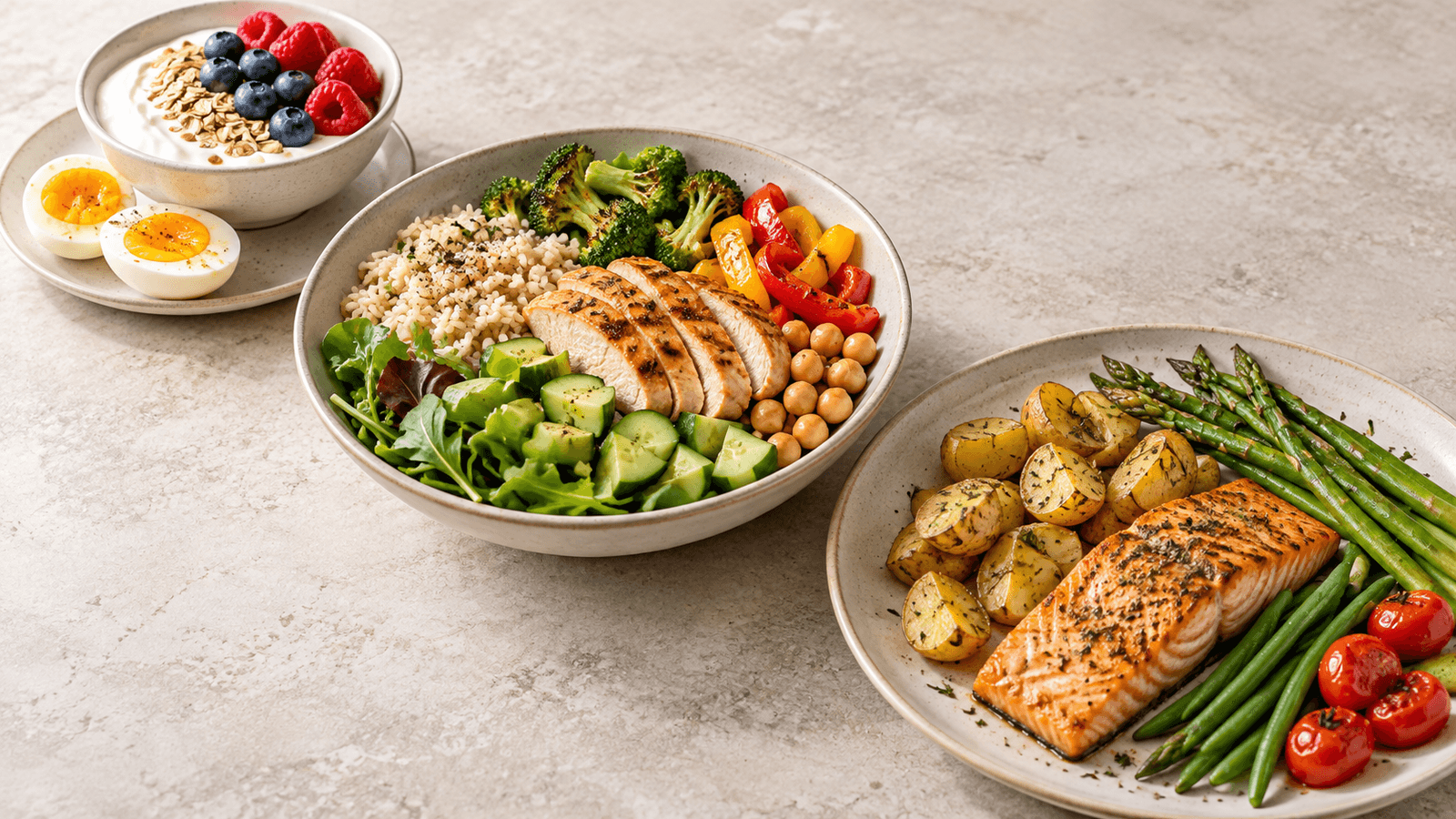
Eating more protein does not have to mean eating plain chicken breast at every meal.
A high-protein meal can be as simple as skyr with oats for breakfast, a chicken and rice bowl for lunch, salmon with potatoes for dinner or a tofu and edamame bowl if you prefer plant-based food.
The most useful approach is to build meals around a clear primary protein source and then add carbohydrates, vegetables, fruit and fats according to your preferences and goals.
Below are 25 practical high-protein meals covering breakfast, lunch and dinner, including quick, budget-friendly, vegetarian and vegan options.
Protein and calorie values are approximate. Actual nutrition depends on ingredients, brands, portions and preparation.
25 high-protein meals at a glance
| Meal | Approx. protein | Approx. calories |
|---|---|---|
| Skyr, oats and berries | ~30 g | ~350–450 kcal |
| Eggs, egg whites and toast | ~35 g | ~400–500 kcal |
| Cottage cheese breakfast bowl | ~30 g | ~350–450 kcal |
| Tofu scramble and toast | ~30 g | ~400–500 kcal |
| Greek yogurt protein oats | ~30–35 g | ~400–500 kcal |
| Chicken rice bowl | ~40–45 g | ~500–650 kcal |
| Turkey wrap | ~35–40 g | ~450–600 kcal |
| Tuna potato salad | ~35–40 g | ~450–550 kcal |
| Chicken lentil bowl | ~40–45 g | ~500–650 kcal |
| Tofu edamame rice bowl | ~30–35 g | ~500–650 kcal |
| Lean beef potato bowl | ~35–40 g | ~550–700 kcal |
| Chicken couscous salad | ~40 g | ~500–600 kcal |
| Lentil pasta with TVP | ~35–40 g | ~500–650 kcal |
| Cottage cheese baked potato | ~30–35 g | ~450–550 kcal |
| Chicken sandwich and skyr | ~40 g | ~500–650 kcal |
| Salmon, potatoes and asparagus | ~35–40 g | ~550–700 kcal |
| Chicken tray bake | ~40–45 g | ~500–650 kcal |
| Turkey chili | ~35–40 g | ~450–600 kcal |
| Cod, potatoes and vegetables | ~40 g | ~450–550 kcal |
| Lean beef rice bowl | ~35–40 g | ~550–700 kcal |
| Chicken pasta | ~40–45 g | ~550–700 kcal |
| Tofu and edamame stir-fry | ~30–35 g | ~500–650 kcal |
| Turkey meatballs and potatoes | ~35–40 g | ~500–650 kcal |
| Shrimp rice bowl | ~35–40 g | ~450–600 kcal |
| Tempeh and lentil bowl | ~30–35 g | ~550–700 kcal |
These meals are examples rather than fixed recipes.
Adjust portions according to your energy needs, protein target and appetite.
What makes a meal high in protein?
There is no official amount that turns a meal into a “high-protein meal” in every context.
A practical way to think about it is relative to your daily target.
If you need approximately 120 g of protein per day and eat three main meals, an average of around 40 g per meal would reach that target.
If you eat four times per day, something closer to 30 g per eating occasion could work.
For example:
| Daily target | 3 meals | 4 eating occasions |
|---|---|---|
| 90 g | ~30 g each | ~22–23 g each |
| 120 g | ~40 g each | ~30 g each |
| 150 g | ~50 g each | ~37–38 g each |
You do not need to divide protein perfectly evenly.
This is simply a useful planning framework.
Use the Mealisa Protein Calculator if you want an estimate based on your body weight and goal.
For protein relative to body weight, see How Much Protein Do You Need per kg of Body Weight?.
How to build a high-protein meal
A simple high-protein meal usually has four parts.
1. Choose the primary protein
Examples include:
- chicken
- turkey
- fish
- lean beef
- eggs
- cottage cheese
- skyr
- Greek yogurt
- tofu
- tempeh
- seitan
- TVP
- lentils
- beans
The primary protein should provide a meaningful part of the meal's total protein.
2. Add a carbohydrate source
Depending on the meal:
- rice
- potatoes
- oats
- pasta
- bread
- couscous
- quinoa
- legumes
Carbohydrates can provide energy and make the meal more satisfying.
3. Add vegetables or fruit
Examples include:
- broccoli
- peppers
- green beans
- spinach
- tomatoes
- cucumber
- berries
- apples
- other fruit
4. Add fat or sauce deliberately
Examples include:
- olive oil
- nuts
- seeds
- cheese
- avocado
- dressing
- sauce
These ingredients can improve flavor and nutrition, but portions matter because many are calorie-dense.
High-protein breakfast meals
1. Skyr, oats and berries
Combine:
- 250 g plain skyr
- 40–50 g oats
- berries
- optional seeds
Approximate protein:
~30 g
This is one of the simplest breakfasts when you want substantial protein without cooking.
Skyr provides most of the protein, while oats and berries add carbohydrate and fiber.
If you need more protein, increase the skyr portion or use a higher-protein dairy product.
2. Eggs, egg whites and whole-grain toast
Try:
- 2 whole eggs
- 150–200 g egg whites
- 1–2 slices whole-grain toast
- tomatoes or spinach
Approximate protein:
~35 g
Using both whole eggs and egg whites gives you the flavor and nutrients of whole eggs while increasing protein without needing five or six whole eggs.
3. Cottage cheese breakfast bowl
Combine:
- 250 g cottage cheese
- berries or another fruit
- a small portion of oats
- cinnamon
Approximate protein:
~30 g
For a savory version, replace the fruit with:
- cucumber
- tomatoes
- herbs
- whole-grain toast
4. Tofu scramble and toast
Use:
- 200–250 g firm tofu
- peppers
- spinach
- mushrooms
- whole-grain toast
Approximate protein:
~30 g, depending on the tofu and bread.
Tofu scramble is a useful vegan alternative to an egg-based breakfast.
5. Greek yogurt protein oats
Combine:
- 250 g high-protein Greek yogurt
- oats
- berries
- a little milk if needed
Approximate protein:
~30–35 g
Check the yogurt label because products marketed as Greek-style can vary considerably in protein.
For more breakfast options, see High-Protein Breakfast: 15 Easy Ideas to Start Your Day.
High-protein lunch meals
6. Chicken rice bowl
Use:
- 150 g cooked chicken breast
- rice
- broccoli
- peppers
- cucumber
- light yogurt-herb sauce
Approximate protein:
~40–45 g
This is an easy meal to adjust.
For fewer calories, increase vegetables and use a smaller rice portion.
For more energy, increase the rice or add another carbohydrate source.
7. Turkey wrap
Fill a whole-grain wrap with:
- cooked turkey breast
- lettuce
- tomato
- cucumber
- yogurt-based sauce
Approximate protein:
~35–40 g
Add a piece of fruit or vegetables on the side if you want more food volume.
8. Tuna potato salad
Combine:
- tuna in water
- boiled potatoes
- cucumber
- tomatoes
- red onion
- yogurt-based dressing
Approximate protein:
~35–40 g
Potatoes can make the meal satisfying without requiring a large amount of added fat.
9. Chicken lentil bowl
Use:
- chicken breast
- cooked lentils
- vegetables
- light dressing
Approximate protein:
~40–45 g
Because both chicken and lentils provide protein, you can use a somewhat smaller chicken portion while still reaching a substantial meal total.
10. Tofu edamame rice bowl
Combine:
- 150–200 g firm tofu
- edamame
- rice
- broccoli
- cucumber
- peppers
Approximate protein:
~30–35 g
This is one of the easiest ways to create a substantial vegan protein meal without protein powder.
11. Lean beef potato bowl
Use:
- lean beef
- roasted or boiled potatoes
- green vegetables
- tomatoes
Approximate protein:
~35–40 g
Choose leaner beef when you want to keep calories more moderate.
12. Chicken couscous salad
Combine:
- chicken breast
- couscous
- cucumber
- tomatoes
- peppers
- leafy greens
Approximate protein:
~40 g
This works well cold, making it useful for work or meal prep.
13. Lentil pasta with TVP
Use:
- lentil pasta
- TVP
- tomato sauce
- vegetables
Approximate protein:
~35–40 g
Both the pasta and TVP contribute meaningful protein.
This is a useful vegan option when you want a familiar pasta-style meal.
14. Cottage cheese baked potato
Top a baked potato with:
- 250 g cottage cheese
- herbs
- cucumber or salad vegetables
Approximate protein:
~30–35 g
The cottage cheese provides most of the protein.
Choose low-fat cottage cheese if you want to reduce calories.
15. Chicken sandwich and skyr
Make a sandwich using:
- whole-grain bread
- cooked chicken breast
- lettuce
- tomato
- mustard or light sauce
Serve with plain skyr.
Approximate protein:
~40 g
This can be more practical than a traditional hot lunch when you need something quick.
For more options, see High-Protein Lunch: 20 Easy Ideas for a Protein-Rich Meal.
High-protein dinner meals
16. Salmon, potatoes and asparagus
Use:
- 150–180 g salmon
- roasted potatoes
- asparagus
- green beans
Approximate protein:
~35–40 g
Salmon is more calorie-dense than white fish but provides omega-3 fatty acids and can still fit comfortably into many diets.
17. Chicken tray bake
Roast together:
- chicken breast
- potatoes
- broccoli
- peppers
- zucchini
Approximate protein:
~40–45 g
A tray bake requires relatively little active cooking and is easy to prepare in larger portions.
18. Turkey chili
Make chili with:
- lean ground turkey
- kidney or black beans
- tomatoes
- peppers
- onion
Approximate protein:
~35–40 g
The combination of turkey and beans provides substantial protein and fiber.
19. Cod, potatoes and vegetables
Use:
- 180–200 g cod
- potatoes
- green beans
- broccoli
Approximate protein:
~40 g
Cod is very lean, so this meal can provide substantial protein while leaving room for a generous potato and vegetable portion.
20. Lean beef rice bowl
Combine:
- lean beef
- rice
- broccoli
- peppers
- green beans
Approximate protein:
~35–40 g
Measure cooking oil and sauces if you are tracking calories because they can substantially change the meal total.
21. Chicken pasta
Use:
- chicken breast
- pasta
- tomato-based sauce
- vegetables
Approximate protein:
~40–45 g
You do not need special high-protein pasta when the meal already contains a substantial chicken portion.
Lentil pasta can increase the protein further if desired.
22. Tofu and edamame stir-fry
Combine:
- firm tofu
- edamame
- broccoli
- peppers
- other vegetables
- rice or noodles
Approximate protein:
~30–35 g
Be deliberate with cooking oil because tofu can absorb a substantial amount.
23. Turkey meatballs and potatoes
Serve lean turkey meatballs with:
- roasted potatoes
- green beans
- tomato-based sauce
Approximate protein:
~35–40 g
This works well for meal prep because both the meatballs and potatoes can be prepared in batches.
24. Shrimp rice bowl
Combine:
- 150–180 g cooked shrimp
- rice
- vegetables
- light sauce
Approximate protein:
~35–40 g
Shrimp provides substantial protein for relatively few calories.
25. Tempeh and lentil bowl
Combine:
- 100–150 g tempeh
- cooked lentils
- roasted vegetables
- greens
Approximate protein:
~30–35 g
This provides a completely plant-based meal with protein from both soy and legumes.
For more dinner ideas, see High-Protein Dinner: 20 Easy Ideas for a Protein-Rich Meal.
Easy high-protein meals under 15 minutes
Not every high-protein meal requires meal prep.
Quick options include:
Tuna potato bowl
Use pre-cooked potatoes, canned tuna and salad vegetables.
Cottage cheese toast
Serve cottage cheese on whole-grain toast with tomatoes and cucumber.
Skyr oats
Mix skyr, oats and berries.
Chicken wrap
Use previously cooked chicken with a wrap and vegetables.
Tofu stir-fry
Use pre-cut vegetables and tofu.
Egg and cottage cheese plate
Combine boiled eggs, cottage cheese, vegetables and bread.
Convenience can be part of a sustainable diet.
High-protein meals for weight loss
When weight loss is the goal, prioritize meals that provide substantial protein without using your entire calorie budget.
A simple structure is:
lean protein + plenty of vegetables + moderate carbohydrate portion + measured fat or sauce
Examples include:
- chicken + potatoes + broccoli
- cod + rice + green beans
- tuna + potatoes + salad
- skyr + berries + oats
- tofu + edamame + vegetables
For a dedicated guide, see High-Protein Foods for Weight Loss: 25 Best Choices.
You can also compare Low-Calorie High-Protein Foods.
High-protein meals for muscle building
When building muscle, protein is only part of the equation.
You also need:
- resistance training
- enough total calories
- adequate carbohydrate
- recovery
- progressive training
Meals can therefore be somewhat larger.
Examples include:
- chicken + rice + vegetables
- lean beef + potatoes
- salmon + rice
- turkey pasta
- tofu + edamame + rice
- lentil pasta + TVP
See How Much Protein Do You Need to Build Muscle?.
Cheap high-protein meals
Affordable meals can be built around:
- eggs
- chicken
- canned tuna
- cottage cheese
- quark
- lentils
- beans
- tofu
- TVP
Examples include:
Lentil and chicken soup
A small amount of chicken can substantially increase the protein in an inexpensive lentil-based meal.
TVP chili
Combine TVP with beans and tomatoes.
Eggs, potatoes and cottage cheese
All three ingredients can be relatively inexpensive depending on local prices.
Tofu rice bowl
Use tofu, rice and frozen vegetables.
For more budget options, see Cheap High-Protein Foods: 30 Budget-Friendly Protein Sources.
Vegetarian high-protein meals
Useful vegetarian meals include:
- egg and cottage cheese breakfast
- skyr oats
- tofu and edamame bowl
- lentil pasta with cottage cheese sauce
- tempeh rice bowl
- eggs, potatoes and vegetables
- tofu curry
- cottage cheese baked potato
See 25 High-Protein Vegetarian Foods.
Vegan high-protein meals
Useful vegan combinations include:
- tofu + edamame + rice
- tempeh + lentils
- seitan + potatoes + vegetables
- TVP chili + beans
- lentil pasta + TVP
- tofu scramble + toast
- seitan wrap
- tempeh stir-fry
See 25 High-Protein Vegan Foods.
High-protein low-carb meals
If you prefer to eat fewer carbohydrates, build meals around:
- chicken
- fish
- lean beef
- eggs
- cottage cheese
- tofu
- seitan
and add non-starchy vegetables.
Examples include:
- chicken + broccoli + zucchini
- salmon + asparagus + green beans
- eggs + cottage cheese + vegetables
- tofu + edamame + vegetables
- lean beef + peppers + mushrooms
A low-carbohydrate diet is not necessary for weight loss or a high-protein diet.
See High-Protein Low-Carb Foods: 25 Best Options.
High-protein meals without protein powder
Protein powder is optional.
A normal meal can easily provide 30–50 g of protein from food.
For example:
Chicken meal
150 g cooked chicken breast can provide roughly 45 g protein before counting anything else on the plate.
Skyr breakfast
250 g skyr plus oats may provide around 30 g.
Tofu and edamame bowl
A generous tofu serving plus edamame can provide 30 g or more.
Turkey chili
Turkey and beans can provide 35–40 g in a normal serving.
Protein powder can be useful for convenience, but it is not required.
How to make a normal meal higher in protein
You do not always need to replace the entire meal.
Small changes can make a large difference.
Increase the main protein portion
If your bowl contains only 70 g of chicken, increasing it to 120–150 g can substantially increase protein.
Add a second protein source
Examples:
- chicken + lentils
- tofu + edamame
- eggs + cottage cheese
- yogurt + soy milk
- lentil pasta + TVP
Replace a low-protein ingredient
Examples:
- ordinary yogurt → skyr
- low-protein plant drink → soy milk
- conventional pasta → lentil pasta
- sour-cream-style topping → cottage cheese or high-protein yogurt where appropriate
Use leftovers strategically
Cook extra chicken, tofu, turkey or fish and use it in the next day's meal.
How much protein should each meal contain?
Your daily target matters more than forcing every meal to contain an identical amount.
Still, a useful target for many people is around 25–40 g per main meal.
Someone with a higher daily requirement may need:
- larger portions
- an additional snack
- four eating occasions
- more protein-dense foods
For example, a 150 g daily target could look like:
- breakfast: 35 g
- lunch: 45 g
- snack: 25 g
- dinner: 45 g
Total:
150 g protein
Can one meal contain too much protein?
Your body does not simply discard all protein above a small fixed amount.
Protein from a meal can still be digested and absorbed.
However, eating nearly all of your daily protein in one enormous meal may be less practical than spreading it across several meals, especially for:
- appetite
- meal size
- training nutrition
- dietary variety
For most people, there is no need to obsess over an exact protein limit per meal.
Are high-protein meals automatically healthy?
No.
“High protein” describes one nutritional characteristic.
A meal could contain plenty of protein and still be:
- very high in calories
- low in fiber
- low in vegetables
- high in sodium
- dominated by highly processed foods
A balanced high-protein meal should still consider the rest of the diet.
Do high-protein meals have to be low carb?
No.
Protein and carbohydrate are separate macronutrients.
Meals such as:
- chicken and rice
- fish and potatoes
- yogurt and oats
- turkey pasta
- tofu and noodles
can be high in protein while still containing substantial carbohydrate.
Do high-protein meals have to be low calorie?
No.
A high-protein meal can be designed for:
- weight loss
- weight maintenance
- muscle gain
- athletic performance
A meal for someone intentionally gaining weight may contain much more energy than a meal for someone in a calorie deficit.
The protein source can be similar while the portions of carbohydrates, fats and sauces change.
High-protein meal prep
Preparing protein in advance can make high-protein eating much easier.
A flexible meal-prep system might include:
Protein 1: grilled chicken
Protein 2: tofu or turkey
Carbohydrate 1: rice
Carbohydrate 2: potatoes
Vegetables: broccoli, peppers and green beans
Then create different combinations instead of preparing five identical meals.
See High-Protein Meal Prep: 15 Easy Ideas for the Week.
Example high-protein day
Here is one example targeting roughly 120 g of protein.
| Meal | Example | Approx. protein |
|---|---|---|
| Breakfast | Skyr, oats and berries | ~30 g |
| Lunch | Chicken rice vegetable bowl | ~40 g |
| Snack | Cottage cheese and fruit | ~20 g |
| Dinner | Salmon, potatoes and vegetables | ~35 g |
| Total | ~125 g |
This is not a universal meal plan.
Adjust food choices and portions according to your own needs.
For a complete weekly example, see 7-Day High-Protein Meal Plan.
Common mistakes when building high-protein meals
1. Starting with carbohydrates and adding only a tiny amount of protein
A huge pasta bowl with a few pieces of chicken may still provide less protein than expected.
Start by deciding on the protein portion.
2. Assuming nuts are a primary protein source
Nuts contain protein, but they also contain substantial fat and calories.
They are useful foods, but usually inefficient as the main protein source of a high-protein meal.
3. Adding too much oil
Cooking oil can substantially increase calories without increasing protein.
4. Relying on protein bars for meals
Bars can be convenient, but they do not need to replace normal meals.
5. Eating the same meal every day
Variety makes a diet easier to maintain and helps provide a broader range of nutrients.
6. Removing all carbohydrates
Carbohydrates are compatible with high-protein eating.
7. Forgetting vegetables and fiber
Protein is only one component of a balanced diet.
8. Chasing the highest possible protein number
More is not automatically better.
Aim for an appropriate target rather than maximizing protein at every opportunity.
Frequently asked questions
What meals are highest in protein?
Meals built around chicken, turkey, lean beef, fish, seitan, tofu, cottage cheese or combinations of protein foods can easily provide 30–50 g of protein or more.
What is an easy high-protein meal?
A chicken rice bowl, tuna potato salad, skyr with oats, eggs with egg whites, tofu and edamame bowl or cottage cheese baked potato can all be simple options.
What can I eat for 30 g of protein?
Examples include:
- 250 g skyr with oats
- eggs plus egg whites
- a substantial serving of cottage cheese
- tofu plus edamame
- chicken in a wrap
- seitan with vegetables
Exact amounts vary by product and portion.
What can I eat for 40 g of protein?
Examples include:
- 150 g cooked chicken breast with sides
- cod with potatoes and vegetables
- turkey chili
- chicken pasta
- lean beef bowl
What high-protein meals are good for weight loss?
Meals based on lean protein, vegetables and controlled portions of calorie-dense ingredients can be useful.
Examples include chicken with potatoes and broccoli, cod with vegetables, skyr with berries and tofu with edamame.
What high-protein meals are vegetarian?
Examples include tofu bowls, egg and cottage cheese meals, skyr breakfasts, tempeh bowls and cottage cheese baked potatoes.
What high-protein meals are vegan?
Examples include tofu and edamame bowls, seitan meals, TVP chili, lentil pasta with TVP and tempeh with lentils.
Can I eat high-protein meals without meat?
Yes.
Eggs, dairy, tofu, tempeh, seitan, TVP, legumes and soy foods can all contribute substantial protein.
Can I eat high-protein meals without dairy?
Yes.
Use meat, fish, eggs, tofu, tempeh, seitan, TVP, edamame, legumes or dairy-free high-protein soy products.
Can I eat high-protein meals without eggs?
Yes.
Eggs are only one of many protein sources.
Do I need protein powder?
No.
Protein powder is convenient but not required.
Is 30 g of protein per meal enough?
It can be.
Whether it is enough depends on your total daily requirement and how many times you eat.
Three meals containing 30 g each provide 90 g per day.
Is 40 g of protein per meal too much?
For most healthy adults, 40 g of protein in a meal is not inherently excessive.
Your appropriate daily intake depends on your individual needs.
Bottom line
High-protein meals do not need to be complicated, repetitive or built around supplements.
A simple formula works well:
choose a substantial protein source, add vegetables or fruit, include an appropriate carbohydrate portion, and add fats or sauces deliberately.
Breakfast might be:
- skyr and oats
- eggs and egg whites
- cottage cheese
- tofu scramble
Lunch might be:
- chicken rice bowl
- turkey wrap
- tuna potato salad
- tofu edamame bowl
Dinner might be:
- salmon and potatoes
- chicken tray bake
- turkey chili
- cod and vegetables
- tempeh and lentils
Start with an appropriate daily target using the Mealisa Protein Calculator.
Then divide that target across the number of meals you actually prefer to eat.
For individual meal inspiration, explore High-Protein Breakfast, High-Protein Lunch and High-Protein Dinner.
For preparing several meals at once, see High-Protein Meal Prep.
For a full week, see the 7-Day High-Protein Meal Plan.
Nutrition values are approximate and vary by ingredients, brands, serving sizes and preparation. This article provides general nutrition information for healthy adults and is not individualized medical or dietetic advice.