
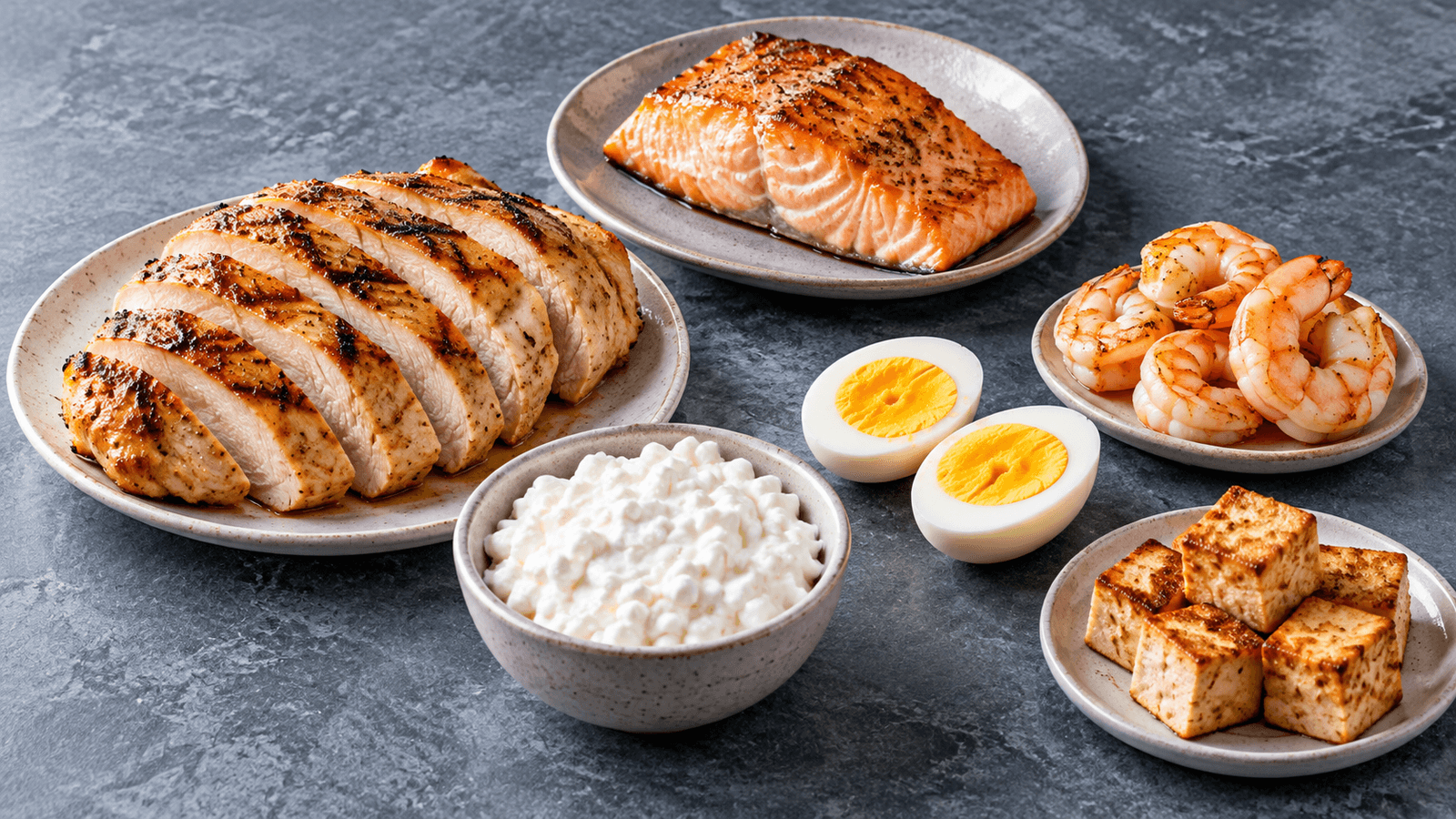
High-protein, low-carb foods can make it easier to increase protein without adding a large amount of carbohydrate to every meal.
Many familiar protein foods naturally fit this description: chicken, turkey, fish, seafood, eggs, cottage cheese, skyr, Greek yogurt, tofu, tempeh and seitan.
But "low carb" does not have one universally accepted definition. Research uses several different thresholds, and a low-carbohydrate diet is not the same thing as a ketogenic diet.
For this guide, the focus is practical: foods that provide a meaningful amount of protein while containing relatively little carbohydrate in a typical serving.
You do not need to follow a low-carb diet to use these foods. They can simply help you build meals where protein is the priority and carbohydrates are adjusted according to your needs.
Nutrition values are approximate and vary by brand, cut, preparation and serving size. Check the nutrition label when precise tracking matters.
25 high-protein low-carb foods at a glance
| Food | Example serving | Approx. protein | Approx. carbs |
|---|---|---|---|
| Chicken breast | 150 g cooked | ~45 g | ~0 g |
| Turkey breast | 150 g cooked | ~40–45 g | ~0 g |
| Lean beef | 150 g cooked | ~35–40 g | ~0 g |
| Pork tenderloin | 150 g cooked | ~35–40 g | ~0 g |
| Cod | 180 g cooked | ~38–42 g | ~0 g |
| Tuna | 150 g drained | ~35–40 g | ~0 g |
| Salmon | 150 g cooked | ~30–35 g | ~0 g |
| Shrimp | 150 g cooked | ~30–35 g | ~0–2 g |
| Sardines | 100 g | ~23–25 g | ~0 g |
| Eggs | 3 large | ~18–21 g | ~1–2 g |
| Egg whites | 200 g | ~20–22 g | ~1–2 g |
| Cottage cheese | 200 g | ~22–26 g | ~6–10 g |
| Skyr | 200 g | ~20–22 g | ~7–10 g |
| High-protein Greek yogurt | 200 g | ~18–20 g | ~6–10 g |
| Quark | 200 g | ~20–26 g | ~6–10 g |
| Reduced-fat cheese | 100 g | ~25–30 g | ~1–4 g |
| Firm tofu | 150 g | ~18–24 g | ~2–6 g |
| Tempeh | 100 g | ~18–20 g | ~5–10 g |
| Seitan | 100 g | ~20–25 g | ~5–12 g |
| Edamame | 150 g cooked | ~16–18 g | ~10–15 g total carbs |
| Lupini beans | 100 g | ~15–16 g | varies |
| High-protein soy yogurt | 200 g | ~10–16 g | varies |
| Unsweetened soy milk | 300 ml | ~9–11 g | ~2–6 g |
| Protein powder | 30 g | ~20–25 g | ~1–5 g |
| Lean deli turkey or chicken | 100 g | ~18–25 g | ~1–5 g |
The table is not a ranking. The best choice depends on your calorie needs, dietary preferences, budget and the rest of your diet.
What does low carb actually mean?
There is no single universally accepted scientific definition of a low-carbohydrate diet.
Different studies use different thresholds.
A commonly used framework describes:
- very low carbohydrate: roughly 20–50 g per day
- low carbohydrate: roughly 50–130 g per day
- moderate carbohydrate: above that range but below conventional higher-carbohydrate patterns
Other research defines carbohydrate intake using a percentage of total calories instead of grams.
That means a food can reasonably be described as low in carbohydrate without implying that the entire diet must be ketogenic.
This article therefore focuses on individual foods rather than prescribing a specific carbohydrate target.
High protein and low carb are not the same thing
A food can be high in protein without being low in carbohydrates.
Examples include:
- lentils
- beans
- chickpeas
- high-protein pasta
These are nutritious foods and useful protein sources, but they also provide substantial carbohydrate.
Likewise, a food can be low in carbohydrates without being high in protein.
Examples include:
- olive oil
- butter
- avocado
- many non-starchy vegetables
The most useful foods for this guide provide both substantial protein and relatively little carbohydrate.
1. Chicken breast
Chicken breast is one of the simplest high-protein, low-carb foods.
A 150 g cooked serving can provide roughly:
- 45 g protein
- 0 g carbohydrate
It works in:
- salads
- bowls
- stir-fries
- wraps
- tray bakes
- curries
Chicken breast is also relatively lean, making it useful when you want high protein without a large amount of calories from fat.
2. Turkey breast
Turkey breast has a similar nutritional profile.
A 150 g cooked serving can provide approximately:
- 40–45 g protein
- 0 g carbohydrate
Use it with vegetables, salads, eggs or lower-carb side dishes.
When buying processed turkey slices, check the label because some products contain added sugar, starch or other carbohydrate-containing ingredients.
3. Lean beef
Lean beef can provide approximately 35–40 g of protein per 150 g cooked serving with essentially no carbohydrate before sauces or coatings are added.
Useful choices include:
- lean steak
- lean ground beef
- trimmed beef cuts
The fat content can vary substantially between cuts.
Choose leaner options when protein relative to calories is the priority.
4. Pork tenderloin
Pork tenderloin is considerably leaner than many people assume.
A 150 g cooked portion can provide approximately 35–40 g of protein with virtually no carbohydrate.
Serve it with vegetables, salad or another side that matches your carbohydrate target.
5. Cod
Cod and other lean white fish are particularly protein-dense.
A 180 g cooked serving may provide around:
- 38–42 g protein
- 0 g carbohydrate
Cod is also relatively low in fat.
This makes it useful when you want a large protein serving while leaving room for calories from other parts of the meal.
6. Tuna
A 150 g serving of drained tuna can provide approximately 35–40 g of protein and virtually no carbohydrate.
Tuna works well in:
- salads
- lettuce wraps
- egg dishes
- vegetable bowls
Canned tuna is also convenient because it requires almost no preparation.
If you eat tuna frequently, variety among fish and protein sources is sensible rather than relying on one fish every day.
7. Salmon
A 150 g cooked salmon fillet provides roughly 30–35 g of protein with essentially no carbohydrate.
Salmon contains more fat and calories than cod or tuna, but much of its fat includes unsaturated fatty acids, including omega-3s.
Low carb does not have to mean low fat, but your total calorie intake can still matter depending on your goals.
8. Shrimp
A 150 g cooked serving of shrimp can provide around 30–35 g of protein with very little carbohydrate.
Shrimp is useful in:
- salads
- stir-fries
- vegetable bowls
- soups
Watch the carbohydrate content of breading and sweet sauces, which can change the nutritional profile substantially.
9. Sardines
A 100 g serving of sardines can provide roughly 23–25 g of protein and almost no carbohydrate.
Sardines also provide omega-3 fatty acids.
They can be served with:
- salad
- eggs
- vegetables
- lower-carb crackers if desired
Canned sardines are inexpensive and shelf-stable.
10. Eggs
Three large eggs provide approximately:
- 18–21 g protein
- 1–2 g carbohydrate
Eggs are naturally very low in carbohydrate.
They work for breakfast, lunch or dinner.
However, whole eggs contain both protein and fat, so eating many extra eggs is not always the most calorie-efficient way to raise protein.
11. Egg whites
Egg whites provide protein with very little carbohydrate or fat.
Around 200 g can provide approximately:
- 20–22 g protein
- 1–2 g carbohydrate
A useful approach is combining whole eggs with egg whites.
For example:
- 2 whole eggs
- 150–200 g egg whites
- vegetables
This gives you the flavor and nutrients of whole eggs while increasing total protein.
12. Cottage cheese
A 200 g serving of cottage cheese can provide approximately:
- 22–26 g protein
- 6–10 g carbohydrate
Exact numbers vary between brands.
Cottage cheese works well with:
- cucumber
- tomatoes
- herbs
- eggs
- berries in moderate portions
Lower-fat versions can also be useful when calories are limited.
13. Skyr
A 200 g serving of plain skyr commonly provides:
- 20–22 g protein
- 7–10 g carbohydrate
This makes skyr one of the easiest high-protein dairy foods.
Choose plain versions if you want to minimize added sugars.
Flavored varieties can contain considerably more carbohydrate.
14. High-protein Greek yogurt
A 200 g serving may provide roughly:
- 18–20 g protein
- 6–10 g carbohydrate
Not every Greek-style yogurt is high in protein.
Some products are primarily higher-fat yogurt with only moderate protein, so compare labels.
Plain high-protein versions are usually the easiest fit for a lower-carbohydrate diet.
15. Quark
Quark is particularly useful in Germany and other European markets where it is widely available.
A 200 g serving can provide roughly:
- 20–26 g protein
- 6–10 g carbohydrate
Low-fat quark can provide substantial protein for relatively few calories.
Use it:
- with herbs
- with cucumber
- as a dip
- with a small amount of fruit
- in savory sauces
16. Reduced-fat cheese
Some reduced-fat cheeses provide around 25–30 g of protein per 100 g with only a few grams of carbohydrate.
Cheese can therefore be both high in protein and low in carbs.
However, it can still contain substantial calories and saturated fat.
Think of cheese as one useful protein source rather than assuming unlimited amounts are automatically beneficial because the carbohydrate content is low.
17. Firm tofu
A 150 g serving of firm tofu may provide approximately:
- 18–24 g protein
- 2–6 g carbohydrate
The exact numbers vary significantly by product.
Extra-firm tofu usually contains more protein because more water has been removed.
Use it in:
- stir-fries
- curries
- salads
- bowls
- tofu scramble
18. Tempeh
Tempeh commonly provides around 18–20 g of protein per 100 g.
Its carbohydrate content is generally higher than tofu but still moderate compared with many legumes or grains.
Tempeh works well in:
- stir-fries
- salads
- wraps
- bowls
It also provides fiber because it is made from whole fermented soybeans.
19. Seitan
Seitan is one of the most concentrated plant-based protein foods.
A 100 g serving can provide roughly 20–25 g of protein.
Carbohydrate content varies by recipe and brand but can remain relatively low.
Check packaged products because sauces and seasonings may add carbohydrates.
Seitan is made from wheat gluten and is not suitable for people who need to avoid gluten.
20. Edamame
A 150 g cooked serving of edamame can provide approximately 16–18 g of protein.
Edamame contains more carbohydrate than meat, fish, eggs or tofu, but it can still fit into many moderately low-carbohydrate eating patterns.
It also provides fiber.
Use it:
- with tofu
- in salads
- in bowls
- as a snack
21. Lupini beans
Lupini beans are unusually protein-rich compared with many other legumes.
A 100 g serving can provide roughly 15–16 g of protein, although values vary significantly between products.
They can be eaten:
- as a snack
- in salads
- in bowls
Packaged lupini beans may contain substantial sodium, so check the label if sodium intake matters to you.
22. High-protein soy yogurt
High-protein soy yogurt can be useful for people avoiding dairy.
A 200 g serving may provide approximately 10–16 g of protein, depending on the product.
Carbohydrate content also varies considerably.
Choose unsweetened products when minimizing carbohydrates.
23. Unsweetened soy milk
A 300 ml serving of unsweetened soy milk can provide around:
- 9–11 g protein
- 2–6 g carbohydrate
Among common plant-based drinks, soy milk is often one of the more useful choices for protein.
Use it in:
- coffee
- smoothies
- sauces
- breakfast meals
Check the label because sweetened versions contain more carbohydrate.
24. Protein powder
A typical 30 g serving of whey, casein, soy or another protein powder may provide:
- 20–25 g protein
- 1–5 g carbohydrate
Protein powder is not necessary for a high-protein diet.
It is simply a convenient option when food alone does not fit your schedule or appetite.
Check labels because flavored powders vary in carbohydrate content.
25. Lean deli turkey or chicken
Lean sliced poultry can provide approximately 18–25 g of protein per 100 g, with relatively little carbohydrate.
It is convenient for:
- quick lunches
- snacks
- lettuce wraps
However, processed meat can contain significant sodium and some products contain added sugar or starch.
Whole cooked chicken or turkey is usually a less processed everyday option.
Best high-protein foods with almost zero carbs
If you want foods that naturally contain almost no carbohydrate, focus on unbreaded and unsweetened animal proteins.
Examples include:
- chicken
- turkey
- beef
- pork
- cod
- tuna
- salmon
- sardines
- shrimp
- eggs
These foods contain essentially no carbohydrate before sauces, marinades, breading or other ingredients are added.
Best vegetarian high-protein low-carb foods
Vegetarians have several useful options:
- eggs
- egg whites
- cottage cheese
- skyr
- Greek yogurt
- quark
- cheese
- tofu
- tempeh
- seitan
- edamame
For a more complete list, see 25 High-Protein Vegetarian Foods: Best Meat-Free Protein Sources.
Best vegan high-protein low-carb foods
Vegan choices are more limited but still practical.
Useful options include:
- tofu
- tempeh
- seitan
- edamame
- lupini beans
- high-protein soy yogurt
- unsweetened soy milk
- some plant-based protein powders
Seitan is especially protein-dense, while tofu can be useful when you want both relatively low carbohydrate and moderate calories.
High-protein low-carb foods for weight loss
A low-carbohydrate diet is not automatically a weight-loss diet.
Foods such as cheese, fatty meat, butter, oils and nuts can contain very little carbohydrate while still providing many calories.
If weight loss is the goal, total calorie intake remains important.
Useful high-protein choices that can make calorie control easier include:
- chicken breast
- turkey breast
- cod
- tuna
- shrimp
- egg whites
- low-fat cottage cheese
- skyr
- low-fat quark
- some firm tofu products
These foods provide substantial protein without requiring large amounts of calories from fat.
For more options, see Low-Calorie High-Protein Foods: 30 Foods for More Protein With Fewer Calories.
For protein targets during weight loss, read How Much Protein Should You Eat to Lose Weight?.
Does low carb cause more weight loss?
Reducing carbohydrate intake can help some people create an eating pattern they find easier to follow.
But carbohydrate restriction itself does not guarantee greater long-term weight loss.
When lower-carbohydrate and more balanced-carbohydrate weight-loss diets have been compared, research has generally found that differences in long-term weight loss are small when the diets are followed over time.
That means you do not need to remove carbohydrates simply because you want to lose weight.
A sustainable calorie deficit, adequate protein and an eating pattern you can maintain are more important than labeling the diet "low carb."
High-protein low-carb foods for muscle building
Protein is important for muscle growth, but carbohydrates do not need to be avoided.
If you perform resistance training, carbohydrate-containing foods can still contribute useful energy to your diet.
A lower-carb meal might include:
- chicken + vegetables
- salmon + asparagus
- beef + broccoli
- eggs + cottage cheese
- tofu + vegetables
A higher-carbohydrate meal might include the same protein source plus:
- rice
- potatoes
- pasta
- bread
- fruit
The right amount depends on your overall diet and training needs.
Read How Much Protein Do You Need to Build Muscle?.
High-protein low-carb breakfast ideas
Eggs and cottage cheese
Combine:
- 2–3 eggs
- cottage cheese
- vegetables
Depending on portions, this can provide 30 g or more of protein with relatively little carbohydrate.
Egg and egg-white omelet
Use:
- 2 whole eggs
- additional egg whites
- spinach
- mushrooms
This increases protein without requiring many whole eggs.
Skyr with a small amount of berries
Plain skyr provides substantial protein.
A modest berry portion adds flavor and fiber while keeping total carbohydrate relatively moderate.
Tofu scramble
Use firm tofu with vegetables and spices.
For more breakfast options, see High-Protein Breakfast: 15 Easy Ideas to Start Your Day.
High-protein low-carb lunch ideas
Chicken salad
Use:
- chicken breast
- leafy vegetables
- cucumber
- tomatoes
- yogurt-based dressing
Tuna and egg salad
Combine tuna, boiled eggs and vegetables.
Turkey lettuce wraps
Use large lettuce leaves instead of tortillas if you specifically want a lower-carbohydrate meal.
Tofu vegetable bowl
Use firm tofu with roasted or stir-fried non-starchy vegetables.
Cottage cheese plate
Combine cottage cheese with eggs and vegetables.
For more ideas, see High-Protein Lunch: 20 Easy Ideas for a Protein-Rich Meal.
High-protein low-carb dinner ideas
Salmon and asparagus
Serve salmon with asparagus and green beans.
Chicken and roasted vegetables
Use chicken breast with broccoli, zucchini and peppers.
Cod and vegetables
Lean white fish creates a particularly protein-dense dinner.
Beef and broccoli
Use lean beef with broccoli and a lower-sugar sauce.
Tofu stir-fry
Combine firm tofu with vegetables and a savory sauce.
For more dinner ideas, see High-Protein Dinner: 20 Easy Ideas for a Protein-Rich Meal.
High-protein low-carb snacks
Easy options include:
- boiled eggs
- cottage cheese
- skyr
- Greek yogurt
- quark
- turkey slices
- chicken pieces
- tuna
- tofu bites
- edamame
A snack does not need to contain zero carbohydrate to fit a lower-carb diet.
See High-Protein Snacks: 20 Easy Ideas to Keep You Satisfied.
How to build a high-protein low-carb meal
Use a simple three-part structure.
1. Choose the protein
Start with:
- chicken
- turkey
- fish
- seafood
- lean beef
- eggs
- cottage cheese
- tofu
- tempeh
- seitan
2. Add vegetables
Examples include:
- broccoli
- cauliflower
- zucchini
- spinach
- cucumber
- asparagus
- green beans
- mushrooms
- peppers
- leafy greens
3. Add fat according to your needs
Possible additions include:
- olive oil
- avocado
- cheese
- nuts
- seeds
But remember that fats are calorie-dense.
A meal does not become automatically healthier simply because it is low in carbohydrate.
What about rice, potatoes, bread and pasta?
These foods contain substantially more carbohydrate, so they do not fit a strict low-carb meal in large portions.
But that does not mean they are unhealthy.
If your goal is simply to prioritize protein rather than follow a strict carbohydrate limit, you can still include moderate portions of:
- potatoes
- rice
- whole-grain bread
- pasta
- oats
- fruit
- legumes
For example, a chicken meal can remain protein-rich whether you serve it with broccoli alone or with broccoli and potatoes.
The carbohydrate amount is something you can adjust rather than automatically eliminate.
Are beans high protein and low carb?
Beans are high in nutrients and provide meaningful protein, but most beans are not especially low in total carbohydrate.
For example, a serving of beans can provide both:
- substantial carbohydrate
- useful protein
- significant fiber
This can make beans an excellent food without making them the best example of a strict high-protein, low-carb food.
Lupini beans and soy foods tend to provide a more favorable protein-to-carbohydrate ratio than many common beans.
Are nuts high protein and low carb?
Many nuts are relatively low in carbohydrate and contain some protein.
However, they are also high in fat and calories.
A small serving of nuts may provide only around 5–8 g of protein.
They can contribute to protein intake, but they are usually less efficient as the main protein source than chicken, fish, dairy, tofu, seitan or eggs.
Is cheese high protein and low carb?
Many cheeses are naturally low in carbohydrate and provide substantial protein.
However, some cheeses are also high in calories, saturated fat and sodium.
If your goal is high protein with moderate calories, compare:
- protein
- calories
- fat
rather than looking only at carbohydrate.
Is Greek yogurt low carb?
Plain Greek yogurt can be relatively low in carbohydrate while providing substantial protein.
However, flavored yogurts may contain added sugars.
Check the label.
A product with around 18–20 g of protein and relatively little added sugar can be a useful option.
Is cottage cheese low carb?
Cottage cheese generally contains much less carbohydrate than foods such as bread, rice or pasta while providing substantial protein.
Exact carbohydrate content varies by product.
Plain versions are usually the simplest option when carbohydrate intake matters.
Is tofu low carb?
Most firm tofu is relatively low in carbohydrate and can provide a meaningful amount of protein.
The exact protein and carbohydrate values vary significantly depending on how much water the tofu contains.
Extra-firm tofu often provides more protein per 100 g.
Low carb does not mean no vegetables
Vegetables can still play a major role in a lower-carbohydrate eating pattern.
Non-starchy vegetables such as:
- broccoli
- spinach
- zucchini
- cucumber
- cauliflower
- mushrooms
- asparagus
- leafy greens
provide fiber, vitamins, minerals and food volume.
There is generally no need to build a low-carb diet entirely from meat, eggs and cheese.
Low carb does not mean keto
A ketogenic diet is a much more restrictive form of carbohydrate reduction.
Someone eating 80–120 g of carbohydrate per day may reasonably describe their diet as lower-carb but would not necessarily be following a ketogenic diet.
Likewise, choosing a low-carb lunch does not mean the rest of your day must be low carb.
You can use high-protein low-carb foods simply because they help you reach your protein target efficiently.
Common mistakes with high-protein low-carb diets
1. Thinking low carb automatically means low calorie
Cheese, oils, nuts, fatty meat and cream can make a meal extremely calorie-dense while containing almost no carbohydrate.
2. Removing vegetables
Carbohydrate restriction does not require eliminating nutrient-dense vegetables.
3. Eating only meat and cheese
A varied diet provides a broader range of nutrients and fiber.
4. Ignoring sauces and marinades
Sweet sauces, glazes and breading can add substantial carbohydrate.
5. Assuming all yogurt is low carb
Flavored yogurt can contain significant added sugar.
6. Confusing high fat with high protein
Butter, oil and avocado are low in carbohydrate but are not high-protein foods.
7. Cutting carbohydrates more than necessary
If your goal is simply eating more protein, you may not need a strict low-carb diet at all.
8. Ignoring your total protein target
Choosing low-carb foods does not automatically guarantee enough protein.
Use the Mealisa Protein Calculator to estimate your daily target.
Example high-protein lower-carb day
Here is one possible example:
| Meal | Example | Approx. protein |
|---|---|---|
| Breakfast | Eggs, egg whites and vegetables | ~30 g |
| Lunch | Chicken salad with yogurt dressing | ~40 g |
| Snack | Skyr | ~20 g |
| Dinner | Salmon with asparagus and green beans | ~35 g |
| Total | ~125 g |
The exact carbohydrate total would depend on portions and ingredients.
This is only an example, not a required meal plan.
Can you eat high protein without going low carb?
Absolutely.
A high-protein diet can include:
- rice
- potatoes
- oats
- fruit
- bread
- pasta
- legumes
alongside protein-rich foods.
For example:
Chicken + rice + vegetables can be high protein.
Skyr + oats + berries can be high protein.
Salmon + potatoes + vegetables can be high protein.
High protein describes protein intake. It does not require carbohydrate restriction.
Frequently asked questions
What foods are high in protein and low in carbs?
Examples include chicken, turkey, lean beef, fish, shrimp, eggs, cottage cheese, skyr, Greek yogurt, quark, tofu, tempeh and seitan.
What high-protein food has almost no carbs?
Unbreaded meat, poultry, fish and many seafood products naturally contain essentially no carbohydrate.
Eggs also contain very little carbohydrate.
What are the best high-protein low-carb foods for weight loss?
Lean choices such as chicken breast, turkey, cod, tuna, shrimp, egg whites, low-fat cottage cheese, skyr and quark can provide substantial protein with moderate calories.
What vegetarian foods are high protein and low carb?
Eggs, egg whites, cottage cheese, skyr, Greek yogurt, quark, tofu, tempeh and seitan are useful options.
What vegan foods are high protein and low carb?
Tofu, tempeh, seitan, edamame, lupini beans and some high-protein soy products can fit.
Are eggs high protein and low carb?
Yes. Eggs provide meaningful protein and very little carbohydrate.
Is chicken low carb?
Plain chicken contains essentially no carbohydrate. Breading, sauces and marinades can add carbohydrates.
Is salmon low carb?
Plain salmon contains essentially no carbohydrate and provides substantial protein.
Can I eat fruit on a low-carb diet?
That depends on your carbohydrate target.
A moderately lower-carb diet may include fruit, while a very-low-carbohydrate or ketogenic diet may restrict portions more significantly.
Do I need to avoid all carbs to lose weight?
No.
Weight loss does not require eliminating carbohydrates.
A sustainable calorie deficit and an eating pattern you can maintain are more important than avoiding a single macronutrient.
Is low carb better than a balanced diet for weight loss?
Research comparing low-carbohydrate and balanced-carbohydrate weight-loss diets has generally found little to no meaningful difference in weight loss over the longer term when both approaches are followed.
Individual preference and adherence therefore matter.
Bottom line
High-protein low-carb foods include many familiar options:
- chicken
- turkey
- lean beef
- fish
- seafood
- eggs
- cottage cheese
- skyr
- Greek yogurt
- quark
- tofu
- tempeh
- seitan
These foods can make it easier to increase protein while keeping carbohydrate intake relatively moderate.
But you do not need to eliminate carbohydrates to eat a high-protein diet.
Rice, potatoes, oats, fruit, legumes and whole grains can still fit into a healthy diet depending on your preferences, activity and goals.
The most useful approach is to determine your protein target first and then choose the amount of carbohydrate that works for your overall eating pattern.
Use the Mealisa Protein Calculator to estimate your daily protein needs.
For more protein options, see High-Protein Foods: 30 Foods to Help You Eat More Protein.
For lower-calorie choices, see Low-Calorie High-Protein Foods.
For vegetarian options, see 25 High-Protein Vegetarian Foods.
Nutrition values are approximate and vary by product, serving size and preparation. This article provides general nutrition information for healthy adults and is not individualized medical or dietetic advice.