
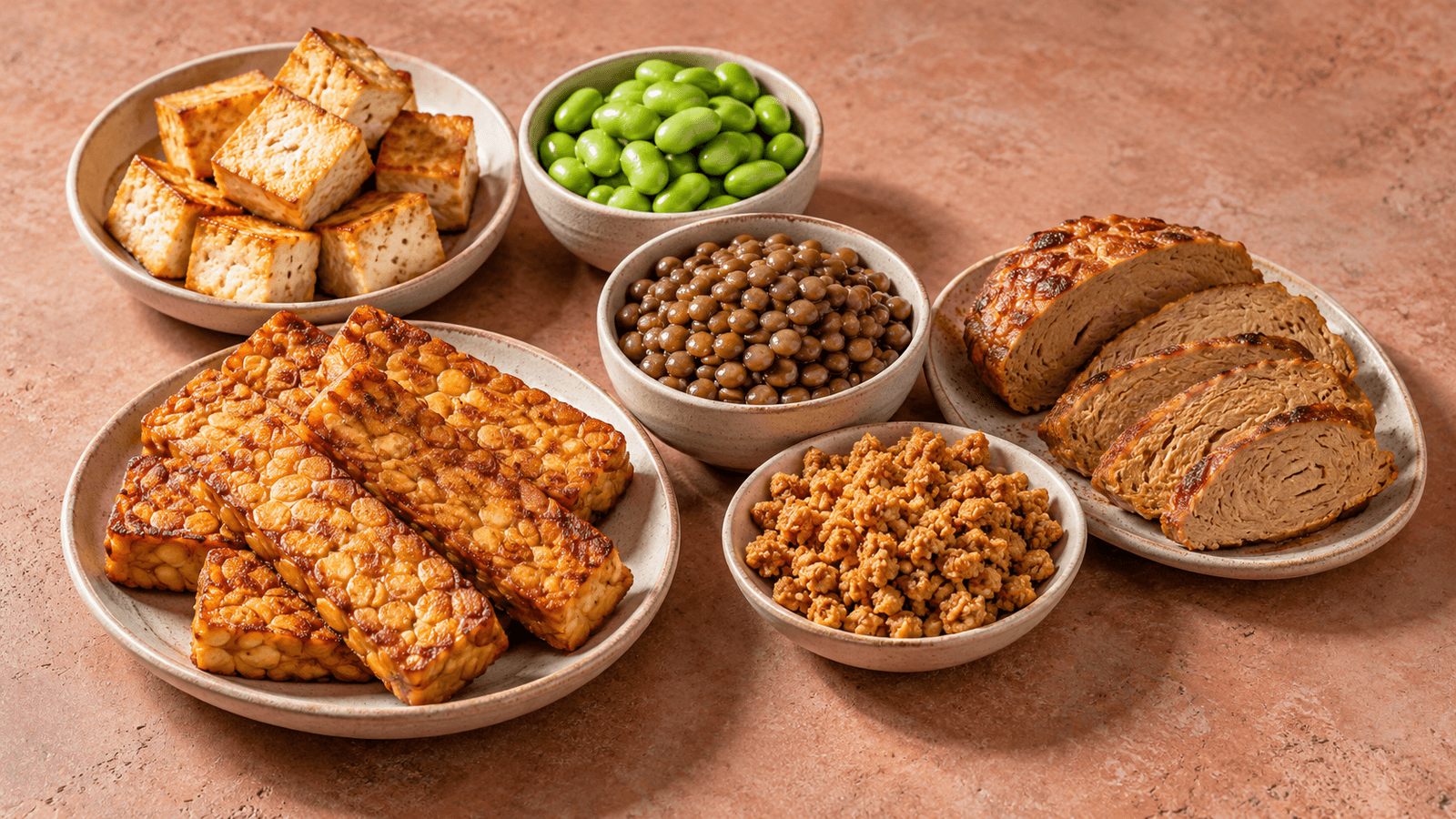
Eating enough protein on a vegan diet is completely possible, but some plant foods make it much easier than others.
Foods such as tofu, tempeh, seitan, textured vegetable protein, edamame, lentils and beans can provide substantial amounts of protein without relying on meat, fish, eggs or dairy.
The key is understanding protein density.
Many plant foods contain some protein, but that does not necessarily make them efficient protein sources.
For example, vegetables, grains, nuts and seeds all contribute protein. But if your goal is 100–150 g of protein per day, relying only on foods that provide a few grams per serving can make the target difficult to reach.
A practical vegan diet therefore usually benefits from including several protein-focused foods every day.
Below are 25 useful vegan protein sources, approximate protein amounts, practical meal ideas and strategies for increasing protein without making every meal enormous.
Nutrition values are approximate. Protein and calorie content can vary substantially by brand, preparation and serving size, particularly for tofu, seitan, TVP and fortified plant-based products.
25 high-protein vegan foods at a glance
| Food | Example serving | Approx. protein |
|---|---|---|
| Seitan | 100 g | ~20–25 g |
| Textured vegetable protein (TVP) | 50 g dry | ~24–27 g |
| Tempeh | 100 g | ~18–20 g |
| Firm tofu | 150 g | ~18–24 g |
| Extra-firm tofu | 150 g | ~20–27 g |
| Edamame | 150 g cooked | ~16–18 g |
| Lentils | 200 g cooked | ~16–18 g |
| Lupini beans | 100 g | ~15–16 g |
| Black beans | 200 g cooked | ~16–18 g |
| Kidney beans | 200 g cooked | ~16–18 g |
| White beans | 200 g cooked | ~16–18 g |
| Chickpeas | 200 g cooked | ~16–18 g |
| Split peas | 200 g cooked | ~16 g |
| Lentil pasta | 75 g dry | ~18–22 g |
| Chickpea pasta | 75 g dry | ~15–20 g |
| High-protein soy yogurt | 200 g | ~10–16 g |
| Unsweetened soy milk | 300 ml | ~9–11 g |
| Green peas | 200 g cooked | ~10–12 g |
| Quinoa | 200 g cooked | ~8 g |
| Hemp seeds | 30 g | ~9–10 g |
| Pumpkin seeds | 30 g | ~9 g |
| Peanuts | 30 g | ~7–8 g |
| Peanut butter | 30 g | ~7–8 g |
| Nutritional yeast | 20 g | ~8–10 g |
| Vegan protein powder | 30 g | ~20–25 g |
These numbers are useful for comparison, but they are not a ranking.
A food that provides slightly less protein may still be useful because of its cost, taste, convenience or nutritional profile.
What counts as a vegan protein food?
A vegan protein source contains no animal-derived ingredients.
That excludes:
- meat
- poultry
- fish
- seafood
- eggs
- milk
- yogurt
- cheese
- cottage cheese
- whey protein
- casein protein
Useful plant-based protein sources include:
- soy foods
- wheat protein
- legumes
- pulses
- some grains
- nuts
- seeds
- plant-based protein products
For people who eat eggs or dairy but not meat or fish, see 25 High-Protein Vegetarian Foods: Best Meat-Free Protein Sources.
How much protein do you need on a vegan diet?
Your protein requirement depends on factors such as:
- body weight
- activity
- training
- calorie intake
- goals
Being vegan does not create one universal protein target.
A 55 kg sedentary adult and a 90 kg person performing regular resistance training should not automatically aim for the same amount.
Use the Mealisa Protein Calculator to estimate a practical daily range.
You can also see protein targets relative to body weight in How Much Protein Do You Need per kg of Body Weight?.
Do vegans need more protein?
Plant and animal proteins differ in amino acid composition and digestibility.
Some plant proteins provide lower amounts of particular essential amino acids or are less digestible than highly digestible animal proteins.
That does not mean plant protein is inadequate.
A varied vegan diet containing enough total protein from foods such as soy, legumes, seitan, grains, nuts and seeds can provide the essential amino acids the body needs.
People with higher protein requirements may find it useful to aim toward the higher end of an appropriate protein range and regularly include concentrated plant protein sources.
1. Seitan
Seitan is one of the most protein-dense vegan foods.
A 100 g serving commonly provides approximately:
- 20–25 g protein
Some products provide even more.
Seitan is made primarily from wheat gluten, which explains its high protein concentration.
Use it in:
- stir-fries
- wraps
- sandwiches
- bowls
- curries
- tray bakes
Seitan is not suitable for people who need to avoid gluten.
Packaged products can also vary considerably in sodium and added ingredients, so check the label.
2. Textured vegetable protein (TVP)
TVP is usually made from defatted soy flour.
Because much of the water and fat has been removed, dry TVP can be extremely protein-dense.
Around 50 g dry TVP may provide approximately 24–27 g of protein.
After rehydrating, use it instead of or alongside ground meat in:
- chili
- Bolognese-style sauce
- tacos
- burritos
- stuffed peppers
- soups
TVP is also inexpensive in many markets and has a long shelf life.
3. Tempeh
Tempeh is made from fermented soybeans.
A 100 g serving typically provides around 18–20 g of protein.
Because it is made from whole soybeans, it also provides fiber.
Tempeh has a firmer texture and stronger flavor than tofu.
Try it:
- pan-seared
- baked
- in stir-fries
- in sandwiches
- in bowls
4. Firm tofu
Firm tofu is one of the most versatile vegan protein foods.
A 150 g serving may provide approximately 18–24 g of protein.
Protein varies substantially by product because tofu can contain different amounts of water.
Use firm tofu in:
- stir-fries
- curries
- salads
- bowls
- wraps
- tofu scramble
Pressing or drying the surface before cooking can help it brown more effectively.
5. Extra-firm tofu
Extra-firm tofu often contains more protein per 100 g than softer tofu because it contains less water.
A 150 g serving may provide approximately 20–27 g of protein, depending on the product.
It works particularly well for:
- baking
- grilling
- pan-searing
- meal prep
Always check the package when accurate protein tracking matters.
6. Edamame
Edamame are immature soybeans.
A 150 g cooked serving can provide approximately 16–18 g of protein.
They also provide fiber.
Use edamame:
- as a snack
- in salads
- with tofu
- in rice bowls
- in noodle dishes
Combining tofu and edamame can make it particularly easy to create a vegan meal with 30 g or more of protein.
7. Lentils
A 200 g serving of cooked lentils can provide roughly 16–18 g of protein.
Lentils are also:
- inexpensive
- high in fiber
- easy to batch cook
- useful in many dishes
Use them in:
- soups
- curries
- salads
- bowls
- chili
- pasta sauces
If 16–18 g is not enough for your meal, combine lentils with tofu, TVP, seitan or another concentrated protein source.
8. Lupini beans
Lupini beans are particularly protein-rich compared with many common legumes.
A 100 g serving can provide around 15–16 g of protein, although values vary by product.
They can be eaten:
- as a snack
- in salads
- in bowls
Prepared lupini beans can be high in sodium, so check the label if sodium intake matters to you.
9. Black beans
A 200 g serving of cooked black beans can provide approximately 16–18 g of protein.
Use them in:
- burrito bowls
- chili
- tacos
- soups
- salads
Black beans also provide substantial carbohydrate and fiber, so they function as more than just a protein source.
10. Kidney beans
A 200 g serving of cooked kidney beans can provide roughly 16–18 g of protein.
They work especially well in:
- chili
- soups
- bean salads
- rice bowls
Canned beans are convenient.
Rinsing canned beans can reduce some of the sodium from the packing liquid.
11. White beans
White beans provide approximately 16–18 g of protein per 200 g cooked serving.
Use them in:
- soups
- stews
- salads
- tomato-based dishes
- blended bean sauces
Like other beans, they provide both protein and carbohydrate.
12. Chickpeas
A 200 g serving of cooked chickpeas can provide approximately 16–18 g of protein.
Chickpeas are useful in:
- curries
- salads
- bowls
- hummus
- roasted snacks
They are nutritious, but they are less protein-dense than tofu, seitan or TVP.
If protein is the priority, combine chickpeas with another protein source rather than simply increasing the serving indefinitely.
13. Split peas
A 200 g cooked serving of split peas can provide roughly 16 g of protein.
Split-pea soup is one of the easiest ways to use them.
Add TVP or tofu if you want to increase protein further.
14. Lentil pasta
Pasta made primarily from lentils can provide considerably more protein than conventional wheat pasta.
A 75 g dry serving may provide around 18–22 g of protein, depending on the brand.
Add:
- tofu
- TVP
- tempeh
- edamame
and a pasta meal can easily reach 30–40 g of protein.
15. Chickpea pasta
Chickpea pasta can provide approximately 15–20 g of protein per 75 g dry serving.
It can be a useful replacement for conventional pasta when you want more protein and fiber from the base of the meal.
Pair it with a protein-rich sauce or tofu for an even higher-protein meal.
16. High-protein soy yogurt
Soy yogurt varies enormously between products.
Some ordinary soy yogurts contain only modest protein, while high-protein versions may provide approximately 10–16 g per 200 g serving.
Choose unsweetened versions when you want to limit added sugar.
Add a modest amount of:
- berries
- oats
- seeds
depending on your calorie and carbohydrate needs.
17. Unsweetened soy milk
Among common plant-based drinks, soy milk is often one of the strongest protein choices.
A 300 ml serving may provide around 9–11 g of protein.
Compare that with many almond, rice or oat drinks, which can contain considerably less protein.
Use soy milk in:
- coffee
- oats
- smoothies
- sauces
- cereal
Choose fortified products when available to help replace nutrients commonly supplied by dairy.
18. Green peas
A 200 g cooked serving of green peas can provide approximately 10–12 g of protein.
That is substantial for a vegetable-like side dish, although peas are not as protein-dense as tofu or seitan.
Combine peas with:
- tofu
- TVP
- lentils
- beans
rather than relying on them as the only protein source in a high-protein meal.
19. Quinoa
A 200 g cooked serving of quinoa provides roughly 8 g of protein.
Quinoa is sometimes described as a high-protein food, but it is more useful as a carbohydrate-rich grain alternative that contributes some additional protein.
Instead of treating quinoa as the main protein, pair it with:
- tofu
- tempeh
- edamame
- beans
20. Hemp seeds
A 30 g serving of hemp seeds can provide around 9–10 g of protein.
They are easy to add to:
- oats
- soy yogurt
- salads
- smoothies
However, seeds are calorie-dense because they also contain substantial fat.
They are best viewed as a protein contributor rather than the primary protein source for most meals.
21. Pumpkin seeds
A 30 g serving of pumpkin seeds provides approximately 9 g of protein.
They can add protein and texture to:
- salads
- soups
- oats
- soy yogurt
Like hemp seeds, they are calorie-dense.
22. Peanuts
A 30 g serving of peanuts provides roughly 7–8 g of protein.
Peanuts can contribute to your daily total, but they also provide substantial fat and calories.
If you need 30 g of protein from a meal, relying on peanuts alone would require a much larger and more calorie-dense serving than using tofu, seitan or TVP.
23. Peanut butter
Around 30 g of peanut butter provides approximately 7–8 g of protein.
It is useful for:
- toast
- oats
- sauces
- smoothies
But peanut butter is primarily a fat-rich food that also contains protein.
It is not as protein-dense as many people assume.
24. Nutritional yeast
Nutritional yeast can provide approximately 8–10 g of protein per 20 g, depending on the product.
It has a savory flavor and works well on:
- pasta
- vegetables
- tofu
- soups
- sauces
Fortification varies, so check the label if you use nutritional yeast as a source of specific vitamins.
25. Vegan protein powder
A typical 30 g serving of vegan protein powder may provide approximately 20–25 g of protein.
Common sources include:
- soy
- pea
- rice
- blends of several plant proteins
Protein powder is not required for a vegan diet.
It is simply convenient.
If you can reach your target comfortably through food, there is no need to use it.
If you struggle to eat enough protein because of appetite, schedule or a high target, one serving can make the process easier.
What are the most protein-dense vegan foods?
If you want a substantial amount of protein without eating a very large volume of food, start with:
- seitan
- TVP
- extra-firm tofu
- tempeh
- vegan protein powder
- edamame
Legumes such as lentils and beans are valuable foods, but they usually provide less protein relative to calories and food volume than concentrated soy or wheat proteins.
Complete vs incomplete plant proteins
Proteins are made from amino acids.
Nine amino acids are considered essential because the body cannot produce enough of them on its own.
Different plant foods contain different proportions of essential amino acids.
Soy foods such as tofu, tempeh and edamame provide all essential amino acids.
Other plant proteins may be relatively lower in one or more essential amino acids.
This does not mean you need to carefully combine two specific proteins at every meal.
Eating a varied diet across the day can provide complementary amino acids.
Useful combinations naturally occur in normal meals, such as:
- beans + rice
- lentils + grains
- hummus + bread
- tofu + rice
- peanut butter + whole-grain bread
Total daily protein and overall dietary variety are more important than trying to create a perfect amino-acid combination at every meal.
Best vegan protein sources for fewer calories
If you want more protein while controlling calories, some foods are more efficient than others.
Useful choices can include:
- seitan
- TVP
- firm tofu
- extra-firm tofu
- edamame
- high-protein soy yogurt
- vegan protein powder
Nuts, seeds and peanut butter contain protein but are much more calorie-dense because of their fat content.
For a broader comparison, see Low-Calorie High-Protein Foods.
Cheap high-protein vegan foods
Protein does not have to be expensive.
Budget-friendly options often include:
- dried lentils
- dried beans
- chickpeas
- split peas
- TVP
- tofu
- peanut butter
- frozen edamame
Local prices matter.
A food that is inexpensive in Germany may not be the cheapest choice in another country.
Compare foods by the cost of a useful amount of protein, not only the package price.
See Cheap High-Protein Foods: 30 Budget-Friendly Protein Sources.
High-protein vegan breakfast ideas
Vegan breakfast can be more challenging if you simply remove eggs and dairy without replacing their protein.
Instead, deliberately include a protein source.
Tofu scramble
Use:
- 200–250 g firm tofu
- vegetables
- spices
Depending on the tofu, this can provide roughly 25–35 g of protein.
High-protein soy yogurt bowl
Combine:
- high-protein soy yogurt
- oats
- hemp seeds
- berries
Protein oats
Prepare oats with:
- unsweetened soy milk
- soy yogurt
- optional vegan protein powder
Tofu breakfast wrap
Use:
- tofu scramble
- vegetables
- whole-grain tortilla
For more general breakfast ideas, see High-Protein Breakfast.
High-protein vegan lunch ideas
Tofu and edamame bowl
Combine:
- firm tofu
- edamame
- rice
- vegetables
This can provide 30 g or more of protein depending on portions.
TVP burrito bowl
Use:
- TVP
- black beans
- rice
- salsa
- vegetables
Seitan wrap
Use:
- seitan
- whole-grain wrap
- salad
- vegetables
- sauce
Lentil pasta with TVP
Combine lentil pasta with a tomato and TVP sauce.
For more meal inspiration, see High-Protein Lunch.
High-protein vegan dinner ideas
Tempeh stir-fry
Use:
- tempeh
- vegetables
- rice or noodles
Seitan with potatoes and vegetables
Seitan makes it easy to build a dinner with 30–40 g of protein.
Tofu curry
Use a generous portion of firm tofu with vegetables and curry sauce.
TVP chili
Combine:
- TVP
- beans
- tomatoes
- peppers
- spices
Lentil pasta with tofu
Combining two protein-containing foods can raise the meal total without requiring an extreme portion of either one.
See High-Protein Dinner for additional ideas.
High-protein vegan snacks
Useful options include:
- edamame
- high-protein soy yogurt
- tofu bites
- roasted chickpeas
- lupini beans
- soy milk
- vegan protein shake
Nuts and seeds can also contribute protein, but their calorie density makes portion size relevant if calorie intake matters.
See High-Protein Snacks.
High-protein vegan foods for weight loss
A vegan diet is not automatically low calorie.
Foods such as:
- nuts
- seeds
- peanut butter
- oils
- coconut products
can make calorie intake high even though they are plant-based.
When weight loss is the goal, prioritize protein sources that provide a useful amount of protein without excessive calories.
Examples include:
- seitan
- tofu
- TVP
- edamame
- high-protein soy yogurt
- legumes
- vegan protein powder when useful
Then add vegetables, appropriate portions of carbohydrates and enough dietary fat.
For general protein guidance during weight loss, see How Much Protein Should You Eat to Lose Weight?.
High-protein vegan foods for muscle building
Building muscle on a vegan diet follows the same basic principles:
- resistance training
- enough total energy
- adequate protein
- progressive training
- recovery
A practical approach is to include a substantial protein source in each main meal.
For example:
Breakfast
Tofu scramble + soy milk
Lunch
Seitan + rice + vegetables
Snack
High-protein soy yogurt or a vegan protein shake
Dinner
Tempeh + edamame + noodles
Someone with a high protein target may find concentrated foods such as seitan, tofu, TVP and protein powder particularly useful.
See How Much Protein Do You Need to Build Muscle?.
High-protein vegan meal prep
Vegan foods can work particularly well for meal prep.
Useful options include:
- tofu
- tempeh
- seitan
- TVP chili
- lentil curry
- bean chili
- lentil pasta
- tofu and edamame bowls
One simple prep could include:
Protein 1: baked tofu
Protein 2: TVP chili
Carbohydrate 1: rice
Carbohydrate 2: potatoes
Vegetables: broccoli, peppers and zucchini
Those ingredients can create several different meals.
See High-Protein Meal Prep: 15 Easy Ideas for the Week.
High-protein low-carb vegan foods
Plant-based protein foods often contain more carbohydrate than meat, fish or eggs, but several options can still work well in a lower-carbohydrate diet.
Examples include:
- tofu
- tempeh
- seitan
- edamame
- lupini beans
- unsweetened high-protein soy yogurt
- some vegan protein powders
For a broader comparison, see High-Protein Low-Carb Foods: 25 Best Options.
Example vegan day with about 120 g of protein
Here is one possible example.
| Meal | Example | Approx. protein |
|---|---|---|
| Breakfast | Tofu scramble + soy milk | ~30 g |
| Lunch | Seitan rice bowl | ~35 g |
| Snack | High-protein soy yogurt + hemp seeds | ~20 g |
| Dinner | Tempeh + edamame + vegetables | ~35 g |
| Total | ~120 g |
This is only an example.
You may need more or less protein depending on your body weight, activity and goals.
Example vegan day without protein powder
Protein powder is convenient but optional.
For example:
Breakfast
250 g tofu scramble + soy milk
~30 g protein
Lunch
120 g seitan + rice + vegetables
~30–35 g
Snack
High-protein soy yogurt + hemp seeds
~18–22 g
Dinner
150 g tempeh + edamame + vegetables
~35–40 g
This can exceed 110 g of protein without protein powder.
Exact values depend on the products used.
Can you get 100 g of vegan protein per day?
Yes.
For example:
- tofu breakfast: 25 g
- seitan lunch: 30 g
- soy yogurt snack: 15 g
- tempeh dinner: 30 g
That already reaches approximately 100 g.
The difficulty usually comes from eating meals built mainly around low-protein foods and expecting small protein contributions to add up automatically.
How to add more protein to a vegan meal
Replace low-protein plant milk with soy milk
Some plant drinks contain very little protein.
Soy milk can contribute around 3 g or more per 100 ml depending on the product.
Add edamame
Edamame works in bowls, salads and stir-fries.
Replace ordinary pasta with lentil pasta
This can increase protein without adding another separate food.
Add TVP to sauces
TVP works well in chili, tomato sauces and tacos.
Increase tofu or tempeh
If a meal contains only a few tofu cubes, the total protein may remain low.
Use a meaningful portion.
Add nutritional yeast
It can provide a small additional protein contribution and savory flavor.
Use protein powder when convenience matters
One serving can add 20–25 g of protein without requiring another full meal.
Are beans enough protein on a vegan diet?
Beans can absolutely contribute substantial protein.
But someone with a high protein target may find it difficult to rely on beans alone because large portions also provide substantial carbohydrate and food volume.
For example, a meal containing beans plus tofu or TVP may provide protein more efficiently than simply doubling the bean portion.
Is tofu a complete protein?
Soy protein contains all nine essential amino acids.
Tofu, tempeh, edamame and soy milk can therefore contribute high-quality plant protein to a vegan diet.
Is seitan a complete protein?
Seitan is very high in protein but relatively low in the essential amino acid lysine compared with many other protein sources.
That does not make it useless.
Eating seitan alongside a varied diet containing legumes, soy foods and other plant proteins helps provide a broader amino-acid profile across the day.
Are nuts good sources of vegan protein?
Nuts contain protein, but they are not usually the most efficient primary protein source.
For example, a small serving of peanuts may provide 7–8 g of protein while also providing substantial calories from fat.
Use nuts because you enjoy them and for their broader nutritional contribution, not because you need to make them the foundation of every high-protein meal.
Is vegan protein powder necessary?
No.
You can build a high-protein vegan diet from whole and minimally processed foods.
Protein powder becomes useful when:
- your target is high
- your appetite is limited
- you need a fast snack
- you travel frequently
- you prefer a convenient post-workout option
It is a tool, not a requirement.
Important nutrients beyond protein
Protein is only one part of vegan nutrition.
A well-planned vegan diet also needs attention to nutrients that can be harder to obtain in adequate amounts from unfortified plant foods.
In particular, vitamin B12 requires a reliable source through fortified foods or supplementation.
Depending on your diet, location and individual needs, other nutrients worth paying attention to can include:
- vitamin D
- iodine
- calcium
- iron
- zinc
- selenium
- omega-3 fatty acids
Fortified foods can be useful.
If you are unsure whether your diet covers these nutrients, a registered dietitian or other qualified healthcare professional can provide individualized guidance.
Common mistakes when trying to eat high protein as a vegan
1. Assuming every plant food is a protein food
Broccoli, oats, quinoa and nuts contain protein, but they may not provide enough to serve as the primary protein source in a high-protein meal.
2. Using tiny tofu portions
A few cubes of tofu may provide only a small amount of protein.
Check the label and use a meaningful serving.
3. Relying entirely on beans
Beans are useful, but combining them with tofu, seitan or TVP can make higher protein targets easier.
4. Treating nuts as the main protein source
Nuts are nutritious but calorie-dense.
5. Avoiding all processed foods
Tofu, tempeh, TVP and fortified soy products can be practical components of a healthy vegan diet.
"Processed" alone does not tell you whether a food is nutritionally useful.
6. Forgetting total calories
A vegan diet can be high or low in calories depending on food choices and portions.
7. Thinking every meal needs perfect amino-acid combining
Variety across the day is generally more important.
8. Focusing on protein while ignoring other nutrients
Vitamin B12 and other nutrients still require attention.
Frequently asked questions
What vegan food is highest in protein?
Seitan, TVP, tofu, tempeh and some vegan protein powders are among the most protein-dense commonly available vegan foods.
What are the best whole-food vegan protein sources?
Tofu, tempeh, edamame, lentils, beans, chickpeas, split peas, nuts and seeds are useful options.
Seitan is also protein-dense, although it is made from isolated wheat gluten.
How can vegans get 100 g of protein a day?
Include a substantial protein source at each meal.
For example, tofu at breakfast, seitan at lunch, soy yogurt for a snack and tempeh with edamame at dinner can reach approximately 100 g or more.
Can vegans get enough protein without supplements?
Yes.
Foods such as tofu, tempeh, seitan, TVP, edamame, lentils and beans can provide substantial protein.
Protein powder is optional.
Which vegan protein is low calorie?
Seitan, TVP, some tofu products, edamame and high-protein soy yogurt can provide relatively high amounts of protein for their calories.
Exact values vary by product.
Which vegan foods have 20 g of protein?
Depending on portions and brands, examples include:
- seitan
- TVP
- tofu
- tempeh
- lentil pasta
- vegan protein powder
Are lentils high in protein?
Yes.
A 200 g cooked serving can provide approximately 16–18 g of protein.
However, lentils also provide substantial carbohydrate and fiber.
Is soy safe to eat regularly?
For most healthy adults, soy foods such as tofu, tempeh, edamame and soy milk can be part of a balanced diet.
People with a soy allergy or individual medical considerations should follow appropriate professional guidance.
Do vegan athletes need protein powder?
Not necessarily.
Protein powder can make high targets more convenient, but adequate protein can also be obtained from food.
Is vegan protein as good as animal protein?
Protein quality varies among individual foods.
Some plant proteins have lower digestibility or different essential amino-acid profiles than animal proteins.
A varied vegan diet with sufficient total protein can nevertheless provide adequate essential amino acids.
Do vegans need to combine proteins at every meal?
No.
You do not need to deliberately pair specific complementary proteins at every meal.
Eating varied protein sources across the day is a practical approach.
Bottom line
A high-protein vegan diet becomes much easier when you build meals around concentrated protein sources instead of expecting small amounts from grains, vegetables, nuts and seeds to do all the work.
Some of the most useful vegan protein foods include:
- seitan
- TVP
- tofu
- tempeh
- edamame
- lentils
- beans
- lupini beans
- lentil pasta
- high-protein soy yogurt
- soy milk
- vegan protein powder
Start with your daily protein target and include a meaningful protein source in each main meal.
Use the Mealisa Protein Calculator to estimate your needs.
For meat-free foods that also include eggs and dairy, see 25 High-Protein Vegetarian Foods.
For the complete protein-food guide, see High-Protein Foods: 30 Foods to Help You Eat More Protein.
For budget options, see Cheap High-Protein Foods.
For preparing several meals in advance, see High-Protein Meal Prep.
Nutrition values are approximate and vary by product, serving size and preparation. This article provides general nutrition information for healthy adults and is not individualized medical or dietetic advice.