
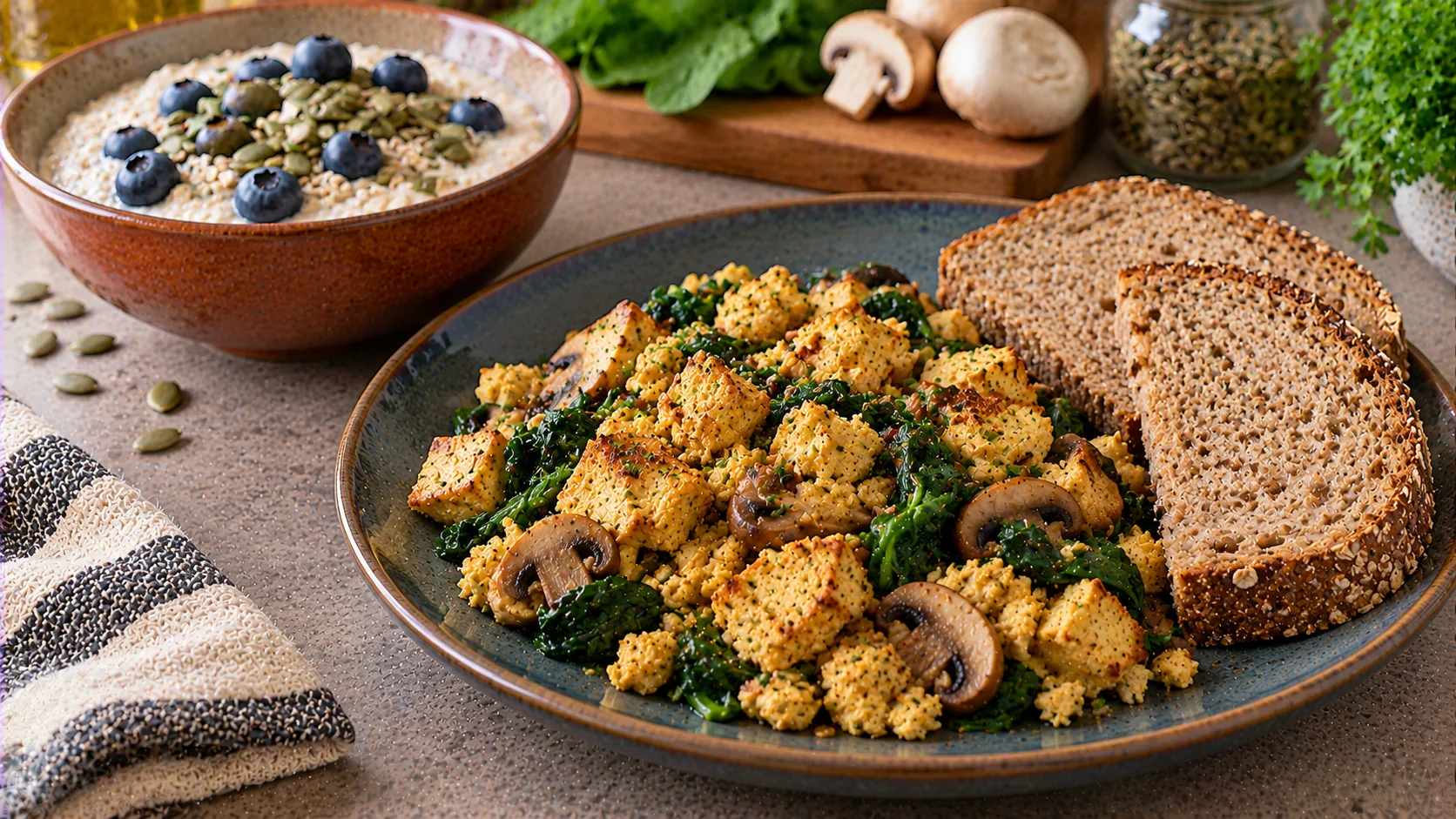
Plant-Based Protein at Breakfast: Egg-Free Food Combinations
Eggs and whey powder are not required for a protein-containing breakfast. The practical approach is to select a meaningful source—soy foods, tofu or pulses—then add grains, fruit and vegetables for an actual meal. These are everyday food combinations, not clinically tested menus. Protein numbers are worked label examples, not universal nutrient values.
Quick answer
Eggs and whey powder are not required for a protein-containing breakfast.
Five combinations you can assemble
| # | Breakfast and amounts | Estimated protein |
|---|---|---|
| 1 | Soy yogurt, oats and pumpkin seeds: 200 g plain soy yogurt + 50 g dry oats + 20 g pumpkin seeds + 100 g berries | 17.5 g |
| 2 | Tofu toast with tomato: 150 g firm tofu + 80 g wholegrain bread + 100 g tomato | 26.2 g |
| 3 | Peanut-butter soy porridge: 60 g dry oats + 250 ml unsweetened soy drink + 20 g peanut butter | 21.1 g |
| 4 | Bean and avocado wrap: 130 g drained cooked black beans + 60 g wholegrain wrap + 50 g avocado | 16.8 g |
| 5 | Hummus and edamame bowl: 150 g cooked shelled edamame + 50 g hummus + 60 g bread | 25.4 g |
1. Soy yogurt, oats and pumpkin seeds
Ingredients: 200 g plain soy yogurt + 50 g dry oats + 20 g pumpkin seeds + 100 g berries.
Preparation: Stir oats into yogurt; refrigerate briefly to soften; top with berries and seeds.
Protein arithmetic: 4.0 + 6.5 + 6.0 + 1.0 = 17.5 g.
2. Tofu toast with tomato
Ingredients: 150 g firm tofu + 80 g wholegrain bread + 100 g tomato.
Preparation: Pat tofu dry, crumble into a pan and heat until hot; serve on toast with sliced tomato.
Protein arithmetic: 18.0 + 7.2 + 1.0 = 26.2 g.
3. Peanut-butter soy porridge
Ingredients: 60 g dry oats + 250 ml unsweetened soy drink + 20 g peanut butter.
Preparation: Simmer oats in soy drink until thick; swirl in peanut butter after cooking.
Protein arithmetic: 7.8 + 8.3 + 5.0 = 21.1 g.
4. Bean and avocado wrap
Ingredients: 130 g drained cooked black beans + 60 g wholegrain wrap + 50 g avocado.
Preparation: Mash cooked beans, fill warmed wrap with avocado and vegetables; heat thoroughly if made ahead.
Protein arithmetic: 10.4 + 5.4 + 1.0 = 16.8 g.
5. Hummus and edamame bowl
Ingredients: 150 g cooked shelled edamame + 50 g hummus + 60 g bread.
Preparation: Warm edamame until piping hot and serve with hummus and sliced bread.
Protein arithmetic: 16.5 + 3.5 + 5.4 = 25.4 g.
How to reproduce the calculations
The soy yogurt example assumes 2 g protein per 100 g, oats 13 g, seeds 30 g and berries 1 g. For other rows, examples use tofu 12 g/100 g, bread 9 g/100 g, beans 8 g/100 g, cooked edamame 11 g/100 g and hummus 7 g/100 g. These chosen label values are illustrative. Brands, drained weights and cooking change the numbers. To recalculate, multiply the amount eaten by the label protein per 100 g and divide by 100; sum the ingredients. For soy drinks labelled per 100 ml, use millilitres consistently.
Protein targets in context
A plant-based breakfast should not be judged by protein alone. Include sufficient energy, fibre and varied ingredients. A high protein figure does not establish better health or suitability for every person. EFSA gives an adult population reference intake of 0.83 g protein/kg body weight per day, not an obligatory breakfast target. For a 70 kg example that is 58.1 g over a full day. EFSA protein reference.
Fortification and nutritional gaps
For a fully vegan pattern, vitamin B12 needs deliberate attention; fortified soy products and supplements can help. Check calcium, iodine and vitamin D on labels and seek individual dietary advice when appropriate. The NHS vegan diet guidance explains these considerations. Unfortified soy yogurt is not nutritionally identical to dairy yogurt. Nuts and soy are allergens; check ingredients.
Preparation and safe storage
Keep refrigerated soy yogurt and cooked toppings cold until serving, follow pack use-by dates, and reheat cooked beans/tofu safely. Prepare dry oats and toppings ahead, but do not presume a mixed five-day refrigerated breakfast is safe without observing product and local food-safety instructions.
Shop by label, not marketing
Choose unsweetened soy yogurt or soy drink by its actual protein per 100 g/100 ml, then compare price per 100 g of protein: price ÷ package protein grams × 100. Do not assume a product called “protein” automatically offers the best value. Ordinary oats, beans and tofu may help keep cost manageable; prices differ by location.
Related practical guides
If you want more affordable ordinary-food combinations, see ordinary-food protein meals. For another structured protein-and-fibre approach, see protein-and-fibre meal combinations.
Sources
- EFSA: dietary reference values for protein — 0.83 g/kg/day adult reference.
- NHS: The vegan diet — B12, calcium and fortified foods.
Protein values are deliberately modelled from sample labels; confirm with the actual product.