
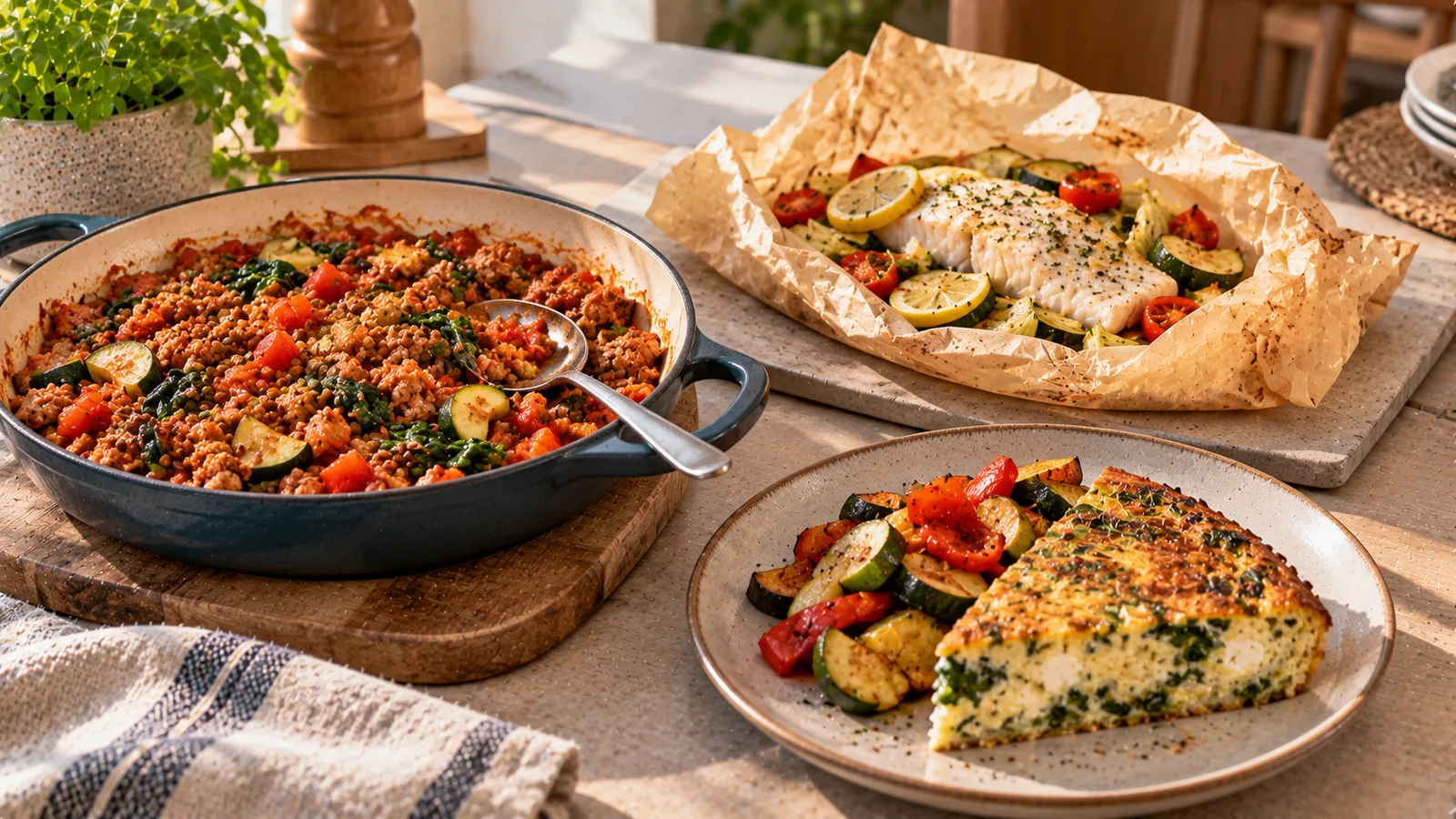
High-protein meals do not have to mean enormous portions of meat, protein shakes or the same chicken-and-broccoli combination every day.
A useful low-calorie, high-protein recipe combines a meaningful protein source with vegetables, fruit, legumes or other filling ingredients while keeping energy-dense additions such as oil, cheese and creamy sauces in sensible amounts.
Below are 15 practical recipes using different protein sources and cooking styles.
The nutrition values are approximate. Actual calories and protein depend on brands, ingredient weights, cooking losses and portion size.
| Recipe | Approx. calories | Approx. protein |
|---|---|---|
| Turkey and lentil skillet | 430 kcal | 40 g |
| Baked white fish with vegetables | 360 kcal | 39 g |
| Cottage cheese and spinach frittata | 350 kcal | 31 g |
| Chicken fajita bowl | 440 kcal | 43 g |
| Greek yogurt chicken salad | 390 kcal | 42 g |
| Tuna and white bean salad | 410 kcal | 39 g |
| Turkey meatballs with tomato sauce | 420 kcal | 42 g |
| Shrimp and vegetable rice | 430 kcal | 36 g |
| Red lentil and cottage cheese soup | 400 kcal | 29 g |
| Egg-white vegetable omelet with feta | 330 kcal | 31 g |
| Salmon with green beans and potatoes | 470 kcal | 35 g |
| Beef and vegetable stir-fry | 450 kcal | 38 g |
| Chickpea and chicken curry | 460 kcal | 41 g |
| Skyr berry breakfast bowl | 340 kcal | 30 g |
| Cottage cheese baked oats | 390 kcal | 32 g |
1. Turkey and lentil skillet
A one-pan combination of lean turkey, lentils and vegetables provides protein from both animal and plant sources.
Ingredients — 2 servings
- 300 g lean ground turkey
- 160 g cooked lentils
- 200 g canned chopped tomatoes
- 1 small courgette
- 1 red pepper
- 100 g spinach
- 1 tsp olive oil
- 1 garlic clove
- paprika, black pepper and herbs
Method
- Dice the courgette and pepper.
- Heat the oil in a large skillet.
- Cook the turkey until no pink remains.
- Add garlic, pepper and courgette and cook until beginning to soften.
- Add tomatoes and lentils.
- Simmer for 8–10 minutes.
- Stir in the spinach at the end.
Approximate nutrition per serving: 430 kcal and 40 g protein.
2. Baked white fish with courgette and fennel
White fish is naturally protein-rich and relatively low in fat, making it easy to build a moderate-calorie meal around it.
Ingredients — 2 servings
- 320 g cod, pollock or another lean white fish
- 1 courgette
- 1 small fennel bulb
- 200 g cherry tomatoes
- 300 g potatoes
- 2 tsp olive oil
- lemon juice
- herbs and black pepper
Method
- Heat the oven to 200°C.
- Cut the potatoes into small pieces and bake with half the oil for about 15 minutes.
- Add sliced courgette, fennel and tomatoes.
- Place the fish on top.
- Add the remaining oil, lemon and herbs.
- Bake until the fish is opaque and separates easily with a fork.
Approximate nutrition per serving: 360 kcal and 39 g protein.
3. Cottage cheese and spinach frittata
Eggs and cottage cheese create a high-protein frittata without requiring a large amount of cheese.
Ingredients — 2 servings
- 4 eggs
- 200 g low-fat cottage cheese
- 150 g spinach
- 1 red pepper
- 150 g mushrooms
- 1 tsp olive oil
- black pepper and herbs
Method
- Heat the oven to 190°C.
- Cook the mushrooms and pepper briefly in an oven-safe pan.
- Add spinach and allow it to wilt.
- Whisk eggs with cottage cheese and seasoning.
- Pour over the vegetables.
- Cook briefly on the stove, then finish in the oven until set.
Approximate nutrition per serving: 350 kcal and 31 g protein.
4. Chicken fajita bowl
A fajita-style bowl can stay moderate in calories when vegetables occupy a substantial part of the serving and oil and toppings are measured.
Ingredients — 2 servings
- 300 g chicken breast
- 250 g cooked rice
- 2 peppers
- 1 onion
- 100 g salsa
- 100 g low-fat Greek yogurt
- 1 tsp oil
- paprika, cumin and chili
Method
- Slice the chicken and vegetables.
- Cook the chicken in oil with the spices.
- Add peppers and onion and cook until tender-crisp.
- Divide rice between two bowls.
- Add the chicken mixture, salsa and yogurt.
Approximate nutrition per serving: 440 kcal and 43 g protein.
5. Greek yogurt chicken salad
Greek yogurt can replace much of the mayonnaise normally used in creamy chicken salad.
Ingredients — 2 servings
- 300 g cooked chicken breast
- 150 g Greek yogurt
- 1 celery stalk
- 1 small apple
- 1 tsp mustard
- lemon juice
- black pepper
- 4 slices whole-grain bread
- lettuce
Method
- Chop the chicken, celery and apple.
- Mix yogurt, mustard, lemon juice and pepper.
- Fold in the chicken mixture.
- Serve with lettuce and whole-grain bread.
Approximate nutrition per serving: 390 kcal and 42 g protein.
6. Tuna and white bean salad
Tuna and beans provide substantial protein while beans also contribute fiber and carbohydrates.
Ingredients — 2 servings
- 240 g drained tuna in water
- 240 g drained white beans
- 250 g tomatoes
- 1 cucumber
- 1/2 red onion
- 1 tsp olive oil
- lemon juice
- parsley
- black pepper
Method
- Drain the tuna and beans.
- Chop the vegetables.
- Combine everything in a large bowl.
- Dress with olive oil, lemon juice, parsley and pepper.
Approximate nutrition per serving: 410 kcal and 39 g protein.
7. Turkey meatballs in tomato sauce
Lean turkey meatballs work well with a tomato-based sauce instead of a heavy cream sauce.
Ingredients — 2 servings
- 320 g lean ground turkey
- 20 g breadcrumbs
- 1 egg
- 300 g passata
- 1 garlic clove
- 300 g courgette
- 200 g cooked whole-wheat spaghetti
- herbs and black pepper
Method
- Mix turkey with breadcrumbs, egg and seasoning.
- Form small meatballs.
- Brown them in a non-stick pan.
- Add garlic and passata.
- Simmer until the meatballs are fully cooked.
- Add sliced courgette during the final minutes.
- Serve with spaghetti.
Approximate nutrition per serving: 420 kcal and 42 g protein.
8. Shrimp and vegetable rice
Shrimp cooks quickly and provides plenty of protein without requiring a large portion.
Ingredients — 2 servings
- 300 g peeled shrimp
- 250 g cooked rice
- 300 g mixed vegetables
- 2 eggs
- 1 tsp oil
- 1 tbsp reduced-salt soy sauce
- garlic and ginger
Method
- Heat the oil in a large pan.
- Cook garlic, ginger and vegetables.
- Add shrimp and cook until opaque.
- Push the mixture to one side and scramble the eggs.
- Add rice and soy sauce.
- Mix everything together and heat thoroughly.
Approximate nutrition per serving: 430 kcal and 36 g protein.
9. Red lentil and cottage cheese soup
Lentils already provide protein, but cottage cheese blended into the finished soup increases protein while adding creaminess.
Ingredients — 2 servings
- 160 g dry red lentils
- 400 g canned tomatoes
- 1 carrot
- 1 onion
- 700 ml vegetable stock
- 200 g low-fat cottage cheese
- paprika and cumin
Method
- Chop the onion and carrot.
- Add them to a saucepan with lentils, tomatoes, stock and spices.
- Simmer until the lentils are soft.
- Blend fully or partially.
- Blend or stir in the cottage cheese off the heat.
- Reheat gently if necessary.
Approximate nutrition per serving: 400 kcal and 29 g protein.
10. Egg-white vegetable omelet with feta
Using whole eggs together with additional egg whites increases protein without requiring a very large omelet.
Ingredients — 2 servings
- 2 whole eggs
- 250 g egg whites
- 100 g spinach
- 150 g mushrooms
- 100 g tomatoes
- 60 g feta
- 1 tsp olive oil
- black pepper
Method
- Cook mushrooms in the oil.
- Add spinach and tomatoes.
- Whisk the whole eggs and egg whites.
- Pour into the pan.
- Add crumbled feta.
- Cook until the egg is fully set.
Approximate nutrition per serving: 330 kcal and 31 g protein.
11. Salmon with green beans and potatoes
Salmon is more calorie-dense than lean white fish, but portion size allows it to fit comfortably into a moderate-calorie meal.
Ingredients — 2 servings
- 240 g salmon fillet
- 400 g potatoes
- 300 g green beans
- lemon
- dill
- black pepper
Method
- Heat the oven to 200°C.
- Cut the potatoes and roast until almost tender.
- Add the salmon and cook until done.
- Steam or boil the green beans.
- Serve with lemon, dill and pepper.
Approximate nutrition per serving: 470 kcal and 35 g protein.
12. Beef and vegetable stir-fry
Choosing lean beef and using plenty of vegetables creates a substantial stir-fry without needing a large amount of oil.
Ingredients — 2 servings
- 280 g lean beef strips
- 350 g mixed peppers, broccoli and carrots
- 220 g cooked rice
- 1 tsp oil
- 1 tbsp reduced-salt soy sauce
- ginger and garlic
Method
- Heat the pan until hot.
- Cook the beef quickly and remove it temporarily.
- Add oil if needed and cook the vegetables.
- Return the beef.
- Add soy sauce, ginger and garlic.
- Serve with rice.
Approximate nutrition per serving: 450 kcal and 38 g protein.
13. Chickpea and chicken curry
Combining chicken and chickpeas produces a filling curry with protein and fiber.
Ingredients — 2 servings
- 250 g chicken breast
- 200 g drained chickpeas
- 250 g chopped tomatoes
- 100 g spinach
- 1 small onion
- 100 g low-fat Greek yogurt
- curry powder
- 1 tsp oil
Method
- Cook the onion in oil.
- Add diced chicken and curry powder.
- Cook until the chicken is browned.
- Add tomatoes and chickpeas.
- Simmer until the chicken is fully cooked.
- Add spinach.
- Remove from direct heat before stirring in the yogurt.
Approximate nutrition per serving: 460 kcal and 41 g protein.
14. Skyr and berry breakfast bowl
A high-protein meal does not have to be savory.
Ingredients — 1 serving
- 300 g plain skyr
- 150 g mixed berries
- 30 g oats
- 10 g chopped nuts
- cinnamon
Method
- Add skyr to a bowl.
- Top with berries and oats.
- Add nuts and cinnamon.
Approximate nutrition: 340 kcal and 30 g protein.
15. Cottage cheese baked oats
Cottage cheese can be blended into baked oats to increase protein while keeping the texture soft.
Ingredients — 2 servings
- 100 g oats
- 250 g low-fat cottage cheese
- 2 eggs
- 1 banana
- 100 g berries
- 1 tsp baking powder
- cinnamon
Method
- Heat the oven to 180°C.
- Blend oats, cottage cheese, eggs, banana, baking powder and cinnamon.
- Fold in the berries.
- Pour into a small baking dish.
- Bake until the center is set.
- Divide into two portions.
Approximate nutrition per serving: 390 kcal and 32 g protein.
How to keep high-protein recipes moderate in calories
The protein source matters, but so do the ingredients surrounding it.
Measure cooking fats
One tablespoon of oil contains a substantial amount of energy even though it occupies little volume.
Oil does not need to be avoided, but measuring it can make recipe nutrition more predictable.
Use vegetables for volume
Vegetables can increase the physical size and variety of meals without requiring large additions of energy-dense ingredients.
Choose sauces deliberately
Cream, mayonnaise, cheese, nut butter and oil-based dressings can change the calorie content of a meal quickly.
Alternatives such as tomato-based sauces, yogurt-based dressings, herbs, spices, citrus and mustard can provide flavor with different calorie profiles.
Do not make protein the entire meal
A high-protein meal can still include:
- vegetables;
- fruit;
- potatoes;
- rice;
- pasta;
- bread;
- legumes;
- other carbohydrate and fat sources.
The goal is not to remove every other macronutrient.
How much protein should a recipe contain?
There is no universal amount that every meal needs.
Daily protein requirements vary according to factors such as body size, age, activity and individual goals.
For recipe selection, it is often more useful to look at how the meal contributes to your overall day rather than trying to force every meal to reach exactly the same protein number.
Calories are estimates, not fixed properties of a recipe
Two people can prepare the same recipe and end up with different calorie totals because of:
- different ingredient brands;
- different meat fat percentages;
- different serving sizes;
- different amounts of oil;
- ingredient substitutions;
- cooking and draining losses.
For accurate personal tracking, calculate the recipe from the actual ingredients and amounts you use and divide the finished recipe by the portions you actually serve.
A recipe nutrition calculator can make this easier.
Choose recipes for the week, not just one meal
A useful recipe collection should make it easier to create variety.
Instead of choosing five recipes that all use the same primary protein, you could combine:
- one fish meal;
- one poultry meal;
- one legume-based meal;
- one egg-based meal;
- one dairy-based breakfast.
That gives you different textures, flavors and nutrient profiles while keeping protein present throughout the week.
Sources
- World Health Organization (WHO), Healthy Diet.
- European Food Safety Authority (EFSA), Dietary Reference Values for protein.
- Deutsche Gesellschaft für Ernährung (DGE), reference values for protein and recommendations for a varied diet.
- USDA FoodData Central, food composition data used as a general reference for approximate nutrition values.