
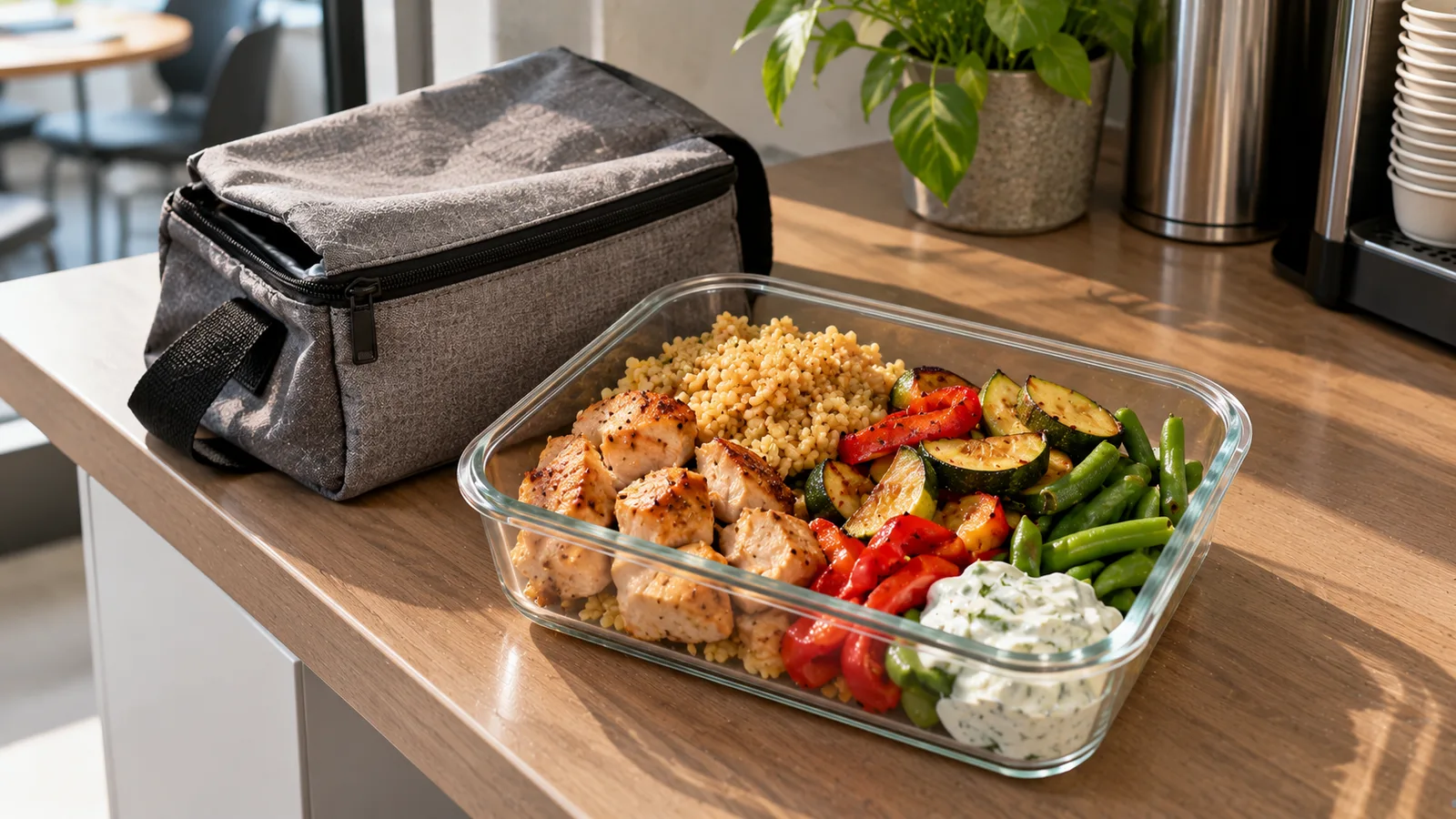
A good work lunch needs to do more than look healthy.
It should travel well, fit your schedule, be practical to prepare and still taste good several hours after you make it.
The 15 recipes below are designed around those constraints. They use familiar ingredients, include a meaningful protein source and can generally be prepared ahead of time.
1. Chicken, rice and roasted vegetable bowl
A simple bowl is one of the easiest work lunches to prepare in batches.
Ingredients
- 120 g cooked chicken breast
- 150 g cooked rice
- 150 g roasted vegetables
- 1 teaspoon olive oil
- lemon juice
- herbs, salt and pepper
Method
Season and cook the chicken, then slice it.
Roast vegetables such as zucchini, bell pepper, onion or broccoli with the oil.
Divide the rice, vegetables and chicken into a container. Add lemon juice and herbs after reheating or just before eating.
Work-lunch tip
Keep any extra sauce in a small separate container so the meal does not become soggy.
---
2. Lentil and feta lunch salad
Lentils make a useful base because they provide both fiber and plant protein.
Ingredients
- 150 g cooked lentils
- 100 g cucumber
- 100 g tomatoes
- 40 g feta
- parsley
- 1 teaspoon olive oil
- lemon juice
Method
Allow the cooked lentils to cool.
Combine them with chopped cucumber, tomatoes, feta and parsley.
Mix the oil and lemon separately and add shortly before eating.
Make-ahead note
The salad can be prepared the night before. Keeping the dressing separate helps preserve the texture.
---
3. Tuna and white bean salad
This lunch requires very little cooking and works well when you need something fast.
Ingredients
- 100 g drained tuna
- 120 g cooked or canned white beans, drained
- 100 g tomatoes
- 80 g cucumber
- red onion to taste
- lemon juice
- 1 teaspoon olive oil
- herbs
Method
Drain the tuna and beans.
Combine with chopped vegetables and herbs.
Add lemon and oil before eating.
Variation
Replace white beans with chickpeas if that is what you already have.
---
4. Chickpea couscous bowl
This is a convenient meat-free lunch that can be eaten warm or cold.
Ingredients
- 150 g cooked chickpeas
- 150 g cooked couscous
- 100 g bell pepper
- 100 g cucumber
- parsley or mint
- lemon juice
- 1 teaspoon olive oil
Method
Prepare the couscous and allow it to cool slightly.
Combine it with chickpeas and chopped vegetables.
Finish with herbs, lemon and oil.
Packing tip
If preparing several portions, divide the couscous and chickpeas first so each container has a similar base.
---
5. Turkey and hummus wrap
Wraps are useful when you need a lunch that can be eaten without reheating.
Ingredients
- 1 whole-grain wrap
- 100 g cooked turkey breast
- 30 g hummus
- lettuce
- tomato
- cucumber
- grated carrot
Method
Spread the hummus over the wrap.
Add turkey and vegetables, keeping wet ingredients away from the outer edge.
Roll tightly and refrigerate.
Preventing a soggy wrap
Pat watery vegetables dry and avoid adding liquid dressing before storage.
---
6. Greek yogurt chicken wrap
Greek yogurt can replace a heavier mayonnaise-based dressing in a simple chicken filling.
Ingredients
- 1 whole-grain wrap
- 120 g cooked chicken
- 50 g plain Greek yogurt
- 40 g celery
- 30 g grated carrot
- mustard to taste
- lettuce
- black pepper
Method
Chop the chicken and mix it with yogurt, celery, carrot, mustard and pepper.
Place lettuce on the wrap first, then add the chicken mixture.
Roll tightly.
Storage
Keep refrigerated until lunch.
---
7. Egg and potato salad box
This is a practical alternative to a sandwich.
Ingredients
- 2 boiled eggs
- 200 g boiled potatoes
- 100 g cucumber
- 100 g tomatoes
- mixed greens
- 50 g plain yogurt
- mustard
- herbs
Method
Cool the potatoes and eggs completely.
Cut them into bite-sized pieces and pack with the vegetables.
Mix yogurt, mustard and herbs separately as a dressing.
Work-lunch tip
Add the dressing when you are ready to eat.
---
8. Salmon and potato lunch bowl
Leftover cooked salmon can become an easy next-day lunch.
Ingredients
- 120 g cooked salmon
- 200 g boiled potatoes
- 150 g green vegetables
- lemon
- dill
- 50 g plain yogurt
Method
Cook and cool all ingredients promptly.
Combine potatoes and vegetables in the container and add the salmon.
Mix yogurt, lemon and dill for a simple sauce.
Food-safety note
Keep cooked fish refrigerated and transport it in an insulated lunch bag with a cold pack when refrigeration is not available.
---
9. Tofu noodle vegetable bowl
This plant-based lunch works particularly well when prepared with firm tofu.
Ingredients
- 150 g firm tofu
- 150 g cooked noodles
- 150 g mixed vegetables
- 1 teaspoon oil
- soy sauce to taste
- lime juice
- ginger
Method
Pat the tofu dry and cut into cubes.
Cook it in a pan with the oil until lightly browned.
Add cooked noodles and vegetables to the lunch container.
Pack the soy, lime and ginger dressing separately.
Variation
Use rice instead of noodles if you already have cooked rice available.
---
10. Chicken pasta salad
Pasta salad is easy to portion and does not require reheating.
Ingredients
- 150 g cooked pasta
- 120 g cooked chicken
- 100 g cherry tomatoes
- 80 g cucumber
- 50 g plain yogurt
- lemon juice
- herbs
Method
Cool the pasta after cooking.
Combine with chicken and vegetables.
Mix yogurt, lemon and herbs separately and stir into the salad before eating.
Make-ahead tip
Avoid overcooking the pasta. Slightly firmer pasta tends to hold its texture better after refrigeration.
---
11. Black bean and corn rice bowl
This inexpensive lunch uses ingredients that are easy to keep in the pantry or freezer.
Ingredients
- 120 g cooked black beans
- 150 g cooked rice
- 80 g corn
- 100 g tomatoes
- 50 g bell pepper
- lime juice
- coriander
- optional chili
Method
Combine rice, beans and corn.
Add chopped vegetables after the cooked ingredients have cooled.
Finish with lime, coriander and chili.
Optional addition
Add plain yogurt or a small amount of grated cheese when serving.
---
12. Cottage cheese and roasted vegetable box
This lunch requires minimal assembly if the vegetables are already cooked.
Ingredients
- 200 g cottage cheese
- 200 g roasted vegetables
- 1 slice whole-grain bread or another grain portion
- herbs
- black pepper
Method
Pack cottage cheese separately from the vegetables if you prefer the textures to remain distinct.
Add herbs and pepper shortly before eating.
Why it works for work
There is very little morning preparation when the vegetables are cooked in advance.
---
13. Mediterranean chickpea wrap
This wrap uses chickpeas as the main filling rather than meat.
Ingredients
- 1 whole-grain wrap
- 120 g cooked chickpeas
- 30 g feta
- lettuce
- cucumber
- tomato
- lemon juice
- herbs
Method
Lightly crush some of the chickpeas with a fork so the filling holds together.
Add feta, vegetables, lemon and herbs.
Roll tightly.
Packing tip
Keep tomatoes toward the center of the filling to reduce moisture against the wrap.
---
14. Red lentil vegetable soup
A thermos makes soup a realistic work lunch even when you do not have access to a microwave.
Ingredients for several servings
- 200 g dry red lentils
- 1 onion
- 2 carrots
- 1 can chopped tomatoes
- 1 liter stock or water
- garlic
- cumin or paprika
- 1 teaspoon oil
Method
Cook the onion in the oil briefly.
Add carrots, lentils, tomatoes, liquid and seasonings.
Simmer until the lentils are soft.
Adjust the amount of liquid to your preferred consistency.
Packing tip
Preheat a food thermos with hot water before filling it with thoroughly reheated soup.
---
15. Leftover chicken and vegetable grain bowl
This recipe is designed specifically for using leftovers rather than cooking another complete lunch.
Ingredients
- 100–120 g leftover cooked chicken
- 150 g cooked rice, bulgur or another grain
- 150–200 g leftover cooked vegetables
- fresh greens if available
- lemon juice or a simple dressing
Method
Cool leftovers promptly after the original meal and refrigerate them.
The next day, combine a measured portion of grain, vegetables and chicken.
Add fresh greens and dressing shortly before eating.
Why it is useful
Turning dinner components into lunch reduces additional cooking and can help use food that might otherwise be wasted.
A simple formula for building your own work lunch
You do not need a new recipe every day.
A practical lunch can often be assembled from four components:
- a protein source;
- vegetables or fruit;
- a carbohydrate source when appropriate;
- a sauce, dressing or other flavor component.
For example:
chicken + roasted vegetables + rice + yogurt-herb sauce
or:
lentils + cucumber and tomatoes + couscous + lemon dressing
This makes it easier to use ingredients already available at home.
How to keep work lunches practical
The best work lunch is not necessarily the most elaborate one.
For regular weekday use, prioritize meals that:
- can be prepared in batches;
- survive refrigeration well;
- do not depend on last-minute cooking;
- fit the equipment available at work;
- are easy to portion;
- use ingredients across several meals.
If you have a microwave, bowls, soups and leftover-based meals become easier.
Without a microwave, wraps, grain salads and cold lunch boxes may be more practical.
Preparing several lunches at once
Instead of making five completely different meals, prepare reusable components.
For example:
- cook a batch of chicken or tofu;
- prepare rice, potatoes or another grain;
- roast a tray of vegetables;
- wash fresh vegetables;
- prepare one simple dressing.
You can then combine those components differently over several days.
This approach provides variety without requiring five separate cooking sessions.
Food safety for packed lunches
Perishable foods such as cooked meat, fish, eggs, dairy and cooked grains should be kept appropriately chilled.
If your workplace has a refrigerator, store the lunch there soon after arrival.
If refrigeration is unavailable, use an insulated lunch bag with cold packs for foods that require chilling.
Reheat foods thoroughly when reheating is appropriate, and follow the storage guidance applicable to the ingredients you use.
Adjust portions to your needs
The ingredient amounts in these recipes are practical starting points, not universal targets.
Your appropriate lunch size depends on factors such as:
- total daily energy needs;
- hunger;
- activity;
- breakfast and dinner size;
- personal nutrition goals.
You can adjust the amount of grains, protein, vegetables and added fats without changing the basic recipe.
Planning work lunches for the week
A simple approach is to choose two or three lunch formats rather than seven different recipes.
For example:
- Monday and Tuesday: chicken rice bowls;
- Wednesday: lentil salad;
- Thursday: wrap;
- Friday: leftover-based lunch.
This reduces preparation while still avoiding eating exactly the same lunch every day.
For a broader planning workflow, see How to Plan Lunches for the Week.
More lunch ideas
If your main goal is specifically lower-calorie recipes, see 20 Easy Low-Calorie Lunch Recipes.
For lower-cost meal ideas, see 20 Budget-Friendly Healthy Recipes.
The most useful work lunch is ultimately one you can prepare, transport and eat consistently within your actual weekday routine.