
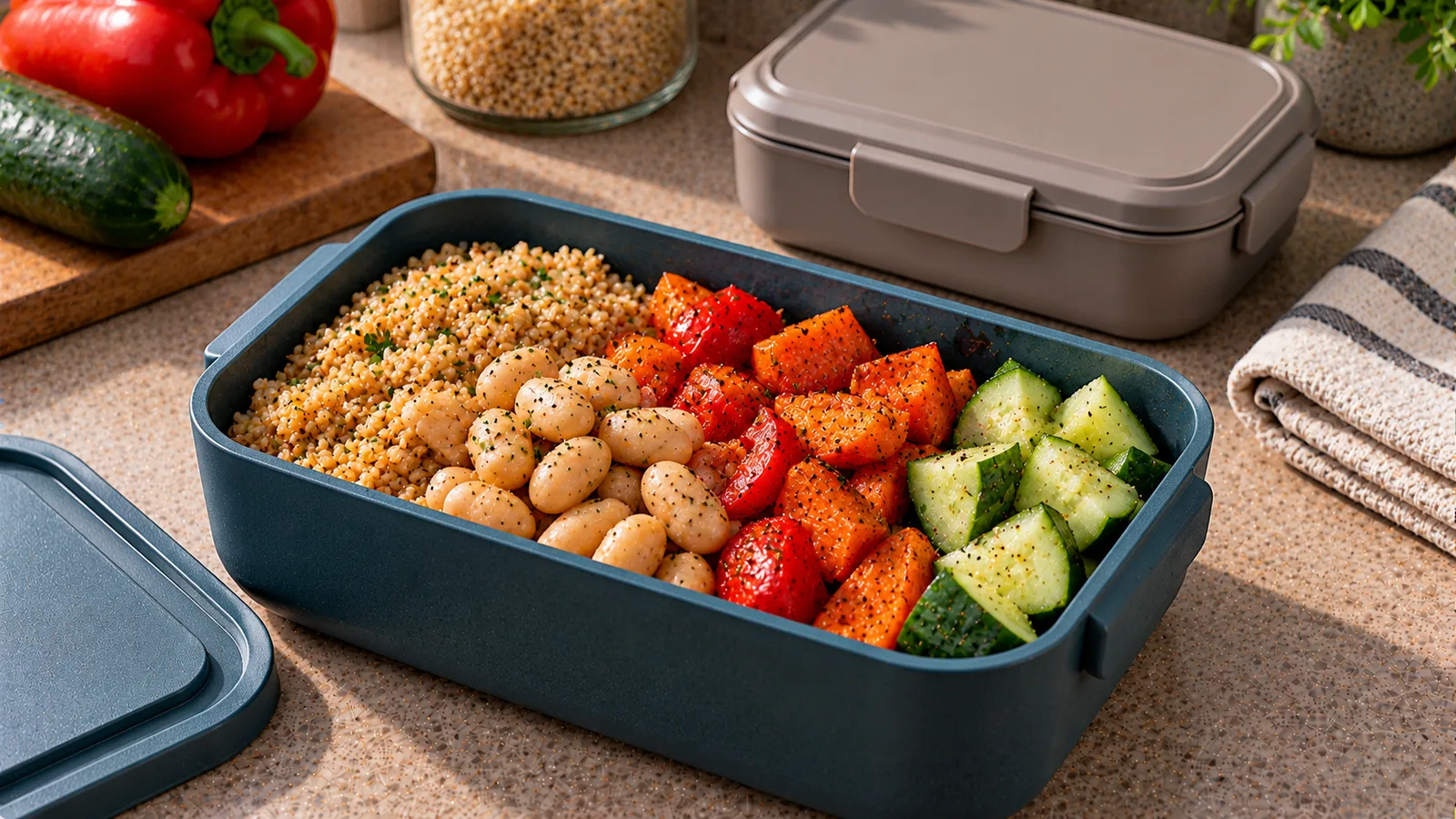
A packed lunch for work can be inexpensive without being a bare sandwich or an oversized bowl of one ingredient. This five-day plan assembles five different lunchboxes for one adult: chickpea couscous, an egg-and-rye sandwich box, white-bean pasta salad, tuna–potato salad and a tofu wrap. Each includes a starchy food, a substantive protein food and vegetables. The quantities are for one packed lunch per day, not a family batch or a complete daily diet.
The key budgeting distinction is between money paid at checkout and the cost of the ingredients actually packed. Our illustrative German shopping basket comes to €28.49 in full packages, while the five lunches use approximately €9.02 of those ingredients—about €1.80 per lunch. Neither number is a verified supermarket offer: these are explicit planning assumptions, and packaging sizes and prices vary by shop and date. After the week, usable leftovers are worth approximately €19.47 at the same proportional prices, provided they can be stored and used safely.
Five work lunchboxes and their ingredient costs
The prices below refer to ingredients allocated to each box, not the amount payable to buy every package anew. All drained weights are edible food, and the couscous and pasta amounts are dry weights before cooking. The stated portion is not a promise of identical calories or protein in every meal.
| Day | Packed lunch | Ingredients used |
|---|---|---|
| Monday | Chickpea couscous box | €1.43 |
| Tuesday | Two-egg rye sandwich and vegetables | €1.40 |
| Wednesday | White-bean wholewheat pasta salad | €1.46 |
| Thursday | Tuna–potato yogurt bowl | €2.46 |
| Friday | Tofu and peanut vegetable wrap | €2.26 |
| TOTAL — 5 lunches | — | €9.02 |
The two lunches with the lowest estimated allocated cost are not necessarily the most filling for every person. Adjust the amount of bread, pasta or vegetables to your appetite and activity. Changing quantities changes the calculated cost. A lunchbox is also only one meal: the principles of a balanced lunch help assess the rest of your day.
Monday: chickpea, couscous and cucumber box
Measure 70 g dry couscous, hydrate it with boiling water as the package directs and spread it in a shallow container so it cools promptly. Drain and rinse 140 g chickpeas; combine with 120 g diced cucumber, 100 g tomatoes, 15 ml lemon juice and 7 ml olive oil. Put the dressing in a small leakproof pot until eating if you prefer a firmer texture. The purchased chickpea can holds more than this recipe uses: refrigerate the remainder in a clean container, following the packaging instructions, rather than leaving it in an opened can.
This is a practical cold lunch, not a claim that couscous is nutritionally superior to bread. The chickpeas provide a pulse component, and cucumber and tomato add fresh produce. The dry-weight measure matters: 70 g uncooked couscous becomes a heavier prepared portion after absorbing water, but it is not 70 g of cooked couscous. A kitchen scale removes the ambiguity. Illustrative ingredient cost: €1.43.
If you carry the box for several hours, chill every prepared component first. Cooked grains and beans in a salad are perishable; an ordinary tote bag without cold packs is not an appropriate storage system for a long commute.
Tuesday: two-egg rye sandwich and crunchy vegetables
Hard-boil 2 eggs until both yolk and white are set; cool and refrigerate them promptly. Assemble with 100 g rye or wholegrain bread, 50 g plain yogurt as a dressing or spread, 140 g carrots cut into sticks and 120 g cucumber. Pack the moist yogurt separately to avoid soggy bread. For a cleaner sandwich, use sliced eggs and add cucumber just before eating; alternatively, keep the eggs whole and build your sandwich during the break.
This box costs €1.40 in allocated ingredients. Eggs, bread and raw vegetables contribute different functions: protein food, starchy base and produce. The example does not include mayonnaise, cheese or sweetened yogurt. If you add them, count them separately. Allergen considerations include egg, dairy and gluten-containing bread, and labels should be checked for a specific brand.
Use properly refrigerated cooked eggs. If workplace refrigeration is unavailable, use an insulated lunch bag and adequate frozen cold sources rather than assuming that a hard-boiled egg remains safe unrefrigerated throughout the morning.
Wednesday: white-bean and pea wholewheat pasta salad
Cook 75 g dry wholewheat pasta according to the package directions. Drain and cool it promptly in a shallow container. Fold through 140 g drained white beans, 90 g cooked and cooled frozen peas, 140 g chopped tomatoes, 6 ml olive oil and 10 ml lemon juice. Season to taste with any salt and spices you already have at home; their costs are not included in this illustrative basket. Use a covered leakproof pot for dressing if the lunch will travel in a backpack.
Pasta is measured dry, beans after draining, and peas at the amount used. These different weighing conventions are intentional. A drained can's printed net weight can include liquid, so use the edible drained weight printed on the label or actually weigh the beans. If a brand adds salt, compare labels rather than assuming all canned beans contain the same sodium. The estimated €1.46 is for this specific combination, not a general price for every pasta salad.
For variety, replace tomatoes with another in-season vegetable if it is cheaper, but revise the shopping model before repeating a price claim. This is a recipe-specific lunchbox; it is not another generic guide to weekly meal prepping. For batch organisation, see planning lunches for the week.
Thursday: tuna, potato and yogurt lunch bowl
Cook 250 g potatoes until tender and cool them safely. Drain one 130 g edible-weight tin of tuna, then mix the fish with 80 g plain yogurt, 100 g grated carrot, 100 g cucumber and 10 ml lemon juice. Keep the creamy dressing cold. Choose tuna in water or brine rather than oil if you want to reproduce the assumption; tuna in oil may change energy and cost. Check the label's drained weight: a 130 g tin here means 130 g edible fish, not 130 g including packing liquid.
At €2.46, this is the most expensive of the five boxes in the model, mainly because the whole tuna can is consumed. That may still be worthwhile when you want fish in a portable lunch. Do not leave opened tuna sitting overnight in the original tin. If the lunch is prepared the night before, immediately transfer it to a clean sealed container and refrigerate. An ice pack is particularly important when fish and yogurt travel together.
Tuna does not need to appear in the plan every day. Fish recommendations and advice for people who are pregnant or planning pregnancy vary by species and authority; check relevant local guidance rather than assuming all canned tuna has identical mercury content. The meal is presented as one possible packed lunch, not a medically tailored prescription.
Friday: tofu, cabbage and peanut wrap
Dry the surface of 150 g firm tofu, cook it thoroughly according to the product instructions, and chill it promptly. Place it in one 60 g wholegrain or wheat wrap with 140 g shredded cabbage and 100 g carrot. Stir a sauce from 18 g peanut butter, 15 ml lemon juice, 4 ml olive oil and enough drinking water for a spreadable texture. Pack the sauce separately and assemble shortly before eating if the wrap might otherwise soften.
This box has an estimated ingredient cost of €2.26. Tofu adds a soy component; cabbage is a relatively sturdy vegetable for transport; peanut butter contributes a dense dressing. The oil is already included in the calculation and must not be added a second time. If you replace peanut butter with a sesame dressing, calculate that as a different ingredient and check allergen labels. This lunch contains possible soy, peanuts and gluten allergens.
A wrap can be easier to eat away from a table than an open bowl, but it still requires cold storage once filled with cooled cooked tofu and cut vegetables. Pack a separate piece of fruit only if you want it; fruit has deliberately not been counted in the five-box basket.
Consolidated shopping list: what to buy versus what you use
Here is one possible basket for Germany, with 19 package lines and hypothetical euro prices. These prices are assumptions used to illustrate transparent math, not observed shelf prices or current deals. We count whole packages at checkout, then allocate each price proportionally to the edible units used. Eggs are counted by the piece; liquid ingredients are measured in millilitres, and other foods in grams. A complete checkout may be lower if you already own oil, peanut butter and staples.
| Product | Package bought | Used in lunches | Full pack price | Allocated cost |
|---|---|---|---|---|
| Couscous, dry | 500 g | 70 g | €1.49 | €0.21 |
| Chickpeas, drained | 240 g | 140 g | €0.79 | €0.46 |
| Cucumber | 400 g | 340 g | €0.89 | €0.76 |
| Tomatoes | 500 g | 240 g | €1.79 | €0.86 |
| Lemon juice | 200 ml | 50 ml | €0.99 | €0.25 |
| Olive oil | 500 ml | 17 ml | €4.49 | €0.15 |
| Eggs | 6 pcs | 2 pcs | €1.79 | €0.60 |
| Rye or wholegrain bread | 500 g | 100 g | €1.39 | €0.28 |
| Carrots | 1000 g | 340 g | €1.19 | €0.40 |
| Plain yogurt | 500 g | 130 g | €0.95 | €0.25 |
| Wholewheat pasta, dry | 500 g | 75 g | €0.95 | €0.14 |
| White beans, drained | 240 g | 140 g | €0.85 | €0.50 |
| Frozen peas | 450 g | 90 g | €1.09 | €0.22 |
| Potatoes | 1000 g | 250 g | €1.69 | €0.42 |
| Tuna, drained | 130 g | 130 g | €1.49 | €1.49 |
| Firm tofu | 200 g | 150 g | €1.69 | €1.27 |
| Wheat wraps | 360 g | 60 g | €1.49 | €0.25 |
| White cabbage | 500 g | 140 g | €1.49 | €0.42 |
| Peanut butter, unsweetened | 350 g | 18 g | €1.99 | €0.10 |
| TOTAL — purchase / used | — | — | €28.49 | €9.02 |
The total is €28.49 at checkout, €9.02 allocated to five lunches, and €19.47 of theoretical remaining package value. The remainder is not cash back and not necessarily usable in full: produce can spoil, package sizes may be different, and some cans have a short recommended storage time once opened. Per-box figures are rounded to the nearest cent; therefore the sum of five printed daily numbers can differ from the total allocated cost by one cent. The internal calculations use unrounded unit costs.
A useful way to read the numbers is this: buying a 500 ml bottle of oil is expensive at checkout, but consuming only 17 ml in the lunches should not make you charge the whole bottle to these five meals. Conversely, a complete can of tuna consumed at Thursday lunch is charged in full. Consult portion size versus serving size when package serving sizes do not match what you pack.
A practical timetable for preparation and food safety
This is a five-day menu, not a recommendation to refrigerate five prepared lunches from Sunday to Friday. On Sunday, inventory the pantry, wash containers and prepare only Monday's lunch; boil Tuesday's eggs on Monday evening or Tuesday morning. On Tuesday evening, cook and cool pasta and peas for Wednesday. On Wednesday evening, cook the potatoes and assemble Thursday's tuna bowl using a freshly opened can. On Thursday evening, cook the tofu and prepare the chopped vegetables for Friday. Keep all prepared perishables refrigerated until departure.
The German Federal Centre for Nutrition describes meal prep as useful for lunch breaks, while advising cooling and refrigerated storage after preparation. The BZfE workplace meal-prep guidance also recommends storing dressing separately. For food-safety transport, USDA FSIS recommends an insulated bag with at least two cold sources for perishable packed lunches and refrigeration on arrival when available; see Keeping Bag Lunches Safe.
If the commute, workplace temperature or absence of a refrigerator make reliable chilling impossible, these particular egg, tuna, yogurt, cooked-pasta and tofu boxes may be unsuitable. Choose an appropriately shelf-stable alternative instead. Do not assume that smell, appearance or a cool-feeling container proves food safety. Separate raw and ready-to-eat ingredients, clean tools and containers, and throw out food whose time-temperature history is uncertain. For reference, USDA's packed-lunch safety guidance explains the usual two-hour limit outside cold control, shortened to one hour in very hot conditions.
Making the same plan fit a different budget
The Verbraucherzentrale shopping guide recommends planning quantities, checking pantry stocks and comparing what the receipt actually cost. This is exactly why the shopping list does not pretend that €9.02 is a cash-register total. Before buying, check whether you already have olive oil, peanut butter, pasta or couscous; that may reduce actual spending substantially.
To reduce checkout cost, substitute one shared staple for two, or use a single type of canned bean in Monday's and Wednesday's boxes. To reduce ingredient cost per lunch, use more inexpensive pulses and seasonal produce, and less packaged specialty food. But changing one ingredient can alter texture, allergens, storage needs and nutrients. A single unit price is not enough to claim the substitution is universally healthier. The high-fiber foods guide provides options for changing the grain and pulse components.
The five prices are not a controlled comparison with workplace cafeterias or supermarket meal deals. Those options vary by city and serving size, and there is no honest universal "saving per lunch" without actual prices. The five examples show how to build portable meals from staples while keeping purchase cost, per-box allocation and safe storage separate.
Balanced does not mean identical portions
The NHS Eatwell Guide encourages vegetables, higher-fibre starchy foods and a range of protein sources. It also notes that balance can be considered over the entire day or week, rather than imposed identically on every plate. Our five lunches apply that practical structure; they are not certified to meet a fixed calorie, protein or micronutrient target.
Someone with a smaller appetite may eat less pasta or bread; an active worker may need a larger portion or an extra snack. Vegetable amounts and cooking yields also vary. For calorie or protein tracking, calculate from the actual product labels and the weights of ingredients used, not from an invented nutrition average for these composite lunches. The same applies to added oil and any snacks bought at work.
Source and pricing note: The recipes, amounts and unit prices are a worked Mealisa example for the German market. They are not an endorsement of specific products. External sources support balancing food groups, planned shopping and safe packing; they do not supply the hypothetical euro prices. Refresh the prices and product labels before treating the plan as a real shopping quotation.