
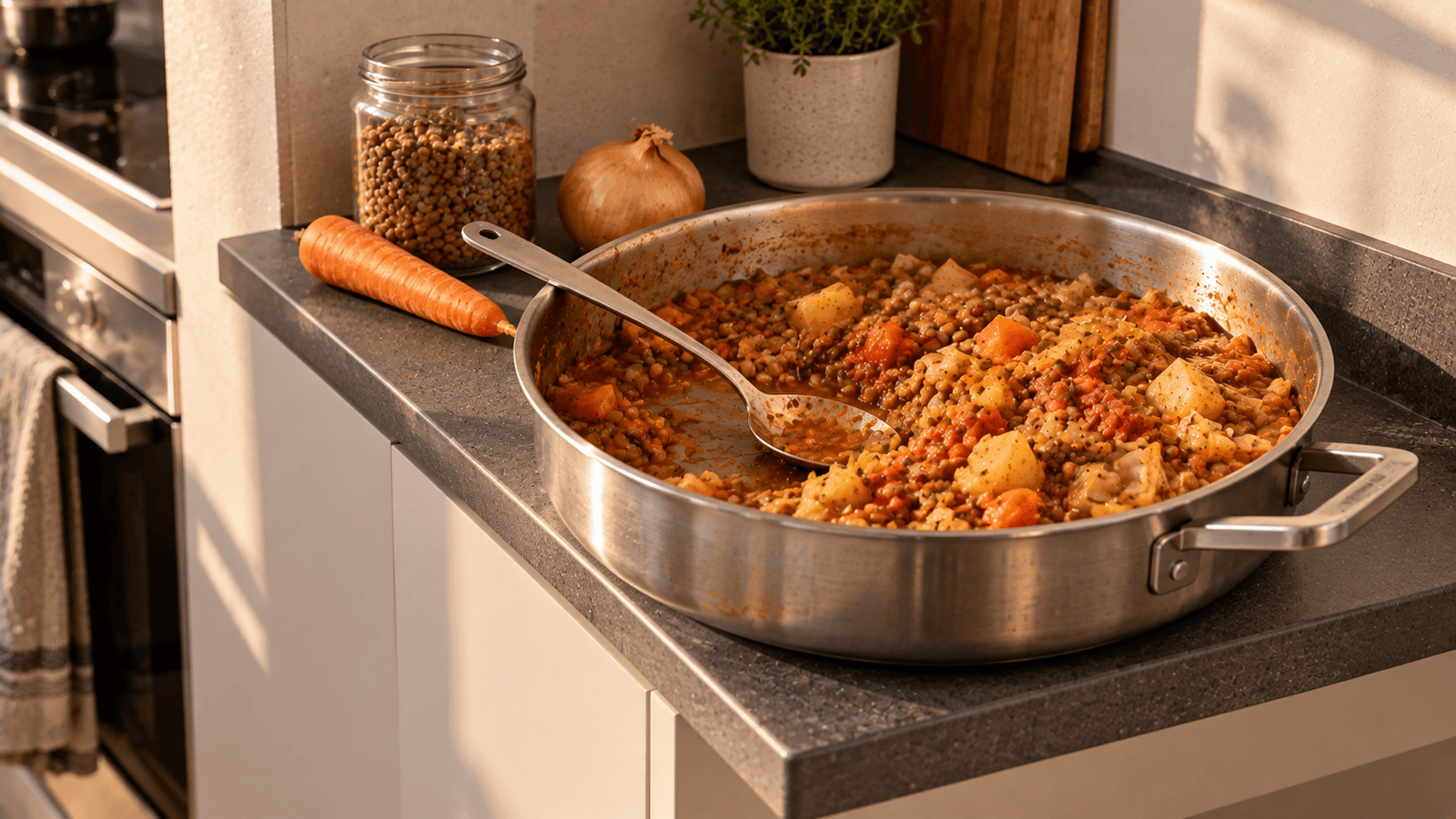
Healthy meals do not need expensive specialty ingredients.
A useful budget recipe usually does three things well: it relies on inexpensive staples, uses ingredients across more than one meal, and still includes a practical combination of protein, carbohydrate, vegetables or fruit, and fats where appropriate.
The 20 recipes below are designed around foods such as oats, potatoes, rice, lentils, beans, eggs, canned tomatoes, frozen vegetables and other ingredients that are widely available and easy to reuse.
Prices vary by country, store and season, so the focus here is on the structure of inexpensive meals, not fixed prices.
1. Lentil and tomato soup
A large pot of lentil soup is one of the simplest ways to turn inexpensive dry ingredients into several meals.
Ingredients
For about 4 servings:
- 250 g dry red lentils
- 1 onion
- 2 carrots
- 1 can chopped tomatoes
- 1 liter water or low-salt stock
- 1 tablespoon oil
- garlic
- paprika
- cumin
- black pepper
Method
- Dice the onion and carrots.
- Heat the oil in a large pot and soften the vegetables.
- Add garlic and spices.
- Add lentils, tomatoes and stock.
- Simmer for about 20–25 minutes until the lentils are soft.
- Add extra water if you prefer a thinner soup.
Serve alone or with bread.
Budget logic: dry lentils are the main protein-rich ingredient, while carrots, onion and canned tomatoes add volume without requiring many separate products.
2. Potato, egg and vegetable skillet
Potatoes and eggs can form the base of a simple one-pan meal.
Ingredients
For 2 servings:
- 500 g potatoes
- 4 eggs
- 1 onion
- 250 g frozen mixed vegetables
- 1 tablespoon oil
- paprika
- black pepper
Method
- Cut the potatoes into small cubes.
- Boil them briefly until almost tender.
- Heat oil in a pan and cook the onion.
- Add potatoes and frozen vegetables.
- Cook until lightly browned and hot throughout.
- Add the eggs and cook until set.
Budget logic: frozen vegetables reduce preparation and can be used in many other meals during the week.
3. Chickpea tomato pasta
Pasta becomes a more substantial meal when legumes are added to the sauce.
Ingredients
For 4 servings:
- 300 g dry pasta
- 1 can chickpeas, drained
- 1 can chopped tomatoes
- 1 onion
- 1 carrot
- 1 tablespoon oil
- garlic
- dried herbs
Method
- Cook the pasta.
- Sauté onion and carrot in oil.
- Add garlic, tomatoes and herbs.
- Stir in the chickpeas.
- Simmer for 10–15 minutes.
- Combine with the pasta.
If you already have spinach or other vegetables that need using, add them to the sauce.
4. Savory oats with egg and spinach
Oats do not have to be sweet.
Ingredients
For 1 serving:
- 60 g oats
- 250 ml water or milk
- 1–2 eggs
- a handful of frozen spinach
- black pepper
- paprika or chili flakes
Method
- Cook the oats with the liquid.
- Heat the spinach separately or stir it into the oats near the end.
- Cook the egg to your preference.
- Place it over the oats and season.
This recipe is useful when the same bag of oats is already being used for breakfast.
5. Bean and rice bowl
Rice and beans are inexpensive pantry staples that can be adapted to whatever vegetables are available.
Ingredients
For 4 servings:
- 250 g dry rice
- 2 cans beans, drained
- 1 can chopped tomatoes
- 300 g frozen vegetables
- 1 onion
- spices
- optional yogurt for serving
Method
- Cook the rice.
- Cook onion in a large pan.
- Add beans, tomatoes, vegetables and spices.
- Simmer until the vegetables are tender.
- Serve over rice.
Add yogurt, herbs or hot sauce if already available.
6. Baked potatoes with cottage cheese and vegetables
A baked potato can become a complete meal rather than just a side dish.
Ingredients
For 2 servings:
- 2 large potatoes
- 250 g cottage cheese
- 250–300 g vegetables
- herbs
- black pepper
Method
- Bake the potatoes until tender.
- Cook or steam the vegetables.
- Split the potatoes.
- Add cottage cheese and vegetables.
- Season with herbs and pepper.
If cottage cheese is expensive locally, plain yogurt mixed with beans or another affordable protein source can be used instead.
7. Red lentil curry with rice
Red lentils cook quickly and do not require soaking.
Ingredients
For 4 servings:
- 250 g red lentils
- 250 g dry rice
- 1 can chopped tomatoes
- 1 onion
- 1 carrot
- curry powder
- garlic
- 1 tablespoon oil
- water
Method
- Cook the rice separately.
- Sauté onion and carrot.
- Add garlic and curry powder.
- Add lentils, tomatoes and enough water to cook the lentils.
- Simmer until thick and tender.
- Serve with rice.
8. Vegetable egg fried rice
This recipe is particularly useful for cooked rice left from another meal.
Ingredients
For 2 servings:
- 350 g cooked cold rice
- 3 eggs
- 300 g frozen mixed vegetables
- 1 teaspoon oil
- soy sauce to taste
Method
- Heat a large pan.
- Add the vegetables and cook until hot.
- Push them to one side and scramble the eggs.
- Add the rice.
- Stir everything together.
- Season with a small amount of soy sauce.
Using previously cooked rice turns leftovers into a different meal rather than simply reheating the same plate.
9. White bean and tomato stew
Canned beans make this a quick pantry meal.
Ingredients
For 3–4 servings:
- 2 cans white beans, drained
- 1 can chopped tomatoes
- 1 onion
- 2 carrots
- 300 g frozen spinach
- 1 tablespoon oil
- garlic
- herbs
Method
- Cook onion and carrots in oil.
- Add garlic and tomatoes.
- Add the beans and spinach.
- Simmer for about 15 minutes.
- Season to taste.
Serve with bread or potatoes if you want a larger meal.
10. Banana oat pancakes
These use only a few basic ingredients and can work for breakfast or a snack.
Ingredients
For about 2 servings:
- 1 ripe banana
- 2 eggs
- 80 g oats
- cinnamon
- a small amount of oil for the pan if needed
Method
- Mash the banana.
- Mix with eggs and oats.
- Let the mixture sit for several minutes.
- Cook small pancakes in a non-stick pan.
- Serve with plain yogurt or fruit if available.
Very ripe bananas that might otherwise be discarded work particularly well.
11. Tuna and bean potato salad
A filling salad does not need expensive salad leaves.
Ingredients
For 3 servings:
- 600 g potatoes
- 1 can tuna
- 1 can white or kidney beans
- 1 onion
- 1 carrot or other crunchy vegetable
- 150 g plain yogurt
- mustard
- black pepper
Method
- Boil the potatoes and let them cool slightly.
- Drain the tuna and beans.
- Mix yogurt with mustard and pepper.
- Combine all ingredients.
- Chill or serve slightly warm.
The beans stretch one can of tuna across several portions.
12. Tomato lentil pasta sauce
Lentils can replace part or all of the meat in a pasta sauce.
Ingredients
For 4 servings:
- 250 g dry pasta
- 180 g dry lentils
- 1 can chopped tomatoes
- 1 onion
- 1 carrot
- garlic
- dried herbs
- 1 tablespoon oil
Method
- Cook the lentils until tender.
- Cook the pasta separately.
- Sauté onion and carrot.
- Add garlic, tomatoes, herbs and cooked lentils.
- Simmer for 10 minutes.
- Serve with the pasta.
Make extra sauce and freeze a portion if useful.
13. Cabbage, potato and bean soup
Cabbage is often an economical way to add a large amount of vegetables to soups.
Ingredients
For 5–6 servings:
- 700 g potatoes
- 500 g cabbage
- 2 cans beans
- 2 carrots
- 1 onion
- 1 can chopped tomatoes
- water or stock
- herbs and pepper
Method
- Chop the vegetables.
- Add onion, carrots, potatoes, cabbage and tomatoes to a large pot.
- Cover with stock or water.
- Simmer until the potatoes are tender.
- Add the drained beans.
- Cook for another 5–10 minutes.
This recipe is well suited to batch cooking.
14. Yogurt oats with apple
A simple cold breakfast can be assembled without cooking.
Ingredients
For 1 serving:
- 60 g oats
- 200 g plain yogurt
- 1 apple
- cinnamon
- a little water or milk if needed
Method
- Mix oats and yogurt.
- Add enough liquid to reach the texture you prefer.
- Dice or grate the apple.
- Add cinnamon.
- Refrigerate overnight or eat immediately with a firmer texture.
Buying plain yogurt and oats in larger containers can reduce the cost per serving compared with individually portioned products.
15. Chickpea and potato curry
Potatoes make a small amount of legumes go further while keeping the meal substantial.
Ingredients
For 4 servings:
- 600 g potatoes
- 2 cans chickpeas
- 1 can chopped tomatoes
- 1 onion
- 300 g frozen vegetables
- curry powder
- garlic
- 1 tablespoon oil
Method
- Cut the potatoes into cubes.
- Cook onion in oil.
- Add garlic and curry powder.
- Add potatoes, tomatoes and enough water to simmer.
- When the potatoes are nearly tender, add chickpeas and vegetables.
- Cook until everything is hot and tender.
Serve alone or with a small portion of rice if needed.
16. Egg and bean wraps
Wraps are useful for combining small amounts of several ingredients.
Ingredients
For 2 servings:
- 4 small tortillas
- 4 eggs
- 1 can beans, drained
- 200 g frozen or fresh vegetables
- plain yogurt or tomato salsa
- spices
Method
- Cook the vegetables.
- Add the beans and warm through.
- Scramble the eggs.
- Divide the mixture between tortillas.
- Add yogurt or salsa.
- Fold and serve.
If tortillas are expensive where you live, use the same filling with potatoes or rice.
17. One-pot tomato rice with beans
This is a low-effort meal with little washing up.
Ingredients
For 4 servings:
- 250 g dry rice
- 2 cans beans
- 1 can chopped tomatoes
- 300 g frozen vegetables
- 1 onion
- garlic
- paprika
- water or stock
Method
- Cook the onion in a large pot with a small amount of oil or water.
- Add garlic, rice, tomatoes and seasoning.
- Add enough liquid for the rice.
- Simmer according to the rice cooking time.
- Add beans and vegetables near the end.
- Cook until everything is hot and the rice is tender.
18. Vegetable frittata with potatoes
A frittata is useful for vegetables that need to be used soon.
Ingredients
For 3 servings:
- 6 eggs
- 350 g cooked potatoes
- 300 g mixed vegetables
- 1 onion
- 1 teaspoon oil
- black pepper
- herbs
Method
- Heat an oven-safe pan.
- Cook onion and vegetables.
- Add sliced cooked potatoes.
- Beat the eggs and pour them over the vegetables.
- Cook gently until the edges begin to set.
- Finish under the grill or in the oven until the center is cooked.
The vegetable mix can change according to what is already in the fridge.
19. Lentil shepherd’s pie
Lentils provide the filling while potatoes form an inexpensive topping.
Ingredients
For 4–5 servings:
- 250 g dry lentils
- 800 g potatoes
- 2 carrots
- 1 onion
- 250 g frozen peas
- 1 can chopped tomatoes
- a little milk for the mash
- herbs
- black pepper
Method
- Boil the potatoes and mash them with a little milk.
- Cook the lentils.
- Sauté onion and carrots.
- Add tomatoes, lentils, peas and seasoning.
- Transfer the filling to a baking dish.
- Spread the mashed potatoes over the top.
- Bake until hot and lightly browned.
20. Apple and cinnamon baked oatmeal
Baked oats make several breakfast portions at once.
Ingredients
For 6 portions:
- 300 g oats
- 2 apples
- 2 eggs
- 600 ml milk
- cinnamon
- 1 ripe banana for sweetness
- 1 teaspoon baking powder
Method
- Heat the oven to 180°C.
- Mash the banana.
- Mix all ingredients in a baking dish.
- Bake for about 30–35 minutes until set.
- Cool and divide into six portions.
Store refrigerated and reheat portions as needed.
How to turn these recipes into a cheaper weekly menu
The recipes become more economical when ingredients overlap.
For example, one shopping basket could supply:
- oats for yogurt oats, pancakes and baked oatmeal
- potatoes for the skillet, baked potatoes, soup and shepherd’s pie
- lentils for soup, curry, pasta sauce and shepherd’s pie
- beans for rice bowls, stew, soup and wraps
- frozen vegetables for fried rice, curry, wraps and one-pot rice
- canned tomatoes for several soups, curries and sauces
- eggs for breakfasts, fried rice, wraps and frittata
This reduces the number of ingredients bought for only one recipe.
Example four-day ingredient rotation
| Day | Meal | Shared ingredients |
|---|---|---|
| 1 | Lentil and tomato soup | lentils, carrots, onion, tomatoes |
| 2 | Chickpea tomato pasta | onion, carrots, tomatoes |
| 3 | Vegetable egg fried rice | frozen vegetables, eggs |
| 4 | Chickpea and potato curry | chickpeas, potatoes, frozen vegetables |
The goal is not to eat the same meal repeatedly.
It is to reuse the same ingredients in different meals.
Use price per unit, not package price alone
A larger package is not automatically cheaper.
Compare price per kilogram, liter or another standardized unit.
If a 500 g bag costs €1.80:
€1.80 ÷ 500 × 100 = €0.36 per 100 g
If a 1 kg bag costs €3.20:
€3.20 ÷ 1,000 × 100 = €0.32 per 100 g
The larger bag is cheaper per 100 g in this example, but it only saves money if you actually use it.
Where to reduce cost without removing the core of the meal
If a recipe is too expensive, start by reviewing:
- premium toppings
- specialty sauces
- individually packaged foods
- out-of-season produce
- expensive protein portions
- ingredients bought for only one recipe
Then protect the basic structure of the meal.
For example, instead of removing vegetables entirely, switch from an expensive fresh vegetable to an affordable frozen or seasonal option.
Instead of removing protein entirely, consider eggs, lentils, beans or a smaller amount of a more expensive protein combined with legumes.
Frozen and canned foods can be practical budget ingredients
Fresh is not the only useful format.
Frozen vegetables can reduce waste because you use only the amount needed.
Canned beans and tomatoes can shorten preparation time and remain available for quick meals.
When comparing products, check the actual price, portion you use and nutrition label rather than assuming one format is always cheaper or nutritionally preferable.
Build your own budget recipe formula
You can create many inexpensive meals without following a fixed recipe.
Choose:
- A staple: potatoes, rice, pasta, oats or bread
- A protein source: lentils, beans, eggs, yogurt, cottage cheese, tofu, canned fish or another affordable option
- Vegetables or fruit: seasonal, frozen, canned or fresh
- Flavor: herbs, spices, garlic, mustard, tomato, yogurt sauce or another ingredient already available
- Cooking fat when needed: measure it rather than pouring automatically
This creates combinations such as:
- rice + beans + vegetables + tomato
- potatoes + eggs + vegetables + yogurt
- pasta + lentils + tomato sauce
- oats + yogurt + fruit
- potatoes + beans + cabbage
The cheapest combination will depend on local prices, but the structure remains useful.