
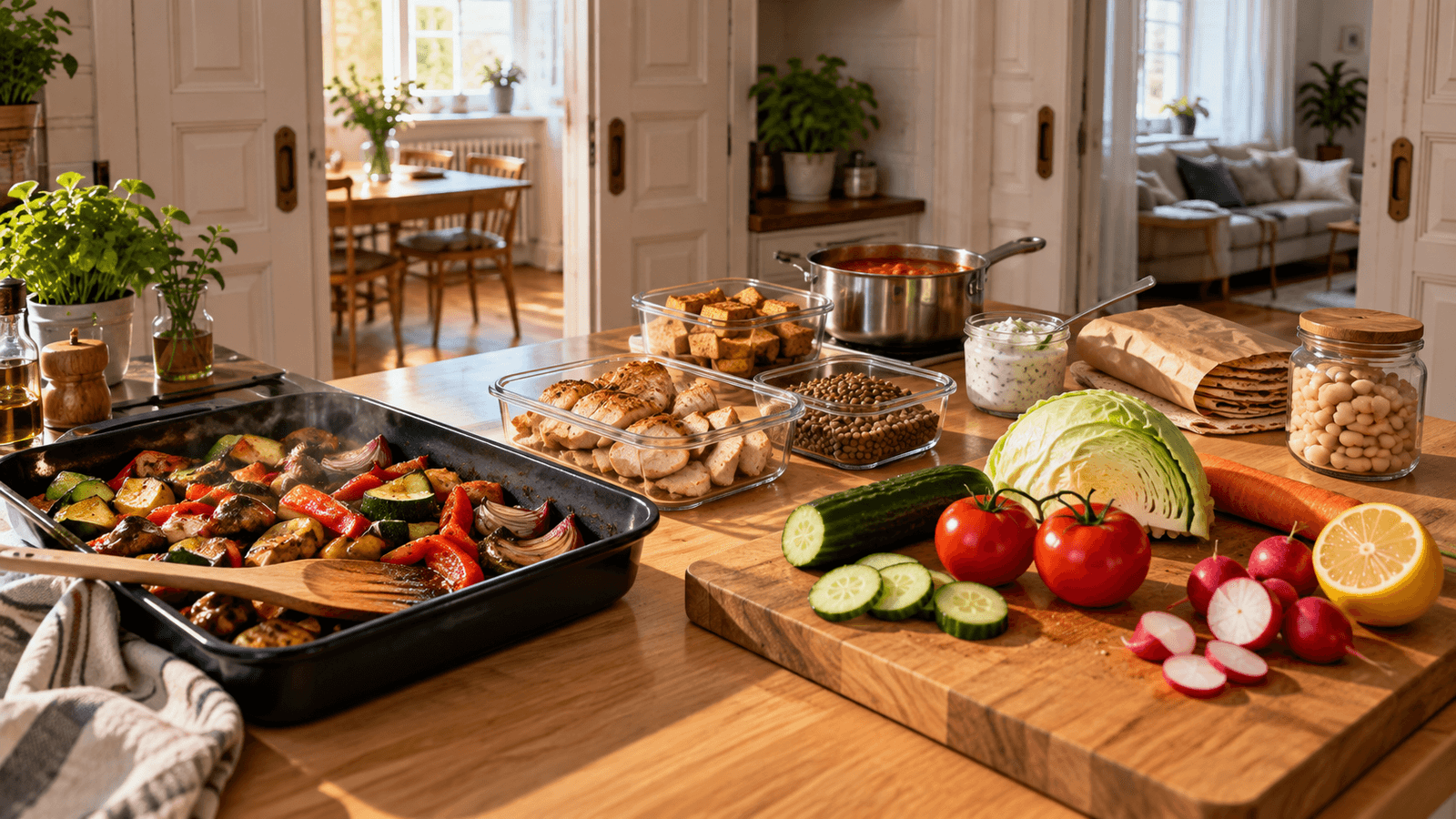
A lower-calorie lunch does not need to be tiny, bland or built around salad every day.
A practical lunch can combine vegetables, protein, fiber-rich carbohydrates and flavorful ingredients while keeping overall energy intake appropriate for your needs.
The recipes below are designed as flexible everyday ideas rather than rigid meal plans.
Exact calories depend on ingredient brands, quantities, cooking methods and substitutions, so use the amounts you actually prepare when tracking a recipe.
What makes a useful low-calorie lunch?
A satisfying lower-calorie lunch often includes several of the following:
- a meaningful source of protein
- vegetables or fruit
- fiber-rich carbohydrates
- a moderate amount of dietary fat
- enough food volume to feel like a real meal
- flavor from herbs, spices, acidity and sauces
The goal is not to make lunch as low in calories as physically possible.
A lunch that leaves you hungry shortly afterward may simply shift eating to later in the day.
For more on meal structure, see What Makes a Lunch Balanced?.
1. Chicken and roasted vegetable bowl
Roast zucchini, bell pepper and red onion until browned at the edges.
Add sliced cooked chicken and a modest portion of cooked potatoes or another carbohydrate you enjoy.
Finish with lemon juice, herbs and a spoonful of yogurt-based sauce.
Why it works: chicken provides protein, while roasted vegetables add volume and flavor without requiring a large amount of oil.
2. Lentil and tomato soup
Cook lentils with tomatoes, carrots, onion, celery, garlic and vegetable stock.
Season with cumin, black pepper and herbs.
Serve as a thick soup rather than blending everything completely.
Why it works: lentils provide both protein and fiber, while the vegetables increase volume.
3. Tuna and white bean salad
Combine drained tuna with white beans, tomatoes, cucumber, red onion and parsley.
Dress with lemon juice, mustard and a measured amount of olive oil.
Why it works: tuna and beans create a protein-rich lunch with substantial texture and fiber.
If you track the tuna separately, remember that water-packed and oil-packed products can differ. See Calories in Tuna.
4. Egg and potato lunch box
Combine boiled potatoes, boiled eggs, cucumber, tomatoes and leafy greens.
Add mustard, herbs and a light yogurt dressing.
Keep the ingredients loosely assembled rather than heavily coated in sauce.
Why it works: potatoes can be filling, while eggs add protein and dietary fat.
5. Chickpea vegetable wrap
Fill a whole-grain wrap with lightly mashed chickpeas, shredded cabbage, tomato, cucumber and herbs.
Use yogurt, lemon and spices for the sauce.
Why it works: chickpeas contribute fiber and protein, and the vegetables add crunch and volume.
6. Chicken vegetable soup
Simmer chicken with carrots, celery, leek, zucchini and broth.
Add a modest amount of potatoes, rice or small pasta if you want more carbohydrate.
Season generously with herbs and pepper.
Why it works: broth-based soups can provide substantial food volume while allowing you to adjust carbohydrate and protein portions easily.
7. Greek yogurt chicken salad
Mix cooked chicken with plain Greek yogurt, mustard, celery, spring onion and herbs.
Serve with crunchy vegetables and a slice of whole-grain bread.
Why it works: yogurt can replace part or all of a heavier mayonnaise-based dressing while still providing creaminess.
8. Tofu and vegetable stir-fry
Brown tofu in a non-stick pan with a small amount of oil.
Add broccoli, mushrooms, bell pepper and cabbage.
Season with soy sauce, ginger, garlic and lime.
Serve with a moderate portion of rice.
Why it works: a large proportion of vegetables keeps the dish substantial while tofu provides protein.
9. Turkey and vegetable skillet
Cook lean turkey mince with onion, zucchini, mushrooms and tomatoes.
Season with smoked paprika, garlic and black pepper.
Serve with potatoes, rice or a piece of bread depending on your needs.
Why it works: the vegetables stretch the mixture into a larger meal without requiring a large quantity of meat.
10. Cottage cheese baked potato
Bake a medium potato until tender.
Split it and top with cottage cheese, chopped cucumber, spring onion, herbs and black pepper.
Add a side of tomatoes or other raw vegetables.
Why it works: potato provides carbohydrate and volume while cottage cheese contributes protein.
11. Red lentil curry with cauliflower
Cook red lentils with tomatoes, onion, garlic, ginger and curry spices.
Add cauliflower and spinach toward the end.
Use a modest amount of coconut milk if desired, or use yogurt when serving.
Why it works: lentils make the dish substantial without requiring meat.
12. Shrimp and zucchini skillet
Cook shrimp quickly with garlic and a small amount of olive oil.
Add zucchini, cherry tomatoes and spinach.
Finish with lemon juice and black pepper.
Serve with a small portion of bread, rice or potatoes if desired.
Why it works: shrimp provides protein while the vegetables create most of the food volume.
13. Mediterranean bean bowl
Combine cannellini beans with tomatoes, cucumber, roasted peppers, red onion and parsley.
Add lemon juice, oregano and a modest amount of olive oil.
Optional feta can add flavor, but account for the amount if you are tracking calories.
Why it works: beans provide fiber and protein, making this more substantial than a vegetable-only salad.
14. Vegetable omelet with rye bread
Cook eggs with mushrooms, spinach, tomato and onion.
Use a non-stick pan and only as much cooking fat as needed.
Serve with a slice of rye or whole-grain bread.
Why it works: eggs provide protein while vegetables increase the size of the meal.
15. Chicken cabbage stir-fry
Cook sliced chicken with a large amount of shredded cabbage, carrots and mushrooms.
Season with garlic, ginger, soy sauce and chili.
Serve alone or with a moderate portion of rice.
Why it works: cabbage provides substantial volume and texture with relatively low energy density.
16. Tomato bean pasta
Use a moderate portion of pasta and combine it with white beans, tomato sauce, zucchini and spinach.
Add garlic, chili and herbs.
A small amount of grated cheese can be used for flavor.
Why it works: beans and vegetables increase the volume and fiber content of the dish without requiring a very large pasta portion.
17. Skyr herb bowl with potatoes and vegetables
Combine plain skyr with chopped herbs, lemon juice, garlic and black pepper.
Serve it alongside boiled potatoes, cucumber, radishes and tomatoes.
Why it works: skyr provides protein and works as both a main component and creamy sauce.
18. Stuffed bell pepper with turkey and lentils
Fill halved bell peppers with cooked lean turkey mince, lentils, tomatoes and onion.
Bake until the peppers are tender.
Use herbs and spices generously.
Why it works: combining lentils with turkey reduces the amount of meat needed while adding fiber and volume.
19. Chickpea tomato stew
Cook chickpeas with tomatoes, zucchini, onion, spinach, garlic and smoked paprika.
Add enough stock to create a thick stew.
Serve with a spoonful of yogurt if desired.
Why it works: this is a simple pantry-based lunch that is easy to batch cook and reheat.
20. Salmon and warm vegetable lunch
Bake or pan-cook a moderate portion of salmon.
Serve it with warm green beans, broccoli and boiled potatoes.
Use lemon, mustard and herbs for flavor rather than relying on a heavy sauce.
Why it works: salmon provides protein and dietary fat, while vegetables and potatoes create a complete and satisfying lunch.
How to keep lunch calories under control without making portions tiny
Reducing calories does not always mean reducing every ingredient.
Often it is more useful to look at the most energy-dense components.
Examples include:
- cooking oil
- mayonnaise
- creamy dressings
- cheese
- nuts and seeds
- large amounts of avocado
- large portions of pasta or rice
Small changes to these ingredients can sometimes make a larger difference than removing vegetables or lean protein.
Use vegetables to increase meal volume
Vegetables can make lunch physically larger while adding flavor, texture and nutrients.
Useful options include:
- cabbage
- zucchini
- mushrooms
- broccoli
- cauliflower
- tomatoes
- cucumber
- carrots
- peppers
- leafy greens
You do not need to use all of them.
Choose vegetables that fit the recipe and that you actually enjoy eating.
Include enough protein
Protein can help make a lunch more substantial.
Possible sources include:
- chicken
- turkey
- tuna
- eggs
- shrimp
- fish
- tofu
- lentils
- beans
- cottage cheese
- Greek yogurt
- skyr
The amount you need depends on your overall diet and individual requirements.
See How Much Protein Do You Need Per Day?.
Do not forget cooking oil
A recipe can look low-calorie based on its main ingredients while containing a substantial amount of cooking oil.
You do not need to avoid oil.
Simply remember that the amount used matters when estimating the total recipe.
Sauces can change the total quickly
Sauces can transform both flavor and calorie content.
Lower-energy options may include:
- yogurt-based sauces
- mustard
- salsa
- tomato-based sauces
- lemon or lime juice
- vinegar
- herbs
- spices
Higher-energy sauces can still fit, but portion size becomes more important.
Batch cooking without eating the same lunch every day
You can prepare flexible components rather than five identical finished meals.
For example, prepare:
- cooked chicken or tofu
- roasted vegetables
- boiled potatoes or rice
- a bean or lentil component
- one or two sauces
Then combine them differently during the week.
This creates variety while reducing daily preparation time.
Use leftovers intentionally
Lunch is a practical place to use leftovers from dinner.
Roasted vegetables can become a wrap.
Cooked chicken can go into soup or salad.
Potatoes can become part of an egg-based lunch.
Beans can be added to tomato sauce or a bowl.
Planning for leftovers can also reduce food waste.
See How to Plan Meals With Leftovers.
Adjust recipes to your appetite
The same recipe does not need to have the same portion for everyone.
You can adjust:
- protein amount
- carbohydrate portion
- vegetables
- sauce
- cooking fat
according to appetite, activity and the rest of your day.
How to track homemade lunch recipes
For mixed dishes, a practical method is:
- record the meaningful ingredients
- include cooking oils and substantial sauces
- calculate the complete recipe
- estimate the portion of the finished recipe you ate
You do not need perfect precision for every herb or low-calorie vegetable.
Focus first on ingredients that materially affect the total.
Common mistakes with low-calorie lunches
Making lunch too small
A tiny lunch may leave you hungry and make the plan difficult to maintain.
Using vegetables but forgetting dressing
Oil-heavy dressings can materially change the meal total.
Removing all carbohydrates
Carbohydrates can be part of a satisfying lunch. Portion and overall composition matter more than automatically excluding them.
Depending only on salad
Soup, wraps, potatoes, beans, lentils, pasta and warm skillet meals can also fit a lower-calorie lunch.
Ignoring protein
A vegetable-only lunch may not be satisfying for everyone.
Treating every recipe value as exact
Ingredient brands, quantities and preparation methods vary.
Frequently asked questions
What is a good low-calorie lunch?
A useful lower-calorie lunch generally provides enough food to be satisfying while fitting your overall energy needs. Protein, vegetables and fiber-rich foods can help.
Does lunch need to be a salad?
No. Soups, wraps, potatoes, eggs, beans, lentils, stir-fries and pasta dishes can all be adapted to a lower-calorie meal.
Can I eat pasta for a low-calorie lunch?
Yes. Portion size, sauce, added fats and the other ingredients determine the total meal more than the presence of pasta alone.
Are potatoes suitable for a lower-calorie lunch?
They can be. Preparation method and added fats matter. Boiled or baked potatoes can be incorporated into many satisfying lunches.
Should I avoid oil completely?
No. Dietary fat is part of a normal diet. If calorie intake matters to you, simply be aware of the amount used.
How can I make lunch more filling?
Protein, fiber-rich foods, vegetables, adequate food volume and a meal you actually enjoy can all contribute to satiety.
Can I meal prep these lunches?
Many of them can be prepared partly or fully in advance. Flexible components can provide more variety than identical prepared meals.
The bottom line
A lower-calorie lunch does not need to be a tiny salad.
Useful options include:
- soups
- wraps
- bean and lentil dishes
- potatoes
- eggs
- chicken
- fish
- tofu
- stir-fries
- moderate pasta or rice portions
- plenty of vegetables
Build lunch around foods you enjoy, pay attention to energy-dense additions and adjust portions to your actual needs.
That makes lower-calorie eating more practical than trying to create the smallest possible meal.
This article provides general educational nutrition information and is not individualized medical or dietary advice.