
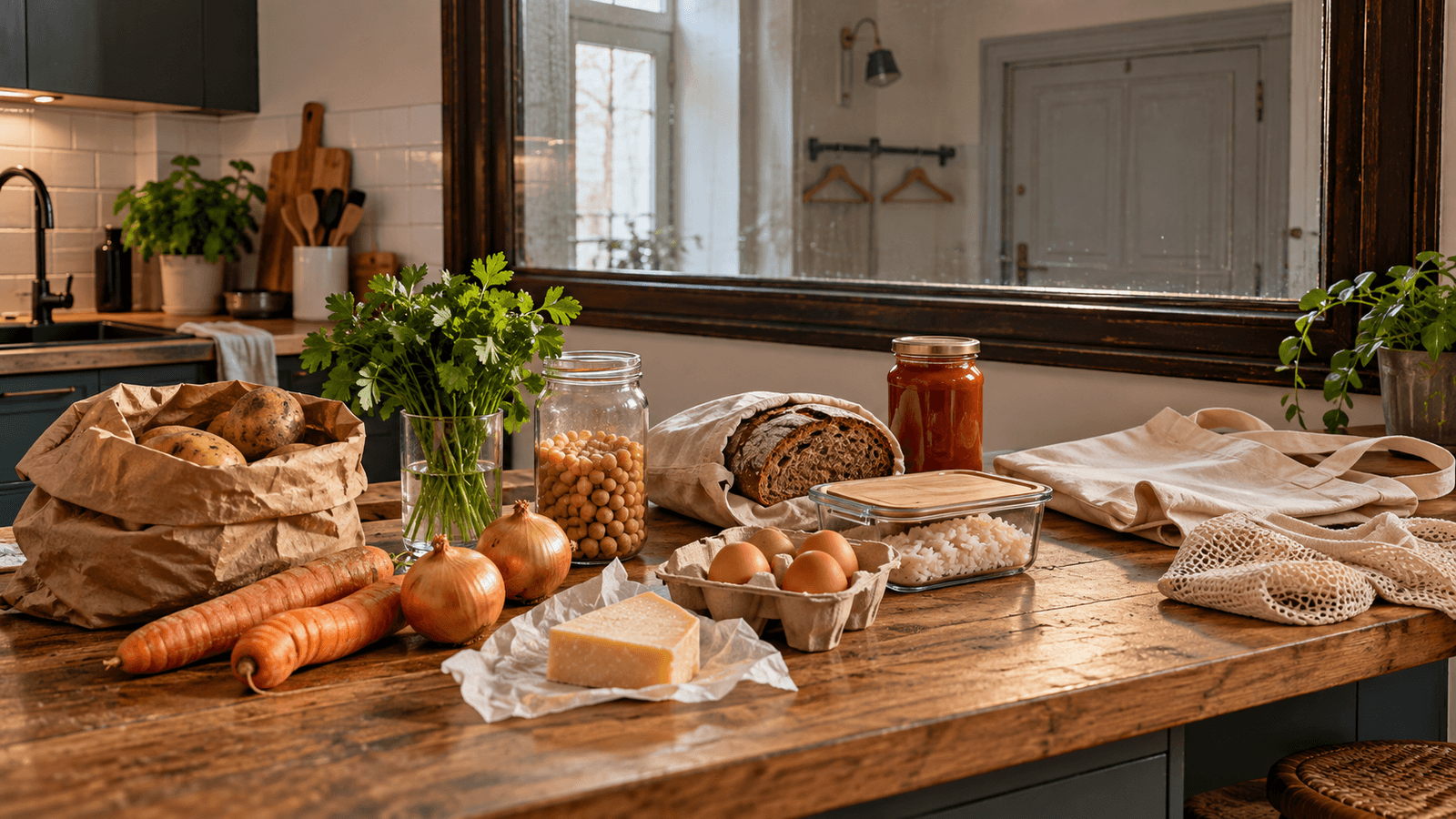
Meal planning can help reduce grocery spending without requiring you to eat the same inexpensive meal every day.
The biggest savings often come from making better use of food you already buy.
A practical plan can help you:
- buy fewer unnecessary items
- use ingredients before they spoil
- reuse ingredients across several meals
- make a more focused shopping list
- reduce last-minute food purchases
- understand which foods actually fit your budget
The goal is not to create a perfect weekly menu.
It is to make grocery decisions more intentional.
Why meal planning can save money
Without a plan, grocery shopping can become disconnected from the meals you actually prepare.
You may buy ingredients because they look useful, then discover that:
- you already had them
- you do not have the other ingredients needed
- the package is larger than you can use
- several perishable foods need to be eaten at the same time
- your schedule leaves no time to cook them
Meal planning connects purchasing with actual use.
That connection is where much of the potential saving comes from.
Start with the food you already have
Before planning new meals, look at what is already available.
Check:
- refrigerator
- freezer
- pantry
- cupboards
- bread storage
- fruit and vegetable storage
Pay particular attention to foods that should be used soon.
These might include:
- opened dairy products
- vegetables beginning to soften
- fresh herbs
- cooked grains
- leftover meat or fish
- tofu
- opened sauces
- bread
- ripe fruit
These foods can become the starting point of the plan.
See How to Plan Meals Around What You Already Have.
Prioritize food that may spoil
Not every ingredient has the same urgency.
Dry pasta can usually wait.
Fresh berries cannot.
A useful planning order is:
- foods that need to be used very soon
- opened refrigerated foods
- other fresh ingredients
- frozen foods
- shelf-stable pantry foods
This helps direct meals toward ingredients that are most likely to become waste.
Build meals around overlapping ingredients
Buying one ingredient for only one recipe can become expensive, especially when the package is larger than the recipe requires.
Instead, look for ingredients that can work in several meals.
For example, a package of vegetables might be used in:
- a stir-fry
- a soup
- a wrap
- an omelet
- a grain-based meal
The meals do not need to be identical.
The same ingredient can appear in different forms.
Reuse ingredients, not entire meals
Saving money does not require eating the same prepared dish repeatedly.
There is a useful difference between:
- repeating a meal
- reusing an ingredient
For example, cooked chicken might appear in one meal with potatoes and vegetables, then later in a wrap or salad.
A pot of lentils could become part of a soup and later part of another dish.
This creates variety while reducing unused ingredients.
Plan the expensive ingredients first
Some foods contribute much more to the grocery bill than others.
Depending on where you shop, these may include:
- meat
- fish
- cheese
- convenience foods
- specialty products
- some fresh produce
- prepared snacks
When planning on a budget, decide how these ingredients will be used before filling the rest of the plan.
You can then build less expensive foods around them.
Use flexible staple foods
Staples can make a budget plan easier to adapt.
Examples include:
- oats
- rice
- pasta
- potatoes
- bread
- lentils
- beans
- chickpeas
- frozen vegetables
- eggs
- plain yogurt
The best staples are the ones you actually eat.
Buying an inexpensive food that stays unused is not a saving.
Include lower-cost protein options
Protein foods can represent a significant part of grocery spending.
Depending on local prices and preferences, lower-cost options may include:
- eggs
- lentils
- beans
- chickpeas
- tofu
- yogurt
- cottage cheese
- canned fish
- selected cuts of meat
Prices vary by country, store and week.
Compare the actual cost where you shop rather than assuming one protein source is always cheapest.
Compare cost per usable amount
Package price alone does not always tell you which option is less expensive.
Consider:
- package size
- edible portion
- whether you will use the entire package
- storage life
- preparation losses
- leftovers
A larger package can have a lower unit price but still waste money if part of it is discarded.
See How to Calculate Cost per Meal.
Plan around package sizes
Suppose a recipe needs only part of a package.
Ask what will happen to the remainder.
If you buy:
- a large tub of yogurt
- a bunch of herbs
- a bag of spinach
- a package of tortillas
- a block of tofu
assign the remainder to another realistic use.
This small habit can reduce forgotten partial packages.
Use the freezer intentionally
The freezer can extend the useful life of many foods.
It can help with:
- bread
- cooked meals
- portions of meat or fish
- some cooked grains
- sauces
- selected vegetables and fruit
But freezing only saves money if you remember what is there.
Keep freezer planning simple and periodically include frozen foods in upcoming meals.
Plan leftovers deliberately
Leftovers are more useful when they have a destination.
Instead of thinking:
“Maybe I will eat this later,”
decide:
“This becomes tomorrow's lunch.”
or:
“This component will be used in the next dinner.”
That turns leftovers into part of the plan.
See How to Plan Meals With Leftovers.
Do not plan every meal from scratch
A budget-friendly plan can include different levels of effort.
For example:
- one cooked meal
- one leftovers meal
- one quick pantry meal
- one flexible meal
- one meal using frozen food
This can reduce both cooking fatigue and unplanned purchases.
Keep one flexible meal
Schedules change.
A rigid seven-day plan can create waste if one evening changes unexpectedly.
Leaving one meal flexible can help.
That meal might use:
- leftovers
- pantry staples
- frozen food
- ingredients that need to be used
Flexibility can make the plan more financially realistic.
Check your schedule before shopping
Meal planning should reflect your actual week.
Ask:
- Which days are busy?
- When will you be home?
- When can you cook?
- Are there evenings when you need something quick?
- Will anyone be eating elsewhere?
Buying ingredients for meals you will not have time to prepare can increase waste and spending.
Make the shopping list from the plan
Once meals are roughly planned, create the shopping list.
Do not begin by writing everything you might want to buy.
Instead:
- identify the ingredients required by the plan
- remove anything already at home
- check package sizes
- add necessary staples
- add flexible foods you genuinely use
This produces a list connected to actual meals.
Separate needs from optional purchases
You can mentally divide the shopping list into:
- needed for planned meals
- useful staples
- optional items
This makes it easier to adjust the basket if prices are higher than expected.
Leave room for substitutions
A meal plan does not need to specify one exact product.
For example, a meal might require:
- one affordable vegetable
- one protein source
- one grain or potato
- one simple sauce
At the store, you can choose based on price and availability.
This is especially useful when produce prices change.
Use sales carefully
A discount only saves money when the food is useful.
Before buying a discounted item, ask:
- Will I actually eat it?
- Can it replace something already on the list?
- Can I store it safely?
- Will I use it before it spoils?
Buying more because something is discounted can increase spending rather than reduce it.
Store brands can help
Store-brand products can sometimes cost less than branded alternatives.
They may be useful for staples such as:
- oats
- pasta
- rice
- canned legumes
- frozen vegetables
- dairy products
Compare the product, package size and unit price rather than relying only on branding.
Convenience foods are not automatically a bad choice
Cooking everything from scratch is not always the cheapest option in practice.
A convenience food may prevent:
- takeaway purchases
- food waste
- buying many ingredients for one recipe
- skipping the planned meal because cooking takes too long
The useful comparison is not always “homemade versus packaged.”
It is often “what will I realistically eat?”
Budget for snacks too
Snacks can quietly increase grocery spending when they are not considered in the plan.
If you regularly snack, include realistic options.
These can be simple foods such as:
- fruit
- yogurt
- bread
- nuts
- vegetables
- hummus
See Healthy Snacks: How to Build a More Satisfying Snack.
Do not overbuy fresh produce
Buying large amounts of vegetables and fruit can look healthy and economical at the store.
It is not economical if a significant amount is discarded.
Plan fresh produce according to:
- how quickly it spoils
- how much your household actually eats
- whether some can be frozen
- how many meals use it
Frozen produce can reduce waste
Frozen fruit and vegetables can be useful because you can take only the amount needed.
They can also provide backup ingredients when fresh food runs out.
Choose based on price, preference and intended use.
Use highly perishable foods early
If you shop once for several days, schedule the most perishable foods earlier.
More durable or frozen ingredients can be used later.
This reduces the chance that delicate foods spoil before you reach them in the plan.
Keep an emergency meal
An inexpensive backup meal can prevent an unplanned order or additional grocery trip.
Examples might use:
- pasta and a simple sauce
- eggs and bread
- lentils
- canned beans
- frozen vegetables
- soup ingredients
Choose something your household actually likes.
Avoid planning an unrealistic cooking week
A plan with seven ambitious recipes may look organized but fail in practice.
If your normal week allows only a few cooking sessions, plan accordingly.
A realistic plan saves more money than an ideal plan that is abandoned.
Repeat components strategically
You can prepare one component and use it in different ways.
For example:
- cooked rice in two different meals
- roasted vegetables as a side and later in a wrap
- yogurt as breakfast and as a sauce base
- beans in a soup and another meal
This can reduce both cooking time and waste.
Track what gets thrown away
For one or two weeks, notice which foods are repeatedly discarded.
Common examples might include:
- salad leaves
- herbs
- bread
- opened sauces
- leftover cooked food
- fruit
Then adjust future shopping.
If spinach repeatedly spoils, buying more spinach because it is inexpensive does not solve the problem.
Track spending by pattern, not only by total
A grocery total tells you how much you spent.
It does not always tell you why.
Useful patterns to notice include:
- repeated extra shopping trips
- expensive convenience purchases
- unused fresh food
- duplicate pantry items
- snacks purchased without a plan
- ingredients bought for one recipe only
These patterns reveal where planning may help.
Set a realistic grocery budget
A grocery budget should reflect:
- household size
- local food prices
- dietary preferences
- nutritional needs
- cooking habits
- how often you eat at home
There is no universal grocery amount that fits every household.
See How Much Should You Budget for Groceries?.
What if the budget is very tight?
Start with the biggest practical opportunities rather than trying to optimize every ingredient.
For example:
- reduce food waste
- use existing pantry food
- plan expensive proteins
- limit unnecessary extra trips
- compare unit prices
- use flexible staples
- cook quantities you can realistically finish
Small repeated improvements can matter more than finding the absolute cheapest version of every item.
Meal planning for one person
Single-person households can face specific challenges because package sizes are often larger than one serving.
Useful strategies include:
- freezing portions
- reusing ingredients
- choosing flexible foods
- planning leftovers
- avoiding too many perishable ingredients at once
See Meal Planning for One Person.
Meal planning for two people
For two people, it helps to consider differences in:
- portion size
- preferences
- schedules
- snack habits
- meals eaten outside the home
The same base ingredients can often be adapted without preparing two completely separate plans.
See Meal Planning for Two People.
A simple budget meal-planning workflow
Step 1: check what you have
Look through the refrigerator, freezer and pantry.
Step 2: identify foods to use first
Prioritize opened and perishable items.
Step 3: check your schedule
Decide how many meals you will realistically prepare.
Step 4: choose meals with ingredient overlap
Reuse ingredients without necessarily repeating meals.
Step 5: plan expensive foods deliberately
Decide where meat, fish, cheese or other higher-cost foods will be used.
Step 6: include flexible low-cost staples
Use foods that can adapt when plans change.
Step 7: assign leftovers
Give likely leftovers a specific next use.
Step 8: build the shopping list
Buy what the plan actually requires.
Step 9: compare and substitute in the store
Adjust for price and availability.
Step 10: review what was wasted
Use that information to improve the next plan.
Example of ingredient overlap
Imagine you buy:
- potatoes
- carrots
- onions
- yogurt
- eggs
- lentils
- bread
- frozen vegetables
These ingredients can support several different meals rather than one recipe each.
For example:
- lentil and vegetable soup
- eggs with potatoes and vegetables
- bread with yogurt-based spread and vegetables
- roasted potatoes and carrots with another protein
- a quick frozen-vegetable meal
The exact meals matter less than the principle: each purchase has more than one possible use.
Meal planning does not need to eliminate spontaneity
You can plan enough structure to protect your budget while leaving room for changes.
For example, plan:
- several definite meals
- one leftovers meal
- one flexible meal
- a few backup foods
This can be more sustainable than assigning a precise recipe to every day.
How Mealisa-style planning can help
A food and meal-planning system can make budget planning easier when it connects:
- foods already available
- planned meals
- grocery needs
- portions
- food waste
- estimated spending
Instead of treating the grocery list separately from the meal plan, the two can inform each other.
The goal is not to buy the cheapest possible food.
It is to get more useful meals from the money you already spend.
Common mistakes
Shopping before checking the kitchen
This can create duplicates.
Planning too many fresh ingredients
Several foods may spoil at the same time.
Buying bulk packages automatically
A lower unit price is not useful if part of the food is wasted.
Planning every meal as a separate recipe
This increases the number of unique ingredients needed.
Ignoring leftovers
Unplanned leftovers often become waste.
Making the plan too rigid
Real schedules change.
Buying discounted food without a use
A discount is not a saving if the food is discarded.
Optimizing price but ignoring convenience
A plan that is too difficult to follow may lead to additional spending later.
Frequently asked questions
Does meal planning really save money?
It can. The main benefit comes from connecting grocery purchases to actual meals, reducing unnecessary purchases and making better use of food already bought.
How far ahead should I meal plan?
There is no universal period. Some households prefer a week, while others find a few days more practical.
Should I plan every meal?
Not necessarily. Planning the meals most likely to create expensive or wasteful decisions may be enough.
Is buying in bulk always cheaper?
No. A lower unit price only helps if you can use or safely store the larger quantity.
Should I plan around supermarket sales?
Sales can be useful when discounted foods replace something you already need. Buying unnecessary food because it is discounted does not automatically save money.
How can I reduce grocery spending without eating the same food every day?
Reuse ingredients across different meals rather than repeating complete meals.
What should I do with leftovers?
Give them a specific next use, such as tomorrow's lunch or a component of another meal.
What is the first thing I should do before grocery shopping?
Check the food you already have and identify what should be used soon.
The bottom line
Meal planning can save money when it helps you buy food with a clear purpose.
A practical approach is to:
- start with what you already have
- prioritize perishable foods
- reuse ingredients across different meals
- plan expensive ingredients carefully
- make the shopping list from the meal plan
- keep some flexibility
- use leftovers intentionally
- avoid buying more than you can realistically eat
- review what gets wasted
The goal is not the cheapest possible grocery basket.
It is a grocery basket that turns into food you actually eat.
This article provides general educational nutrition and budgeting information and is not individualized financial, medical or dietary advice.