
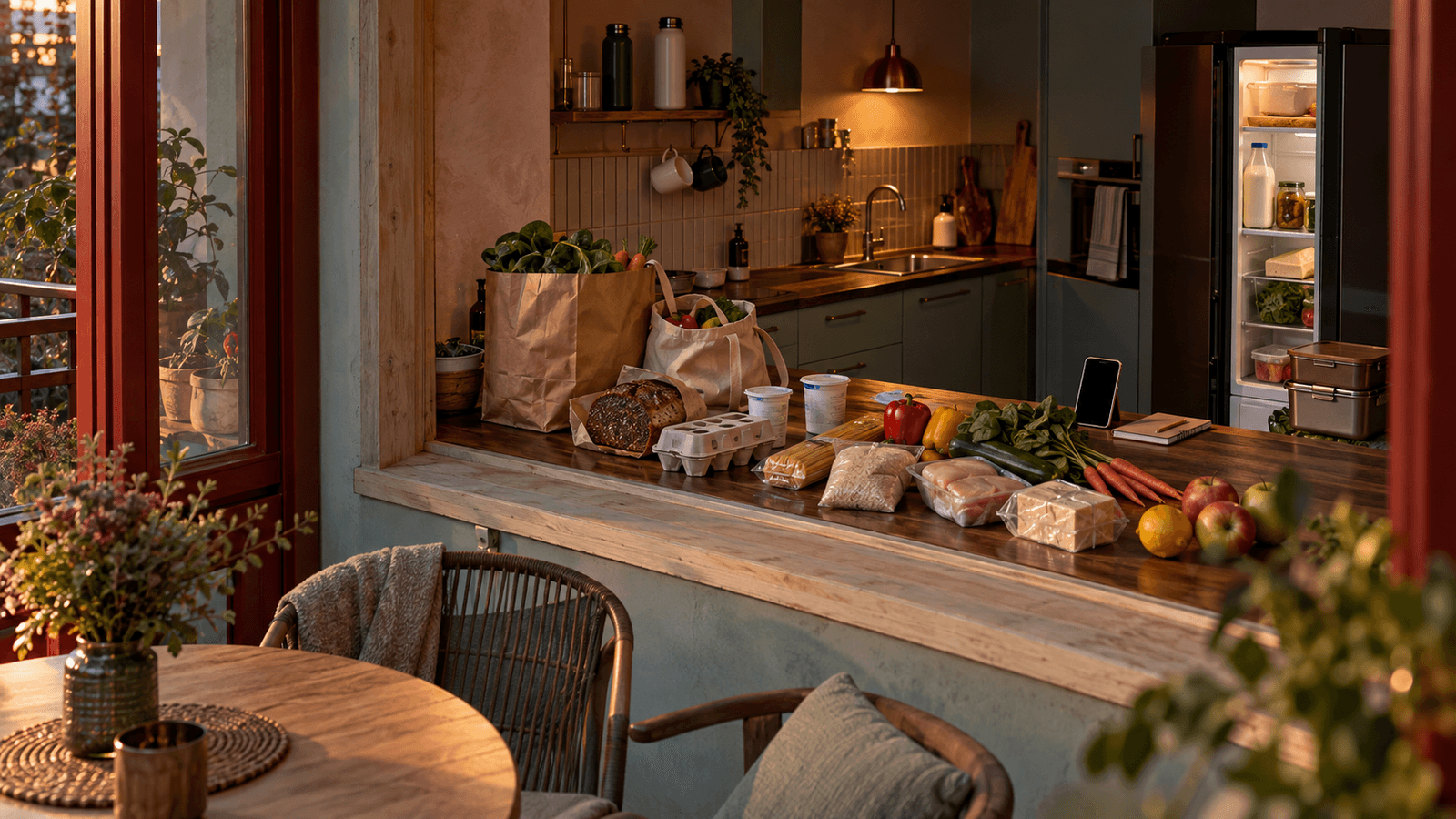
Meal planning for two people sounds simple, but it creates a few problems that are easy to underestimate.
Many recipes are written for four or more servings. Grocery packages may be larger than two people need. One person may eat more than the other, schedules may differ, and buying too much fresh food can lead to waste.
A useful meal plan for two should therefore do more than divide a family recipe in half.
It should help two people decide what to eat, how much to buy, what can be reused and how to keep the plan flexible when real life changes.
How to meal plan for two people
A practical process is:
- Check what food you already have.
- Look at both people's schedules.
- Decide how many meals actually need planning.
- Choose a small number of flexible meals.
- Estimate portions for each person.
- Reuse ingredients across several meals.
- Decide intentionally which meals should create leftovers.
- Build one combined grocery list.
- Leave some flexibility for changes during the week.
The goal is not to schedule every bite.
The goal is to reduce unnecessary decisions, shopping and food waste.
Start with your actual week
Before choosing recipes, look at the calendar.
Ask:
- Which days will both people eat at home?
- Are there evenings when only one person needs dinner?
- Will either person eat lunch outside the home?
- Are there unusually busy days?
- Is there a day when cooking is realistic?
- Are there social plans or restaurant meals already scheduled?
If you automatically plan seven breakfasts, seven lunches and seven dinners for two people, you may buy much more food than you actually need.
Plan the meals that are likely to happen.
Check the fridge, freezer and pantry first
Before making a grocery list, check what is already available.
Look for:
- vegetables that should be used soon
- opened dairy products
- cooked grains
- leftover sauces
- frozen meat or fish
- tofu or other proteins
- canned beans
- pasta, rice and grains
- bread
- fruit
- ingredients left from previous recipes
Starting with existing food can reduce both cost and waste.
Mealisa's fridge and food-tracking workflows are designed around the same idea: understand what you already have before deciding what comes next.
Decide how many dinners you really need
You do not necessarily need seven different dinners.
For example, a week for two might include:
- three freshly cooked dinners
- two leftover dinners
- one very quick meal
- one flexible evening for eating out, ordering food or using whatever remains
That is often more realistic than choosing seven unrelated recipes.
Avoid seven completely different recipes
A common planning mistake is choosing meals that share almost no ingredients.
One recipe needs half a cabbage.
Another needs a few herbs.
Another requires one specific sauce.
Another uses only part of a package of cheese.
The result can be an expensive grocery list and many leftovers that do not naturally fit together.
Instead, choose meals with some ingredient overlap.
For example, the same vegetables could appear in:
- a rice dish
- a pasta sauce
- a soup
- a wrap
- an omelet
The meals can still taste different.
Ingredient overlap does not mean eating the same dish every day.
Plan around ingredients, not only recipes
For two people, ingredient-based planning can be especially useful.
Suppose you buy:
- potatoes
- spinach
- tomatoes
- mushrooms
- yogurt
- chicken or tofu
- rice
- eggs
Instead of assigning every ingredient to one exact recipe, think about several possible combinations.
That gives you flexibility if your appetite or schedule changes.
How much food should you buy for two?
There is no universal amount.
Two people can have very different energy needs and appetites.
A useful approach is to estimate portions based on what each person normally eats rather than assuming both require identical servings.
If one person usually eats substantially more rice, pasta or protein, account for that when shopping.
This is more useful than simply multiplying every serving by two.
Two people do not need identical portions
A shared meal does not require identical quantities.
You can cook the same base meal and serve different amounts.
For example:
- one person may need more rice
- the other may prefer more vegetables
- one may need a larger protein portion
- one may want more sauce
- one may eat dessert while the other does not
The meal can remain shared even when portions differ.
Use flexible base meals
Meals that can be adjusted after cooking work particularly well for two people.
Examples include:
- grain bowls assembled individually
- pasta with adjustable portions of sauce and protein
- tacos or wraps
- baked potatoes with different toppings
- soups with optional sides
- stir-fries served with different amounts of rice
- yogurt or oatmeal breakfasts with individual additions
The idea is not to prepare two separate dinners.
It is to create one meal structure that can accommodate two people.
What if you have different calorie needs?
Different calorie needs are normal.
You usually do not need two completely separate meal plans.
Instead, keep the main meal similar and adjust portions or additions.
For example, the person with higher energy needs might have:
- a larger carbohydrate portion
- more protein
- additional bread
- more sauce or fat
- an extra snack
The person with lower needs can eat the same core meal in a smaller overall quantity.
This reduces cooking complexity.
What if one person is trying to lose weight?
You can still share many meals.
The person pursuing weight loss may adjust:
- total portion size
- amount of energy-dense sauce
- added fats
- carbohydrate portion
- snack choices
while keeping the main ingredients similar.
A useful shared meal can still include protein, vegetables, carbohydrates and enjoyable flavor.
For more detail, see How to Build a Filling Meal for Weight Loss.
What if your food preferences are different?
Start by identifying overlap.
Perhaps both people eat:
- rice
- potatoes
- pasta
- vegetables
- eggs
- yogurt
but prefer different proteins or sauces.
In that case, plan a common base and change only one component.
For example, cook the same rice and vegetables while using tofu for one person and chicken for the other.
This is usually easier than preparing two unrelated meals.
Use leftovers deliberately
Leftovers are especially useful when cooking for two because many recipes naturally produce more than two servings.
Instead of treating leftovers as an accident, decide in advance whether a meal should make:
- exactly two servings
- three servings
- four servings
A four-serving dinner can become lunch for both people the next day.
That turns one cooking session into two meals.
Not every meal should create leftovers
If every dinner produces four servings, the refrigerator can quickly fill with food that nobody wants to repeat.
Choose which meals are good leftover candidates.
Soups, stews, curries, pasta sauces and many grain-based dishes often store well.
Other meals may be better cooked in smaller quantities.
Use the freezer strategically
The freezer can solve the awkward mathematics of cooking for two.
If a recipe naturally makes six servings, you do not necessarily need to reduce every ingredient.
You might eat two servings now and freeze four for future meals.
Useful freezer options can include:
- soups
- stews
- cooked beans
- sauces
- curries
- bread
- cooked meat in suitable dishes
- some cooked grains
Label and date frozen food so it actually gets used.
Build a grocery list from the plan
Once the meals are selected, create one combined grocery list.
Group items by category:
- vegetables and fruit
- protein foods
- dairy or alternatives
- grains and bread
- pantry foods
- frozen foods
- sauces and condiments
Then remove anything you already have.
This prevents buying the same item twice.
Check package sizes
Package size matters more when shopping for two.
A large package may have a lower price per kilogram but still be poor value if half of it gets discarded.
Ask:
- Can we use the entire package this week?
- Can part of it be frozen?
- Will the ingredient appear in another meal?
- Does the larger package actually save money after waste is considered?
The cheapest unit price is not always the cheapest practical purchase.
Plan fresh foods according to shelf life
Not every ingredient needs to be eaten immediately.
Use more perishable foods earlier in the week.
For example:
Early in the week:
- delicate leafy greens
- fresh berries
- fresh fish
- opened dairy
Later in the week:
- carrots
- cabbage
- potatoes
- frozen vegetables
- canned beans
- pantry staples
This reduces the chance that Friday's meal depends on something that spoiled on Wednesday.
Keep one emergency meal
A useful plan for two should include at least one very easy backup meal.
Examples:
- eggs and toast
- pasta with a pantry sauce
- frozen vegetables with rice and a protein source
- soup from the freezer
- yogurt, fruit and oats for a simple meal
- beans with bread and vegetables
The exact meal is less important than having an option that prevents an unplanned evening from disrupting the entire week.
Breakfast planning for two
Breakfast does not need seven different recipes.
Many couples or households do well with two or three repeatable options.
For example:
- yogurt with fruit and oats
- eggs with bread
- oatmeal
- cottage cheese with fruit
- simple sandwiches
If each person prefers a different breakfast, keep the ingredients simple enough that maintaining two options does not create excessive waste.
Lunch planning for two
Lunch is often easiest when it uses dinner leftovers.
For example:
Monday dinner → Tuesday lunch.
Wednesday dinner → Thursday lunch.
This reduces both cooking and grocery complexity.
If one person eats lunch outside the home, account for that before buying food.
Dinner planning for two
Dinner usually deserves the most planning because it often requires the most preparation.
Instead of choosing seven recipes, consider a structure such as:
- Monday: cook
- Tuesday: leftovers
- Wednesday: cook
- Thursday: quick meal
- Friday: cook
- Saturday: flexible
- Sunday: leftovers or freezer meal
The exact days do not matter.
The principle is to match cooking effort to your actual week.
Example weekly meal plan for two
A simple example could look like this:
Monday
Dinner: rice, roasted vegetables and chicken or tofu.
Cook enough for four servings.
Tuesday
Lunch: Monday leftovers.
Dinner: pasta with tomato sauce, mushrooms and a protein source.
Wednesday
Dinner: lentil or bean soup with bread.
Make extra portions for the freezer.
Thursday
Lunch: leftover soup.
Dinner: baked potatoes with yogurt-based topping, vegetables and eggs or another protein.
Friday
Dinner: stir-fry using remaining vegetables and rice.
Saturday
Flexible meal: restaurant, takeaway, social meal or freezer food.
Sunday
Use remaining ingredients before the next grocery trip.
This is only an example.
The useful part is the structure: fresh cooking, leftovers, flexibility and ingredient reuse.
Meal planning for two on a budget
Planning can reduce food spending when it helps prevent unnecessary purchases and waste.
Useful strategies include:
- check existing food before shopping
- choose ingredients that work in several meals
- compare unit prices
- freeze surplus
- use beans and lentils regularly
- plan around seasonal produce
- avoid buying ingredients for only one small recipe component
- intentionally schedule leftovers
For a broader approach, see Meal Planning on a Budget.
How to avoid food waste
For two-person households, waste often comes from buying family-size packages and too many fresh ingredients.
To reduce waste:
- Check the refrigerator before planning.
- Use the most perishable foods first.
- Choose recipes with overlapping ingredients.
- Freeze ingredients before they spoil.
- Plan leftover meals.
- Keep a flexible end-of-week meal.
- Buy smaller packages when the larger size will not realistically be used.
What if your schedules change?
Do not make the plan so rigid that one unexpected evening ruins it.
A good plan contains meals that can move.
If Tuesday changes, Tuesday's ingredients might become Wednesday's dinner.
Shelf-stable and frozen backup foods provide additional flexibility.
Meal planning should reduce stress, not create another obligation.
How Mealisa can help two people plan meals
Mealisa is designed to connect meal planning with the information that affects real food decisions.
A plan can take into account factors such as:
- calorie and macro targets
- food preferences
- available ingredients
- cooking time
- budget
- meal history
- personal eating patterns
For two people, the useful principle is to share as much of the meal structure as possible while allowing portions and individual needs to differ.
That can reduce duplicate cooking while keeping the plan personalized.
Do both people need to track everything?
Not necessarily.
Tracking is a tool, not a requirement for meal planning.
Some people want detailed calorie and macro information.
Others mainly want to know what to cook and what groceries to buy.
The level of detail should match the reason you are planning.
Should you meal prep for two?
You can, but meal planning and meal prep are not the same thing.
Meal planning decides what you expect to eat.
Meal prep means preparing some or all of that food in advance.
You can have a very effective meal plan without spending Sunday filling a refrigerator with containers.
For two people, simply cooking extra portions of selected dinners may provide enough preparation.
Common mistakes when meal planning for two
Planning every meal from scratch
This creates unnecessary cooking and a long grocery list.
Assuming both people eat identical portions
Different needs are normal.
Buying family-size packages without a plan
Lower unit cost does not help if food is discarded.
Choosing too many unrelated recipes
Ingredient overlap can reduce waste and cost.
Forgetting existing food
A grocery list should begin with the fridge, freezer and pantry.
Making leftovers accidentally
Decide which meals should create extra servings.
Planning seven perfect days
Real schedules change. Leave room for flexibility.
Cooking separate meals for every preference
Look for a shared base before creating two completely different dishes.
A simple weekly workflow
Try this routine:
Step 1
Check the fridge, freezer and pantry.
Step 2
Look at both schedules.
Step 3
Count how many shared meals actually need planning.
Step 4
Choose three or four main meals.
Step 5
Assign intentional leftovers.
Step 6
Choose one quick backup meal.
Step 7
Create the grocery list.
Step 8
Adjust quantities for each person's appetite.
Step 9
Use perishable ingredients earlier.
Step 10
At the end of the week, review what was left unused.
That final step helps improve the next plan.
Frequently asked questions
How many meals should two people plan per week?
There is no fixed number. Plan only the meals you realistically expect to eat at home. Many households need fewer planned meals than they initially assume because of leftovers, work lunches and social plans.
How do you meal plan when two people eat different amounts?
Cook a shared base and adjust portions. One person can have more protein, carbohydrates, sauce or side dishes without requiring an entirely different meal.
Is meal planning for two cheaper?
It can reduce costs when it prevents overbuying, encourages ingredient reuse and reduces food waste. Planning itself does not guarantee savings if the grocery list remains excessive.
How do you cook recipes written for four?
You can halve the recipe, make all four servings and use leftovers, or freeze the extra portions. Choose the option that works best for that particular dish.
How can two people avoid wasting vegetables?
Buy realistic quantities, choose meals with overlapping vegetables, use delicate produce earlier and keep a flexible meal for using remaining ingredients.
Should couples eat the same meals?
They do not have to, but sharing a common meal base can reduce cooking effort. Portions and individual components can still differ.
What if one person is vegetarian?
Use shared carbohydrates, vegetables and sauces when possible, then prepare different protein components if needed.
Do we need a seven-day meal plan?
No. Planning three or four key meals plus leftovers and flexible meals may be more useful than assigning a unique recipe to every day.
The bottom line
Meal planning for two works best when you plan around your real schedules rather than an idealized week.
Check what you already have, choose a manageable number of meals, reuse ingredients, adjust portions for each person and decide intentionally when you want leftovers.
You do not need two separate meal plans simply because two people have different appetites or nutrition goals.
A shared structure with flexible portions is often simpler, cheaper and easier to maintain.
This article provides general educational nutrition information and is not a substitute for individualized medical or dietetic advice.