
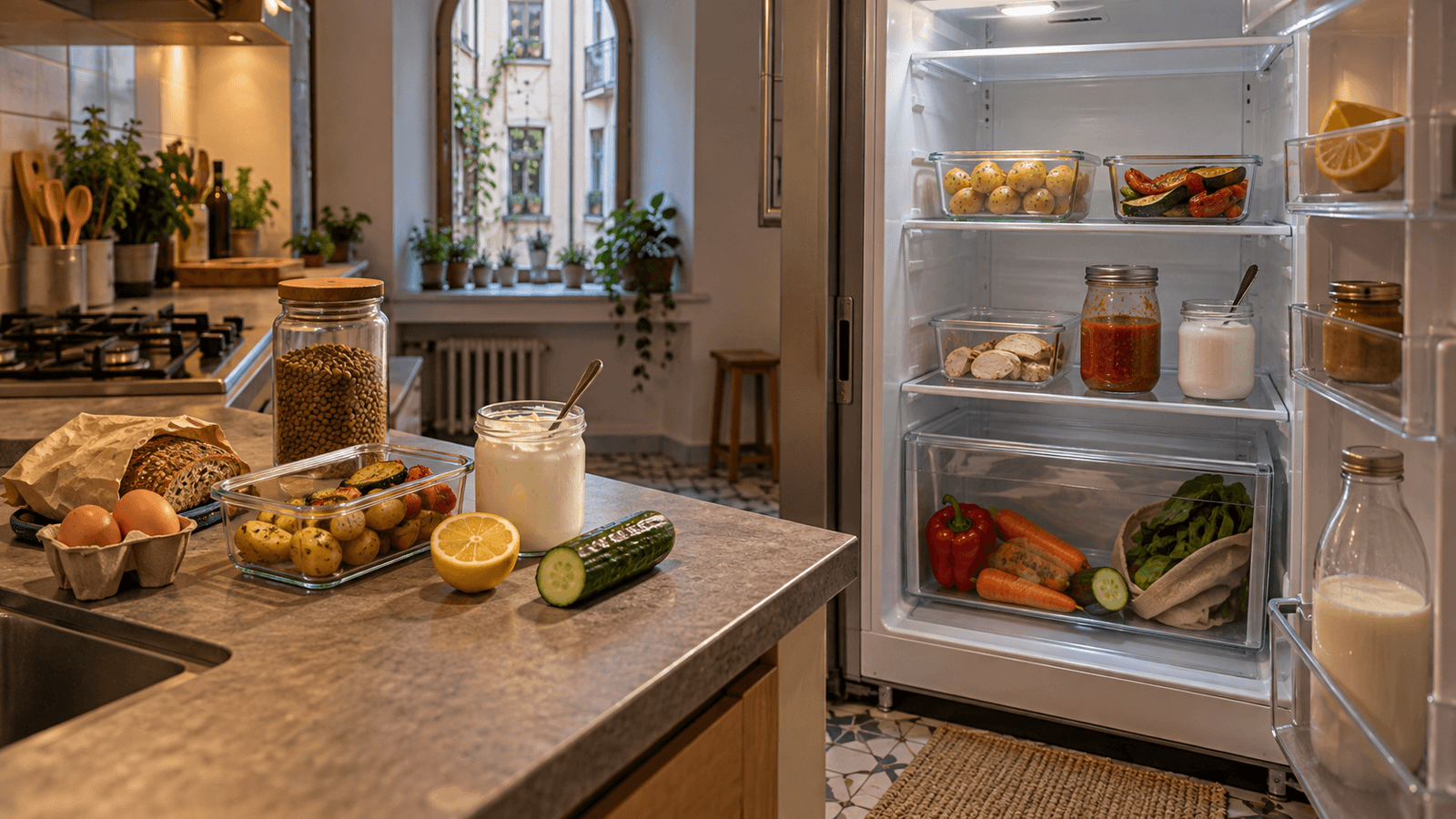
Leftovers can make meal planning easier, but only if you actually have a plan for using them.
Without one, cooked food often sits in the refrigerator until it is forgotten. With a simple system, yesterday’s ingredients can become part of tomorrow’s lunch or dinner without forcing you to eat exactly the same meal again.
Meal planning with leftovers is not about saving every spoonful indefinitely. It is about deliberately creating, storing and reusing useful food while it is still safe and appealing.
What does meal planning with leftovers mean?
Meal planning with leftovers means considering food you already cooked when deciding what to eat next.
That can include:
- complete leftover meals
- cooked protein
- cooked grains
- potatoes
- roasted vegetables
- sauces
- cooked legumes
- opened ingredients
- small quantities of food that can become part of another meal
The important distinction is that a leftover does not always need to return as the same dish.
A component can be reused in a different way.
Start by checking what is already cooked
Before planning another meal or buying more groceries, look at what is already in your refrigerator and freezer.
Ask:
- What is already cooked?
- What was opened recently?
- What should be eaten first?
- Which ingredients can be reused?
- Is there enough for a full meal or only a component?
This is similar to planning around pantry ingredients, but leftovers usually have a shorter useful storage window.
See How to Plan Meals Around What You Already Have.
Separate complete leftovers from reusable components
It helps to think about leftovers in two categories.
Complete leftovers
These are dishes that can simply be reheated and eaten again.
Examples include:
- soup
- stew
- pasta dish
- casserole
- curry
Reusable components
These are cooked ingredients that can become part of something else.
Examples include:
- cooked chicken
- roasted vegetables
- rice
- potatoes
- lentils
- beans
- cooked grains
- tomato sauce
Reusable components often provide more flexibility.
Plan intentional leftovers
One of the easiest strategies is to cook slightly more of an ingredient you know you can reuse.
For example, if you are cooking potatoes tonight, you might prepare enough to use some tomorrow.
If you are roasting vegetables, an extra portion can become part of another meal.
If you are cooking lentils, some can be refrigerated or frozen for later.
This is different from accidentally making far too much food.
The extra quantity has a purpose.
Cook once, use twice
A simple leftover strategy is to choose one component that can work in two different meals.
For example:
Dinner:
roasted vegetables with chicken and potatoes.
Next day:
the remaining roasted vegetables and chicken can go into a wrap or be combined with a different carbohydrate and sauce.
The meals share ingredients, but they do not have to feel identical.
Reuse protein differently
Cooked protein is often one of the most useful leftover components.
Depending on the food and appropriate storage, cooked chicken, fish, tofu, beans or lentils may be reused in another meal.
For example, cooked chicken might become:
- part of a sandwich or wrap
- an addition to a grain-based meal
- a component with potatoes and fresh vegetables
- part of a quick mixed lunch
The goal is not to disguise leftovers.
It is simply to avoid assuming that yesterday’s combination must be repeated exactly.
Reuse cooked carbohydrates
Cooked carbohydrates can also become flexible components.
Examples include:
- rice
- potatoes
- pasta
- couscous
- quinoa
- other cooked grains
A leftover carbohydrate can be paired with a different protein, vegetables or sauce the next day.
This can reduce both cooking time and food waste.
Use leftover vegetables as building blocks
Roasted or cooked vegetables can be particularly easy to reuse.
They may work:
- in a wrap
- with eggs
- alongside a different protein
- mixed with grains
- with legumes
- as part of a warm mixed meal
Fresh vegetables can then add a different texture so the second meal does not feel like a direct repeat.
Sauces can change the direction of a meal
A different sauce or seasoning can make familiar components feel substantially different.
For example, the same potatoes and vegetables might be combined once with a yogurt-herb sauce and another time with a tomato-based sauce.
If you track calories, remember that sauces and oils can contribute meaningful energy.
You do not need to avoid them, but the amount used should reflect what you actually eat.
Do not create leftovers you dislike
Planning leftovers only works when you still want to eat the food later.
If you dislike reheated fish, for example, preparing extra fish may not be useful.
If you enjoy leftover lentils but dislike reheated pasta, plan accordingly.
A good meal plan should reflect your real preferences rather than an idealized routine.
Build a “use first” area
You can make leftovers easier to remember by keeping foods that should be used soon in one visible refrigerator area.
This does not need to be a special container system.
A shelf or section of a shelf is enough.
Keep the most time-sensitive cooked foods visible rather than hiding them behind newer groceries.
Label when necessary
If several containers look similar, labeling them with the food and preparation date can help you remember what they contain and when they were prepared.
Follow appropriate local food-safety guidance for storage times.
Do not rely only on appearance or smell to determine whether a potentially unsafe food is safe to eat.
Plan leftovers before new meals
When deciding what to cook tomorrow, start with the food that already exists.
For example, if you have:
- cooked potatoes
- roasted zucchini
- a small amount of chicken
- yogurt
- fresh tomatoes
you already have several building blocks.
You may only need one or two additional ingredients to create another meal.
This is often more efficient than choosing a completely unrelated recipe and buying a new set of groceries.
Use a flexible meal formula
A simple way to plan around leftovers is to combine:
- one existing cooked component
- one protein source
- vegetables or fruit
- a carbohydrate source when useful
- a sauce, seasoning or other flavor element
Not every meal needs all five as separate items.
The formula simply helps you see what is missing.
Example: leftover potatoes
Suppose you have cooked potatoes left from dinner.
Instead of repeating the same dinner, you could combine them the next day with:
- eggs and vegetables
- beans and a yogurt-based sauce
- fish and fresh cucumber
- lentils and roasted vegetables
The potatoes remain the shared component, while the rest of the meal changes.
Example: leftover chicken
Cooked chicken could be used with:
- bread and fresh vegetables
- rice and a different sauce
- potatoes and cabbage
- beans and tomatoes
Again, the goal is not to create a complicated new recipe.
It is to give one prepared ingredient another useful role.
Example: leftover grains
A container of cooked grains can become:
- a quick lunch with vegetables and protein
- part of a warm meal with legumes
- a side for fish or tofu
- a base for another combination
Keeping the grain separate from sauce during storage can sometimes preserve more flexibility.
Freeze leftovers you will not use soon
If you know you are unlikely to eat a suitable leftover soon, freezing it can be better than leaving it in the refrigerator until the last moment.
Many foods can be frozen successfully, although texture and food-safety considerations vary.
Soups, stews, cooked legumes, sauces and many cooked grains are often practical candidates.
Follow current food-safety recommendations for cooling, freezing, thawing and reheating.
Do not wait until food is almost unusable
A common mistake is treating freezing as a rescue operation at the very end.
If you already know your schedule changed and you will not eat a suitable leftover, decide earlier whether to freeze it.
This preserves more flexibility.
Keep leftovers in useful quantities
One very large container can make leftovers harder to use.
Depending on the food, storing reasonable quantities separately may make it easier to:
- reheat only what you need
- freeze part of the batch
- use a component in different meals
- avoid repeatedly warming the entire quantity
Use appropriate food-safe storage containers.
Avoid repeatedly reheating the whole batch
If you only need part of a stored food, remove the amount you intend to use rather than repeatedly warming and cooling the full container.
Follow appropriate food-safety guidance for the specific food.
Use leftovers for the busiest meals
Leftovers are especially useful when time is limited.
Instead of planning them randomly, assign them to the days when cooking is least convenient.
For example:
- a busy workday lunch
- an evening after a late appointment
- the day before grocery shopping
- a day when you know you will have little time to cook
This turns leftovers into a planning advantage rather than an obligation.
Leave room for schedule changes
Do not assign every leftover to an exact future meal if your week is unpredictable.
You can simply decide:
- use tomorrow
- use within the next few meals
- freeze now
This gives you structure without excessive rigidity.
Leftovers and weight loss
Leftovers can also support a weight-loss plan because they reduce the need to make every food decision from scratch.
However, a leftover meal is not automatically suitable for your current hunger or calorie needs.
You can adjust:
- portion size
- vegetables
- carbohydrate amount
- sauces
- side ingredients
For more on flexible meal composition, see How to Build a Filling Meal for Weight Loss.
Leftovers and meal prep
Meal prep and leftovers overlap, but they are not exactly the same.
Meal prep usually involves intentionally preparing food for later.
Leftovers may result from a normal meal.
Both can use the same principle: store useful components separately when possible and combine them flexibly later.
See Meal Prep for Weight Loss Without Eating the Same Meal.
Track what you actually eat
If you track calories or macros, record the portion you actually eat rather than assuming it is identical to the original meal.
A leftover portion may contain:
- a different amount of sauce
- more or less protein
- a different side
- additional vegetables
- a different serving size
Your food log should reflect the second meal as it was actually eaten.
Photo tracking can help
Photo-based food tracking can be useful when leftovers are recombined.
Instead of trying to remember the exact original recipe, photograph the new meal and review the components that are actually present.
This can be especially helpful when yesterday’s food has been combined with new ingredients.
Meal planning before grocery shopping
Before shopping, check whether leftovers can cover part of the next one or two days.
This can prevent buying ingredients for meals you do not actually need.
It can also help you buy only the missing components.
For example, leftover lentils and roasted vegetables might mean you only need fresh bread, yogurt and fruit rather than ingredients for an entirely new meal.
Leftovers can reduce food waste
Using leftovers deliberately is one practical way to reduce avoidable household food waste.
The goal is not to consume food regardless of quality or safety.
It is to notice usable food earlier and incorporate it into your plan before it is forgotten.
For more strategies, see How to Avoid Food Waste With Meal Planning.
A simple leftover-planning routine
1. Check the refrigerator
Identify cooked food and opened ingredients.
2. Decide what should be used first
Prioritize foods with shorter safe storage windows.
3. Separate complete meals from components
A component may offer more possibilities than a complete dish.
4. Choose the next meal around one existing item
Start with what you already have.
5. Add only what is missing
Use fresh ingredients to change texture, flavor or nutritional balance.
6. Freeze suitable food you will not use
Make this decision early.
7. Update the plan when your schedule changes
Leftovers should make your plan more flexible, not less.
Common mistakes
Forgetting what is in the refrigerator
Food hidden behind other items is easy to overlook.
Cooking new food before checking leftovers
This can create a growing queue of food that needs to be eaten.
Making too much intentionally
Intentional leftovers should have a realistic future use.
Repeating the exact same meal when you dislike repetition
Reuse components differently instead.
Saving quantities that are too small to be useful
Very small amounts may not justify storage unless they have a clear purpose.
Waiting too long to freeze suitable leftovers
Freeze earlier when you know your plans have changed.
Ignoring food safety
Reducing waste never means eating food that may be unsafe.
Frequently asked questions
How do I plan meals around leftovers?
Start by identifying what is already cooked, choose one useful leftover component and build the next meal around it rather than starting from a completely new recipe.
Do leftovers have to be eaten as the same meal?
No. Cooked components such as potatoes, grains, vegetables, chicken or lentils can often be combined differently.
Should I plan leftovers in advance?
You can. Cooking a little extra of a flexible ingredient can save time later, provided you have a realistic plan for using or freezing it.
Can I freeze leftovers?
Many leftovers can be frozen, but suitability and storage practices vary by food. Follow current local food-safety recommendations.
How can I remember to use leftovers?
Keep foods that should be eaten soon visible in a designated refrigerator area and label containers when necessary.
Are leftovers useful for weight loss?
They can make meal decisions easier, but portions and meal composition should still reflect your actual needs and goals.
Should I track a leftover meal again?
If you track food intake, record what you actually eat. The second meal may differ from the original in portion size, sauces, sides or other ingredients.
The bottom line
Meal planning with leftovers works best when leftovers are treated as useful ingredients rather than obligations.
A practical system is simple:
- check what is already cooked
- use time-sensitive foods first
- reuse components in different combinations
- cook intentional extras only when they have a purpose
- freeze suitable food before it is forgotten
- add fresh ingredients when you want a different meal
- track what you actually eat
The goal is not to eliminate every leftover.
It is to make the food you already have easier to see, easier to use and easier to fit into the next meal.
This article provides general educational nutrition information and is not individualized medical or dietary advice.