
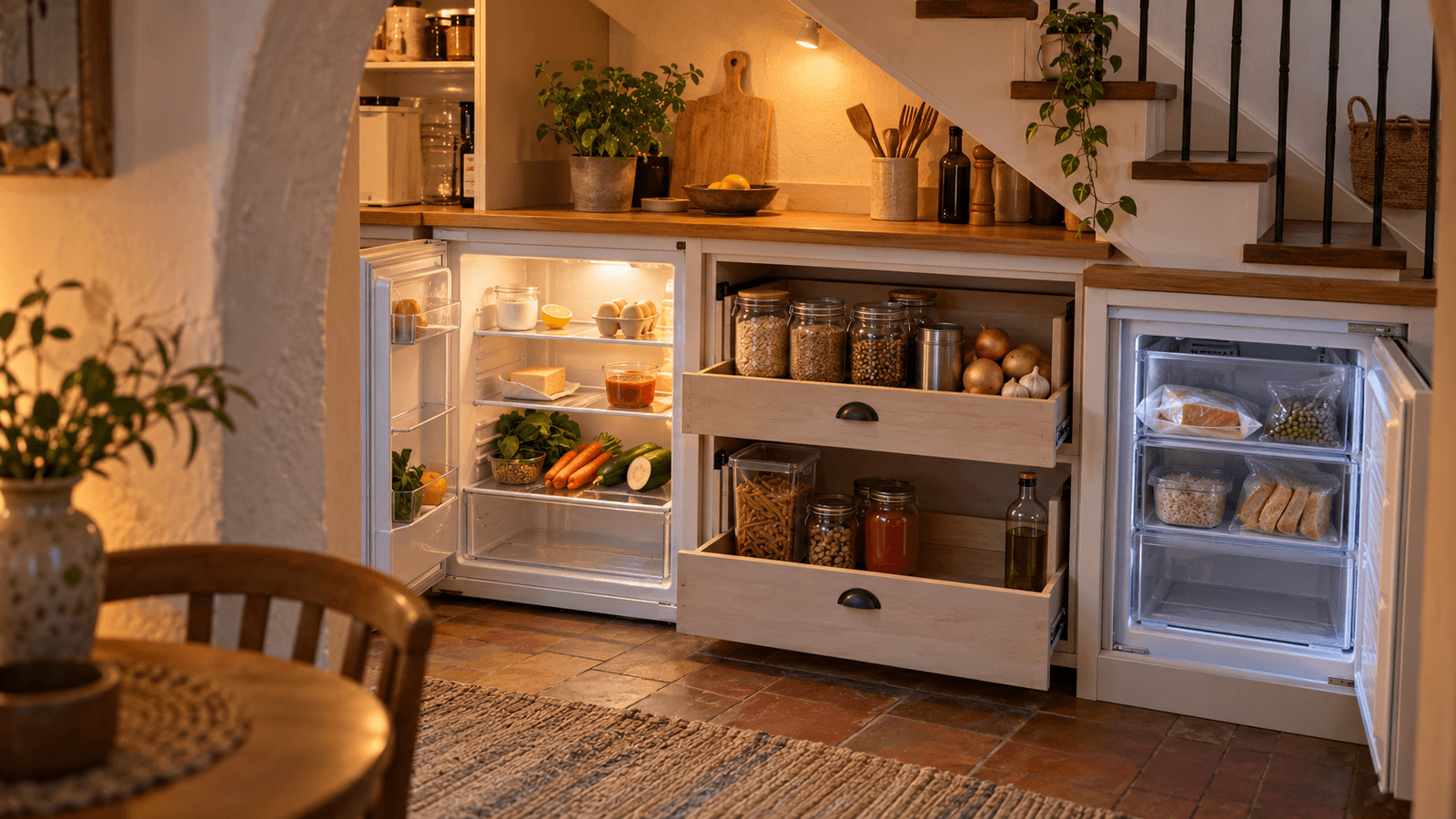
Meal planning does not have to start with recipes.
In many households, a better first step is to look at the food you already have.
Your refrigerator, freezer and pantry may already contain the foundation for several meals. Planning around those ingredients can reduce unnecessary grocery purchases, help use food before it spoils and make the next shopping list more focused.
The basic idea is simple:
Check what you have first. Then decide what you can make. Buy only what is missing.
Why start with the food you already have?
A recipe-first approach often works like this:
- choose several recipes
- create a long ingredient list
- buy everything
- discover that similar food was already at home
A pantry-first approach reverses the process.
You begin with existing ingredients and use recipes or meal ideas to fill the gaps.
This can help:
- reduce duplicate purchases
- use perishable food sooner
- reduce food waste
- spend less on groceries
- simplify meal decisions
- keep the pantry from becoming overcrowded
- make better use of freezer food
Start with a quick kitchen inventory
You do not need to create a detailed spreadsheet of every ingredient.
A quick scan is often enough.
Check three places:
- refrigerator
- freezer
- pantry or food cupboard
Focus especially on foods that can form the base of a meal.
Check the refrigerator first
Refrigerated food usually has the shortest useful life, so it often deserves priority.
Look for:
- vegetables
- fruit
- yogurt
- cheese
- eggs
- tofu
- cooked grains
- cooked meat or fish
- open sauces
- leftovers
Ask:
What needs to be used soon?
Those foods should influence the first meals you plan.
Then check the freezer
Freezer food is easy to forget because it is out of sight.
Look for:
- frozen vegetables
- frozen fruit
- fish
- meat
- bread
- cooked meals
- sauces
- cooked grains
- leftovers
- individual ingredients saved from previous recipes
You may already have enough frozen food to cover several meals.
Finally check the pantry
Pantry staples often provide the structure that turns perishable ingredients into complete meals.
Useful staples include:
- rice
- pasta
- oats
- couscous
- lentils
- beans
- canned tomatoes
- canned fish
- flour
- bread or crispbread
- potatoes
- onions
- garlic
- herbs
- spices
- oils
- vinegars
You do not need all of these.
The point is to identify what is already available.
Find the foods that should be used first
Not every ingredient has equal urgency.
A useful order is:
Use soon
Foods that are already open, ripe or close to losing quality.
Use this week
Foods that are still in good condition but should not be forgotten.
Keep for later
Frozen foods, dry staples and longer-lasting ingredients.
This simple prioritization can shape the order of your meals.
Build meals from anchors
Instead of asking, “Which recipe should I cook?” ask:
What ingredient can anchor a meal?
An anchor might be:
- cooked chicken
- tofu
- eggs
- lentils
- potatoes
- rice
- pasta
- a large amount of vegetables
- leftover sauce
- an opened container of yogurt
Then add other ingredients around it.
Example: you have potatoes
Suppose you find potatoes that should be used soon.
You might combine them with:
- eggs and vegetables
- fish and frozen vegetables
- beans and tomato sauce
- chicken and salad
- yogurt-based sauce and roasted vegetables
One ingredient can support several possible meals.
Example: you have cooked rice
Cooked rice could become:
- a rice bowl with tofu and vegetables
- part of a soup
- a side for fish
- a vegetable-and-egg rice dish
- a quick meal with beans and tomato
The goal is not to force one specific recipe.
It is to identify several realistic uses.
Example: you have vegetables that need using
A collection of vegetables can become:
- soup
- pasta sauce
- stir-fry
- omelet or frittata
- roasted vegetables
- filling for a wrap
- part of a grain bowl
This is often more useful than searching for a recipe that uses every ingredient perfectly.
Think in meal components
A flexible meal can often be assembled from several components.
Protein
Examples:
- eggs
- chicken
- fish
- yogurt
- cottage cheese
- tofu
- beans
- lentils
Carbohydrate or staple
Examples:
- potatoes
- rice
- pasta
- oats
- bread
- couscous
- other grains
Vegetables or fruit
Use what needs attention first.
Flavor
Examples:
- herbs
- spices
- mustard
- tomato sauce
- yogurt-based sauce
- vinegar
- lemon
- a suitable amount of oil
You do not need every meal to follow the same formula, but components make improvisation easier.
Create meal ideas before a shopping list
Once you know what you have, write or mentally choose several meal ideas.
For example:
- lentil tomato pasta
- potato and egg skillet
- tofu with rice and frozen vegetables
- yogurt with oats and fruit
- vegetable soup with bread
Then identify what is missing.
Perhaps you already have almost everything and need only a few fresh ingredients.
Buy bridge ingredients
A bridge ingredient is something that connects foods you already have into a usable meal.
For example:
You have:
- pasta
- canned tomatoes
- zucchini
You may only need:
- a protein source
- perhaps cheese or herbs
Or you have:
- rice
- frozen vegetables
- eggs
You may already have a complete meal without buying anything.
Bridge ingredients can keep the grocery list short.
Do not shop for complete recipes automatically
If every recipe introduces six new ingredients, your kitchen can quickly fill with half-used products.
Before adding an ingredient to the list, ask:
- Do I already have something similar?
- Can another ingredient serve the same purpose?
- Will I use the rest later?
- Is this ingredient essential to the meal?
Substitutions are a normal part of practical meal planning.
Use substitutions intelligently
You do not always need the exact ingredient from a recipe.
Depending on the dish, possible substitutions might include:
- rice instead of couscous
- yogurt instead of a creamy sauce
- frozen vegetables instead of fresh
- beans instead of another legume
- potatoes instead of another starch
- one leafy vegetable instead of another
The substitution should still make culinary sense.
The goal is not to replace ingredients randomly.
Plan around open packages
Open food is easy to forget.
Before opening another package, check whether you already have:
- half a jar of sauce
- open yogurt
- cheese
- cooked grains
- an open package of tofu
- half a loaf of bread
- leftover vegetables
Using open products first can reduce waste.
Plan leftovers deliberately
Leftovers do not need to mean eating exactly the same meal again.
You can reuse components.
For example:
Roasted vegetables from dinner can become part of lunch.
Cooked chicken can go into a sandwich or wrap.
Tomato sauce can be used with pasta and later with beans.
Cooked potatoes can become another side dish.
This creates variety without starting from zero each time.
Give leftovers a destination
A common problem is storing leftovers without deciding when they will be eaten.
Instead, assign them to a future meal.
For example:
“Tuesday dinner leftovers → Wednesday lunch.”
You do not need a detailed calendar. You simply need a likely next use.
Use the freezer strategically
If you know you will not use something in time, freezing may be better than hoping you remember it later.
Foods that may freeze well depending on the product include:
- bread
- cooked grains
- soups
- sauces
- cooked beans
- some cooked meals
- meat and fish
- many prepared ingredients
Use appropriate food-safety and storage practices.
Keep a small group of flexible staples
A pantry works best when it contains foods you actually use.
A practical group of staples might include:
- one or two grains
- pasta
- oats
- canned tomatoes
- beans or lentils
- frozen vegetables
- eggs
- bread
- basic seasonings
Your list may look completely different.
The best staples are the ones that repeatedly become real meals in your household.
Avoid buying aspirational food
Sometimes people buy ingredients for the version of themselves they hope to become rather than the way they actually cook.
If a food repeatedly expires unused, reconsider whether it needs to be a regular purchase.
A useful pantry reflects your real habits.
Use perishable ingredients earlier
If you are planning several days, put the most fragile foods first.
For example:
Earlier:
- leafy greens
- ripe berries
- fresh fish
- opened dairy products
Later:
- carrots
- cabbage
- potatoes
- frozen vegetables
- dry staples
This reduces the chance that food spoils before you reach it.
Keep one or two backup meals
Even a pantry-first plan should allow for schedule changes.
Useful backup meals may rely mostly on longer-lasting foods.
Examples:
- pasta with tomato sauce and beans
- eggs with bread and frozen vegetables
- lentil soup
- rice with frozen vegetables and tofu
- canned fish with potatoes
A backup meal can prevent an unexpected evening from turning into unnecessary grocery shopping or takeout.
Do not over-plan
If you already have many ingredients at home, planning seven completely different recipes can create more complexity rather than less.
Consider planning:
- several main meals
- one leftover meal
- one flexible backup meal
The exact number depends on your schedule.
Pantry-first planning can save money
Using existing food before buying more can reduce grocery spending in several ways.
It can help you:
- avoid duplicate purchases
- use ingredients already paid for
- reduce spoilage
- buy fewer one-use ingredients
- rely more on flexible staples
For more grocery-saving strategies, see How to Save Money on Groceries Without Sacrificing Nutrition.
Pantry-first planning can reduce food waste
Food waste often happens because food is forgotten rather than intentionally rejected.
A quick inventory makes existing food visible again.
This is especially useful for:
- produce hidden in refrigerator drawers
- leftovers
- opened dairy products
- freezer food
- half-used sauces
- duplicate pantry items
What if the pantry is almost empty?
Then the inventory still helped.
You now know what you genuinely need.
Instead of guessing, you can build a focused grocery list around a few flexible meals.
What if you have too much food?
Do not immediately buy more simply because it is your usual shopping day.
Try creating several meals from existing supplies first.
You may only need a few bridge ingredients such as:
- fresh vegetables
- fruit
- milk or yogurt
- a protein source
What if ingredients do not seem to match?
Start with the ingredients that are most urgent and identify a simple meal category.
For example:
- soup
- pasta
- stir-fry
- omelet
- grain bowl
- sandwich
- wrap
- baked tray meal
You do not need to combine every available ingredient into one dish.
A simple pantry-first workflow
Step 1: Open the refrigerator
Identify foods that should be used soon.
Step 2: Check the freezer
Look for proteins, vegetables, bread and leftovers.
Step 3: Check the pantry
Find grains, pasta, legumes, canned foods and flavor ingredients.
Step 4: Choose several anchors
Select the ingredients that should shape the next meals.
Step 5: Generate meal ideas
Think of several ways to combine the anchors with what you already have.
Step 6: Identify gaps
Determine what is genuinely missing.
Step 7: Buy bridge ingredients
Keep the shopping list focused.
Step 8: Use fragile food first
Order meals according to perishability.
Step 9: Give leftovers another use
Decide where they will appear next.
Step 10: Keep a backup meal
Leave room for plans to change.
Example pantry-first plan
Imagine you already have:
Refrigerator:
- eggs
- yogurt
- carrots
- spinach
- half a zucchini
Freezer:
- chicken
- peas
- bread
Pantry:
- oats
- rice
- lentils
- canned tomatoes
- onions
You could build several meals:
Breakfast
Yogurt with oats.
Meal 1
Chicken, rice, spinach and peas.
Meal 2
Lentils with tomatoes, carrots and onion.
Meal 3
Eggs with zucchini and bread.
Your shopping list might only need fruit and a few additional fresh ingredients.
The exact meals are less important than the process.
How to keep track without making another complicated system
You do not need a perfect inventory database.
Several approaches can work:
- a quick visual check before shopping
- a short note of foods that need using
- keeping older items visible
- grouping similar pantry foods together
- using a food-tracking or meal-planning app
The system should save time rather than create more administrative work.
How Mealisa can help
Mealisa can support this approach by connecting meal planning with foods you already have.
Instead of starting every plan from an empty kitchen, you can use available ingredients as part of the planning context.
This can make suggestions more relevant to:
- your current food supply
- your calorie and macro targets
- dietary preferences
- allergies and intolerances
- budget
- available cooking time
- previous meals
The goal is to turn existing food into realistic meal options before adding more groceries.
Common mistakes
Choosing recipes before checking the kitchen
This often creates duplicate purchases.
Forgetting the freezer
Useful ingredients can remain hidden for months.
Buying ingredients for only one recipe
This can leave partially used products with no next purpose.
Ignoring open packages
Open foods should often receive priority.
Planning too many meals
A rigid plan leaves little room for leftovers or schedule changes.
Treating substitutions as failure
Practical cooking often depends on reasonable substitutions.
Buying more because it is shopping day
The calendar does not know how much food is already in your kitchen.
Frequently asked questions
What is pantry meal planning?
It is a meal-planning approach that begins with food already available in your refrigerator, freezer and pantry before choosing what else to buy.
Do I need to inventory every ingredient?
No. A quick scan focused on useful and perishable foods is often enough.
Should I plan recipes or ingredients?
Both can work, but starting with ingredients often creates more flexibility.
How does this reduce food waste?
It makes existing and perishable food visible before more groceries are purchased.
Can pantry meal planning save money?
It can help by reducing duplicate purchases, spoilage and unnecessary one-use ingredients.
What should I use first?
Prioritize foods that are already open, highly perishable or approaching the end of their useful storage life.
What if I do not have enough ingredients for a complete meal?
Buy a small number of bridge ingredients that turn what you already have into practical meals.
Do I need to follow the plan exactly?
No. The plan should help you make decisions, not prevent reasonable substitutions.
The bottom line
Meal planning can start with your kitchen rather than a recipe website.
Check the refrigerator, freezer and pantry.
Identify what should be used first.
Choose a few ingredients to anchor upcoming meals.
Then buy only the foods needed to complete those meals.
This approach can reduce waste, simplify shopping and make better use of food you have already paid for.
The best meal plan is not necessarily the one with the most recipes.
Sometimes it is the one that turns what is already in your kitchen into the next few meals.
This article provides general educational nutrition and meal-planning information. Follow appropriate food-safety and storage guidance for specific foods.