
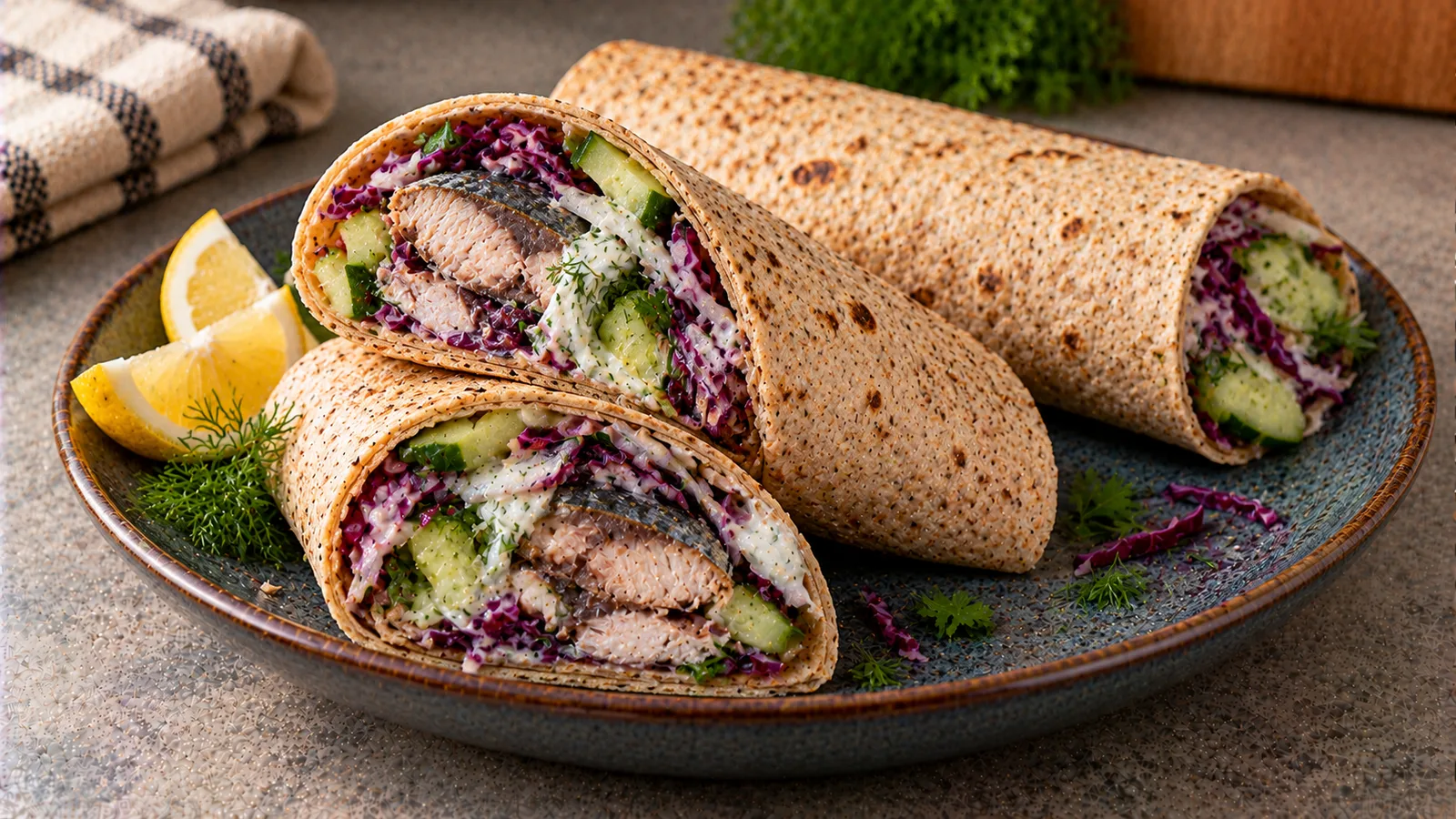
A cold wrap built around sardines
These wholegrain wraps are a practical lunch when you want something more substantial than a snack without switching on the oven. Flaked canned sardines are folded into a lemony yogurt dressing, then layered with thinly sliced cucumber, red cabbage and parsley. The contrast matters: creamy fish and yogurt on one side, crisp vegetables on the other. The recipe makes two filled wraps, each intended as one lunch portion. Preparation takes about 15 minutes if the vegetables are ready to wash and slice. No cooking is needed when using ready-to-eat canned sardines and packaged tortillas.
This is a specific sardine-and-yogurt lunch, not a promise that all wraps have the same nutrition. Both tortilla size and the liquid in the sardine tin change the result. For a fish-focused comparison of different tinned choices, see our anchovies-versus-sardines comparison.
Ingredients for two wraps
The weights refer to the ingredients actually used, not necessarily the size of each item bought. Weigh the drained sardines, not the full unopened tin. Choose canned sardines that are ready to eat, and check whether they are packed in water, brine or oil.
| Ingredient | Amount used | Preparation |
|---|---|---|
| Wholegrain tortillas | 120 g (2 × 60 g) | Keep flexible; warm briefly only if needed |
| Sardines, drained | 120 g | Break into bite-size flakes |
| Plain yogurt, around 2% fat | 80 g | Stir until smooth |
| Cucumber | 100 g | Dry and slice into thin matchsticks |
| Red cabbage | 80 g | Shred very finely |
| Lemon juice | 15 g | Add gradually to taste |
| Fresh parsley | 10 g | Finely chop |
Use a fork to check canned fish for larger bones if that is your preference. Some soft sardine bones are edible; the texture varies by product. The wrap contains fish, milk and wheat when made with these ingredients. Check each package for additional allergens, as required by EU food information rules.
Choose the right sardines and tortillas
For the nutrition calculation below, the sardine model assumes 150 kcal and 24 g protein per 100 g drained fish, similar to some products packed without added oil. Sardines in olive or sunflower oil can be considerably higher in energy after draining, because oil can remain on the fish. Look at the specific label: the values for “per 100 g” may refer to the drained product or the contents as sold. If you use a smaller drained tin, reduce the filling instead of assuming that a listed 120 g on the tin is the edible drained amount.
Wholegrain is not one uniform product either. Two tortillas weighing 60 g each may vary in fibre, salt and energy. Compare fibre and wholegrain ingredients on the pack instead of relying only on a brown colour. The NHS wholegrain guidance explains why wholegrain cereals contribute fibre to meals.
Mix a light dressing that holds the filling
First combine the 80 g yogurt with lemon juice and most of the parsley. Taste it before adding any salt: canned sardines and tortillas may already be salty. Fold in the sardines carefully. You want flakes that spread easily, not a purée that makes the wrap soggy. If the mixture is very wet, drain the fish further and reserve a spoonful of dressing rather than adding more liquid. If it feels too dry, stir in a teaspoon of plain yogurt from the measured amount.
Let the vegetables stay separate until assembly. Yogurt softens shredded cabbage if it sits in a packed lunch for hours. Keeping a little crunch makes this recipe different from a mashed fish salad served on bread.
Assemble and roll without tearing
Lay each tortilla on a clean board. Leave about 2 cm clear along the edge closest to you and a larger free strip at the far edge. Put half the cabbage across the middle, followed by half the sardine mixture and half the cucumber. Fold both side edges inward, fold the near edge tightly over the filling, then roll toward the far edge. Place the seam underneath. Repeat with the second tortilla.
For a neater lunch box, wrap each roll in parchment and cut it in half only when ready to eat. Avoid overfilling; the combined weighed ingredients already make a generous wrap. A 60 g tortilla may be smaller than one sold as an extra-large burrito wrap, so adjust how much salad you put inside rather than forcing the seam closed.
Nutrition: a transparent example
The estimate below is calculated from illustrative per-100-g ingredient values, not a laboratory analysis or a verified label for a named shop product. Total ingredient weight is 525 g before any moisture loss. Each wrap uses half of the measured batch. For individual needs, read the labels of your tortillas, sardines and yogurt and recalculate.
| Nutrient | Whole recipe, 2 wraps | Per wrap |
|---|---|---|
| Energy | 633 kcal | 317 kcal |
| Protein | 49.0 g | 24.5 g |
| Fat | 17.5 g | 8.7 g |
| Carbohydrates | 71.5 g | 35.7 g |
| Fibre | 11.0 g | 5.5 g |
| Salt | 2.46 g | 1.23 g |
Protein comes largely from the fish, while much of the carbohydrate comes from the tortillas. The salt figure is a reason to compare products rather than treat this example as universally low-salt. Our portion-size guide helps distinguish an ingredient's label serving from the portion you actually eat.
What does one wrap cost?
The following is a hypothetical ingredient-use example in euros, not a live German supermarket price survey. It allocates only the amount eaten; buying full packs at checkout usually costs more. Use your own receipt to replace each figure, especially for sardines and fresh herbs.
| Ingredient used | Assumed cost |
|---|---|
| Two tortillas (120 g) | €0.90 |
| Drained sardines (120 g) | €1.80 |
| Yogurt (80 g) | €0.24 |
| Cucumber (100 g) | €0.20 |
| Red cabbage (80 g) | €0.12 |
| Lemon juice (15 g) | €0.20 |
| Parsley (10 g) | €0.29 |
| Both wraps | €3.75 |
Dividing €3.75 by two gives €1.875, or €1.88 per wrap after rounding. Leftover yogurt, cabbage and tortillas can make the second lunch economical only if you actually use them. If a tin yields less than 120 g drained sardines, the model and ingredient quantity need adjusting. For another cold sardine meal, try our sardine couscous salad.
Preparing lunch ahead without losing crunch
The best result comes from assembling immediately before eating. For a packed lunch, you can chop and dry the vegetables, mix the fish with yogurt, and chill them in separate covered containers. Put the components together shortly before leaving. If you must assemble in advance, place cabbage between the tortilla and the wet filling, keep cucumber well drained, and use parchment to support the roll. The tortilla will gradually soften, so a freshly rolled version will have the better texture.
Keep fish and yogurt refrigerated, including during transport. Use an insulated lunch bag with a cold pack when reliable refrigeration is unavailable. Do not leave a prepared dairy-and-fish filling in a warm bag for the morning. Follow the package's storage and after-opening instructions; this recipe cannot set a single safe storage life for every product.
Fish choice, nutrients and food safety
Sardines count as oily fish and are a source of long-chain omega-3 fats, according to NHS advice on fish. They are also listed among lower-mercury choices in FDA/EPA advice, although individual dietary advice can differ during pregnancy or for young children. This recipe uses 60 g drained sardines per wrap, not an entire 120 g tin per person.
The Food Standards Agency's chilling guidance explains why temperature control matters. If a can is damaged, bulging or smells abnormal on opening, do not use it. Do not assume that adding lemon juice makes poor storage conditions safe.
Useful substitutions and their trade-offs
If you dislike red cabbage, use well-dried grated carrot or a handful of crisp lettuce; the fibre and weight will change. Greek-style yogurt makes a thicker sauce than many thin drinking yogurts. Lactose-free dairy yogurt changes the lactose content, but it is still a milk ingredient; a plant-based alternative also changes protein and allergens. When replacing fish with beans, the wrap becomes a different recipe with a different protein profile, not the same meal with equal numbers.
For comparison, a warmer canned-fish lunch built around potatoes rather than tortillas is our salmon and potato cakes recipe. Keep that as a separate meal idea rather than mixing the two nutrition calculations.
Serving adjustments without misleading numbers
One wrap is the defined portion here. Someone wanting a larger lunch can add fruit, soup or another side without claiming that the wrap itself is suddenly higher in protein. Alternatively, make two smaller wraps with the same filling and divide the batch into two equal amounts: the macros per wrap stay the same only if no filling is left behind. A bigger tortilla adds extra energy and carbohydrate even when the sardine filling does not change.
If your labels differ, calculate each ingredient as grams used ÷ 100 × the label value per 100 g, add the ingredient results, then divide by the number of wraps. For drained fish, use the appropriate drained-weight label. This reproducible calculation is more informative than an unexplained calorie number.
Sources and calculation notes
For the general evidence, see the NHS fish guidance, FDA/EPA fish-choice FAQ, NHS starchy-food and wholegrain advice, FSA chilling information, and EU Regulation 1169/2011 on food information. Ingredient nutrient numbers and euro allocations are explicit illustrative assumptions, not measurements extracted from those guidance pages. The recipe is a practical example; your package labels control the final calculation.