
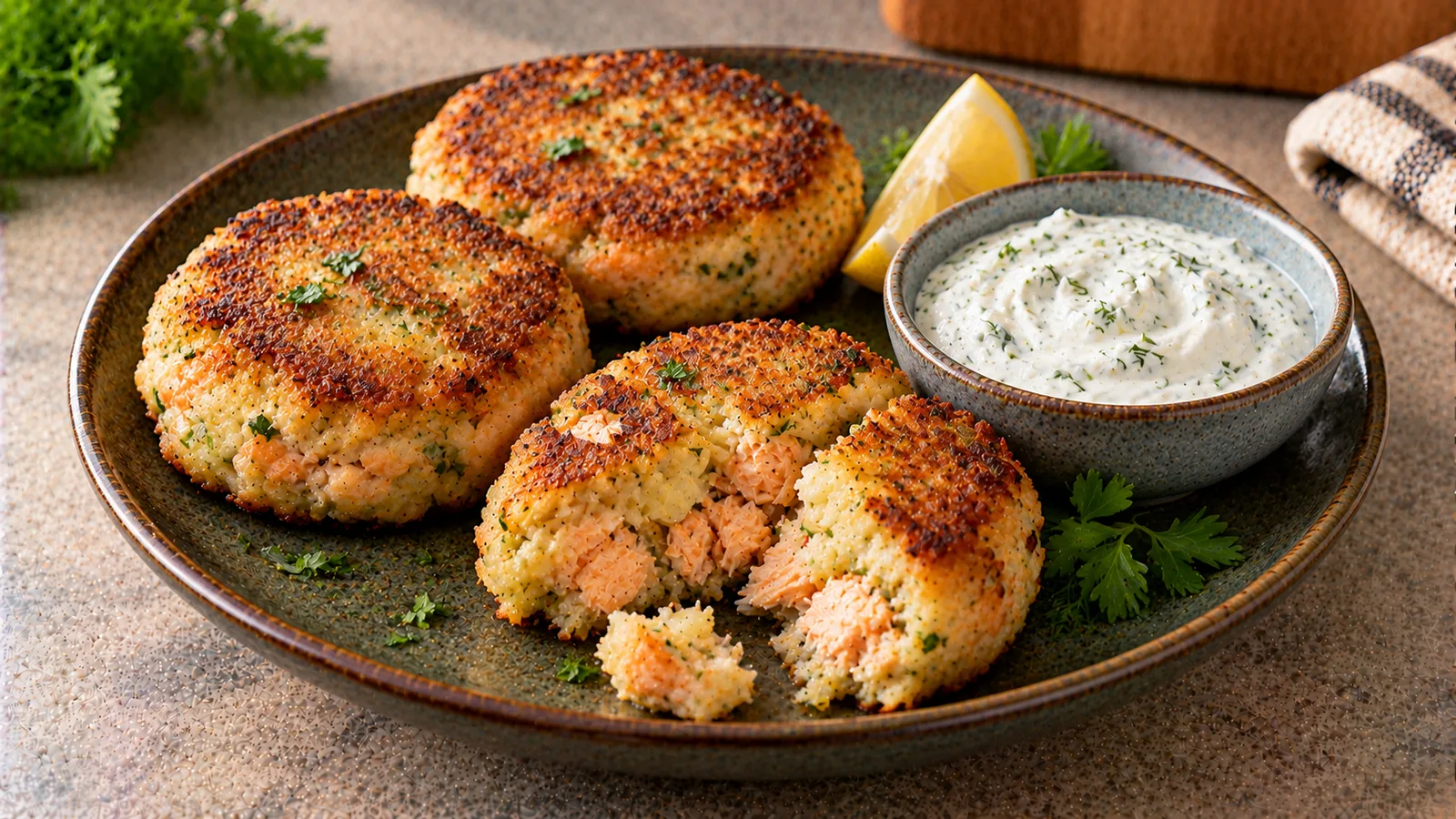
Why canned salmon works here
These salmon and potato cakes turn tinned fish and leftover boiled potatoes into a practical lunch or dinner. Four patties make two portions, served with a quick dill-and-lemon yogurt. Use 200 g drained canned salmon, not 200 g including the brine or oil, and 300 g already cooked potatoes. This distinction matters for texture, cost and nutrients. The recipe is pan-seared, not deep-fried. The yogurt sauce is served cold, after cooking.
Ingredients for two portions
| Ingredient | Amount used | Practical note |
|---|---|---|
| Canned salmon, drained | 200 g | Remove skin or bones if preferred; see label |
| Boiled potato, cooled | 300 g | Mashed, without butter or milk |
| Egg | 1 medium, about 50 g edible | Helps bind the mixture |
| Dry breadcrumbs | 30 g | Add gradually |
| Oil | 15 g | Total amount allocated to frying |
| Plain yogurt | 120 g | Sauce, not a sweetened dessert |
| Lemon juice | 20 g | For sauce and brightness |
| Dill or mixed soft herbs | 10 g | Fresh or thawed, chopped |
Pepper is optional. The ingredient model excludes any extra salt, butter, mayonnaise or frying oil beyond the 15 g shown. If the canned fish is already salty, taste before seasoning. Check the actual label for allergens and sodium.
Method: make four cakes
- Drain and weigh the salmon. Break it into flakes and remove any large, hard pieces of bone you do not want to eat. Many canned salmon bones are soft and edible; follow your preference.
- Mash the cooked, cooled potatoes until mostly smooth. Mix with the salmon, beaten egg, half of the breadcrumbs and a little chopped dill.
- Rest the mixture for five minutes. Shape four cakes with a spoon or damp hands. Add remaining crumbs only if the mixture is too wet to hold together.
- Heat a non-stick skillet over moderate heat with the measured 15 g oil. Cook cakes approximately 4–5 minutes per side until browned and thoroughly heated; thicker cakes may take longer. If the mixture breaks, lower the heat and turn carefully.
- Stir 120 g plain yogurt, 20 g lemon juice and remaining dill to make sauce. Serve half the sauce with two cakes per person. For an egg-containing fish patty, aim for 74 °C at the centre as a conservative reheating/cooking check; time and colour alone are not guarantees.
Texture: common problems and fixes
If patties fall apart, check the potato state. Warm or watery mashed potato makes a softer mixture; cool it before shaping. Excess canned liquid also weakens binding. Stir only enough to combine so the finished cakes still contain identifiable salmon flakes. Add a little of the 30 g total breadcrumbs rather than inventing extra dry ingredients without recalculating. If the outside browns too quickly, turn down the heat so the centre has time to heat through. The yogurt should not be cooked in the skillet: it may split and lose its fresh texture.
What is in a portion?
These are illustrative calculated figures, not verified laboratory measurements or a promise for a particular brand. They use generic per-100-g ingredient assumptions, 200 g drained salmon, 300 g cooked potato and the full 15 g frying oil as consumed. Pan losses, exact salmon type, yogurt fat content and breadcrumb brands can change the result. The arithmetic covers the complete recipe including sauce.
| Calculated nutrition | Full recipe | One of 2 portions |
|---|---|---|
| Energy | ~924 kcal | ~462 kcal |
| Protein | ~66 g | ~33 g |
| Fat | ~36 g | ~18 g |
| Carbohydrate | ~89 g | ~45 g |
Do not confuse canned salmon in oil, drained salmon in water and fresh fillet nutrition entries. Salmon may have edible bones that contribute calcium, but the amount is product-specific and is not estimated in this table. The USDA FoodData Central search can help identify appropriately described foods, not a guaranteed match for your can.
How the calculation works
For each ingredient: nutrient total = weight in grams × assumed amount per 100 g ÷ 100. Sum across ingredients, then divide by two portions. For example, the salmon contributes 200 × 23 ÷ 100 = 46 g protein with the illustrative assumption of 23 g per 100 g. The 300 g cooked potatoes provide 261 kcal at 87 kcal per 100 g. Oil contributes 133 kcal at 884 kcal per 100 g, assuming all 15 g remain in the served dish. These individual assumptions should be replaced with label values if you track precisely. The count of four cakes is not a nutrition unit until their sizes are equal.
Portion cost: a transparent example
The example assumes you use only the ingredient quantities above, rather than charging the whole jar of oil or tub of yogurt to this one meal. Prices are hypothetical euro estimates, not current German retail observations.
| Cost calculation | Full recipe | Per portion |
|---|---|---|
| Drained salmon | €3.20 | €1.60 |
| Cooked potatoes | €0.48 | €0.24 |
| Egg and breadcrumbs | €0.42 | €0.21 |
| Oil | €0.12 | €0.06 |
| Yogurt, lemon, dill | €0.80 | €0.40 |
| Total | €5.02 | €2.51 |
A 200 g drained yield can require buying a can whose advertised net weight is greater. Read both net and drained-weight markings. If leftover potatoes were already paid for, accounting for their cost still helps compare recipe alternatives; if your purpose is reducing food waste, you can also state incremental cash spending separately. Portion definitions are discussed in Portion Size vs Serving Size: What’s the Difference?.
Nutrition in the context of a meal
Fish supplies protein and can contribute long-chain omega-3 fats, but the omega-3 amount in canned salmon depends on species and processing. The NHS guide to fish discusses fish types and dietary context; the FDA advice on eating fish discusses fish choices and mercury considerations, especially for pregnant people and children. Avoid claiming a precise omega-3 figure without a specific label or database record. Serve these cakes with raw vegetables or cooked greens if you want a fuller plate; our What Is a Balanced Meal? A Simple Plate-Building Guide guide describes a broader meal pattern. See Calories in Salmon: Nutrition, Portions and Common Serving Sizes for a separate look at salmon nutrition rather than treating the numbers here as a universal fish standard.
Storage and reheating
Treat canned salmon as perishable once opened and mixed into the recipe. Cool prepared cakes promptly, refrigerate in covered containers and eat within 3–4 days if handled correctly, following the USDA leftovers guidance. Refrigerate the yogurt sauce separately, ideally prepare it close to serving, and do not leave cooked fish cakes standing at room temperature for extended periods. Reheat cakes until steaming hot throughout, with a thermometer as a useful check. If you are uncertain how long a dish was unrefrigerated, discard it rather than relying on smell. Freezing is possible, but texture may soften after thawing; always thaw safely.
Variations without breaking the recipe
Using low-fat yogurt changes sauce texture, energy and protein. Swapping the egg for an alternative binder requires its own trial: these quantities were tested as a concept for an egg-containing mixture, not for egg-free cakes. If you choose canned salmon with a very different fat or liquid content, drain thoroughly and expect the mixture to behave differently. Capers, finely chopped scallions or a little mustard can change flavour, but they should be introduced conservatively, especially with a salty can. For a gluten-free version, choose certified suitable breadcrumbs, and verify any allergen guidance on the labels.
How to shop and prepare efficiently
Choose a can according to the drained edible amount, not just the shelf price or gross tin weight. Check whether the fish is packed in water, brine or oil and whether salt is added. Reusing already cooked plain potatoes saves preparation time, provided they were chilled properly. Put the sauce together while the cakes cook. When planning for two, split the four finished cakes as evenly as possible and divide the yogurt equally. If you want lunch-box use, cool, transport chilled and warm the cakes separately from the yogurt.