
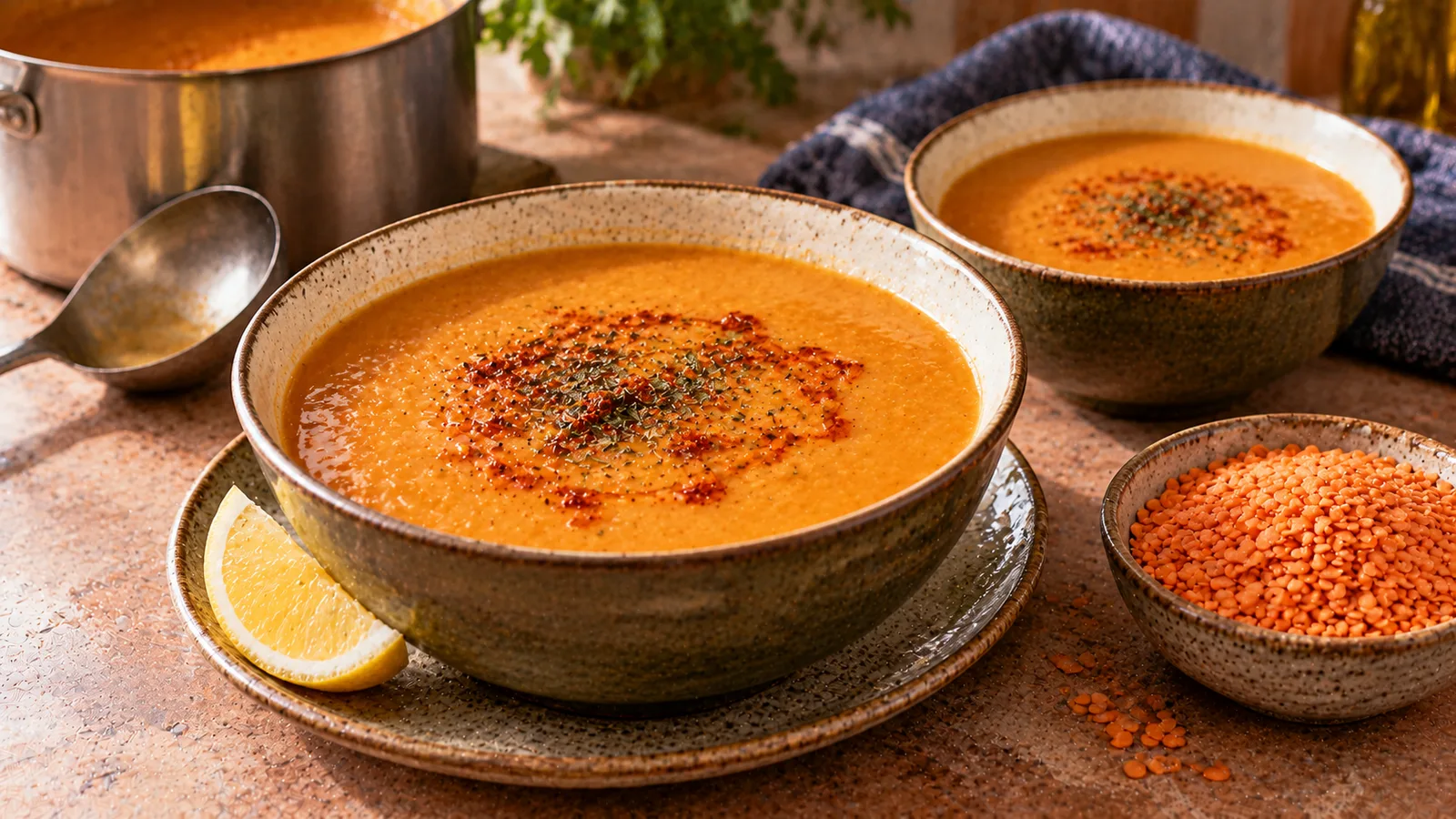
Mercimek çorbası is a familiar part of Turkish cooking: a warm, smooth lentil soup that is often served with lemon. There is no single recipe for every household or café. Some cooks use flour or butter; others rely entirely on lentils to thicken the pot. This version takes a straightforward route with red lentils, onion, carrot, olive oil and a little tomato paste, then blends everything until velvety. The important difference from recipes that simply say “four bowls” is that both the uncooked ingredients and the finished soup are weighed.
For context, Türkiye's Ministry of Culture and Tourism publishes a simple red-lentil soup using lentils, onion, oil, paprika and water. Our carrot-and-tomato variation is a practical home version rather than a claim that every Turkish kitchen prepares it identically. See the official Turkish red-lentil soup example.
Ingredients: one pot, four measured portions
Use a kitchen scale for the dry ingredients. The lentil weight below is before cooking, not the weight of soaked or boiled lentils.
| Ingredient | Measured amount | Function |
|---|---|---|
| Dry split red lentils | 200 g | Body, protein and thickening |
| Onion, peeled | 120 g | Savoury base |
| Carrot, peeled | 100 g | Gentle sweetness and colour |
| Olive oil | 20 g | Softens the vegetables; counted in calories |
| Tomato paste | 15 g | Optional depth; included in this estimate |
| Water | 1,200 ml | Starting liquid; add more if required |
| Ground cumin, paprika, pepper and salt | To taste | Seasoning; exact sodium depends on salt |
| Lemon wedges | Serve separately | Brightness without changing the base recipe |
The weighed food ingredients total 455 g before water; the initial pot contents are approximately 1,655 g. Some liquid evaporates during cooking, so 1,500 g finished soup is an illustrative weighed yield, not a guaranteed outcome. Measure your own saucepan after blending. Use water rather than an unspecified commercial stock for the calorie example; stock and packaged seasonings can change sodium and energy.
Method: build flavour, then blend
- Sort and rinse 200 g dry red lentils in a sieve. Discard any debris. Red split lentils normally soften without overnight soaking.
- Dice the 120 g onion and 100 g carrot. Warm 20 g olive oil in a saucepan, then cook the vegetables gently for roughly 5–7 minutes without scorching them.
- Stir in 15 g tomato paste with a little cumin and paprika. Heat briefly until fragrant. Paprika burns quickly, so do not leave it over high heat.
- Add the drained lentils and 1,200 ml water. Bring to a simmer and cook, partially covered, for about 20–30 minutes, stirring periodically, until the lentils and carrot are completely tender. Actual time depends on the lentils and the pan.
- Blend carefully with a stick blender until smooth. Keep hot splashes away from your face. Add a little hot water if necessary, season, and serve with lemon at the table.
You do not need cream or a flour roux for this particular pot: cooked split lentils provide the texture. For a finer, restaurant-style finish, pass the blended soup through a sieve. That removes some solids, however, so weigh the edible finished yield again rather than assuming it is unchanged.
Calorie calculation from the uncooked ingredients
The calculation starts with the food going into the saucepan. The figures below are rounded recipe estimates, not a laboratory analysis of a particular brand of red lentils. For lentils, the reference is 352 kcal per 100 g dry, following the USDA FoodData Central raw-lentil reference. Red lentil brands may differ; a package label takes priority for the food you actually use.
| Ingredient | Calculation | Estimated energy |
|---|---|---|
| Dry red lentils, 200 g | 200 × 352 / 100 | 704 kcal |
| Onion, 120 g | 120 × 40 / 100 | 48 kcal |
| Carrot, 100 g | 100 × 41 / 100 | 41 kcal |
| Olive oil, 20 g | 20 × 884 / 100 | 177 kcal |
| Tomato paste, 15 g | 15 × 82 / 100 | 12 kcal |
| Whole pot | Rounded ingredient sum | 982 kcal |
Water adds weight, not calories. Dry lentils also contribute approximately 49 g protein to the whole pot at a reference value of 24.6 g per 100 g dry; onion and carrot add a little more. Do not mistake that dry-lentil reference for a claim that 100 g of finished soup contains 24.6 g protein. Check food composition data in USDA FoodData Central.
Portion sizes: count the finished soup, not the water added
Suppose your blended pot weighs 1,500 g. Divide it into four 375 g servings. The 982 kcal pot becomes approximately 246 kcal per serving, or about 65 kcal per 100 g. This example assumes no oil or garnishes added after the calculation.
| Actual cooked yield | Whole-pot energy | Energy per 100 g | Four equal bowls |
|---|---|---|---|
| 1,200 g, thicker soup | 982 kcal | 82 kcal | 300 g each, about 246 kcal |
| 1,500 g, reference yield | 982 kcal | 65 kcal | 375 g each, about 246 kcal |
| 1,800 g, thinner soup | 982 kcal | 55 kcal | 450 g each, about 246 kcal |
Dilution changes the calories per 100 g, not the total calories in the pot. If you serve three bowls instead of four, divide 982 by three, not four. If you lose soup to the blender or sieve, count only what you actually serve; it is an estimate because the discarded material may contain nutrients. Stir before dividing so that thicker lentil solids do not settle disproportionately.
Common adjustments that change the estimate
Lemon juice and dried spices usually make much less difference to energy than oil, bread or butter. Just 5 g extra olive oil adds about 44 kcal to the pot, or around 11 kcal to each of four equal bowls. A butter-and-chilli topping should therefore be measured separately rather than hidden under “seasoning.” A slice of bread beside the soup is another food, not part of this soup's calculated 982 kcal.
Prefer a thicker meal? Use less water or let the soup reduce, then weigh the finished pot. Prefer a drinkable, lighter texture? Add water gradually after blending. For a vegan bowl, keep water or verified vegetable stock and avoid butter-based toppings. For gluten-free preparation, this recipe does not use flour, but check spice blends, stock and any bread served alongside it. If using stock, follow its label and avoid making generic sodium claims: added salt is highly variable.
For alternative preparations, you can also compare a simpler red-lentil soup · chicken and lentil soup.
Cooling, storage and reheating
A large saucepan cools slowly. Divide leftovers into shallow, covered containers and refrigerate within two hours of cooking; if the surroundings exceed 32°C, the USDA advises within one hour. Refrigerated cooked leftovers are generally used within three to four days. Reheat leftover soup thoroughly to 74°C (165°F); USDA guidance also recommends bringing soups to a rolling boil when reheating. Stir while heating, especially after the soup has thickened in the fridge. Read USDA FSIS guidance on leftovers.
Red-lentil soup usually becomes noticeably thicker after cooling. Add water when reheating and adjust salt only after tasting. Extra water does not add calories; oil or cream added at this stage does. Label frozen portions with the date and cool them promptly before freezing. Do not rely on smell alone to decide whether food held too long at room temperature is safe.
Sources
- Republic of Türkiye Ministry of Culture and Tourism — Red Lentil Soup: Turkish recipe context, including lentils, onion and paprika.
- USDA FoodData Central: reference ingredient energy values; verify the dry/raw state and package-specific labels.
- USDA Food Safety and Inspection Service — Leftovers and Food Safety: cooling, storage and reheating guidance.