
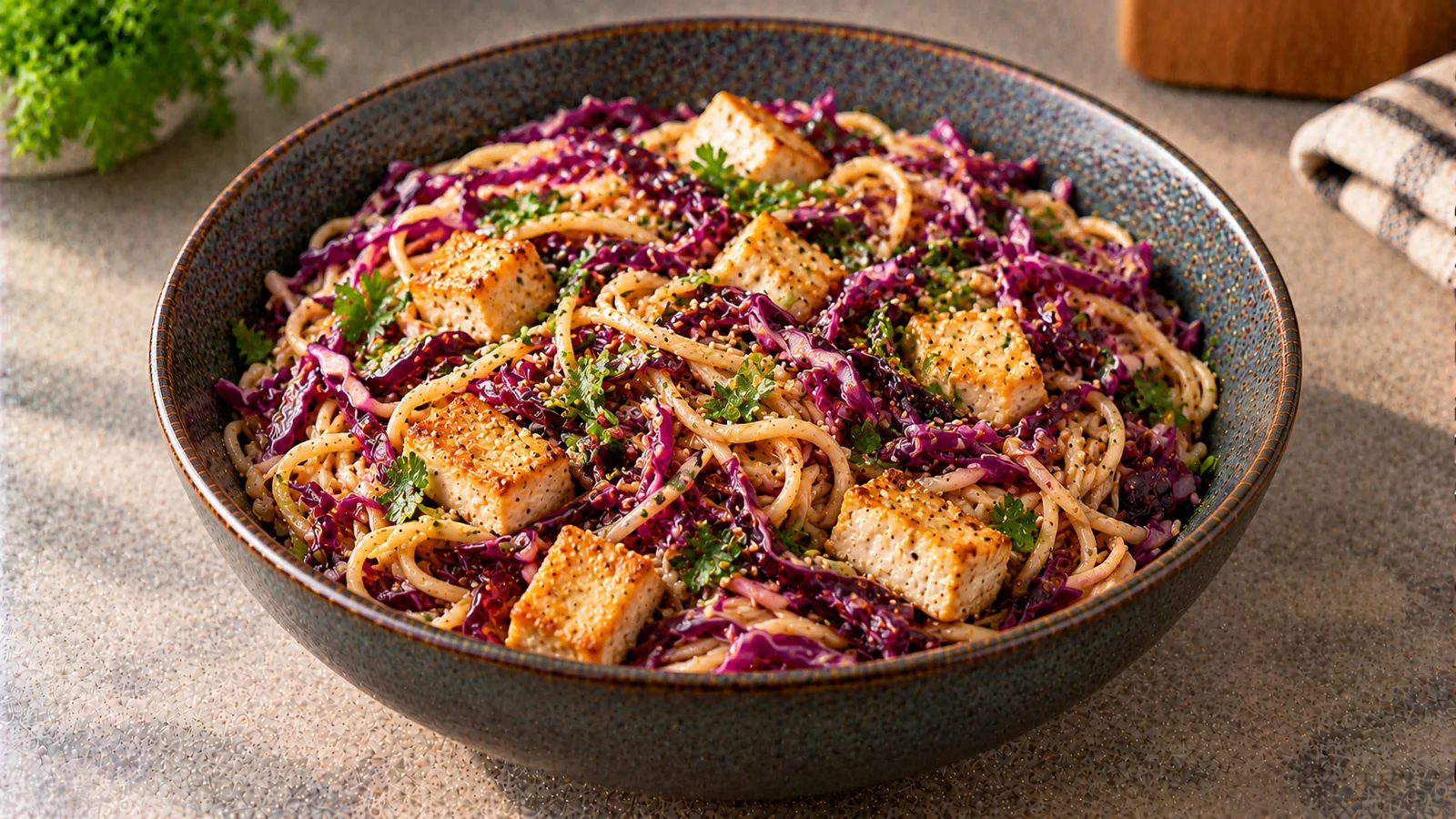
A good noodle salad does not need a heavy peanut sauce or a long shopping list. In this version, lightly browned tofu, fine strands of red cabbage and spelt noodles are tossed with rice-style vinegar, measured soy sauce, ginger and sesame. It is a cool, substantial lunch with a little crunch rather than a hot stir-fry disguised as a salad. The quantities below make four complete servings. The nutrition calculation begins with dry noodles, not a bowl of noodles after they have absorbed water.
What makes this salad different
The defining combination is tofu, finely shredded raw red cabbage, cooked and cooled noodles and a light sesame-vinegar dressing. There is no peanut butter, cucumber-heavy base or sweet bottled glaze. The sharpness of the vinegar and mild bitterness of cabbage prevent the tofu and noodles from tasting flat. You can serve the salad at room temperature immediately after making it or properly chill it for lunch later. It is not a substitute for a hot noodle stir-fry: the cabbage is deliberately left crisp, and the dressing is not simmered.
The recipe uses 400 g of plain tofu, 200 g of dry spelt mie noodles, 300 g of cabbage, 150 g of carrot, 80 g of spring onion, 20 g of sesame seeds, 20 ml of regular soy sauce, 30 ml of vinegar, 20 ml of rapeseed oil and 15 g of fresh ginger. Water for cooking is not a source of energy. These are edible ingredient weights, except that noodles are weighed dry and the spring onions are weighed after trimming. Two 200 g tofu packs provide the exact tofu amount without an open leftover pack.
Ingredients and sensible substitutions
| Ingredient | Whole recipe | What to check |
|---|---|---|
| Plain firm tofu | 400 g | Two 200 g packs; drain surface liquid |
| Dry spelt mie noodles | 200 g | Weigh before hydration |
| Raw red cabbage | 300 g | Remove thick core; slice very finely |
| Carrots | 150 g | Scrub or peel, then julienne |
| Spring onions | 80 g | Trim before weighing |
| Unhulled sesame seeds | 20 g | Sesame allergen |
| Regular soy sauce | 20 ml | Concentrated salt; contains soy and wheat |
| Vinegar | 30 ml | Choose plain, unsweetened vinegar |
| Rapeseed oil | 20 ml | Divide between pan and dressing |
| Fresh ginger | 15 g | Finely grate; optional extra to taste |
Use regular wheat noodles if spelt is unavailable, but recalculate from the chosen label. A gluten-free rice noodle version requires a different label and a gluten-free soy-sauce alternative: replacing only the noodle is not enough. For a stronger acidic note, add a little vinegar at serving rather than doubling soy sauce. For extra crunch, increase the cabbage and reduce the noodles by the same cooked-volume impression—not gram for gram nutritionally. Neither the exact finished weight nor the calories remain unchanged if you swap ingredients.
Choose the weights before cooking
The noodle quantity is 200 g dry, about 50 g per person. The maker of dmBio spelt mie noodles lists 372 kcal and 12 g protein per 100 g dry product; its label also specifies a short cooking time. Do not record the 200 g as cooked weight: if the noodles weigh 430–500 g after hydrating, their energy has not doubled. Only absorbed water changed their mass. Measure the total cooked noodles if you want to divide them into unequal bowls. Portion Size vs Serving Size: What’s the Difference? has a useful explanation of the difference between a label serving and the portion you actually put on a plate.
The tofu is measured as 400 g from two edible 200 g packs. Blot the surface dry, but do not subtract an assumed 20% or 30% unless you actually discard and weigh substantial liquid. The dmBio plain tofu used in the worked calculation contains 122 kcal, 12 g protein, 7.1 g fat and 1.9 g fibre per 100 g. Smoked or marinated tofu can have very different salt and fat values. For tofu without the dressing, the separate Calories in Tofu: Nutrition, Portions and Common Serving Sizes reference is useful.
Red cabbage is measured after removing the tough core. Its baseline values are illustrative USDA food-composition values for raw cabbage, not a retail-brand label. USDA lists raw red cabbage in its searchable ingredient database. Fine slicing is much more important to texture than attempting to cook the cabbage until soft. Keep the strips short enough to lift with a fork together with noodles.
Equipment and a simple timing plan
You need one pot for the noodles, a frying pan for tofu, a large bowl, a small jar or cup for dressing, a colander and a sharp knife or mandoline. Allow approximately 25–35 minutes of active preparation and cooking plus time to cool ingredients if you intend to serve it cold. Start by boiling water, then slice the cabbage while it heats. Cook the noodles as directed on the actual package, drain and spread them in a broad bowl to release heat. Do not leave a deep mass of warm noodles on the kitchen counter for hours.
While the noodles cook, cut tofu into small rectangles. Pat it dry and heat approximately half the oil in the frying pan. Brown the tofu in one uncrowded layer; turn the pieces once they release easily. Aim for light golden edges rather than very dark, hard cubes. Remove from the pan into a clean dish. The tofu should cool promptly before it is combined with cold vegetables. Prepare the carrot and spring onion last to preserve their fresh texture.
Prepare noodles that stay separate
Follow the instructions for the particular mie noodles rather than using a universal cooking time. The cited dmBio spelt product can be cooked for about five minutes or softened in hot water covered for approximately nine minutes. Taste near the end: noodles intended for a salad should be tender but not mushy. Drain them completely and toss them with a small amount of the measured dressing when slightly cooled. That thin coating reduces sticking without requiring an additional uncounted spoonful of oil.
Do not rinse excessively simply to make the noodles cold; use a clean colander, let steam escape and refrigerate promptly if the meal will not be eaten immediately. If they stick together after chilling, loosen with one teaspoon of water or vinegar, rather than pouring in more oil. That keeps the nutritional estimate reasonably close to the worked model. A firmer noodle makes this dish feel like a salad rather than a bowl of cold paste.
Brown tofu and soften the cabbage without cooking it
Tofu browns most reliably when its outside is dry and the pan is not crowded. Cook in two batches if your frying pan is small. The oil belongs in the recipe's total 20 ml, not an unmeasured addition for each batch. Lightly pan-seared tofu still has a tender ivory centre, and its protein does not disappear merely because moisture evaporates. Fat and calories can rise if you add more frying oil; what the pan retains also makes the final measured oil intake uncertain.
Finely shred the red cabbage and massage it for thirty to sixty seconds with about a teaspoon of the measured vinegar. This reduces stiffness without heating away its crispness. Add julienned carrot and chopped spring onion. Avoid adding salt separately at this stage because the soy dressing already brings a substantial amount. The contrast between purple cabbage, pale noodles and golden tofu is part of the dish's appeal; it is not evidence of a specific nutrient value.
Mix a light sesame-vinegar dressing
Whisk 20 ml soy sauce, 30 ml plain vinegar, the remaining measured rapeseed oil, grated ginger and roughly half of the 20 g sesame seeds. Add one or two tablespoons of water for easier distribution if needed. Water changes dressing volume, not the underlying calories. Toss the cooled noodles with the vegetables first, then fold the tofu through gently so it keeps its shape. Finish with the rest of the sesame. The aim is a light coating, not a pool of sauce at the bottom of the bowl.
Salt deserves attention here. The chosen Kikkoman regular soy sauce contains 16.9 g salt per 100 ml. At 20 ml, the soy sauce alone contributes approximately 3.38 g salt to the entire recipe, or 0.845 g per quarter before considering salt in other ingredients. For a lower-salt result, use less sauce and more vinegar or water; a lower-salt soy sauce has its own label and cannot be treated as nutritionally identical. Do not describe the original recipe as low-salt. The label's allergen information matters too: normal soy sauce contains both soy and wheat, while tofu contains soy and the sesame seeds contain sesame.
Nutrition calculation for four equal servings
The following figures are a transparent estimate, not a laboratory analysis. The tofu, dry noodles, sesame and soy sauce come from identifiable product labels; vegetables, vinegar, ginger and oil use rounded generic composition values. The model assumes all the measured oil and dressing are consumed, and every eater receives one quarter of the batch. Small label rounding differences and tofu moisture losses will change the result.
| Component | Energy for batch | Protein for batch |
|---|---|---|
| Tofu, 400 g | 488 kcal | 48.0 g |
| Dry noodles, 200 g | 744 kcal | 24.0 g |
| Sesame, 20 g | 120 kcal | 4.2 g |
| Vegetables, sauce, oil and ginger | 379.1 kcal | 9.26 g |
| Total batch | 1,731.1 kcal | 85.46 g |
| One of four servings | 432.8 kcal | 21.37 g |
The same estimated model gives approximately 15.25 g fat, 50.45 g carbohydrate and 7.17 g fibre per serving. The carbohydrate field for tofu is based on the label's less-than sign, approximated conservatively as 0.5 g per 100 g; it is not an exact lab measurement. If you add 20 g extra sesame to the whole dish, that contributes another 120 kcal and 4.2 g protein per batch, or 30 kcal and about 1 g protein per serving. The simplest way to make your own number more accurate is to update the three labelled foods, then record the amount of oil that actually went into the pan.
This makes a protein-containing lunch, but the dish is not automatically high-protein according to any legal labelling claim. Portions differ, and the appropriate judgment depends on the food's full composition and the criteria involved. To place the salad alongside other foods in a day's diet, see What Is a Balanced Meal? A Simple Plate-Building Guide rather than using a single protein target for everyone.
Grocery cost: used quantity versus checkout
The confirmed October 2026 dm online display prices for the selected staples were €0.95 per 200 g tofu pack, €1.75 per 250 g noodles and €2.25 per 500 g sesame. The other prices below are explicitly hypothetical example assumptions, not verified offers from a specific store. This separation prevents the appealing low cost of the used portion from being confused with the amount spent at checkout.
| Item group | Used-quantity cost | Basis |
|---|---|---|
| Two tofu packs (400 g) | €1.90 | Listed dm price |
| Dry noodles (200 g) | €1.40 | €1.75 per 250 g |
| Sesame seeds (20 g) | €0.09 | €2.25 per 500 g |
| Cabbage, carrot, spring onions | €1.80 | Hypothetical produce prices |
| Soy, vinegar, oil and ginger | €0.67 | Hypothetical condiment prices |
| Whole four-serving batch | €5.86 | Used quantities |
| Per quarter serving | €1.47 | Rounded |
Purchasing the complete sesame package, complete noodle package and entire fresh-produce units may make the upfront basket noticeably more expensive than €5.86. The remaining noodles, seeds and condiments retain value for later cooking. Shopping receipts, packaging, store promotions and spoilage change the actual economics. For a more transferable approach to cost comparisons, Edamame Noodle Salad shows another meal built with noodles but a different legume; it is a separate recipe, not a substitute for this ingredient-level calculation.
Serving, adjusting and packing for lunch
Divide the prepared mixture into four bowls by approximate finished weight if everybody wants a comparable meal. If one person takes one third of the total, that person is getting roughly 577 kcal in this model, not the quarter-serving estimate. Weight after cooking can vary as noodles hydrate and vegetables shed water. Keep the nutrition denominator tied to what fraction of the whole recipe you actually ate. A generous serving with extra dressing needs the added oil or sauce counted as well.
For a brighter lunch, serve with extra unseasoned shredded cabbage or a squeeze of lemon. For more heat, add chilli flakes. A little chilli adds negligible calories in household amounts, but a sugary chilli sauce does not. For a more substantial meal, increase the tofu and recompute protein; for a lighter meal, reduce dry noodles without silently reusing the original nutrient totals. This flexibility is useful if a household prefers different serving sizes.
Safe chilling, transport and leftovers
This is a cooked-tofu, cooked-noodle salad with fresh vegetables, so treat it as a perishable mixed meal. Cool cooked ingredients quickly in shallow containers and refrigerate within two hours; keep the refrigerator at approximately 4°C or colder. FoodSafety.gov advises refrigerated cooked leftovers generally be used within three to four days, but a more cautious one- to two-day target is practical for the best noodle texture and crisp cabbage. Use clean utensils and containers, and keep a lunch box cold during transport. If you are uncertain about prolonged warm storage, discard the food rather than trying to rescue it with extra vinegar.
Never assume that vinegar turns a mixed salad into a shelf-stable pickle. Ordinary dressing quantities do not establish a validated safe acidity throughout the food. Do not freeze the assembled salad if you expect crunchy raw cabbage and spring onions after thawing; the texture deteriorates. You can cook and freeze tofu separately if its package and handling permit it, then prepare fresh vegetables and noodles for assembly.
Troubleshooting and recipe boundaries
If the salad seems dry, first add a spoonful of water and toss again. More oil is not always necessary. If it tastes too salty, dilute the soy dressing with vinegar and water or fold in additional vegetables; dilution lowers salt per gram but does not remove the grams already added. If the tofu is soft and pale, dry it before searing and leave it untouched briefly in the hot pan. If the cabbage is unpleasantly coarse, slice more finely and massage with the already measured vinegar, rather than adding more salty sauce.
This particular recipe uses spelt noodles, plain soy tofu and sesame. It is therefore not gluten-free, not soy-free and not sesame-free. Use ingredient labels to check allergens and potential cross-contact. The numerical estimate is for the stated weights, not a universal claim about all chilled noodle salads. More general reading on portion sizes can complement this specific recipe, but does not replace weighing what actually went into the bowl.
Sources
- dmBio plain tofu: ingredients, allergens, nutrition and 200 g pack.
- dmBio spelt mie noodles: dry nutrition, 250 g pack and preparation.
- dmBio unhulled sesame: 100 g nutrition and 500 g package.
- Kikkoman regular soy sauce: salt per 100 ml and ingredients.
- USDA FoodData Central: raw red cabbage search.
- European Regulation 1169/2011: allergen information.
- FoodSafety.gov: safe cooling, refrigeration and leftovers.