
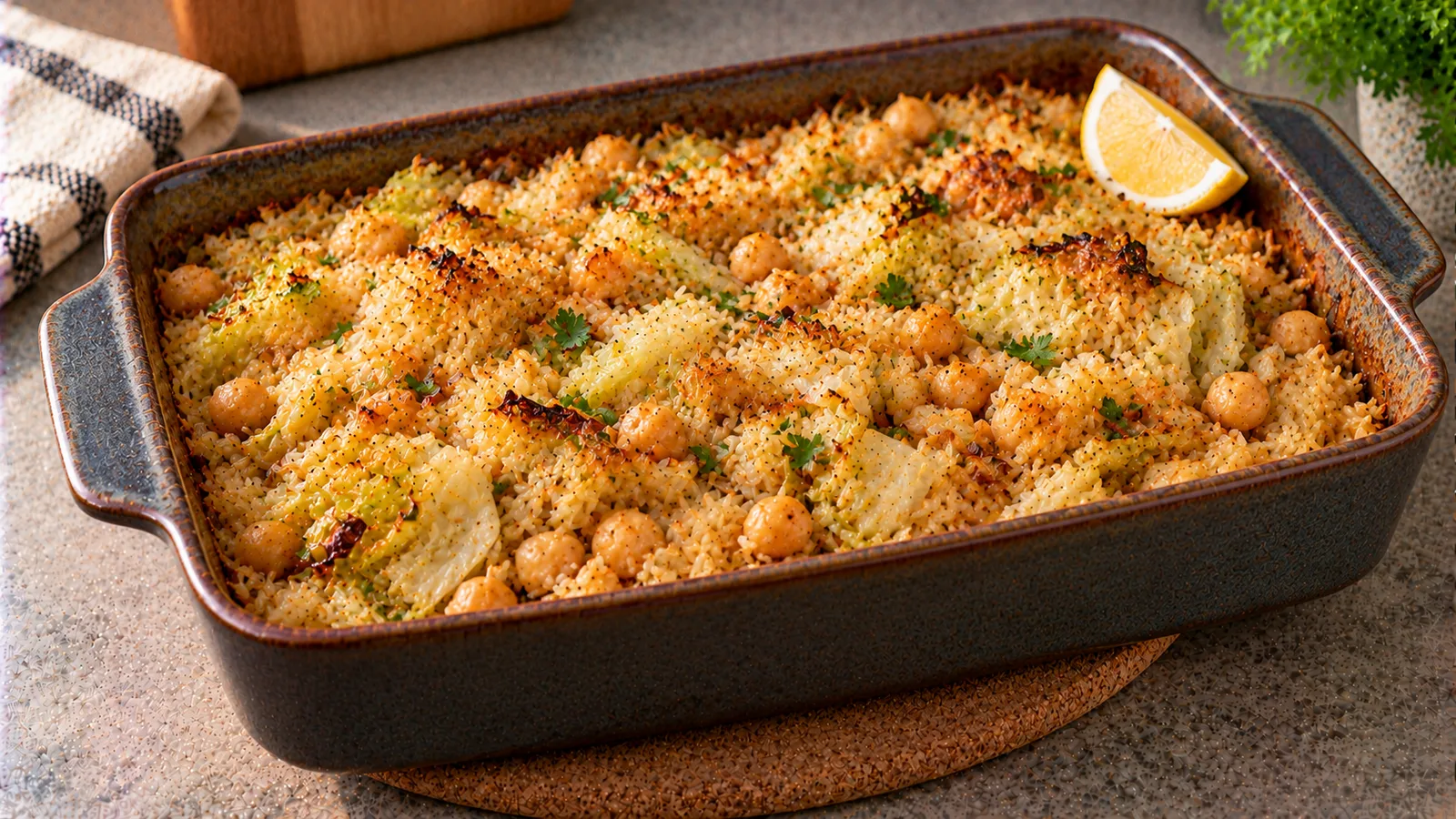
Why this is a rice bake, not a tray bake
This oven casserole is built around dry rice that absorbs measured vegetable stock in the covered baking dish. Shredded cabbage softens in the same dish while drained chickpeas supply substance. Unlike a roast-vegetable tray bake, the recipe relies on covered steam for the rice rather than crisp roasting. Use a dish with a close-fitting lid or tightly sealed foil. The lemon goes in at the end to preserve its fresh flavour.
Ingredients for four servings
| Ingredient | Total quantity | Practical note |
|---|---|---|
| Dry long-grain white rice | 240 g | Rinse and drain; not pre-cooked |
| White cabbage, shredded | 500 g | Remove tough central core |
| Canned chickpeas, drained and rinsed | 480 g | Drain weight, not can weight |
| Onion and garlic | 150 g onion + 2 cloves | Finely sliced or chopped |
| Olive oil | 24 g | Weigh; approximately 2 tablespoons |
| Low-salt vegetable stock | 520 ml | Hot; adjust to rice packet |
| Lemon | 1 | Zest plus 2 tbsp juice |
| Parsley, black pepper, paprika | To taste | Optional herbs and spices |
Before starting: rice, chickpeas and liquid
The 240 g rice weight is dry. A finished dish will weigh much more because the grains absorb water. The 480 g chickpeas are weighed after draining; two tins do not necessarily provide the same drained yield, so check labels. Use 520 ml hot stock as a starting point for ordinary white long-grain rice, but varieties and oven dishes differ. Brown rice requires a different cooking time and liquid ratio: do not swap it without reformulating the method.
Method: step by step
- Heat the oven to 190°C conventional / 170°C fan. Put a rack in the middle and lightly oil a deep oven dish.
- Toss the shredded cabbage and onion with 24 g olive oil, garlic, paprika and pepper. Spread in the dish.
- Rinse the 240 g rice until water is less cloudy. Stir the uncooked rice and the drained chickpeas through the cabbage so rice is not left in a dry layer on top.
- Pour over 520 ml hot vegetable stock. Gently level the mixture and cover tightly with a lid or foil.
- Bake for 35 minutes. Carefully open, stir from the corners and check a few grains. If dry before the rice is tender, add 50–100 ml boiling water, cover and cook another 10–15 minutes.
- Once rice is fully tender and no hard centre remains, rest covered for 5 minutes. Stir in lemon zest, 2 tbsp lemon juice and parsley. Taste before adding salt, because stock and chickpeas may already contain sodium.
Texture and doneness checks
A tender grain, not a fixed clock, is the finishing test. Oven performance, dish depth, cabbage water content and rice variety all change absorption. If the top browns before the rice softens, keep the lid on and add a little hot water. If the casserole looks wet but rice is already tender, uncover for a few minutes rather than increasing the oven temperature. Do not leave a layer of uncooked rice exposed above the liquid.
Estimated nutrition per serving
Using illustrative reference values, not a brand-specific laboratory analysis, the whole recipe is approximately 1,879 kcal, giving about 470 kcal per quarter. The assumptions are dry rice 365 kcal/100 g (240 g), drained chickpeas 120 kcal/100 g (480 g), cabbage 25 kcal/100 g (500 g), onion 40 kcal/100 g (150 g), olive oil 884 kcal/100 g (24 g), and 30 kcal for garlic, stock, lemon and parsley combined. Sum: 876 + 576 + 125 + 60 + 212 + 30 = 1,879 kcal, or 470 kcal per serving. Treat 470 kcal as an estimate: nutrition changes with your labels, oil absorbed and portion size. Protein is mainly provided by the chickpeas and rice; use pack data for a dependable macro calculation.
Estimated cost for four
Illustrative German grocery inputs: dry rice 240 g at €2.00/kg = €0.48; drained chickpeas 480 g at €3.20/kg drained = €1.54; cabbage 500 g at €1.60/kg = €0.80; onion, garlic and parsley €0.65; oil 24 g at €8.00/kg = €0.19; stock, lemon and spices €0.65. Total €4.31, or €1.08 per serving. These are worked-example prices, not current store quotes. Replace them with receipts, accounting for the edible drained chickpea weight and any unused cabbage.
Meal prep and safe storage
Cool the casserole quickly in shallow containers and refrigerate within two hours, or within one hour if the room is above 32°C. Rice needs particular care: chill promptly, ideally within one hour, keep refrigerated and eat within 24 hours under conservative UK rice guidance. Reheat only once until steaming hot throughout (FDA guidance for leftovers is 74°C / 165°F). If you intend to eat it cold, keep it refrigerated until serving. Do not let cooked rice stand warm for an extended period.
Variations that keep the method reliable
For extra citrus, add zest after baking rather than baking the lemon juice for the full time. A teaspoon of smoked paprika changes the profile without altering rice hydration. Swapping white cabbage for a watery leaf cabbage may affect the liquid balance. To increase vegetable volume, replace part of the cabbage with carrots, but check that the rice remains immersed. For a richer topping, serve with plain yoghurt after cooking rather than baking it into the rice.
Allergens and ingredient notes
Rice, cabbage and chickpeas are naturally free of gluten as ingredients, but vegetable stock mixes and cross-contact may introduce allergens; read labels if preparing food for someone with coeliac disease or another allergy. Chickpeas can cause digestive discomfort for some people; rinse thoroughly and serve a manageable portion. Lemon provides acidity and flavour, not a clinically meaningful detox effect. This is a regular meal, not a medical treatment.
Serving ideas
Serve one quarter of the casserole with a simple crunchy salad or chopped cucumber. For a richer meal, add a spoon of plain yoghurt; for a dairy-free serving, use a suitable plant-based alternative. The dish works as a lunch box only when it has been cooled and stored safely. For portion planning, portion guide helps distinguish weighed servings from package reference amounts, while balanced meal guide puts this rice-and-legume meal in the context of a complete day. If you prefer a higher-protein plate, pair it with an additional protein-rich side rather than claiming that the casserole alone meets everyone’s needs.
Sources
Food composition database for independent ingredient checks: USDA FoodData Central. Food-handling guidance: FDA Safe Food Handling. Rice-specific guidance: NHS reheating rice. Figures are illustrative recipe estimates; use product labels for exact nutrition and prices.