
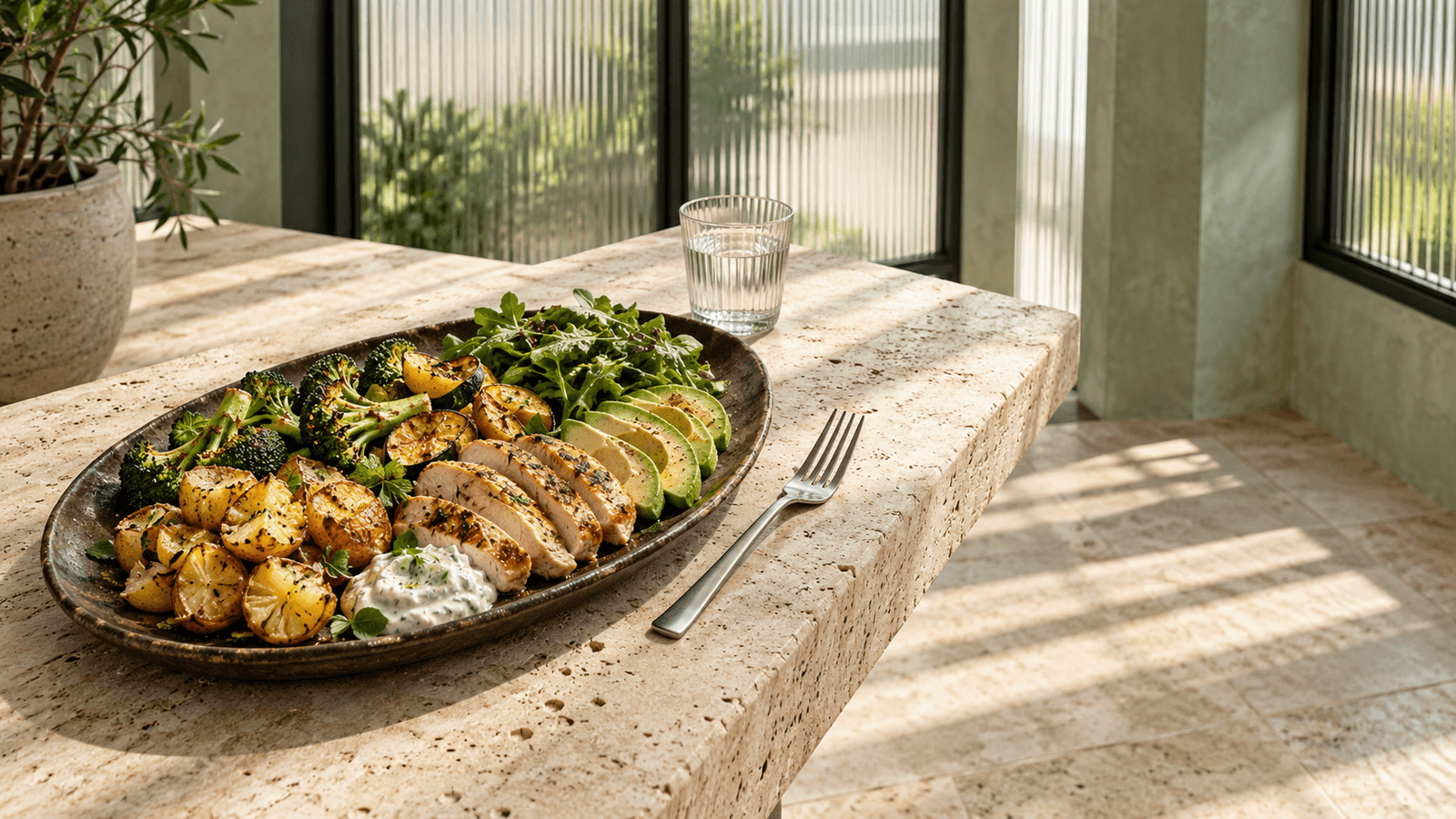
A balanced meal does not need to follow a complicated formula.
For most everyday meals, the goal is simply to combine foods that provide:
- protein
- carbohydrates
- vegetables or fruit
- dietary fat
- fibre
- enough energy to satisfy your needs
A useful plate-building method can make this easier without requiring you to weigh every ingredient or calculate every meal precisely.
This guide explains what a balanced meal is, how to build one and how to adjust the basic structure to your appetite, activity and goals.
What is a balanced meal?
A balanced meal combines several types of food rather than relying heavily on one component.
A practical meal might include:
- a protein source
- vegetables or fruit
- a carbohydrate source
- a source of dietary fat
For example:
grilled chicken + potatoes + broccoli + olive oil
or:
lentils + rice + roasted vegetables + yogurt sauce
or:
tofu + noodles + mixed vegetables + sesame seeds
There is no single perfect combination.
The goal is to create meals that are nutritionally varied, satisfying and practical.
A simple balanced plate
One easy way to think about a meal is to divide it conceptually into several components.
You do not need to physically divide the plate.
A practical starting point is:
Vegetables or fruit
Make vegetables a substantial part of many main meals.
Examples:
- broccoli
- peppers
- carrots
- tomatoes
- cucumber
- leafy greens
- zucchini
- green beans
Fruit can also contribute to an overall balanced diet and works particularly well in breakfasts, snacks and some meals.
Protein
Include a useful protein source.
Examples:
- chicken
- turkey
- fish
- eggs
- yogurt
- skyr
- cottage cheese
- tofu
- tempeh
- beans
- lentils
Protein contributes to the maintenance and growth of body tissues and can also make meals more satisfying.
For more detail, see How Much Protein Do You Need Per Day?.
Carbohydrates
Carbohydrate foods can provide energy and are a normal part of a balanced diet.
Examples include:
- potatoes
- rice
- oats
- pasta
- bread
- couscous
- quinoa
- beans
- lentils
- fruit
Whole-grain and other fibre-rich options can help increase fibre intake.
Dietary fat
Fat is an essential nutrient and also helps make meals enjoyable.
Sources can include:
- olive oil
- avocado
- nuts
- seeds
- oily fish
- nut butter
Because fat is energy-dense, the amount needed on a plate may look smaller than the amount of vegetables or carbohydrate-rich foods.
Do balanced meals need exact percentages?
No.
Plate diagrams can be useful visual tools, but they are not universal prescriptions.
The appropriate amount of each food depends on factors such as:
- appetite
- body size
- activity
- total daily intake
- health goals
- dietary preferences
- what you eat during the rest of the day
A highly active person may want a larger carbohydrate portion.
Someone trying to increase protein intake may emphasize the protein component.
Someone with a smaller appetite may need a smaller overall meal.
Think of the balanced plate as a flexible framework rather than a rigid rule.
Protein in a balanced meal
Protein is often a useful starting point when building a meal.
You might choose:
- chicken breast
- salmon
- eggs
- tofu
- lentils
- beans
- Greek yogurt
Then build the rest of the meal around it.
For example:
Salmon
+ potatoes
+ green beans
+ salad
or:
Tofu
+ rice
+ broccoli
+ peppers
or:
Lentils
+ whole-grain bread
+ roasted vegetables
+ yogurt
This approach can make meal decisions easier.
Vegetables in a balanced meal
Vegetables add:
- fibre
- vitamins
- minerals
- volume
- variety of flavors and textures
You do not need five different vegetables at every meal.
One or two can be enough.
For example:
- chicken + rice + broccoli
- salmon + potatoes + green beans
- tofu + noodles + peppers
- eggs + bread + tomatoes
Frozen vegetables can also be practical.
The important point is consistency across your overall diet rather than creating a perfect vegetable display at every meal.
Carbohydrates are not the opposite of healthy eating
Carbohydrates are sometimes removed from meals in an attempt to make them healthier.
That is not automatically necessary.
Foods such as:
- potatoes
- oats
- rice
- whole-grain bread
- pasta
- beans
- fruit
can all fit into balanced eating.
Carbohydrates are one of the three main macronutrients.
For a broader explanation, see What Are Macros?.
The amount that works best can vary depending on energy needs and activity.
What about dietary fat?
Dietary fat should not be treated as something that must be eliminated.
It provides essential fatty acids and helps with the absorption of fat-soluble vitamins.
Practical sources include:
- olive oil
- nuts
- seeds
- avocado
- salmon and other oily fish
The amount can be modest because fat provides more calories per gram than protein or carbohydrate.
Fibre and balanced meals
Fibre-rich foods can help make a balanced eating pattern more satisfying and nutritionally varied.
Useful sources include:
- vegetables
- fruit
- whole grains
- beans
- lentils
- nuts
- seeds
Instead of trying to add a special fibre product, start by regularly including these foods in meals.
A balanced breakfast
Breakfast does not need to look like a dinner plate.
The same principles can be applied differently.
Example 1
Greek yogurt or skyr
+ oats
+ berries
+ nuts
Example 2
Eggs
+ whole-grain toast
+ tomatoes
+ fruit
Example 3
Oatmeal
+ milk or yogurt
+ berries
+ seeds
Each combines several nutritional components without requiring a rigid plate format.
A balanced lunch
A practical lunch might be:
Chicken bowl
- chicken
- rice
- vegetables
- yogurt-herb sauce
Lentil bowl
- lentils
- roasted vegetables
- potatoes
- feta or yogurt sauce
Sandwich meal
- whole-grain sandwich with protein filling
- vegetables
- fruit
- yogurt
Balanced meals do not have to be cooked from scratch.
A balanced dinner
Dinner can follow the same basic framework.
Example 1
Salmon
+ potatoes
+ broccoli
+ olive oil or sauce
Example 2
Chicken
+ rice
+ mixed vegetables
Example 3
Tofu
+ noodles
+ stir-fried vegetables
+ sesame seeds
Example 4
Beans
+ rice
+ vegetables
+ avocado
The exact foods matter less than the overall structure and dietary pattern.
Can pasta be a balanced meal?
Yes.
Instead of thinking of pasta as a meal that needs to be avoided, consider what is included with it.
For example:
pasta + tomato sauce + lean minced meat + vegetables
or:
pasta + lentils + tomato sauce + spinach
or:
pasta + tuna + tomatoes + vegetables
The pasta provides carbohydrates while the other ingredients contribute protein, vegetables and additional nutrients.
Can sandwiches be balanced meals?
Yes.
A sandwich can include:
- whole-grain bread
- chicken, tuna, eggs, cheese, tofu or another protein source
- vegetables
- a moderate amount of sauce or spread
Add fruit, yogurt or vegetables alongside it when useful.
A balanced meal does not need to be served on a ceramic dinner plate.
Can soup be a balanced meal?
It depends on what the soup contains.
A vegetable broth may be nutritious but may not provide much protein or energy on its own.
A more complete meal could be:
lentil soup + whole-grain bread + yogurt
or:
chicken and vegetable soup + potatoes or bread
Again, look at the components rather than the name of the dish.
Balanced vegetarian meals
Vegetarian meals can follow the same structure.
Protein sources might include:
- lentils
- beans
- tofu
- tempeh
- eggs
- yogurt
- cottage cheese
- other dairy foods
Example:
lentils + roasted potatoes + vegetables + yogurt sauce
or:
tofu + rice + broccoli + sesame seeds
Balanced vegan meals
A vegan meal can combine:
- tofu, tempeh, beans or lentils
- grains or potatoes
- vegetables
- nuts, seeds, avocado or another plant fat
For example:
tofu + brown rice + broccoli + peppers + sesame seeds
Variety across the overall diet remains important.
Balanced meals for weight loss
A balanced meal can support weight management, but the word "balanced" does not automatically mean low-calorie.
Energy intake still matters.
If weight loss is the goal, useful adjustments may include:
- plenty of vegetables
- a meaningful protein source
- portions that fit your calorie needs
- awareness of calorie-dense oils, sauces and extras
For a broader approach, see How to Lose Weight Sustainably.
You can also read How Many Calories Should You Eat Per Day?.
Balanced meals for active people
People with higher activity levels may require more total energy.
A balanced meal for an active person might contain:
- a larger carbohydrate portion
- sufficient protein
- vegetables or fruit
- dietary fat
The structure can remain similar while the portions change.
This is why a single universal plate size does not work for everyone.
Portion size matters
Two people can eat the same foods but need different portions.
A plate containing:
- salmon
- potatoes
- broccoli
- olive oil
could be appropriate in many different contexts.
But the amount of each component may change.
Portions can be influenced by:
- hunger
- calorie needs
- activity
- meal frequency
- goals
You do not necessarily need to weigh every component to make sensible adjustments.
Does every meal need to be perfectly balanced?
No.
Nutrition works across meals and days.
One meal may contain less protein.
Another may contain fewer vegetables.
A restaurant meal may be richer than usual.
That does not make the entire diet unbalanced.
Focus on repeated patterns rather than individual meals.
What about snacks?
Snacks can complement meals.
Examples include:
- yogurt + fruit
- apple + nuts
- vegetables + hummus
- cottage cheese + berries
- boiled eggs + fruit
A snack does not need to contain every component of a balanced meal.
Its role depends on hunger and the rest of the day's food.
How to build a balanced meal in 5 steps
A simple process:
Step 1: Choose a protein source
Chicken, fish, eggs, tofu, beans, lentils or another option.
Step 2: Add vegetables or fruit
Choose one or more foods you enjoy.
Step 3: Add a carbohydrate source
Rice, potatoes, pasta, bread, grains or another suitable option.
Step 4: Include dietary fat if needed
Olive oil, nuts, seeds, avocado or fat naturally present in the meal.
Step 5: Adjust the portions
Consider hunger, activity and your overall goals.
That is enough for many everyday meals.
Building meals from what you already have
Balanced eating does not require buying a completely new collection of ingredients.
Suppose you have:
- eggs
- potatoes
- frozen broccoli
- yogurt
You can already build a practical meal.
Or perhaps you have:
- canned beans
- rice
- frozen vegetables
- olive oil
Again, you have the basic components of a meal.
This approach also works well with meal planning.
See Meal Planning for Beginners.
How Mealisa can help
Mealisa is designed to reduce the amount of manual work involved in food tracking and meal planning.
Instead of applying one fixed meal template to everyone, food choices can be considered alongside factors such as:
- calorie goals
- protein and macro targets
- dietary preferences
- allergies or intolerances
- budget
- cooking time
- foods already available
Mealisa can also analyze meals from photos and help turn available ingredients into meal ideas.
The goal is not to make every plate identical.
It is to make balanced everyday eating easier to organize.
Common balanced-meal mistakes
Thinking every plate must look identical
Different meals can be balanced in different ways.
Removing carbohydrates automatically
Carbohydrate foods can be part of a balanced diet.
Forgetting protein
Some meals contain plenty of vegetables and carbohydrates but very little protein.
Treating vegetables as decoration
A few leaves on the side are not the only way to include vegetables. Use portions that meaningfully contribute to the meal.
Adding large amounts of oil without noticing
Healthy fats still contribute energy.
Making the system too complicated
If building a meal requires a calculator every time, the system may be too difficult to use consistently.
Frequently asked questions
What should a balanced meal contain?
A practical balanced meal often contains a protein source, vegetables or fruit, a carbohydrate source and some dietary fat.
Does a balanced meal need all food groups?
Not every individual meal needs to contain every possible food group. Look at the overall dietary pattern.
Is rice part of a balanced meal?
Yes. Rice can provide the carbohydrate component of a meal and can be combined with protein, vegetables and other foods.
Is bread healthy in a balanced meal?
Bread can fit into balanced eating. Whole-grain varieties can provide additional fibre.
Do I need to weigh food to build balanced meals?
Not necessarily. Visual portion awareness and consistent meal structure can be enough for many people. Weighing can be useful when greater precision is required.
Can a balanced meal help with weight loss?
It can support a weight-loss eating pattern, but total energy intake remains important.
Can I eat the same balanced meal regularly?
Yes. You do not need constant novelty. Variety across the broader diet is more important than making every meal different.
The bottom line
A balanced meal does not require a perfect plate or complicated calculations.
Start with a useful protein source.
Add vegetables or fruit.
Include a carbohydrate source.
Include an appropriate source of dietary fat.
Then adjust portions to your appetite, activity and goals.
The exact foods can change from meal to meal.
The useful principle stays the same:
build meals from complementary components rather than trying to make every plate perfect.
This article provides general nutrition information and is not individualized medical or dietary advice. People with medical conditions, allergies or other specific dietary requirements may need personalized guidance.