
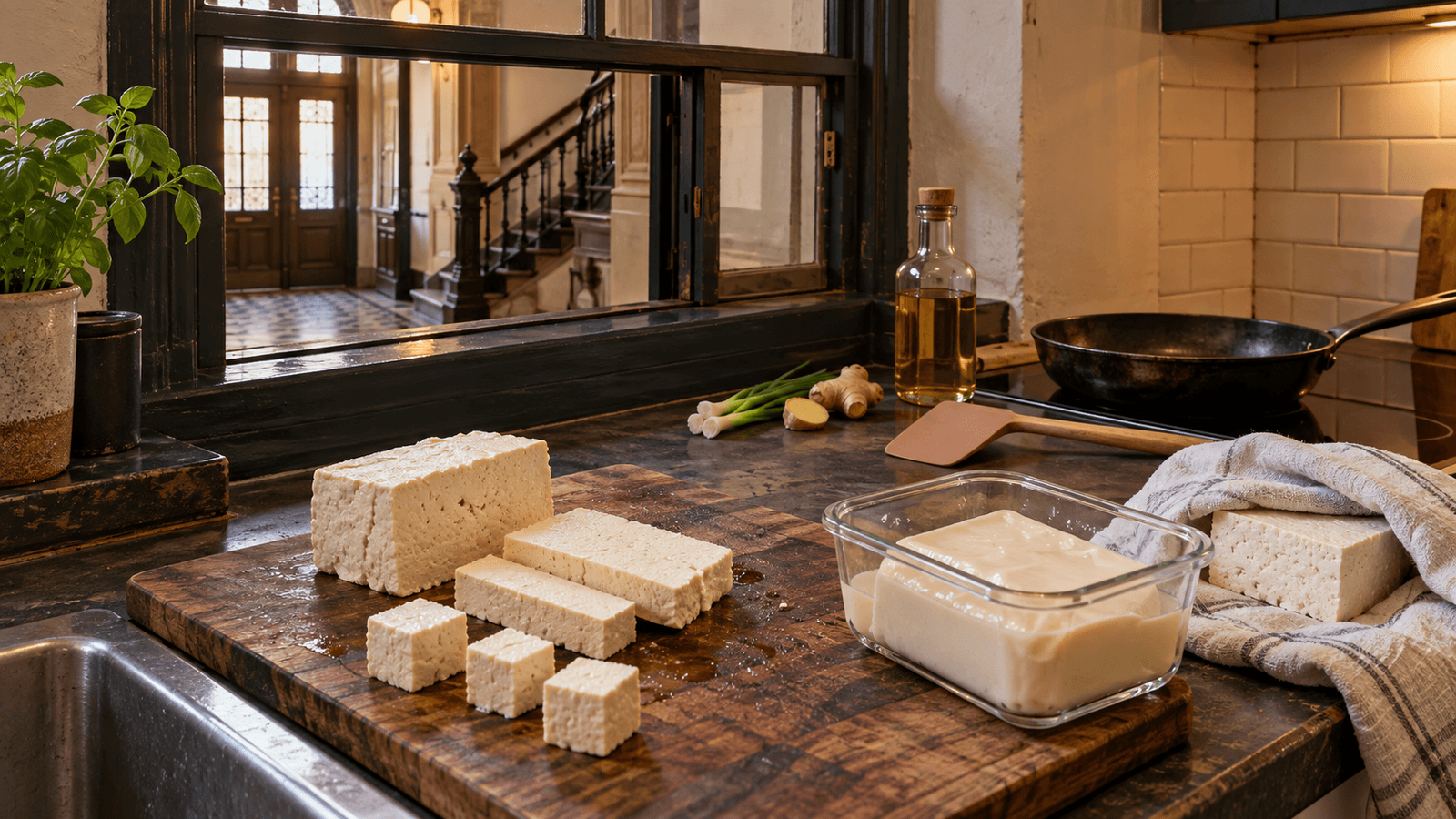
Tofu can be a useful source of plant-based protein, but its calorie content is not identical across every product.
The total depends on the type of tofu, its water content, the portion you use and what happens during cooking.
That means the most accurate answer to “How many calories are in tofu?” usually comes from the specific product and amount you are actually eating.
How many calories are in 100 g of tofu?
Quick answer: One USDA FoodData Central reference for raw, firm tofu prepared with calcium sulfate provides 144 kcal per 100 g. This is a specific reference product, not a universal value for every type of tofu.
| Nutrient | Amount per 100 g |
|---|---|
| Calories | 144 kcal |
| Protein | 17.3 g |
| Fat | 8.7 g |
| Carbohydrates | 2.8 g |
| Calcium | 683 mg |
Calories in common portions
| Portion | Calories | Protein |
|---|---|---|
| 100 g | 144 kcal | 17.3 g |
| 150 g | 216 kcal | 26.0 g |
| 200 g | 288 kcal | 34.6 g |
These serving values are calculated from the same reference. Silken, soft, smoked and other firm tofu products can differ substantially, particularly in water content, protein concentration and calcium. Check your product's nutrition label for the most accurate result.
Source: USDA FoodData Central — firm tofu, FDC ID 172475.
What is tofu?
Tofu is made from soybeans.
Soy milk is coagulated and the resulting curds are formed into blocks. Different production methods and different amounts of water create tofu with different textures.
Common varieties include:
- silken tofu
- soft tofu
- medium tofu
- firm tofu
- extra-firm tofu
These differences matter when estimating calories and nutrients.
Why tofu calories vary
Two pieces of tofu that look similar can have different nutrition values.
Important factors include:
- water content
- firmness
- soybean concentration
- manufacturing method
- added ingredients
- whether the tofu is plain, smoked, marinated or flavored
A firmer tofu often contains less water and more solids per unit of weight than a softer tofu.
However, product labels remain the best source for the exact product you purchased.
Silken tofu vs firm tofu
Silken tofu contains relatively more water and has a soft, smooth texture.
Firm and extra-firm tofu have more water pressed out.
Because the concentration of solids can differ, equal-weight portions of silken and firm tofu do not necessarily contain the same calories, protein or fat.
Do not assume that all tofu can use one universal nutrition value.
Plain tofu vs flavored tofu
Plain tofu usually has a relatively simple ingredient list.
Other products may include:
- marinades
- oil
- sauces
- seasonings
- sugar
- coatings
These additions can change the calorie content.
A smoked or marinated tofu product should therefore be tracked using its own nutrition information when available rather than the value for generic plain tofu.
What nutrients does tofu provide?
Depending on the product, tofu can provide:
- protein
- fat
- small amounts of carbohydrate
- minerals such as calcium when calcium salts are used during production
- iron and other micronutrients
The exact nutrient profile varies between products.
Is tofu high in protein?
Tofu is commonly used as a plant-based protein source.
Firm tofu generally provides more protein per unit of weight than very high-water tofu, although exact values vary.
If protein intake is important to you, compare the protein value on the nutrition label rather than relying only on the word “tofu.”
See How Much Protein Do You Need Per Day?.
Does tofu contain fat?
Yes.
Soybeans naturally contain fat, so plain tofu is not normally fat-free.
The amount depends on the product.
Additional oil from marinades or cooking can increase the total amount of fat and calories in the final dish.
See How Much Fat Do You Need Per Day?.
Does tofu contain carbohydrates?
Plain tofu generally contains some carbohydrate, but the amount varies.
Flavored products can contain additional carbohydrates from sauces, coatings or sweeteners.
Again, use the label for the specific product when precision matters.
Portion size matters
The calorie content of tofu scales with the amount eaten.
A small amount added to a soup is very different from a large block used as the main protein source of a meal.
This is why estimating the portion is often more important than memorizing one calorie number.
Common ways tofu portions are measured
Tofu may be tracked by:
- grams
- ounces
- fraction of a package
- number of cubes or slices
- visual portion estimate
Weight is usually the most transferable method because cube and slice sizes vary considerably.
Why “one block of tofu” is not a standard serving
Tofu packages are sold in different sizes.
A whole block from one brand may be substantially different from a whole block from another.
For calorie tracking, “one block” is therefore less precise than using the package weight and nutrition information.
How to calculate calories from the package
If the package provides nutrition information per 100 grams, you can calculate the amount for your portion.
For example, if you eat only part of the package:
- determine the weight of the portion
- check the nutrition value per 100 grams
- scale that value to the amount eaten
This method is more reliable than choosing a generic database entry when the exact product is available.
Should tofu be weighed before or after cooking?
For packaged tofu, the nutrition label usually refers to the product as sold unless the label states otherwise.
If you use the package nutrition information, weighing the tofu in the same state represented by the label is usually the clearest approach.
Cooking can change water content.
That means the weight may change even though the tofu itself has not suddenly gained or lost the corresponding amount of energy.
Pressing tofu and calorie density
Pressing removes water.
After pressing, the tofu may weigh less.
If you compare the pressed tofu gram-for-gram with the original unpressed product, the apparent calorie density can change because there is less water.
The total calories in the piece do not disappear simply because water was removed.
This is one reason to keep the measurement method consistent.
Does frying tofu add calories?
It can.
Tofu can absorb some cooking oil during frying.
The amount depends on factors such as:
- amount of oil used
- cooking method
- surface area
- cooking time
- how much oil remains in the pan
If you are tracking calories, cooking oil should be considered separately.
Air-fried tofu
Air frying itself does not automatically add substantial calories.
The important question is whether oil, sauce or coating was added before cooking.
Tofu cooked in an air fryer with added oil should include that oil in the overall estimate.
Baked tofu
Plain baked tofu may change in weight as water evaporates.
If oil or marinade is added, those ingredients contribute additional calories.
A cooked portion can therefore have a different calorie density per gram from the raw product.
Marinated tofu
Marinades vary widely.
Some contain mostly:
- soy sauce
- vinegar
- spices
- herbs
Others may also contain:
- oil
- sugar
- syrups
- thicker sauces
The amount of marinade absorbed or eaten affects the final total.
Breaded or coated tofu
Breadcrumbs, flour, starch and other coatings add ingredients that plain tofu does not contain.
Oil used during cooking can add more.
Do not use a plain-tofu calorie value for breaded or heavily coated tofu.
Tofu in restaurant meals
Restaurant tofu can be more difficult to estimate because you may not know:
- the tofu type
- the portion weight
- the amount of oil
- the sauce ingredients
- whether the tofu was fried
- whether it was coated
In this situation, treat the estimate as an estimate rather than false precision.
Tofu in stir-fries
In a stir-fry, tofu may be only one part of the calorie total.
Other contributors can include:
- cooking oil
- sauce
- noodles or rice
- nuts or seeds
- vegetables
If the goal is to estimate the full meal, track the whole dish rather than focusing only on the tofu.
Tofu in salads
A tofu salad can vary substantially depending on:
- tofu portion
- dressing
- oil
- avocado
- nuts
- seeds
- grains
- other toppings
The presence of tofu alone does not determine whether the meal is low or high in calories.
Tofu in soups
Tofu used in broth-based soups may contribute only part of the meal's energy.
The total depends on the other ingredients and the amount of tofu actually eaten.
Soft or silken tofu is often used in soups, so using a generic firm-tofu entry may also create an inaccurate estimate.
Tofu for weight loss
Tofu can fit into a weight-loss diet.
Whether it supports your plan depends on the overall meal, portion size, preparation and total energy intake.
A tofu meal can be relatively light or very energy-dense depending on oil, sauces and accompaniments.
See How to Build a Filling Meal for Weight Loss.
Tofu and satiety
Protein can contribute to satiety, and tofu can provide protein as part of a meal.
However, fullness also depends on the complete meal.
Vegetables, fiber-rich carbohydrates, fats, portion size and individual preferences all matter.
Tofu for meal planning
Tofu can be useful in meal planning because it works in many formats.
Examples include:
- stir-fries
- soups
- wraps
- grain bowls
- curries
- salads
- baked dishes
Choose formats that match the tofu type and the other foods you already have.
Tofu and food waste
Package size matters when planning tofu meals.
If you only need part of a package, decide how the rest will be used.
For example, the remaining tofu could be assigned to another meal rather than left without a plan.
This is the same principle used in How to Avoid Food Waste With Meal Planning.
How to track tofu more accurately
A practical approach is:
- identify the exact tofu product
- check whether it is plain, flavored, smoked or marinated
- use the nutrition label
- weigh or estimate the portion
- include cooking oil
- include sauces and coatings
- keep raw and cooked measurements consistent
This is usually more useful than searching for a single universal calorie value.
Using a food database
If the original packaging is unavailable, a food database can provide an estimate.
Choose an entry that matches the tofu as closely as possible.
For example, avoid selecting:
- silken tofu when you ate extra-firm tofu
- plain tofu when you ate fried tofu
- generic tofu when the product was heavily marinated
Small differences are normal, but choosing the correct category improves the estimate.
Tracking tofu from a photo
A food photo can help identify tofu and estimate the visible portion.
However, a photo may not reveal:
- exact weight
- tofu firmness
- oil absorbed during cooking
- ingredients in a marinade
- hidden sauce
- whether the tofu was coated before cooking
Photo-based tracking is therefore most useful when the estimate can be corrected if you know more about the meal.
Common tracking mistakes
Using one value for every tofu product
Different tofu types and products vary.
Ignoring cooking oil
Oil can meaningfully change the total.
Tracking the package instead of the portion
You may not eat the whole package.
Confusing raw and cooked weight
Cooking changes water content.
Ignoring marinades and coatings
These can add calories beyond the tofu itself.
Estimating cubes without considering size
One person's tofu cube can be much larger than another's.
Is tofu low in calories?
That depends on what you compare it with, the tofu type and the portion.
Very high-water tofu may have a lower calorie density than firmer varieties.
But describing tofu simply as “low calorie” can hide meaningful differences between products and preparation methods.
Is tofu healthier than meat?
There is no universal answer.
Tofu and different meats have different nutrient profiles.
The better choice depends on:
- overall diet
- protein needs
- preferences
- preparation
- portion
- other foods in the meal
A single food does not determine the quality of an entire diet.
Is tofu good for a high-protein diet?
It can contribute to protein intake.
If protein density is important, compare products because the amount of protein per 100 grams can differ between soft and firm varieties.
Is tofu suitable for vegetarian and vegan diets?
Plain tofu is commonly used in vegetarian and vegan eating patterns.
For processed or flavored products, check the ingredient list if you need to confirm suitability for a specific diet.
Does tofu need to be counted if you track calories?
If you are tracking total energy intake, tofu contributes calories and should generally be included like other foods.
How precisely you track it depends on your goals and the level of precision that is useful to you.
Do you need perfect accuracy?
No.
Food tracking is always an estimate to some degree.
The goal is usually consistent, useful information rather than laboratory-level precision.
Using the correct tofu type, a reasonable portion estimate and the main added ingredients will usually improve the estimate substantially.
Frequently asked questions
Do all tofu products have the same calories?
No. Water content, firmness, ingredients and processing can create differences between products.
Is firm tofu higher in calories than silken tofu?
Firm tofu often contains more solids and less water, which can make it more calorie-dense by weight, but exact values depend on the products being compared.
Does pressing tofu remove calories?
Pressing primarily removes water. It does not simply remove a proportional amount of the tofu's energy.
Does cooked tofu have more calories than raw tofu?
Cooking itself does not necessarily add calories, but oil, sauces, coatings and marinades can. Water loss can also make cooked tofu more calorie-dense per gram.
Should I weigh tofu before cooking?
If you are using the package nutrition information, measuring it in the state represented by that label is usually the simplest approach.
Is fried tofu higher in calories?
It can be because tofu may absorb cooking oil.
Can I estimate tofu from a photo?
Yes, but treat it as an estimate. A photo may not reveal exact weight, firmness, oil or hidden ingredients.
What is the most accurate way to track tofu?
Use the exact product label, measure the portion and include meaningful additions such as oil, sauces and coatings.
The bottom line
There is no single calorie value that accurately represents every tofu product.
Calories in tofu depend on:
- tofu type
- water content
- product formulation
- portion size
- cooking method
- oil
- marinades
- coatings and sauces
For the most useful estimate, start with the nutrition label of the specific tofu you are eating and scale it to your actual portion.
Then include the ingredients added during cooking.
That approach is more accurate than relying on one generic number for every kind of tofu.
This article provides general educational nutrition information and is not individualized medical or dietary advice.