
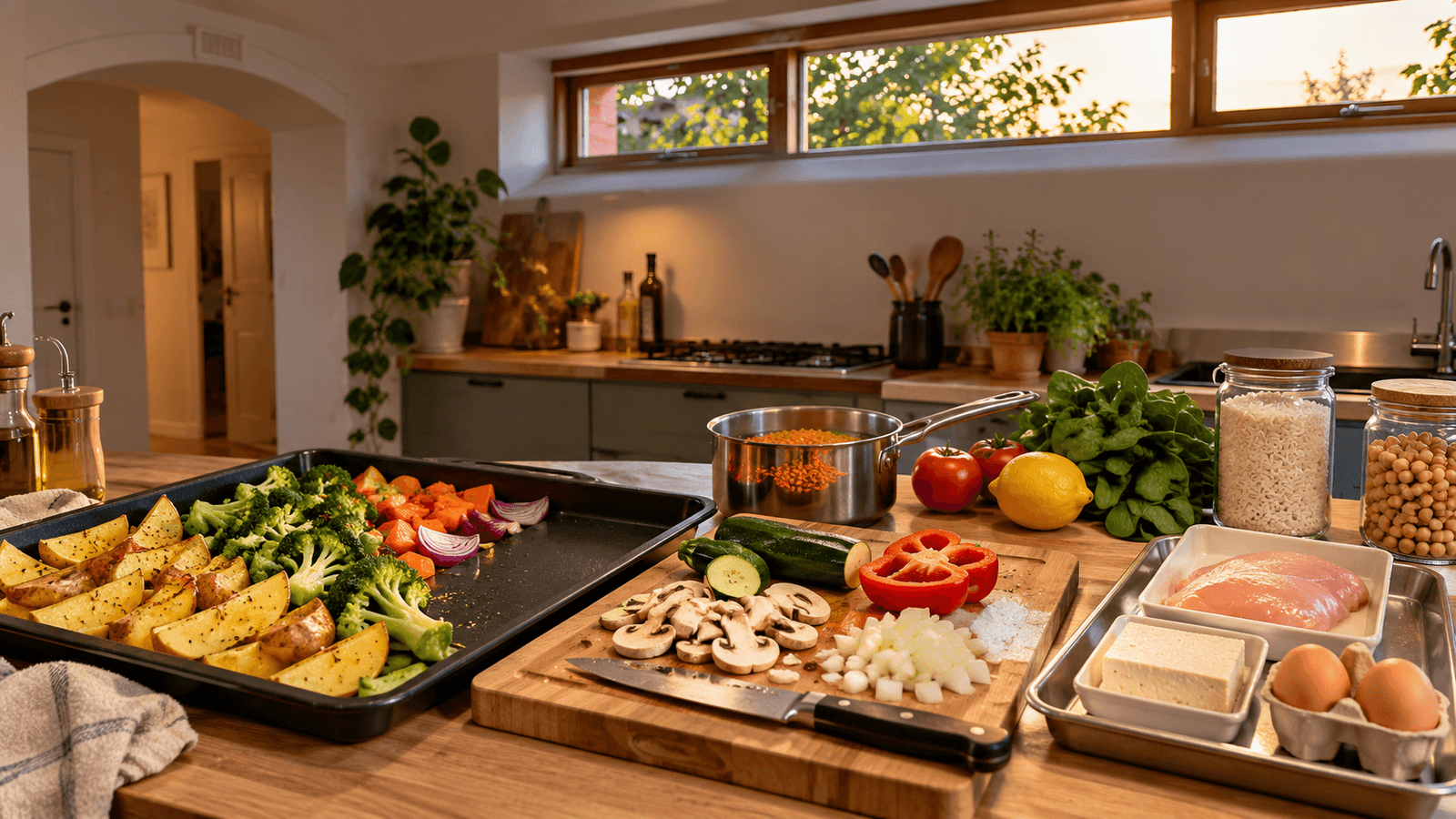
A lower-calorie dinner does not need to be tiny, bland or built entirely around salad.
A practical dinner can combine vegetables, a useful source of protein, a moderate portion of carbohydrate and enough flavor to make the meal satisfying.
The recipes below are designed around ordinary ingredients and relatively simple preparation.
Exact calories depend on the brands, quantities and substitutions you use, so treat any estimate as approximate and calculate from your actual ingredients when accuracy matters.
What makes a useful low-calorie dinner?
A lower-calorie dinner often becomes easier to build when you start with:
- a substantial amount of vegetables
- a practical protein source
- a controlled amount of higher-calorie ingredients
- enough carbohydrate for your preferences and needs
- herbs, spices, acidity and other flavorings
You do not need to remove pasta, rice, potatoes or bread.
Portion size and the complete recipe matter more than categorizing one ingredient as automatically good or bad.
1. Lemon chicken with potatoes and green beans
Ingredients
- chicken breast
- potatoes
- green beans
- lemon
- garlic
- small amount of olive oil
- black pepper
- herbs
Method
Cut the potatoes into small pieces and roast until nearly tender.
Add seasoned chicken and green beans and continue cooking until the chicken is fully cooked and the vegetables are ready.
Finish with lemon juice and herbs.
Why it works
Potatoes provide volume and carbohydrate, while chicken supplies protein and green beans increase the vegetable portion.
Measure the oil rather than pouring it freely if you are tracking calories.
2. Turkey and vegetable tomato skillet
Ingredients
- lean ground turkey
- onion
- zucchini
- bell pepper
- canned tomatoes
- garlic
- paprika
- herbs
Method
Brown the turkey in a large pan.
Add onion, zucchini and pepper.
Stir in tomatoes, garlic and seasonings and simmer until the vegetables are tender.
Serve alone or with a measured portion of rice, potatoes or bread.
3. Tofu vegetable stir-fry
Ingredients
- firm tofu
- broccoli
- carrots
- bell pepper
- mushrooms
- soy sauce
- garlic
- ginger
- small amount of cooking oil
Method
Pat the tofu dry and cut it into cubes.
Cook it in a nonstick pan with a measured amount of oil.
Add the vegetables and cook until tender-crisp.
Finish with soy sauce, garlic and ginger.
Serve with rice if desired.
4. Lentil and vegetable soup
Ingredients
- dry or cooked lentils
- carrots
- celery
- onion
- canned tomatoes
- vegetable stock
- garlic
- herbs
Method
Cook the onion, carrot and celery until slightly softened.
Add lentils, tomatoes, stock and seasonings.
Simmer until the lentils are tender.
Add extra water or stock if you prefer a thinner soup.
This is also useful for batch cooking and freezing.
5. Salmon with broccoli and boiled potatoes
Ingredients
- salmon fillet
- broccoli
- potatoes
- lemon
- dill
- black pepper
Method
Bake or pan-cook the salmon until properly cooked.
Boil the potatoes and steam the broccoli.
Serve with lemon and dill.
Because salmon is more energy-dense than many lean fish, portion size can make a meaningful difference to the total calories.
6. Chicken fajita bowl
Ingredients
- chicken breast
- bell peppers
- onion
- lettuce
- tomatoes
- cooked rice
- lime
- cumin
- paprika
Method
Cook sliced chicken with peppers, onion and spices.
Add a measured portion of rice to a bowl and top with lettuce, tomatoes and the cooked chicken mixture.
Finish with lime.
Optional toppings should be counted separately when tracking calories.
7. White fish with tomato zucchini sauce
Ingredients
- white fish fillet
- zucchini
- canned tomatoes
- onion
- garlic
- herbs
- small amount of olive oil
Method
Cook onion and zucchini with a small amount of oil.
Add tomatoes, garlic and herbs.
Place the fish into the sauce and cook gently until the fish is done.
Serve with potatoes, rice or bread if desired.
8. Egg and vegetable fried rice
Ingredients
- cooked rice
- eggs
- peas
- carrots
- spring onion
- soy sauce
- small amount of oil
Method
Cook the vegetables in a large pan.
Move them aside and scramble the eggs.
Add cooked rice and soy sauce and combine everything.
Using plenty of vegetables allows the rice portion to remain moderate while still producing a substantial dinner.
9. Turkey meatballs with tomato sauce and vegetables
Ingredients
- lean ground turkey
- egg
- onion
- garlic
- herbs
- canned tomatoes
- zucchini or another vegetable
Method
Combine turkey with egg, finely chopped onion and seasoning.
Form small meatballs and bake or pan-cook until properly cooked.
Simmer briefly in tomato sauce and serve with cooked vegetables.
Add pasta or potatoes according to your needs.
10. Chickpea spinach curry
Ingredients
- chickpeas
- spinach
- tomatoes
- onion
- garlic
- curry spices
- light coconut milk or another suitable cooking liquid
Method
Cook onion and garlic.
Add spices, tomatoes and chickpeas.
Simmer, then add spinach near the end.
If using coconut milk, measure it because calorie content can vary considerably between products.
Serve with a moderate portion of rice if desired.
11. Chicken and cabbage stir-fry
Ingredients
- chicken breast
- cabbage
- carrots
- onion
- garlic
- soy sauce
- ginger
- small amount of oil
Method
Cook thin strips of chicken until nearly done.
Add cabbage, carrots and onion.
Stir-fry until the vegetables soften while retaining some texture.
Season with garlic, ginger and soy sauce.
12. Stuffed bell peppers with turkey and rice
Ingredients
- bell peppers
- lean ground turkey
- cooked rice
- canned tomatoes
- onion
- herbs
Method
Cut the peppers in half and remove the seeds.
Cook turkey and onion, then mix with rice and tomatoes.
Fill the pepper halves and bake until the peppers are tender and the filling is thoroughly cooked.
13. Potato, egg and vegetable skillet
Ingredients
- potatoes
- eggs
- zucchini
- spinach
- onion
- paprika
- small amount of oil
Method
Cut potatoes into small cubes and cook until tender.
Add onion and zucchini.
Stir in spinach and make spaces for the eggs.
Cook until the eggs reach your preferred safe doneness.
14. Shrimp and vegetable noodles
Ingredients
- shrimp
- noodles
- broccoli
- carrots
- cabbage
- soy sauce
- garlic
- ginger
Method
Cook the noodles according to the package directions.
Cook shrimp separately until done.
Stir-fry the vegetables, then combine with shrimp, noodles and seasoning.
Keep the noodle portion moderate and use vegetables to increase the total volume.
15. Red lentil tomato pasta
Ingredients
- pasta
- red lentils
- canned tomatoes
- onion
- garlic
- spinach
- herbs
Method
Cook the lentils in the tomato sauce until soft.
Add spinach near the end.
Serve with a measured portion of cooked pasta.
The lentils add protein and fiber while extending the sauce.
16. Baked tofu with potatoes and broccoli
Ingredients
- firm tofu
- potatoes
- broccoli
- paprika
- garlic
- soy sauce
- small amount of oil
Method
Cut tofu and potatoes into pieces.
Season and bake the potatoes first.
Add tofu and broccoli later so everything finishes at approximately the same time.
Serve with a simple yogurt or soy-based sauce if desired, tracking it separately.
17. Chicken vegetable pasta
Ingredients
- chicken breast
- pasta
- zucchini
- tomatoes
- spinach
- garlic
- herbs
Method
Cook the pasta.
Cook chicken pieces in a large pan, then add zucchini, tomatoes and garlic.
Add spinach and cooked pasta.
Use enough vegetables that pasta is only one component of the final meal.
18. Bean and vegetable chili
Ingredients
- kidney beans
- black beans or another bean
- canned tomatoes
- bell pepper
- onion
- corn
- garlic
- chili powder
- cumin
Method
Cook onion and pepper until softened.
Add tomatoes, beans, corn and spices.
Simmer until thickened and the flavors combine.
Serve alone or with a moderate portion of rice.
19. Greek yogurt chicken with roasted vegetables
Ingredients
- chicken breast
- plain Greek yogurt
- lemon
- garlic
- paprika
- zucchini
- carrots
- onion
Method
Mix yogurt with lemon, garlic and seasoning.
Coat the chicken and allow it to marinate in the refrigerator.
Roast or bake with vegetables until the chicken is thoroughly cooked.
Use the amount of yogurt actually added when calculating nutrition.
20. Vegetable omelet with potatoes
Ingredients
- eggs
- potatoes
- mushrooms
- spinach
- tomatoes
- onion
- herbs
Method
Boil or roast a moderate portion of potatoes.
Cook mushrooms and onion in a nonstick pan.
Add spinach and beaten eggs.
Cook until the eggs are set and serve with tomatoes and potatoes.
How to keep dinner calories under control
You do not need to make every ingredient low calorie.
Instead, pay particular attention to ingredients that are easy to underestimate, such as:
- cooking oil
- butter
- cheese
- creamy sauces
- mayonnaise
- nuts
- seeds
- dressings
- large amounts of pasta or rice
These foods can fit into a balanced diet, but small changes in quantity can noticeably affect the total calories.
Measure cooking oil when accuracy matters
Oil is useful for cooking and flavor, but free-pouring can make calorie estimates unreliable.
If you are tracking intake, measure the oil used for the whole recipe and divide it across the number of portions.
Do the same for sauces and dressings.
Use vegetables for volume
Vegetables can increase the physical amount of food without requiring the entire dinner to consist of low-calorie substitutes.
Useful options include:
- broccoli
- zucchini
- cabbage
- mushrooms
- peppers
- carrots
- tomatoes
- spinach
- green beans
- cauliflower
Choose vegetables you actually enjoy.
Include enough protein
Protein can contribute to satiety and helps support muscle maintenance.
Dinner protein sources may include:
- chicken
- turkey
- fish
- shrimp
- eggs
- tofu
- lentils
- beans
- Greek yogurt
Your total daily protein intake matters more than making dinner unusually high in protein.
See How Much Protein Do You Need Per Day?.
You can still eat carbohydrates
Rice, pasta, bread and potatoes do not need to disappear from a lower-calorie dinner.
Instead:
- choose a portion appropriate for your needs
- combine it with vegetables
- include protein
- account for sauces and cooking fats
This often produces a more sustainable meal than trying to eliminate an entire food group.
Low-calorie dinner and weight loss
A low-calorie dinner does not guarantee weight loss.
Weight change depends on energy balance over time.
If your goal is weight loss, dinner is one part of the entire day.
See Meal Planning for Weight Loss: A Beginner’s Guide.
Plan dinners around ingredients you already have
Before buying ingredients for several new recipes, check:
- refrigerator
- freezer
- pantry
If you already have rice, potatoes, frozen vegetables, eggs or canned beans, choose recipes that use them.
This can reduce both food waste and grocery spending.
See How to Plan Meals Around What You Already Have.
Use leftovers deliberately
Many of these recipes can produce extra portions.
Decide whether those portions will become:
- tomorrow's lunch
- another dinner
- a freezer meal
Do not prepare extra food without a plan for it.
See How to Plan Meals With Leftovers.
Frequently asked questions
What is a good low-calorie dinner?
A practical lower-calorie dinner can include vegetables, protein and a suitable portion of carbohydrate, with cooking fats and sauces kept in quantities that fit your calorie target.
Do I need to avoid rice or pasta?
No. Portion size and the complete meal matter more than eliminating rice or pasta.
Are potatoes good for a low-calorie dinner?
Potatoes can fit well. Preparation method and added fats can substantially affect the final calorie total.
Can I meal prep these dinners?
Many of them can be prepared in advance or partially prepped. Follow appropriate food-safety and storage guidance.
How do I calculate the calories in a homemade dinner?
Add the calories from all ingredients used in the recipe, then divide by the number or weight of the portions actually eaten.
Are vegetarian dinners lower in calories?
Not automatically. Vegetarian meals can be low or high in calories depending on ingredients and quantities.
What should I watch most closely when tracking dinner?
Cooking oils, sauces, dressings, cheese and portion sizes of calorie-dense ingredients are common sources of underestimation.
The bottom line
A lower-calorie dinner can still be substantial, varied and satisfying.
Build meals around foods you enjoy, include vegetables and protein, keep an eye on calorie-dense additions and use realistic portions of rice, pasta, potatoes or bread.
The best recipe is not simply the one with the smallest calorie number.
It is one that fits your overall nutrition goals and that you will genuinely want to cook and eat.
This article provides general educational information and is not individualized medical or dietary advice.