
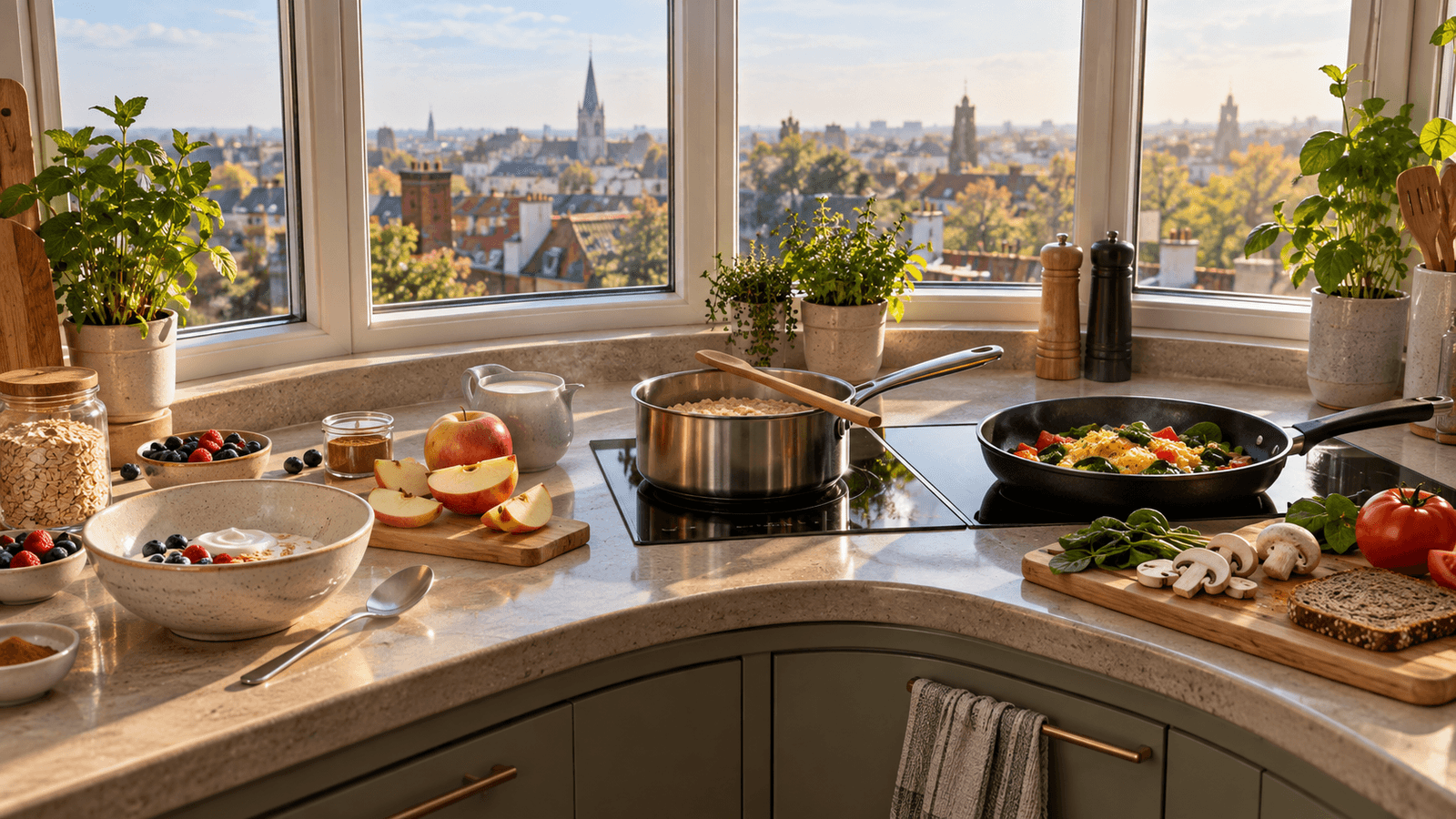
A lower-calorie breakfast does not have to be tiny, complicated or based on special diet products.
Simple ingredients such as eggs, yogurt, oats, fruit, vegetables and whole-grain bread can be combined in many different ways.
The recipes below are designed as practical starting points. Exact calories depend on the brands, ingredient sizes and quantities you use, so treat the estimates as approximate.
What makes a useful low-calorie breakfast?
Calories are only one part of breakfast.
A practical breakfast may also include:
- a source of protein
- fiber-rich foods
- fruit or vegetables
- enough volume to feel satisfying
- ingredients you actually enjoy
- preparation that fits your morning
You do not need every breakfast to follow exactly the same formula.
1. Skyr with berries and oats
Ingredients
- 200 g plain skyr
- 100 g mixed berries
- 20 g rolled oats
- cinnamon
Method
Add the skyr to a bowl.
Top with berries and oats.
Finish with cinnamon.
For frozen berries, thaw them first or warm them briefly.
This is a simple option when you want a breakfast with relatively little preparation and a useful amount of protein.
2. Egg and tomato rye toast
Ingredients
- 1 slice rye bread
- 1 egg
- 1 medium tomato
- black pepper
- fresh herbs if desired
Method
Toast the rye bread.
Cook the egg using your preferred method.
Slice the tomato and add it with the egg to the toast.
Season with pepper and herbs.
3. Apple-cinnamon oatmeal
Ingredients
- 35 g rolled oats
- 150 ml low-fat milk
- 100 ml water
- 1 small apple
- cinnamon
Method
Combine oats, milk and water in a saucepan.
Cook until the oats soften.
Dice or grate the apple and stir it into the oats near the end of cooking.
Add cinnamon.
Using part water and part milk keeps the porridge creamy while controlling the total energy content.
4. Cottage cheese with pear
Ingredients
- 180 g low-fat cottage cheese
- 1 small pear
- cinnamon
- a few drops of vanilla extract if desired
Method
Cut the pear into small pieces.
Serve it with the cottage cheese.
Add cinnamon and optional vanilla.
No cooking is required.
5. Vegetable omelet
Ingredients
- 2 eggs
- 100 g mushrooms
- 80 g bell pepper
- handful of spinach
- pepper
- herbs
Method
Slice the vegetables.
Cook the mushrooms and pepper in a non-stick pan with a small amount of cooking fat if needed.
Add spinach.
Beat the eggs and pour them into the pan.
Cook until set.
6. Yogurt, banana and cocoa bowl
Ingredients
- 200 g plain low-fat Greek-style yogurt
- 1 small banana
- 1 teaspoon unsweetened cocoa powder
- cinnamon if desired
Method
Slice the banana.
Add it to the yogurt.
Dust with cocoa powder and optional cinnamon.
Choose unsweetened cocoa rather than a sweetened chocolate drink powder if you want to keep the ingredients simple.
7. Savory cottage cheese toast
Ingredients
- 1 slice whole-grain bread
- 100 g cottage cheese
- cucumber
- tomato
- pepper
- fresh herbs
Method
Toast the bread if desired.
Spread cottage cheese over it.
Add sliced cucumber and tomato.
Season with pepper and herbs.
8. Overnight oats with strawberries
Ingredients
- 35 g rolled oats
- 120 g plain yogurt
- 80 ml milk
- 100 g strawberries
- cinnamon or vanilla
Method
Mix oats, yogurt and milk in a container.
Refrigerate overnight.
Add sliced strawberries before eating.
If the mixture is too thick in the morning, add a little more milk.
9. Egg and spinach breakfast wrap
Ingredients
- 1 small whole-grain tortilla
- 1 egg
- 1 egg white
- handful of spinach
- tomato
- pepper
Method
Cook the spinach briefly in a non-stick pan.
Add the egg and egg white and scramble.
Place the mixture in the tortilla with chopped tomato.
Fold and serve.
10. Warm berry oatmeal
Ingredients
- 35 g oats
- 200 ml low-fat milk or an unsweetened fortified plant drink
- 100 g frozen berries
- cinnamon
Method
Cook the oats with the milk.
Add frozen berries during the final few minutes.
Continue cooking until the berries are hot and the oats are soft.
Add cinnamon.
11. Skyr with apple and walnuts
Ingredients
- 200 g plain skyr
- 1 small apple
- 8 g walnuts
- cinnamon
Method
Dice the apple.
Add it to the skyr.
Top with walnuts and cinnamon.
Nuts are energy-dense, so a small amount can add texture and flavor without dominating the breakfast.
12. Tomato and egg breakfast bowl
Ingredients
- 2 eggs
- 150 g tomatoes
- handful of spinach
- spring onion
- pepper
Method
Chop the tomatoes and spring onion.
Cook the tomatoes briefly in a non-stick pan.
Add spinach.
Add the eggs and cook until set.
Serve immediately.
13. Quark with berries
Ingredients
- 200 g low-fat quark
- 100 g berries
- a small splash of milk or water
- cinnamon or vanilla
Method
Stir a little milk or water into the quark until it reaches the texture you prefer.
Add berries.
Season with cinnamon or vanilla.
14. Mushroom and egg rye toast
Ingredients
- 1 slice rye bread
- 1 egg
- 120 g mushrooms
- parsley
- pepper
Method
Slice and cook the mushrooms in a non-stick pan.
Toast the bread.
Cook the egg.
Place the mushrooms and egg on the toast and finish with parsley and pepper.
15. Peach yogurt oats
Ingredients
- 170 g plain yogurt
- 25 g rolled oats
- 1 small peach or nectarine
- cinnamon
Method
Dice the fruit.
Combine it with yogurt and oats.
Add cinnamon.
You can eat it immediately or refrigerate it for a softer oat texture.
16. Vegetable scrambled eggs
Ingredients
- 1 egg
- 2 egg whites
- 100 g zucchini
- 80 g tomatoes
- handful of spinach
- pepper
Method
Dice the zucchini and tomatoes.
Cook the zucchini in a non-stick pan until it begins to soften.
Add tomatoes and spinach.
Pour in the egg and egg whites and scramble until cooked.
17. Banana oat pancakes
Ingredients
- 1 small banana
- 1 egg
- 25 g oats
- cinnamon
Method
Mash the banana.
Mix with the egg, oats and cinnamon.
Cook small pancakes in a good non-stick pan over medium heat.
Make them relatively small so they are easier to turn.
18. Berry cottage cheese bowl
Ingredients
- 180 g low-fat cottage cheese
- 120 g berries
- cinnamon
- lemon zest if desired
Method
Add the berries to the cottage cheese.
Finish with cinnamon and optional lemon zest.
This breakfast requires no cooking and can be assembled quickly.
19. Egg, cucumber and rye crispbread
Ingredients
- 2 rye crispbreads
- 1 boiled egg
- cucumber
- tomato
- pepper
Method
Slice the egg, cucumber and tomato.
Arrange them on the crispbreads.
Add pepper.
For a portable version, keep the vegetables separate until you are ready to eat.
20. Warm apple yogurt oats
Ingredients
- 30 g rolled oats
- 1 small apple
- 150 g plain yogurt
- cinnamon
- a splash of water
Method
Dice the apple.
Cook it briefly with a splash of water and cinnamon until slightly softened.
Stir in the oats and cook until tender, adding a little more water if necessary.
Allow the mixture to cool slightly before adding the yogurt.
How to make a breakfast lower in calories without making it tiny
Reducing calories does not necessarily mean reducing the physical size of the meal.
You can often increase food volume with ingredients such as:
- berries
- apples
- tomatoes
- cucumber
- mushrooms
- zucchini
- spinach
At the same time, include foods that make the breakfast practical and satisfying for you.
Include protein
Protein-rich breakfast foods may include:
- eggs
- skyr
- Greek-style yogurt
- cottage cheese
- quark
- fortified soy alternatives
- other foods that fit your diet
The amount you need depends on your overall diet rather than one universal breakfast target.
Use oats and whole grains strategically
Oats, rye bread and whole-grain products can contribute carbohydrates and fiber.
Portion size still affects total calories.
You do not need to remove carbohydrate foods to make breakfast lower in calories.
Fruit can add sweetness
Fruit can make breakfasts sweeter without requiring large amounts of added sugar.
Useful options include:
- berries
- apples
- pears
- peaches
- bananas
Different fruits have different energy densities and portion sizes, but all can fit into an overall balanced diet.
Be aware of energy-dense toppings
Some nutritious foods are also energy-dense.
Examples include:
- nuts
- seeds
- nut butter
- granola
- chocolate
- large amounts of oil
There is no need to avoid them automatically.
Simply remember that small quantities can make a noticeable difference to the total calories.
Drinks can change breakfast calories
Coffee or tea may contribute very few calories on their own.
Milk, sugar, syrups, cream and other additions can change that.
You do not need to drink everything without milk or sugar.
Include what you actually consume when estimating your breakfast.
Prepare ingredients in advance
A lower-calorie breakfast is easier to choose when preparation is simple.
You can prepare:
- boiled eggs
- washed fruit
- chopped vegetables
- overnight oats
- portioned yogurt
- containers of berries
This reduces morning decisions.
Adjust portions to your needs
The recipes above are examples, not mandatory serving sizes.
You may need a larger or smaller breakfast depending on:
- body size
- activity
- total daily intake
- hunger
- meal timing
- personal goals
Modify portions rather than treating the recipes as fixed prescriptions.
How Mealisa can help
Mealisa can help you estimate calories and macros, save foods and recipes, and adapt meal choices to your preferences and goals.
For homemade breakfasts, you can use the actual ingredients and amounts rather than relying only on a generic database entry.
That can make repeated breakfasts easier to track.
Frequently asked questions
What is considered a low-calorie breakfast?
There is no universal calorie threshold that makes a breakfast "low calorie." The appropriate amount depends on your total energy needs and eating pattern.
Can a low-calorie breakfast still be filling?
Yes. Protein, fiber-rich foods, fruit, vegetables and adequate food volume can all contribute to a more satisfying breakfast.
Are eggs good for a lower-calorie breakfast?
Eggs can fit into many different eating patterns. The total breakfast depends on the number of eggs, cooking fat and foods served with them.
Is oatmeal low in calories?
The total depends on the portion and additions. Oats can be combined with fruit, yogurt or milk in amounts that fit your overall intake.
What is a quick low-calorie breakfast?
Options requiring little preparation include skyr with fruit, cottage cheese with pear, yogurt with berries or rye crispbread with egg and vegetables.
Do I need special diet foods?
No. Ordinary foods can be used to build lower-calorie breakfasts.
Should I skip breakfast to lose weight?
Breakfast is not mandatory for everyone. Weight management depends on overall energy intake and other factors. Choose an eating pattern that is practical for you.
The bottom line
Lower-calorie breakfasts do not need to be repetitive or unusually small.
Use ordinary foods.
Include protein when practical.
Add fruit or vegetables.
Use oats, rye or other whole grains in portions that fit your needs.
Pay attention to energy-dense toppings and additions.
Most importantly, choose breakfasts that you can realistically prepare and enjoy.
This article provides general educational nutrition information and is not a substitute for individualized medical or dietetic advice.