
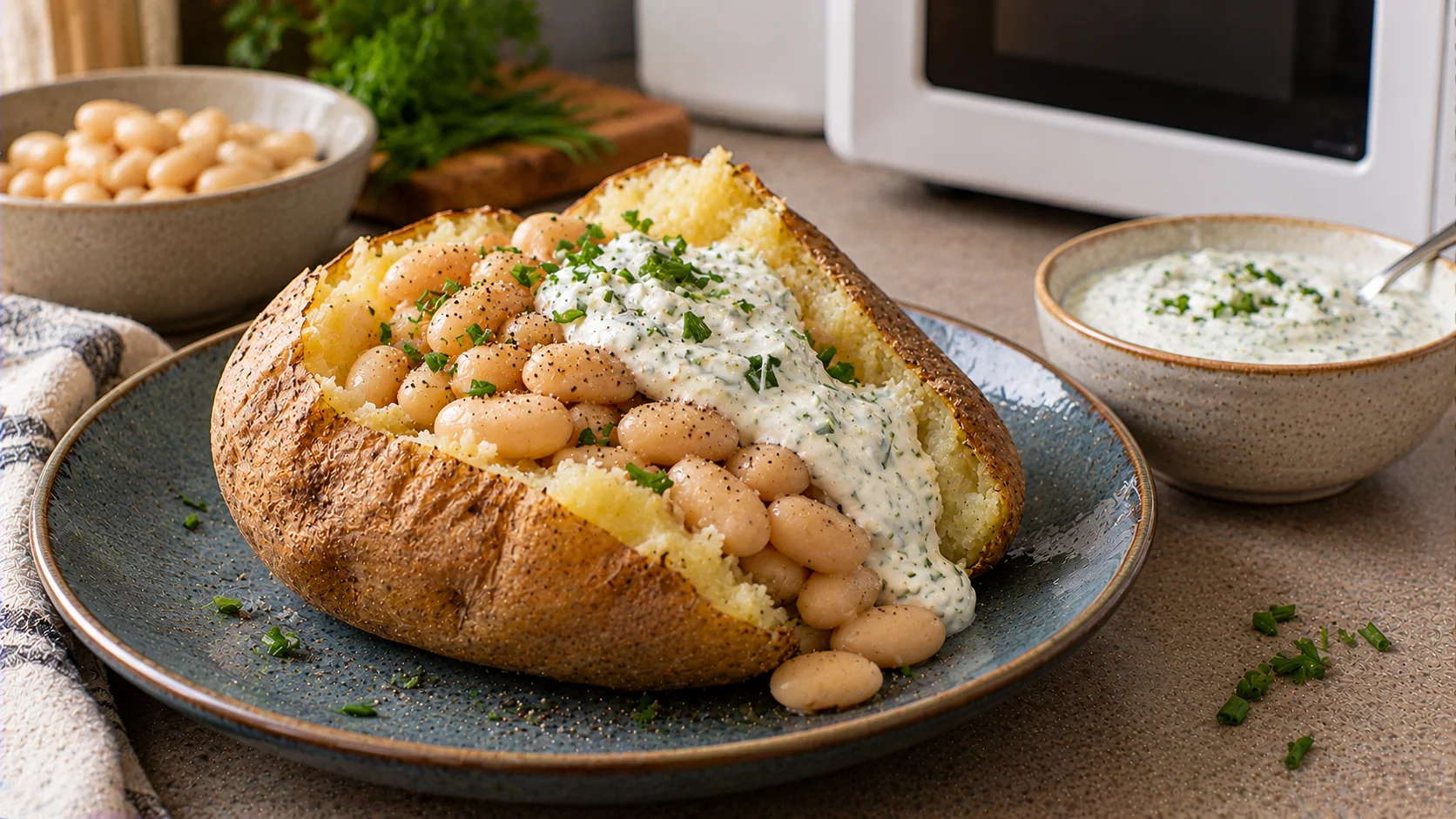
A complete meal from one potato and one can
A microwave potato with white beans and yogurt is useful when a stove is unavailable or there is little time to cook. This is a single-serving recipe, not a claim that microwaving a potato reproduces the crisp skin of an oven-baked one. The microwave steams the potato internally; its skin stays softer. The beans supply additional protein and fibre, while plain yogurt makes a cool sauce. This method needs one microwave-safe plate, a small microwave-safe bowl, a fork, a knife and a spoon. our microwave-only dinner guide
Ingredients: one substantial serving
| Ingredient | Amount | Role |
|---|---|---|
| Medium-large raw potato, skin on | 300 g | Main carbohydrate and potassium source |
| Canned white beans, drained and rinsed | 130 g | Protein and fibre |
| Plain unsweetened yogurt | 80 g | Cool creamy topping |
| Olive oil | 5 g (1 teaspoon) | Flavour and fat |
| Lemon juice | 10 g | Acidity |
| Chopped parsley | 5 g | Fresh finish |
| Ground black pepper | To taste | Seasoning |
The 130 g of beans is drained weight, not the weight of beans plus liquid. If your tin yields 240 g after draining, you will have around 110 g remaining. Check whether the yogurt is dairy-based or a fortified plant alternative: nutritional values vary. If sodium needs attention, look at the canned-bean label and rinse the beans.
Equipment and potato selection
Choose a fairly even potato without green patches or sprouts. Remove any damaged areas, scrub under running water and pat dry. A 300 g potato takes longer than a 150 g potato; unevenly shaped potatoes can cook at different speeds. Use a microwave-safe ceramic plate, not metal or foil. Make 6–8 shallow fork punctures around the potato so steam can escape. Never microwave a potato wrapped in aluminium foil. If a manufacturer instructs you to use a special microwave potato bag, follow that product's instructions rather than inventing an equivalent.
Method: cook, test, then assemble
- Place the washed, pierced potato on a microwave-safe plate. Set the microwave to about 800 W. Start with 5 minutes, then turn the potato over carefully using an oven glove.
- Cook another 3–5 minutes, checking every minute near the end. These are estimates, not a fixed safety or doneness guarantee. Wattage, potato density and size change the duration.
- Insert a thin knife or skewer through the thickest centre. It should pass through easily with no firm raw core. If resistance remains, continue in 60-second increments and test again. Let the potato stand 2 minutes before cutting; steam and the potato itself can burn.
- While the potato cooks, drain and rinse the beans. Place them with 1 tablespoon water in a separate microwave-safe bowl. Cover loosely with a microwave-safe lid that lets steam escape. Heat in short bursts, stir and check that the beans are steaming hot throughout; do not assume they are hot because the outside of the bowl is hot.
- Mix yogurt, lemon juice, parsley and pepper in a separate small bowl. Do not heat the yogurt with the beans: it may split and become watery.
- Split the potato lengthwise, fluff the centre with a fork, add the olive oil, spoon over the hot beans and finish with the cold yogurt sauce. Eat promptly.
If using refrigerated leftover cooked beans rather than shelf-stable canned beans, reheat leftovers thoroughly to 74°C / 165°F. A food thermometer is the most reliable check. Stir or rotate food and allow a standing time; microwave heating is not always even. our guide to drained weights of canned legumes
At-a-glance timing
| Stage | Approximate time | Important check |
|---|---|---|
| Scrub and pierce potato | 2 minutes | No foil; skin punctured |
| Microwave 300 g potato at ~800 W | 8–10 minutes initially | Centre soft; add 1-minute bursts |
| Stand before slicing | 2 minutes | Watch for escaping steam |
| Warm canned beans | 1–2 minutes, variable | Stir; hot all the way through |
| Mix topping and assemble | 2–3 minutes | Yogurt stays cold |
Allow roughly 15–20 minutes total, but prioritise the centre-of-potato test over any clock. Do not put a cold glass plate directly under a very hot dish unless it is intended for microwave use.
Example nutrition: understand the assumptions
Food composition varies with potato type, brand of beans and yogurt. For planning, use the following illustrative per-recipe inputs, not laboratory-tested values: 300 g potato at 77 kcal/100 g; 130 g drained beans at 100 kcal/100 g; 80 g yogurt at 61 kcal/100 g; 5 g oil at 9 kcal/g; lemon and parsley together about 8 kcal. This totals about 463 kcal (231 + 130 + 49 + 45 + 8). Cooking changes water weight but does not create new calories. If your bean can or yogurt provides different values, replace the example inputs with its label figures. USDA FoodData Central can provide ingredient reference data, but it is not a substitute for the actual packaged-product label.
| Component | Illustrative calories |
|---|---|
| Potato, 300 g | 231 kcal |
| White beans, 130 g drained | 130 kcal |
| Yogurt, 80 g | 49 kcal |
| Olive oil, 5 g | 45 kcal |
| Lemon juice and parsley | ~8 kcal |
| Total, one meal | ~463 kcal |
The meal includes fibre from both potato and beans. Protein depends strongly on the white-bean variety and yogurt choice. A protein-enriched yogurt will change the result, but it is not necessary to make the dish. Do not state a precise protein total without entering your brands and portions into a validated calculator.
Example cost of one portion
Compare cost per used gram, not the full package at checkout. The sample prices below are illustrative euro figures, not verified supermarket offers.
| Ingredient used | Example calculation | Used cost |
|---|---|---|
| Potato, 300 g | €1.60/kg × 0.30 kg | €0.48 |
| White beans, 130 g drained | €0.85 per 240 g drained × 130/240 | €0.46 |
| Yogurt, 80 g | €1.20 per 500 g × 80/500 | €0.19 |
| Oil, lemon, parsley | Small measured portions | €0.18 |
| Recipe cost | Sum of used ingredients | ~€1.31 |
If the can contains 400 g net weight but only 240 g drained weight, using 400 g as the divisor artificially lowers the calculated bean cost. At a different shop, substitute the actual shelf price and drained-weight label; add package leftovers to another recipe rather than treating them as waste automatically.
Variations without changing the cooking method
For more vegetables: add a handful of thawed, cooked spinach to the hot beans. Heat until hot throughout. For a spicy version: use smoked paprika and chilli flakes in place of parsley. For extra tang: swap a little yogurt for more lemon juice, tasting before adding. For dairy-free eating: choose an unsweetened yogurt alternative, checking for protein content, additives and calcium fortification if those nutrients matter. These substitutions change nutrition and should not be treated as identical to the base recipe.
Storage, leftovers and food safety
This is at its best served immediately. If you prepare components in advance, cool cooked potato and heated beans promptly, refrigerate in covered shallow containers at 4°C / 40°F or below, and keep yogurt sauce separately. General food-safety guidance recommends refrigerating perishables within 2 hours, or within 1 hour in conditions above 32°C / 90°F. Refrigerated leftovers should generally be eaten within 3–4 days, provided they were cooled and stored correctly. Reheat the potato and beans until thoroughly hot, ideally 74°C / 165°F for leftovers, and add yogurt only after reheating. Discard food left unrefrigerated too long; reheating does not reverse all unsafe handling.
When transporting the assembled meal, use an insulated bag with ice packs. Keeping the yogurt mixed into the hot potato for hours is poor both for texture and temperature control. A separate small sealed container keeps the topping fresher. Do not place a sealed, unvented container in the microwave.
Common microwave problems
If the centre is hard, the potato needs more time: use one-minute intervals instead of a long uninterrupted second cook. If the surface is dry, add yogurt or a spoonful of warm water rather than more oil by default. If beans burst, lower the power and use shorter heating periods with stirring. If the potato skin wrinkles, that is normal in microwave cooking; a crisp oven-style skin requires another appliance. Do not microwave a potato showing green areas or significant spoilage.
Sources
- USDA FoodData Central: ingredient nutrient reference. Select the appropriate raw potato, canned/drained bean and yogurt entries, then adjust for the actual brands.
- USDA FSIS: Microwave Ovens and Food Safety. Guidance on uneven heating, standing time and safe use.
- FoodSafety.gov: 4 Steps to Food Safety. Refrigeration limits, food thermometers and leftovers.