
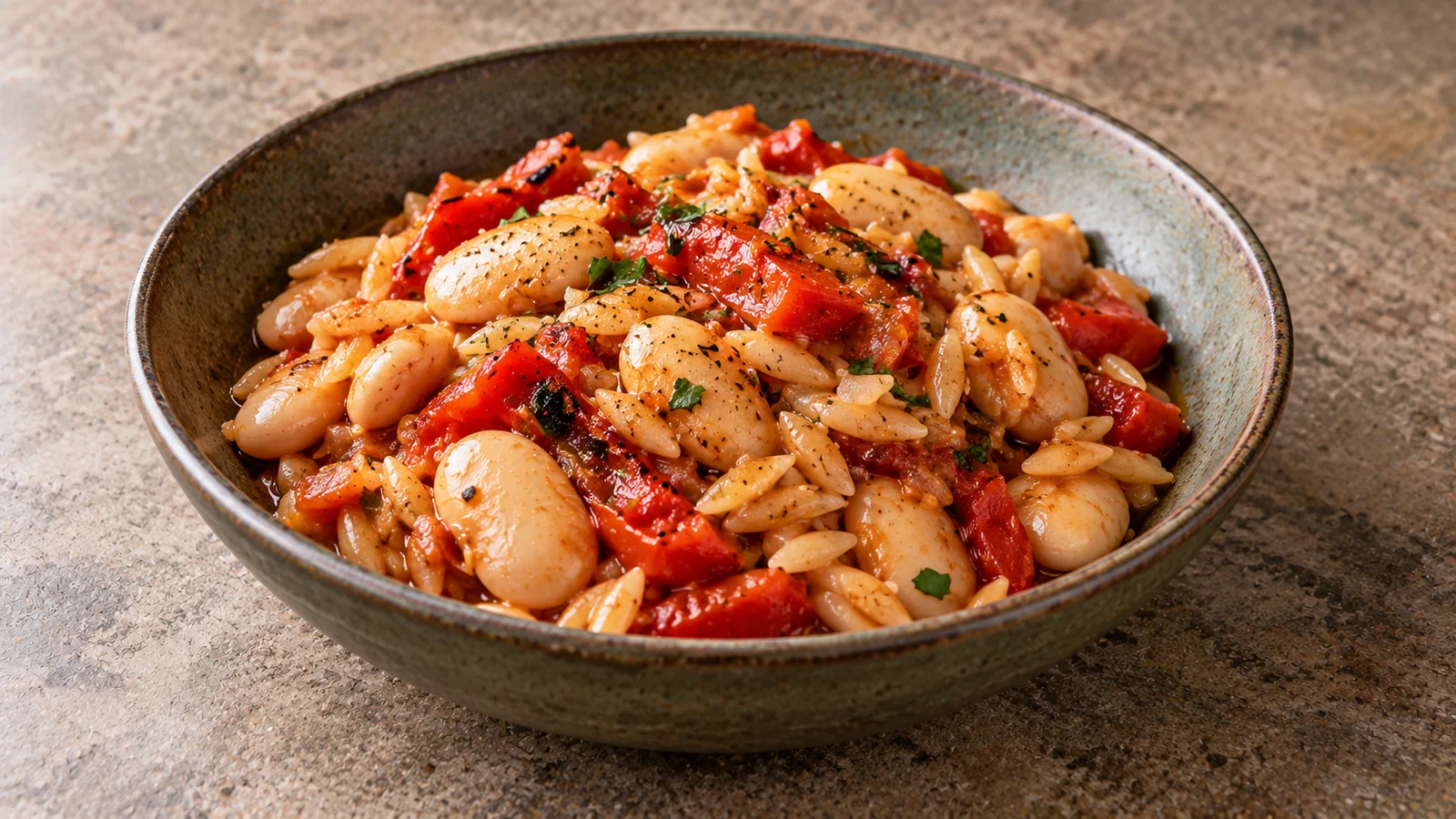
Butter beans make a comforting partner for rice-shaped pasta. They give a roasted-pepper sauce a creamy texture without requiring cream, and the dish can be cooked in one pan after the peppers have been roasted. This recipe makes four substantial portions of butter bean and roasted red pepper orzo. It specifies the ingredients by weight, distinguishes dry pasta from cooked pasta and drained beans from the weight of the whole tin, and calculates protein, fibre and cost without pretending that every supermarket has the same prices.
The practical result is an estimated 459 kcal, 18.6 g protein and 14.1 g fibre per portion in the worked ingredient model. These figures are calculated, not laboratory-tested: two labelled commercial foods anchor the model, while the remaining ingredients use stated approximate food-composition assumptions. The dish is not a promise of a particular calorie count unless you use the same labels, masses and oil quantity. Prices below are an explicitly hypothetical euro shopping scenario, not today's shop quotations.
A four-portion recipe, with weights that actually mean something
Set out two tins of cooked butter beans, each yielding 240 g after draining, for 480 g edible beans in total. Use 240 g dry ordinary wheat orzo/risoni, 300 g raw red peppers before roasting, 120 g onion, 200 g plain tomato passata, 20 g olive oil, 10 g garlic and 20 g lemon juice. Water, pepper, smoked paprika, herbs and a little salt are added to taste and are not assigned precise nutrition or costs. Measure the oil; the difference between 20 g and a generous unmeasured pour can outweigh the calorie difference between two brands of beans.
| Ingredient for four servings | Amount measured | Role in the pan |
|---|---|---|
| Cooked butter beans, drained | 480 g | Creamy beans; protein and fibre |
| Ordinary wheat orzo, dry | 240 g | Starch and structure |
| Red bell peppers, raw | 300 g | Roasted, sweet, smoky sauce base |
| Onion, raw | 120 g | Aromatic depth |
| Plain tomato passata | 200 g | Moisture and acidity |
| Olive oil | 20 g | Roasting and softening vegetables |
| Garlic and lemon juice | 10 g + 20 g | Finish and brightness |
Why these distinctions matter: 240 g dry pasta does not mean 240 g served from the pot. Orzo absorbs cooking liquid; a cooked-weight comparison changes the arithmetic. Likewise, a 400 g butter-bean tin with 240 g drained content supplies 240 g beans, not 400 g beans. Two such tins are used here. For a detailed explanation of label portions and weighed food, see Mealisa's portion-size guide.
Ingredients and product labels: what is verified
The pasta example follows the Barilla Risoni nutrition declaration, which gives 356 kcal, 12 g protein and 3 g fibre per 100 g dry pasta. For the beans, the Davert Butter Beans declaration at dm gives 122 kcal, 7.9 g protein and 7.8 g fibre per 100 g, with 240 g drained content. These are example products, not a claim that all risoni or all butter beans have the same nutrition. Product formulations and country-specific packaging change; use the pack you actually buy.
The pepper is a normal fresh red sweet pepper, not an oil-packed jar of roasted peppers. Roasting removes water, so 300 g raw peppers might weigh less when finished. Our nutrition model is based on the starting raw mass; it does not multiply the smaller roasted mass by raw-pepper values. For passata, onions, garlic, lemon and olive oil, use the ingredient estimates in the calculation section rather than interpreting them as verified brand labels. Their values are approximate and will vary with actual product, variety and cooking losses.
This combination of cooked legumes and grain is useful in a plant-based meal, but no single dish must cover every nutrient requirement. The German Nutrition Society's guidance on legumes explains why legumes contribute plant protein and fibre. If you need a wider meal composition framework, see Mealisa's balanced-meal guide.
Roast the peppers without turning the orzo mushy
- Heat the oven to 220°C conventional / 200°C fan. Core and slice the 300 g peppers and spread on a baking tray. Toss with 10 g of the measured oil and roast for about 20–25 minutes, until tender with a few browned edges. Oven times vary; use colour and softness, not a timer alone.
- While they roast, drain and rinse the two tins of beans, confirming their combined edible weight is close to 480 g. Finely dice the 120 g onion and chop the garlic. Rinsing changes surface salt and liquid; do not treat the water in the can as edible bean weight. See the canned-legume rinsing guide for that separate measurement question.
- Heat the remaining 10 g oil in a wide lidded pan. Soften onion over medium heat for about 5–7 minutes; add garlic for 30–60 seconds, without burning it. Stir in the roasted peppers, passata, a little smoked paprika and approximately 450 ml hot water.
- Add 240 g dry orzo, stir and simmer uncovered or partly covered according to your pan, stirring frequently for around 9–12 minutes. Add 50–150 ml more hot water only if needed. The pasta should be tender but retain shape; manufacturers' timings are guides, and the sauce should remain fluid enough to move around the grains.
- Fold in the 480 g drained butter beans and heat thoroughly for a few minutes. Lightly crush a spoonful against the pan to thicken the sauce without blending the entire dish. Turn off the heat, add 20 g lemon juice, taste, then season. Divide evenly into four servings.
A useful kitchen test is to draw a spatula through the pan: the sauce should slowly flow back into the space. If it is stiff, add a few tablespoons of hot water. If it is soupy, let the pan sit briefly; the orzo will continue absorbing liquid. Avoid simmering for a long time after the pasta is tender, because the grains become swollen and the beans can break down.
Nutrition per pan and per portion: show the arithmetic
The following calculation uses per-100-g inputs, not a database entry for the cooked dish. For beans and dry risoni, the specified manufacturer labels are the anchors. The pepper, onion, passata, oil, garlic and lemon entries are rounded recipe-model assumptions. Protein and fibre are not identical from one brand to another, and the cooking water adds weight but not an equivalent amount of protein or energy.
| Ingredient | kcal for amount used | Protein / fibre for amount |
|---|---|---|
| 480 g beans (122 kcal; 7.9 g protein; 7.8 g fibre per 100 g) | 585.6 | 37.92 g / 37.44 g |
| 240 g dry orzo (356 kcal; 12 g protein; 3 g fibre per 100 g) | 854.4 | 28.80 g / 7.20 g |
| 300 g raw red pepper (model: 31 kcal; 1 g; 2.1 g per 100 g) | 93.0 | 3.00 g / 6.30 g |
| 120 g onion (model: 40 kcal; 1.1 g; 1.7 g per 100 g) | 48.0 | 1.32 g / 2.04 g |
| 200 g passata (model: 29 kcal; 1.4 g; 1.5 g per 100 g) | 58.0 | 2.80 g / 3.00 g |
| 20 g olive oil (model: 884 kcal per 100 g) | 176.8 | 0 g / 0 g |
| 10 g garlic and 20 g lemon juice (model) | 19.3 | 0.71 g / 0.27 g |
| Four-serving pan | 1,835.1 | 74.55 g / 56.25 g |
| One-fourth of pan | 458.8 | 18.64 g / 14.06 g |
For example, the bean protein is 480 ÷ 100 × 7.9 = 37.92 g. The orzo protein is 240 ÷ 100 × 12 = 28.8 g. Those two items already provide 66.72 g protein for the pan, before vegetables. Dividing the final 74.55 g by four gives approximately 18.64 g per serving. The fibre calculation works the same way. Figures can shift with a different label, drained yield or sauce recipe, and some vitamins or water-soluble nutrients may change during preparation.
If your plate contains half the pan rather than a quarter, the calorie and protein estimates double. If you add parmesan, feta, nuts or more oil, include those separately. This is why the article reports portions of the whole recipe, not an invented universal value per 100 g cooked orzo. A cooked-weight figure would require actually weighing your finished batch. For comparisons of protein and fibre against a food budget, the protein-and-fibre-per-euro guide uses a distinct purchasing framework.
Cost of the used food versus the money paid at checkout
The sample shopping basket below is hypothetical. It uses plausible euro prices to demonstrate the arithmetic, not verified current offers at dm, Barilla or any retailer. Its pasta and bean nutrient figures still come from the cited labels; price and nutrition sources must not be confused. If you have the receipt, replace every assumed price with the real one before using the result for budgeting.
| Item and assumed pack | Hypothetical checkout | Cost used in recipe |
|---|---|---|
| Two 240 g drained bean tins, €1.65 each | €3.30 | €3.30 |
| 500 g dry orzo pack at €1.49 | €1.49 | €0.72 (240/500) |
| 500 g raw peppers at €2.49 | €2.49 | €1.49 (300/500) |
| 1 kg onions at €1.49 | €1.49 | €0.18 (120/1,000) |
| 500 g passata at €0.99 | €0.99 | €0.40 (200/500) |
| 500 ml olive oil at €5.99 | €5.99 | €0.26 (20 g ≈ 22 ml) |
| 100 g garlic at €0.79 | €0.79 | €0.08 (10/100) |
| One lemon at €0.49, assumed to give 40 g juice | €0.49 | €0.25 (20/40) |
| Total | €17.03 | €6.68 |
The model allocates olive oil by estimating 0.91 g/ml, so 20 g is approximately 22 ml; the assumed lemon provides 40 g juice. It rounds each displayed line to two decimal places; totals sum the displayed rounded lines. On that basis the four portions cost €6.68 in used ingredients, or €1.67 per serving. The €17.03 checkout is not the cost of eating the recipe four times: it includes remaining pasta, peppers, onions, oil, garlic and juice. If you already have those ingredients, the cash you need to spend today may be lower, while the ingredients you consume still have economic value.
For realistic household budgeting, record both the amount you pay and the amount consumed. Avoid counting the unused half of a pasta pack as waste if it remains safely stored for another dish. Also avoid calling a meal €1.67 in every country or store. Bean prices, brand size, fresh-pepper seasonality and promotions can change which ingredient dominates your bill.
Three ways to alter protein and price without misreporting the base recipe
More beans, less pasta. Replacing 80 g dry orzo with an additional 240 g drained beans changes the ingredient model by −284.8 + 292.8 = +8.0 kcal, −9.6 + 18.96 = +9.36 g protein and −2.4 + 18.72 = +16.32 g fibre across the whole pan. That yields a different, more bean-forward recipe; it also adds the price of another tin and reduces pasta usage. Keep the bean drained weight explicit. Do not present this as a magical free protein boost or claim it will suit people who need to limit fibre.
Use less oil. Reducing oil from 20 g to 10 g saves about 88.4 kcal for the entire recipe, roughly 22 kcal per portion. The flavour and mouthfeel may change, and reducing oil does not change the beans' protein. Brush the peppers lightly or use a good roasting tray if you want to try it.
Choose a different pasta. Wholegrain or legume-flour orzo can have very different protein and fibre values from the ordinary wheat risoni in this model. Check the actual product declaration. Do not replace the 12 g protein per 100 g assumption with a marketing slogan such as “protein pasta”; it is the nutrient number on the specific label that belongs in your calculation. Orzo, risoni and other small pasta shapes are interchangeable only if the dry amount and cooking performance suit the dish.
Texture, serving size and inexpensive leftovers
A complete serving in this model is one quarter of the cooked pan. The final cooked weight depends on how much water the pasta absorbs, how far the peppers roast down and how much liquid evaporates. Divide the finished dish into four containers or weigh the total batch and divide that number by four. A photographed bowl containing 400 g and a bowl containing 400 g of a different batch are not guaranteed to have identical calories.
This is good as a main dish with leafy greens or a side salad. If your household needs a larger meal, pair it with additional vegetables or another protein-containing food and calculate those extras rather than silently redefining the four portions as two. A little chilli, parsley, lemon zest or oregano adds variation without turning the recipe into a new untested nutritional claim. Cream or cheese changes the fat and cost profile; delicious additions are welcome, but the base figures no longer apply as written.
For leftovers, cool food promptly in shallow covered containers. The German Federal Institute for Risk Assessment's meal-prep guidance recommends consuming heated meals within 2–3 days or freezing them. That is a useful conservative schedule for this orzo-and-beans dish. Refrigerate soon after cooking, don't leave the pan at room temperature for a long evening, and reheat a portion thoroughly. The USDA leftovers guide also advises prompt cooling and thorough reheating; it describes a general 3–4-day refrigerated range, which is less conservative than the BfR schedule used here. Always follow the stricter applicable handling guidance and any ingredient-specific label instructions.
Where a budget bean-and-pasta meal fits
The point of this recipe is not to compete with protein powder or promise 30 g protein in a small portion. Its strength is a measurable combination of ordinary ingredients: drained legumes, a familiar quantity of dry pasta and vegetables. In this worked four-portion scenario, beans contribute more than half of the total fibre and slightly more than half the protein. That makes the identity of the beans important; white butter beans are not nutritionally identical to every other canned pulse.
It is also not a direct substitute for a grain salad or a general guide to eating cheaply. The method explains one specific cooked dish, including roasting, simmering, drained yields, portion division, shopping mathematics and storage. Once you can make the calculation once, you can reuse the method for another bean-orzo recipe while checking the new labels. The cost is an adjustable scenario, not a permanent promise.
Sources and calculation notes
- Barilla Risoni — dry pasta ingredient and nutrition label: 356 kcal, 12 g protein and 3 g fibre per 100 g of the reference dry wheat pasta.
- Davert Butter Beans — label and drained weight: 122 kcal, 7.9 g protein and 7.8 g fibre per 100 g; 240 g drained beans per tin.
- German Nutrition Society — legumes and nuts: context for plant protein and fibre from legumes.
- BfR — preparing meals for several days: conservative 2–3-day refrigeration advice for heated dishes.
- USDA FSIS — leftovers and food safety: cooling, storage and reheating guidance.
Method: nutrition = starting amount (g) ÷ 100 × food's per-100-g model figure, summed and divided by four. Beans and dry pasta use the two cited product labels; all other ingredient values are illustrative rounded input assumptions. The cost example uses fictional pack prices and explicit edible amounts; neither the nutrition estimate nor the calculated €1.67 portion price is a universal food label or live retail offer.