
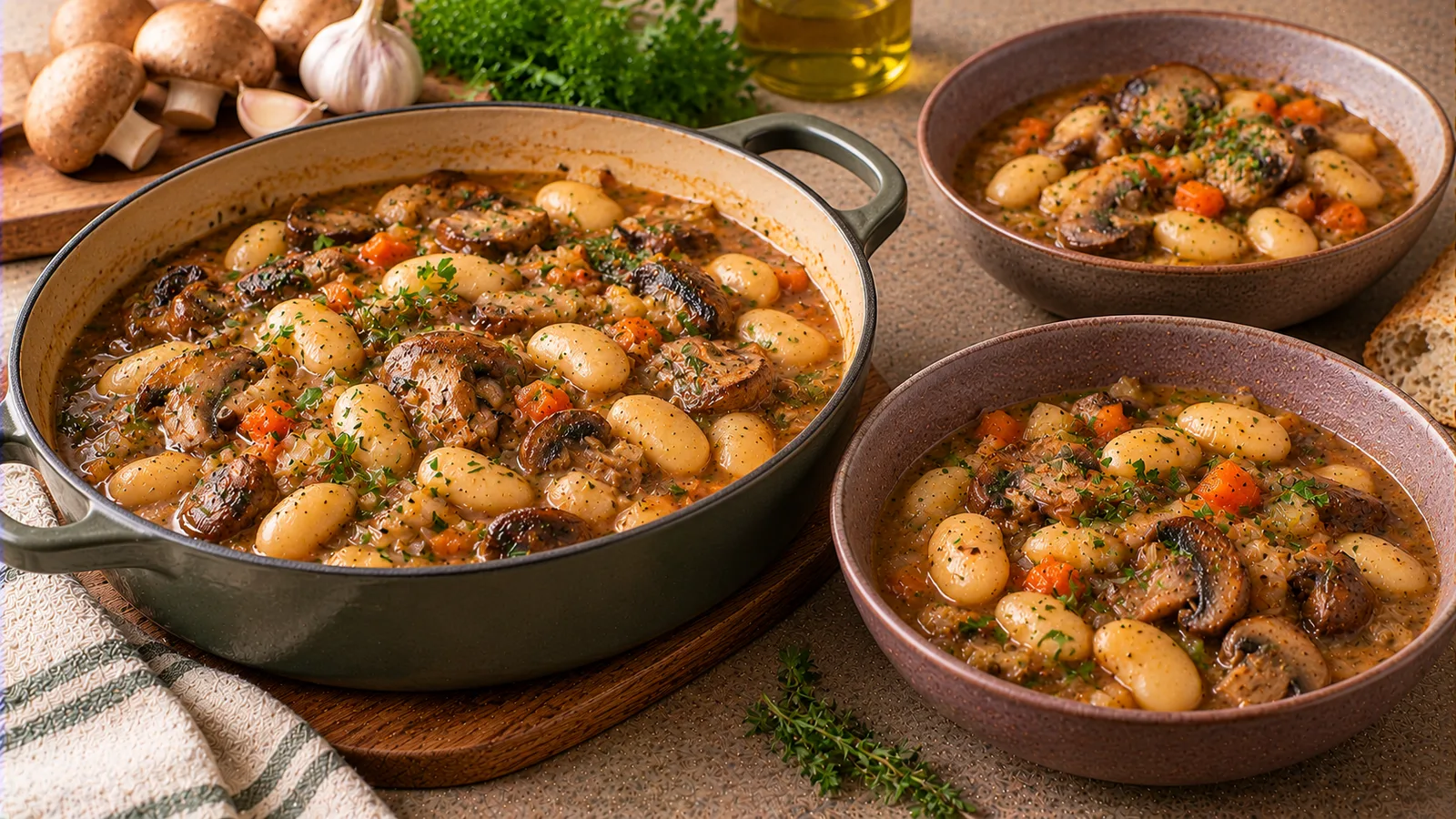
A good mushroom and butter bean stew needs very little equipment: one wide pan, one tin of cooked beans and enough time to brown the mushrooms before adding liquid. This version makes two generous main-course bowls with tender vegetables, soft but intact butter beans and a thick tomato-and-mushroom sauce. The beans are canned and already cooked; the recipe does not start with raw dried beans.
The key is to let the mushrooms release moisture and develop colour, then simmer the rest of the ingredients gently. Pouring everything into the pan at once produces a different, more watery dish. You can serve this stew on its own, with bread or over a small portion of cooked grain; those extras are not included in the ingredient quantities below.
Recipe at a glance
| Detail | For this recipe |
|---|---|
| Yield | 2 main-course portions |
| Preparation | About 10 minutes |
| Cooking | About 25 minutes |
| Total | About 35 minutes |
| Pan | Wide saucepan or deep skillet with lid |
| Main ingredients | 250 g mushrooms and 240 g drained canned butter beans |
| Style | Vegetarian and vegan when prepared with the listed ingredients |
These are practical kitchen times, not a guarantee: the pan width, mushroom moisture and stove heat affect how quickly the sauce thickens. The completed stew should be spoonable rather than soupy.
Ingredients for two
| Ingredient | Exact amount | Preparation |
|---|---|---|
| Fresh brown or white button mushrooms | 250 g | Brush or wipe clean; slice 5–7 mm thick |
| Canned butter beans (cooked) | 240 g drained | Drain and rinse; weigh after draining |
| Onion | 100 g | Finely dice |
| Carrot | 120 g | Small 5–8 mm dice |
| Garlic | 8 g | Finely chop |
| Crushed or chopped canned tomatoes | 200 g | With their juice |
| Water or unsalted vegetable stock | 120 ml | Start with this amount |
| Olive oil | 15 g | About 1 tablespoon; weighing is more precise |
| Baby spinach | 60 g | Rinse if needed; roughly chop |
| Smoked sweet paprika | 2 g | About 1 teaspoon, depending on the grind |
| Dried thyme | 1 g | About ½ teaspoon |
| Lemon juice | 10 ml | Add at the end |
| Black pepper | To taste | Freshly ground if possible |
| Salt | To taste | Check bean and tomato labels first |
The 240 g bean figure is the drained edible weight, not the weight printed on the front of a tin including liquid. A 400 g tin often gives a drained weight near this amount, but brands differ. Check the label or drain and weigh what you have. If the drained quantity is smaller, reduce the other ingredients slightly or use an additional tin to reach 240 g. Large butter beans are also called lima beans; in German shops you may see Riesenbohnen. Choose cooked canned beans, not an uncooked dried product.
Step-by-step method
- Prepare the ingredients — about 10 minutes. Dice the carrot fairly small so it softens during the short simmer. Slice mushrooms thick enough to remain recognisable in the finished stew. Drain and rinse the butter beans carefully: they are tender and can break if shaken hard in a sieve.
- Brown the mushrooms — 6–8 minutes. Heat a wide pan over medium-high heat. Add 10 g of the olive oil, then the 250 g sliced mushrooms in a reasonably even layer. Leave them undisturbed for the first minute or two, then stir occasionally. Allow the liquid they release to evaporate; stop when the edges have developed visible golden-brown patches. If your pan is small, cook them in two batches. Transfer to a bowl.
- Soften the aromatics — 5 minutes. Reduce heat to medium. Add the remaining 5 g olive oil, onion and carrot. Stir frequently for about 4 minutes. Add garlic, paprika and thyme and cook for another 30–60 seconds, just until fragrant. Do not burn the paprika or garlic.
- Build the sauce — 10–12 minutes. Pour in 200 g tomatoes and 120 ml water or unsalted stock. Scrape browned mushroom bits from the pan bottom. Return the mushrooms, bring to a gentle simmer and cover loosely. Stir a few times until the carrots are tender to the bite and the liquid has reduced slightly. If it dries out before the carrot cooks, add water 1 tablespoon at a time.
- Warm the cooked beans — 3–4 minutes. Fold in the 240 g drained butter beans. Reduce the heat to low-medium, then simmer gently until hot throughout. Avoid vigorous boiling, which can break the beans and turn the stew into a mash.
- Finish — 1–2 minutes. Stir in 60 g spinach and cook until wilted. Turn off the heat, add 10 ml lemon juice and taste. Add black pepper and only as much salt as needed, especially if your canned beans or tomatoes already contain salt. Divide into two bowls and serve while hot.
The stages overlap a little in real cooking, so the method normally fits the stated about 25 minutes on the stove. Use tenderness and texture, rather than a timer alone, to decide when it is done.
How to get a rich stew without cream
Mushroom browning and tomato reduction provide most of the depth. A wide pan lets mushroom moisture escape instead of trapping it around the slices. The first step is not a race to cook mushrooms through; it is a way to build flavour before they re-enter the sauce.
Butter beans contribute a naturally velvety mouthfeel. For a thicker stew, press 2 tablespoons of the cooked beans against the side of the pan and stir them back in. That changes texture without adding flour or dairy. If you prefer intact large beans, leave them whole and simply simmer the sauce uncovered for another 2–3 minutes. Adding much more water at the beginning makes it harder to reach a thick consistency.
Smoked paprika offers a warm note, not a spicy finish. For a milder flavour, substitute ordinary sweet paprika at the same 2 g amount. Lemon goes in at the end because its brightness is more noticeable after simmering. If the tomatoes taste overly sharp, cook the sauce a few minutes longer before considering any extra seasoning.
Serving two people without losing track of portions
Stir the stew once before dividing so both bowls receive mushrooms, beans and vegetables. The complete 240 g of drained beans is shared across two servings, which means about 120 g drained beans per bowl if evenly distributed. The same split gives roughly 125 g raw mushrooms per person before cooking; mushrooms lose water, so the final cooked mushroom weight will be lower.
The recipe's final total weight varies with evaporation, the drained beans and your pan. Do not claim a fixed finished weight or an exact calorie/protein figure without measuring the finished dish and checking the specific product labels. If you need food-diary totals, record each ingredient's state and amount before cooking, total the values from your own labels or a reputable database, then divide by two equal servings. A bread roll or rice added at the table is a separate food.
A little toasted bread is useful for collecting the sauce. For a more filling meal, serve over cooked barley, potatoes or rice, understanding that the accompanying grain changes the overall portion. This recipe deliberately remains a two-serving stew, rather than a bean-on-toast preparation. For the separate toast idea, see white bean and mushroom toast. For a different tomato-led bean dish, compare white bean and tomato stew.
Substitutions that preserve the method
- Mushrooms: Button, chestnut or cremini mushrooms all work. Very wet frozen mushrooms often release more liquid; let that evaporate before adding tomatoes, and do not expect the exact timing to hold.
- Beans: Another large cooked white bean can work, but choose roughly 240 g drained and expect a different texture. Chickpeas are firmer and make a noticeably different stew.
- Leafy greens: Use 60 g chopped kale instead of spinach, but add it earlier and simmer until tender. Tough kale will not wilt in only the final minute.
- Stock: Plain water is sufficient because browned mushrooms carry flavour. A salted cube or concentrated stock raises sodium; check its directions and reduce added salt.
- Acidity: Replace 10 ml lemon juice with a small splash of mild vinegar, tasting before you add more.
There is no need for cream or butter. For someone avoiding gluten, the listed ingredients do not intentionally include wheat, but check packaged stock, beans and seasonings for the applicable label and cross-contact information.
Storage and reheating
This is designed to serve two immediately. If keeping one portion for later, transfer it promptly into a shallow sealed container and refrigerate within 2 hours of cooking. For a conservative household routine, eat refrigerated leftovers within 48 hours or freeze them sooner. Reheat the portion only once until steaming hot throughout, stirring so the centre heats evenly. Follow the UK Food Standards Agency's cooked-food and leftovers guidance.
A refrigerated stew will thicken as the beans absorb liquid. Add a tablespoon or two of water when reheating, not another large pour. If a cooked portion has been left out for longer than the recommended cooling window, do not treat reheating as a way to repair unsafe storage.
Source
- UK Food Standards Agency — Cooking your food and using leftovers. The recipe quantities and cooking method above are Mealisa's original practical formulation; storage guidance is attributed separately.