
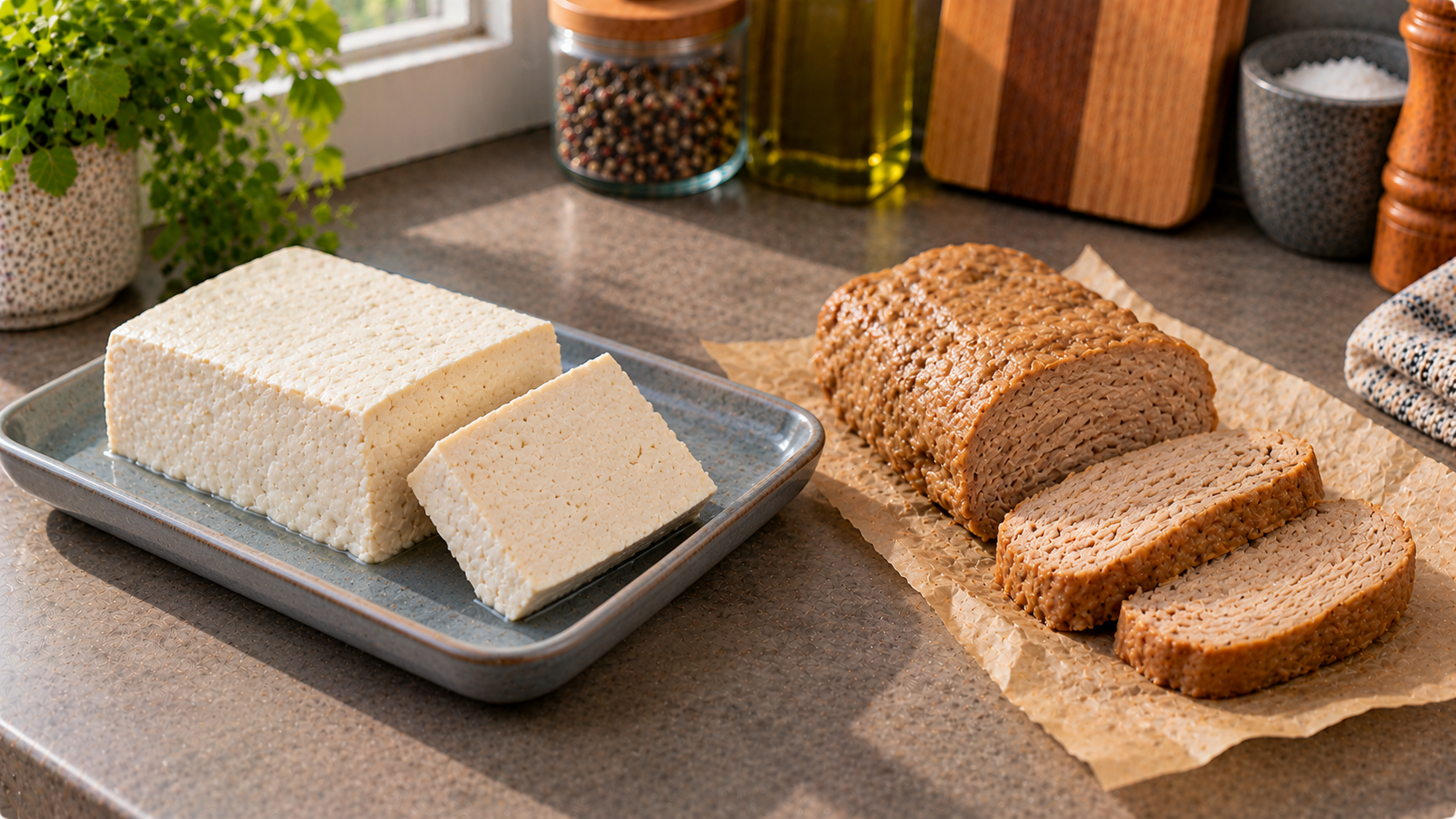
Tofu and seitan are both popular plant-based alternatives to meat, but their nutrition, allergens and cooking properties differ. Tofu is made from soybeans; seitan is made mainly from wheat gluten. Which is better depends on your protein target, dietary restrictions and recipe.
Nutrition per 100 g
These are real reference values for calcium-set firm tofu (USDA FoodData Central 172475) and Upton's Naturals Traditional Seitan. The seitan values are converted from its declared 57 g serving and rounded.
The ingredient and product type matter: compare the individual nutrition references for tofu and seitan rather than applying one label to every brand.
| Nutrient | Firm tofu | Seitan |
|---|---|---|
| Calories | 144 kcal | 158 kcal |
| Protein | 17.3 g | 31.6 g |
| Fat | 8.7 g | 0.9 g |
| Carbohydrates | 2.8 g | 8.8 g |
| Calcium | 683 mg | 70 mg |
| Sodium | 14 mg | 772 mg |
Tofu composition · Seitan manufacturer
These are specific products, not universal averages. Different tofu firmness, coagulants and seitan seasonings change the numbers.
What does a real portion provide?
| Serving | Tofu protein | Seitan protein |
|---|---|---|
| 150 g | 26.0 g | 47.4 g |
| 200 g | 34.6 g | 63.2 g |
Values are calculated from the reference products. Formula: protein per 100 g × serving grams ÷ 100. Always compare hydrated, ready-to-cook seitan with ready-to-use tofu, not dry gluten flour.
Protein quality and calcium
Soy provides all essential amino acids. Wheat gluten is comparatively low in lysine. Seitan can still support protein intake when the overall diet includes legumes, soy or other varied protein sources.
Calcium-set tofu can be especially rich in calcium. Tofu produced with another coagulant may contain much less; check the actual label.
The referenced seitan has considerably more sodium because it is a seasoned commercial product. Homemade varieties may differ.
Allergies and gluten
Tofu contains soy. Seitan contains wheat gluten and is unsuitable for people with coeliac disease. The seitan product compared also contains soy sauce, so it includes both wheat and soy allergens.
Plain tofu is generally gluten-free, but sauces and marinades may introduce gluten. Celiac Disease Foundation.
Cooking and choosing
Tofu works well in curries, stir-fries, baked cubes, scrambles and creamy sauces. Seitan has a firmer, chewy texture suitable for strips, sandwiches and stews.
Choose tofu for soy-based protein, potential calcium benefits or gluten-free meals when verified suitable. Choose seitan for concentrated protein and a meat-like bite when wheat gluten is tolerated.
Consider cooking oil, sauces, price per edible portion and salt. Neither food is automatically healthier; the exact product and complete meal determine the practical choice.