
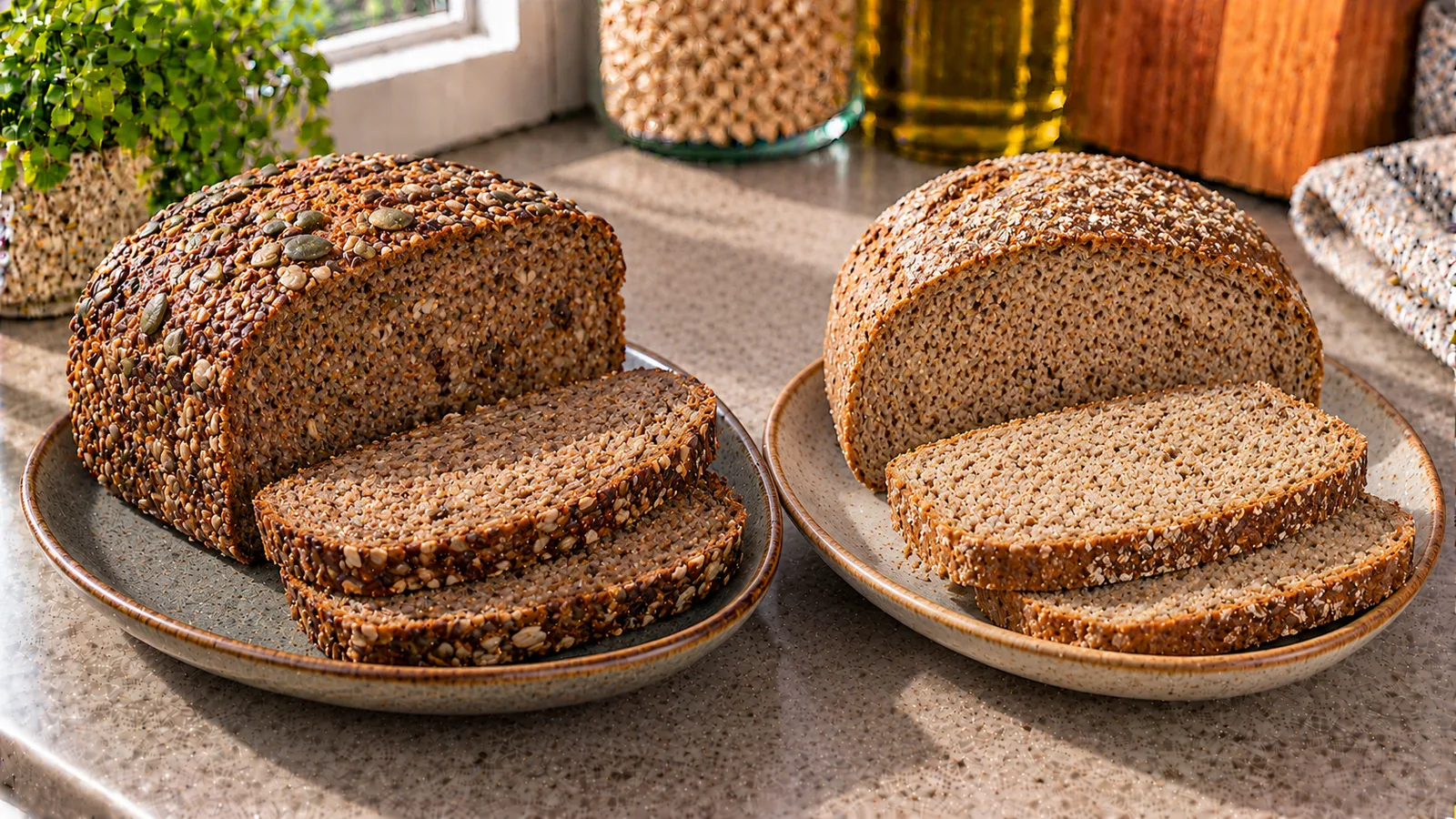
Protein bread looks like an obvious upgrade when you want more protein from breakfast or sandwiches. Yet the label may tell a less simple story: some protein loaves also contain more fat and calories, while a traditional wholegrain loaf can provide almost as much fiber at a lower shelf price. The useful question is not which name sounds healthier, but what changes per 100 g, per actual slice and per euro spent.
For a transparent comparison, this article uses published labels for two German breads from the same manufacturer: Mestemacher High Protein Eiweißbrot klassisch and Westfälisches Vollkornbrot. A less expensive dmBio rye wholegrain loaf offers a third price example. They are specific products, not the average of all protein or wholegrain breads. Prices are online listings observed in October 2026, not promises about future offers or availability.
The nutrition labels side by side
The figures come from the manufacturer's protein bread label and wholegrain rye bread label. Both are ready-to-eat packaged breads. All values refer to the same 100 g weight; salt is given as salt, not sodium.
| Nutrient per 100 g | Protein bread | Wholegrain rye bread |
|---|---|---|
| Energy | 262 kcal | 183 kcal |
| Protein | 21.0 g | 4.7 g |
| Fiber | 10.1 g | 9.6 g |
| Fat | 12.5 g | 1.4 g |
| Saturated fat | 1.7 g | 0.7 g |
| Carbohydrate | 11.3 g | 32.9 g |
| Sugar | 2.9 g | 3.5 g |
| Salt | 1.2 g | 0.76 g |
In this pair, the protein bread supplies 16.3 g more protein per 100 g, but also 79 extra kcal and 11.1 g more fat. Fiber is almost identical: the gap is only 0.5 g per 100 g. That last result matters because high-protein marketing does not automatically mean more fiber than a genuinely wholegrain product.
The protein loaf contains less carbohydrate on its label, but that does not make it calorie-free or inherently better for blood glucose management. Total meal composition, the bread's real serving size and individual circumstances matter. These label numbers cannot predict a person's glucose response.
What does a 50 g portion provide?
The manufacturer packs its classic protein bread as five roughly 50 g slices in 250 g. A different wholegrain loaf may have heavier or lighter slices. For a fair comparison, use 50 g of each, even if that is not one intact slice of the second loaf.
| Equal edible bread weight | Protein bread | Wholegrain bread |
|---|---|---|
| 50 g energy | 131 kcal | 91.5 kcal |
| 50 g protein | 10.5 g | 2.35 g |
| 50 g fiber | 5.05 g | 4.8 g |
| 100 g energy | 262 kcal | 183 kcal |
| 100 g protein | 21.0 g | 4.7 g |
Two 50 g portions of protein bread provide 21 g protein and 262 kcal before toppings. The same 100 g of the cited wholegrain bread gives 4.7 g protein and 183 kcal. This comparison says nothing about which tastes better or keeps you satisfied longer; there is no satiety experiment behind these two product labels.
If a sandwich contains cheese, eggs, hummus or meat, those toppings might contribute more protein than a change of bread. Measure both the bread and the filling when comparing complete lunches. The separate Mealisa guide to calories in bread explains why an unweighed 'slice' is an unreliable calorie unit.
Does the protein premium pay off? Three real price labels
Comparing only the package price would distort the result: the two Mestemacher packs contain different amounts. In the manufacturer's online shop, the protein loaf was listed at €2.49 for 250 g, and the wholegrain rye loaf at €1.99 for 500 g. A dmBio rye wholegrain bread was listed at €0.95 for 500 g, with 4.4 g protein per 100 g. Prices and shipping conditions can change; these are dated examples, not market averages.
| Listed product | Pack price | Price per 100 g | Protein per 100 g | Cost for 20 g protein |
|---|---|---|---|---|
| Mestemacher protein, 250 g | €2.49 | €1.00 | 21.0 g | €0.95 |
| Mestemacher wholegrain, 500 g | €1.99 | €0.40 | 4.7 g | €1.69 |
| dmBio wholegrain, 500 g | €0.95 | €0.19 | 4.4 g | €0.86 |
Formula: cost for 20 g protein = (pack price ÷ pack weight in grams) × (20 ÷ protein grams per 100 g) × 100. The displayed price-per-100-g numbers are rounded, but the cost-per-20-g figures use the unrounded amounts. For example, the protein bread costs €2.49 ÷ 250 × (20 ÷ 21) × 100 = approximately €0.95.
On this narrow protein-per-euro measure, the higher-priced protein loaf beats the named manufacturer wholegrain bread, but the dmBio option beats both. That does not make bread a sensible sole source of 20 g protein. Reaching 20 g from the manufacturer wholegrain loaf alone would require about 426 g bread, compared with about 95 g of the protein loaf. Such weights are arithmetic comparisons, not recommended servings. Also compare eggs, beans, yogurt and other foods when planning overall protein costs. Our protein-and-fiber-per-euro shopping guide applies the same reasoning across a wider food basket.
Fiber and whole grains are different questions
Both named breads exceed 6 g fiber per 100 g. Under the European Commission's nutrition-claim conditions, a solid food with at least that amount can qualify for the 'high fiber' claim. The EU 'high protein' threshold uses at least 20% of food energy from protein, not a fixed protein weight; the manufacturer protein bread's 21 g in 262 kcal exceeds that threshold. An attractive packaging phrase still needs to be assessed against the individual product's declaration.
Fiber grams alone do not make the products nutritionally identical. The wholegrain loaf is made predominantly from rye wholemeal, while the protein version combines added wheat and pea proteins with rye wholemeal, flaxseeds, soy ingredients and seeds. Wholegrain ingredients retain more of the grain's natural structure and nutrients than refined grain; additional protein does not erase that distinction. The German Nutrition Society's wholegrain guidance recommends choosing wholegrain versions regularly.
Equally, a protein bread can contain wholegrain flour. These are overlapping product characteristics, not mutually exclusive categories. If you want both, inspect the ingredient order and the stated share of wholegrain grain material rather than assuming every seeded dark loaf is wholegrain. Bread colour, seeds on top and a 'fitness' name are not reliable substitutes for the ingredients list.
Check fat, salt and allergens—not just protein
The specific protein loaf lists 12.5 g fat and 1.2 g salt per 100 g; the compared wholegrain loaf lists 1.4 g fat and 0.76 g salt. Most of that difference in total fat is associated with the selected recipe, including seeds. Fat is not automatically undesirable, but it increases energy per 100 g and should be counted when comparing calories. Look at saturated fat separately: 1.7 g versus 0.7 g here.
Protein recipes may use wheat gluten, soy, pea protein, dairy proteins, egg or sesame. The named protein loaf contains wheat protein, rye, soy and sesame among its ingredients; the wholegrain bread contains rye and may carry trace-allergen warnings. Neither is appropriate for someone who needs to avoid a listed ingredient. 'Low carb', 'high protein', 'vegan' and 'gluten-free' are not synonyms.
In a weight-management context, two slices of the protein loaf are not necessarily a lower-calorie breakfast than the same weighed quantity of wholegrain bread. For a person with a relatively low-protein meal, however, the extra bread protein may be convenient. For someone already meeting protein needs and trying to spend less, a standard wholegrain loaf may make more practical sense. Our article on high-protein foods covers alternatives without treating bread as a complete solution.
A five-check supermarket decision
Start with price per kilogram so pack size cannot mislead you. Next compare protein, fiber, calories and salt per 100 g, using matching units. Then read the first ingredients: is wholemeal grain a major ingredient, or are protein concentrates and seeds driving the nutrition profile? Fourth, check which allergens are present, especially wheat, soy, sesame, egg or milk ingredients if relevant. Finally weigh the slice you normally eat; 'one slice' is not a common unit across brands.
A useful choice may even change within one household. Protein bread can work for a sandwich where boosting protein without adding another filling matters; wholegrain rye may be preferable for inexpensive daily toast with plenty of fiber. Neither label alone determines the healthfulness of the entire meal. The comparison should extend to toppings, vegetables, portions and the rest of the day.
For actual purchases, repeat the price calculation using the current shelf price and the current pack label. Manufacturers can reformulate products, and promotional discounts reverse rankings. You can also use Mealisa's guide to portion size versus serving size when one package advertises a 50 g slice and another uses a different reference portion.
Source and calculation note: all nutrition and German online-shop prices above refer to the named products and their published labels accessed for this comparison in October 2026. Per-portion values and costs per 20 g protein are calculations, not additional laboratory analyses; shipping is excluded. The comparison is about choosing between bread products, not diagnosing an illness or prescribing protein intake.