
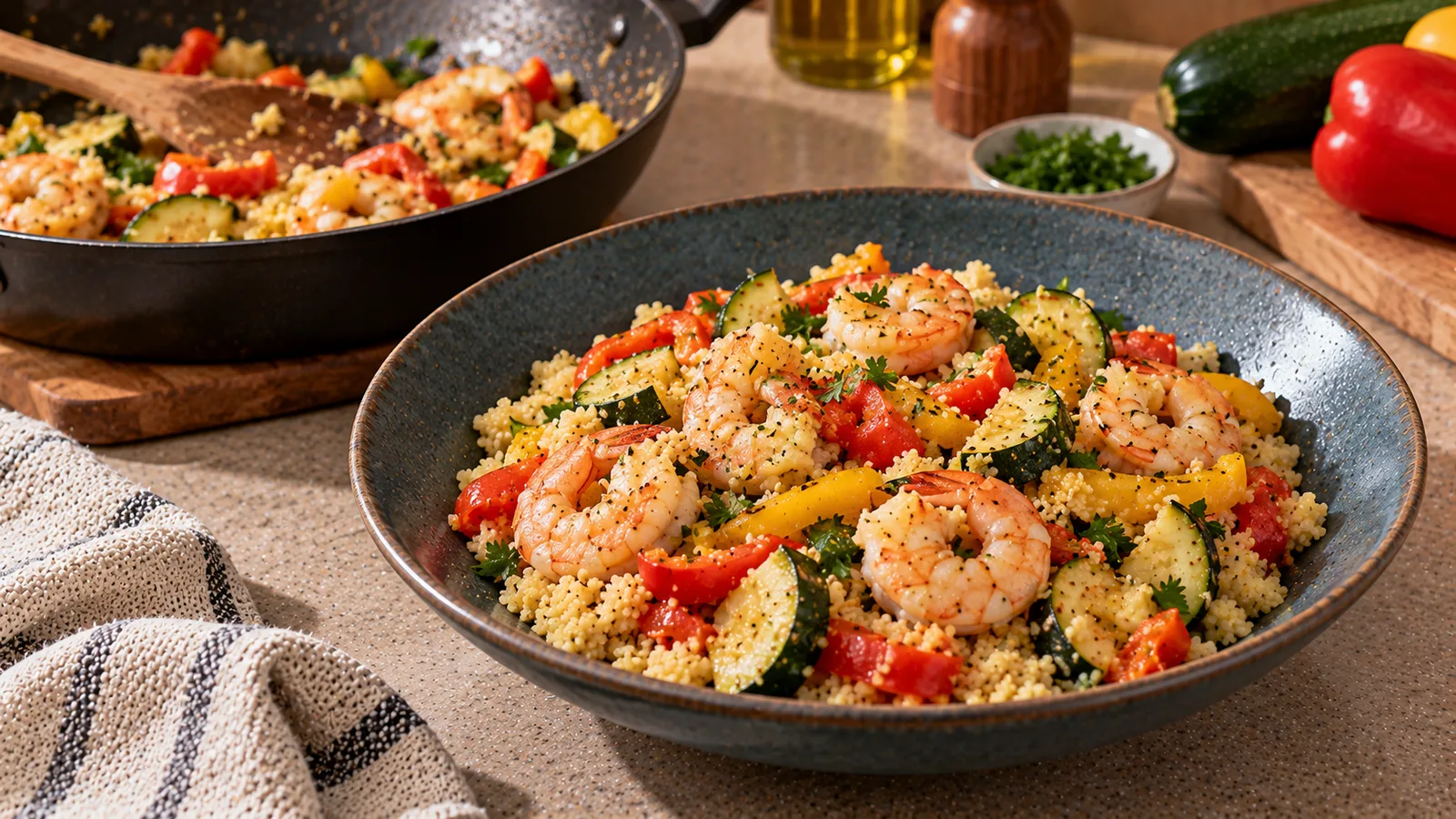
Shrimp and vegetable couscous is a practical dinner when you want a meal with protein, vegetables and a satisfying grain without spending an hour cooking.
The dish combines tender shrimp, fluffy couscous, zucchini, bell pepper and cherry tomatoes with lemon, garlic and olive oil.
Preparation time: 10 minutes
Cooking time: 15 minutes
Total time: approximately 25 minutes
Servings: 4
Ingredients
| Ingredient | Amount |
|---|---|
| Raw shrimp, peeled and deveined | 500 g |
| Dry couscous | 240 g |
| Zucchini | 250 g |
| Red bell pepper | 180 g |
| Cherry tomatoes | 200 g |
| Red onion | 120 g |
| Garlic | 12 g |
| Olive oil | 25 g |
| Hot vegetable stock or water | 300 ml |
| Lemon juice | 25 ml |
| Lemon zest | From 1 lemon |
| Ground paprika | 1 tsp |
| Ground cumin | 1/2 tsp |
| Fresh parsley | 15 g |
| Salt and black pepper | To taste |
Use plain, unsweetened shrimp without added sauces. Frozen shrimp should be thawed safely before cooking.
The amount of liquid required for couscous varies by brand. Check the package and adjust the 300 ml reference accordingly.
Step 1: Prepare the vegetables
Dice the zucchini and bell pepper into bite-sized pieces.
Finely chop the onion and garlic.
Halve the cherry tomatoes.
Pat the shrimp dry with kitchen paper so they sear rather than steam.
Keep raw shrimp and ready-to-eat ingredients separate during preparation.
Step 2: Cook the couscous
Place the dry couscous in a heatproof bowl.
Bring the vegetable stock or water to a boil and pour it over the couscous.
Cover and leave for approximately 5 minutes, or follow the package directions.
Fluff the couscous with a fork.
Set aside while you cook the vegetables and shrimp.
Step 3: Sauté the vegetables
Heat 15 g of olive oil in a large skillet over medium-high heat.
Add the onion and bell pepper and cook for about 3 minutes.
Add the zucchini and continue cooking for another 3–4 minutes, stirring occasionally.
Add the garlic, paprika and cumin.
Cook for approximately 30 seconds, just until fragrant.
Add the cherry tomatoes and cook for 1–2 minutes.
The vegetables should be tender but still hold their shape.
Step 4: Cook the shrimp
Move the vegetables to one side of the skillet or transfer them temporarily to a plate.
Add the remaining 10 g of olive oil.
Place the shrimp in a single layer.
Cook for approximately 2–3 minutes per side, depending on their size.
Shrimp should turn opaque and firm. For food-safety verification, US guidance recommends cooking seafood to an internal temperature of 63°C / 145°F.
Avoid prolonged cooking, which can make shrimp rubbery.
Step 5: Combine and finish
Return all the vegetables to the skillet.
Add the prepared couscous and gently mix.
Stir in the lemon juice and zest.
Season with salt and black pepper.
Finish with chopped parsley.
Divide into four portions and serve immediately.
Estimated nutrition per serving
The following figures are approximate estimates for one-quarter of the complete recipe.
| Nutrient | Estimated amount |
|---|---|
| Calories | 440–490 kcal |
| Protein | 35–40 g |
| Carbohydrates | 54–60 g |
| Fat | 8–11 g |
| Fiber | 5–7 g |
Actual values depend on shrimp composition, couscous brand, vegetables and the amount of oil used.
The estimates are not laboratory measurements. For precise tracking, calculate the recipe using the nutritional information for your specific ingredients.
Why this recipe works
The dish uses three components with different roles.
Shrimp provide most of the protein.
Couscous supplies the main carbohydrate portion and can be prepared quickly without prolonged boiling.
Vegetables contribute volume, fiber and variety.
Olive oil helps cook the ingredients and adds fat.
Lemon, garlic and herbs provide flavor without requiring a heavy cream-based sauce.
How to adjust the portions
For a larger carbohydrate portion, increase the dry couscous quantity.
An additional 40 g of dry couscous adds approximately 150 kcal to the whole recipe, depending on the product.
For more vegetables, add another 150–200 g of zucchini, peppers or tomatoes.
For a lighter meal, reduce the dry couscous to 180–200 g for the whole recipe while keeping the shrimp and vegetables unchanged.
If you modify ingredients, recalculate the nutrition rather than relying on the original estimate.
Ingredient substitutions
Shrimp alternatives
Chicken breast can replace shrimp, but it needs a different cooking time and must be cooked thoroughly.
Firm tofu can provide a plant-based alternative.
Use a separate nutritional calculation because protein and calorie values will change.
Vegetable alternatives
You can use:
- Spinach.
- Broccoli.
- Green peas.
- Carrots.
- Eggplant.
Harder vegetables should be added earlier so they have enough time to cook.
Couscous alternatives
Bulgur, quinoa and rice can also work.
They require different liquid ratios and cooking times.
Cook them according to their own instructions before combining with the vegetables and shrimp.
Can you use frozen shrimp?
Yes.
Thaw frozen shrimp in the refrigerator or using another food-safe method.
Do not leave them on the counter for several hours.
Drain and pat dry before cooking.
If the shrimp are already cooked, add them near the end and heat them thoroughly without overcooking.
The recipe's original cooking instructions assume raw shrimp.
Common mistakes
Adding wet shrimp to a crowded pan.
This can cause the shrimp to steam rather than develop a lightly seared surface.
Overcooking the shrimp.
They can become tough and rubbery.
Adding too much liquid to couscous.
This produces a wet, clumpy texture. Follow the package's liquid ratio.
Cooking every vegetable for the same amount of time.
Bell pepper and onion generally need more time than cherry tomatoes.
Forgetting the lemon.
A small amount of acidity balances the sweetness of the vegetables and the savory shrimp.
Food safety and storage
Shrimp are a crustacean shellfish allergen. Couscous is usually made from wheat and therefore contains gluten.
Check stock, seasoning blends and other packaged ingredients for additional allergens.
Refrigerate leftovers promptly in shallow, covered containers.
As a general US food-safety guideline, perishable foods should be refrigerated within two hours, or within one hour when temperatures exceed 32°C / 90°F.
Keep the refrigerator at 4°C / 40°F or below.
Cooked leftovers are generally recommended for use within 3–4 days under US guidance, provided they have been handled and stored safely.
Reheat leftovers thoroughly; US guidance recommends 74°C / 165°F for reheated leftovers.
The texture of shrimp is usually best when the dish is eaten freshly prepared.
Meal-prep option
For better texture, prepare the couscous and vegetables in advance and cook the shrimp close to serving time.
Alternatively, portion the finished dish into containers for refrigerated meals.
Avoid leaving the cooked dish at room temperature while preparing other meals.
If you track food intake, weigh the complete cooked recipe and record the amount actually eaten.
Sources
- USDA FoodData Central — ingredient nutrition reference data.
- FDA: Safe Food Handling — safe seafood preparation and storage.
- USDA Food Safety and Inspection Service — cooking, cooling and leftover guidance.
- EU Regulation No 1169/2011 — allergen information requirements.
A simple weeknight dinner
Shrimp and vegetable couscous is quick to prepare, easy to portion and flexible enough for different vegetable combinations.
For the best result, cook the couscous separately, keep the vegetables slightly firm and add the shrimp only when the rest of the dish is nearly ready.