
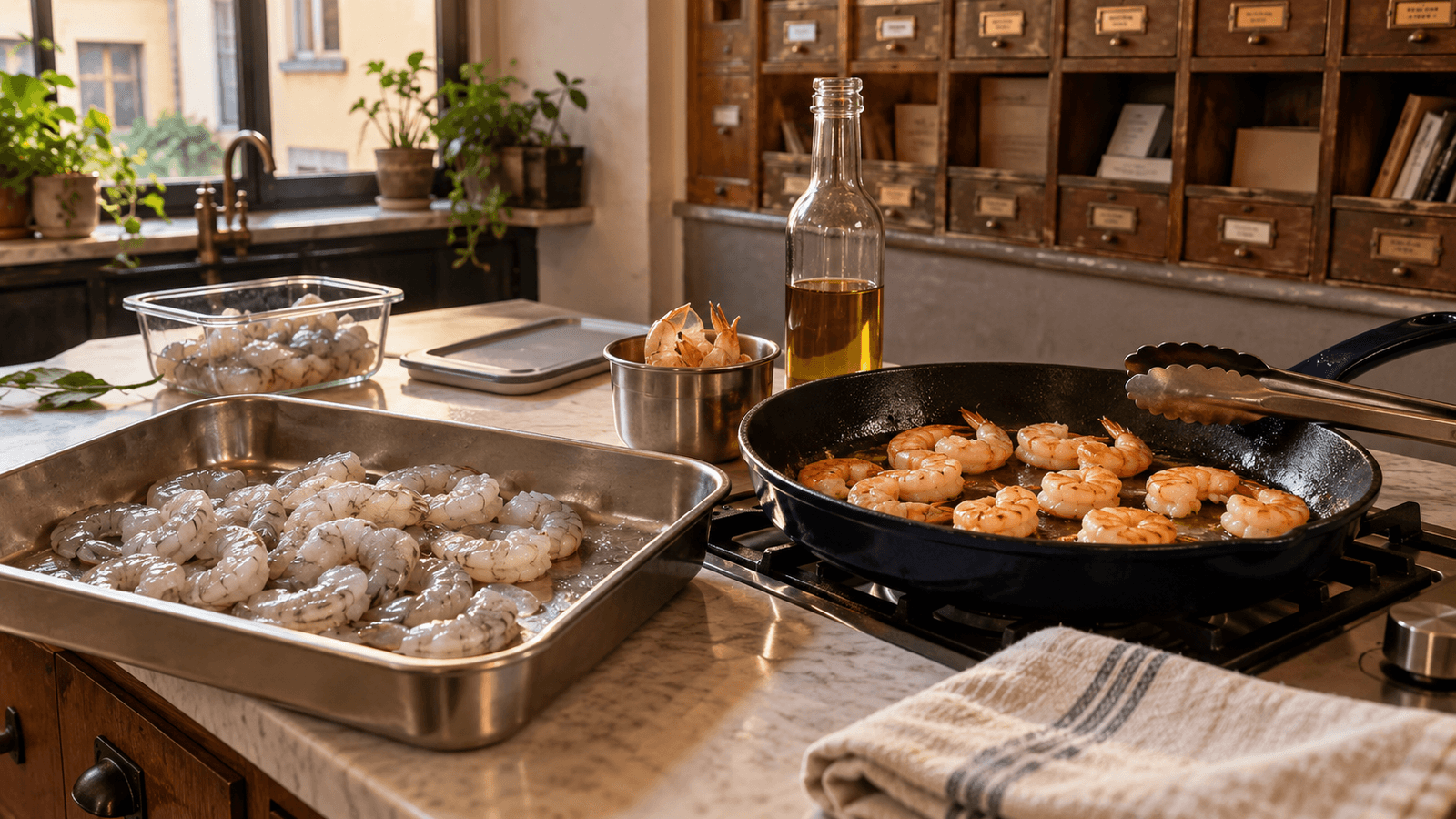
Shrimp can be a relatively protein-rich food, but the calories in a shrimp dish depend on much more than the shrimp alone.
Portion size, whether the shrimp are weighed raw or cooked, added oil, breading, butter, sauces and the rest of the meal can all change the final calorie total.
That is why the most useful approach is to identify the shrimp you actually ate and track the preparation as accurately as practical.
Calories and nutrition: USDA reference values
Quick answer: 99 kcal / 100 g.
The following values describe specific USDA FoodData Central reference foods. They are not universal values for every product.
| Reference food | kcal / 100 g | Protein (g) | Fat (g) | Carbohydrates (g) |
|---|---|---|---|---|
| Shrimp, cooked | 99 | 23.98 | 0.28 | 0.2 |
Calories by edible portion weight
| Reference food | 100 g | 150 g | 200 g |
|---|---|---|---|
| Shrimp, cooked | 99 | 149 | 198 |
The reference is cooked shrimp. Raw shrimp, breaded shrimp and shrimp cooked with added oil require different entries.
Sources:
Are shrimp high in calories?
Plain shrimp are generally relatively low in calories compared with many foods that provide a similar amount of protein.
However, there is no single calorie value that applies to every serving.
The total depends on:
- portion size
- raw or cooked weight
- species and product
- whether shells are included in the measured weight
- cooking method
- oil or butter
- breading or batter
- sauces
- other ingredients in the dish
A plain cooked portion and a breaded fried shrimp dish can therefore have very different calorie totals.
Shrimp nutrition
Shrimp are best known nutritionally as a source of protein.
They also provide several micronutrients naturally found in seafood.
The exact nutrition profile varies by product and preparation.
For practical tracking, the most important variables are usually the edible amount and any meaningful ingredients added during cooking.
Shrimp and protein
Shrimp can provide a substantial amount of protein relative to their calorie content.
This can make them useful in meals where you want a clear protein component without requiring a large portion of food.
Your total protein needs depend on factors such as body size, activity, age and overall diet.
See How Much Protein Do You Need Per Day?.
Common shrimp portion sizes
Shrimp are eaten in many different quantities.
Instead of assuming that a serving always means the same thing, it is more useful to think in terms of the actual edible weight.
A smaller amount may be used:
- in a salad
- inside a wrap
- in soup
- as part of a mixed pasta dish
A larger amount may be used when shrimp are the primary protein source in the meal.
The number of individual shrimp is not a reliable way to estimate calories because shrimp vary greatly in size.
Why shrimp count can be misleading
Ten small shrimp and ten very large shrimp can represent very different amounts of food.
Commercial shrimp may also be described using count ranges that indicate approximately how many pieces make up a particular unit of weight.
For calorie tracking, actual edible weight is usually more useful than simply counting pieces.
Raw weight vs cooked weight
Shrimp lose some water during cooking.
As a result, the same shrimp can weigh less after cooking than before.
This means nutrition values listed per 100 grams of raw shrimp should not automatically be applied to 100 grams of cooked shrimp, or vice versa.
Whenever possible:
- determine whether your nutrition entry refers to raw or cooked shrimp
- weigh the shrimp in the corresponding state
- use the matching database entry
Consistency matters more than trying to convert every serving perfectly.
Peeled vs shell-on shrimp
Shells add weight but are usually not eaten.
If you weigh shell-on shrimp and then use a nutrition entry intended for edible peeled shrimp, you may overestimate the amount consumed.
For better accuracy, use edible weight when possible.
If you buy a packaged product, check whether the listed nutrition information refers to the product as sold.
Boiled shrimp
Boiling shrimp without substantial added ingredients keeps the final nutrition profile relatively close to the shrimp themselves.
Seasonings, herbs, lemon and similar low-energy additions usually contribute little to the total.
The important variable remains the amount of edible shrimp.
Steamed shrimp
Steamed shrimp are similar from a tracking perspective.
If no meaningful amount of fat or sauce is added, most of the calories come from the shrimp.
This can make the dish relatively straightforward to estimate.
Grilled shrimp
Grilling itself does not automatically add many calories.
What matters is what goes onto the shrimp.
For example:
- oil
- butter
- marinades
- glazes
can increase the total.
If you brush shrimp with oil before grilling, include a reasonable estimate of the amount that actually contributes to the food.
Pan-fried shrimp
Shrimp cooked in a frying pan can vary considerably.
A non-stick pan with little added fat may keep the total relatively close to plain shrimp.
A generous amount of oil or butter can add substantially more energy.
When tracking homemade shrimp, record the cooking fat separately when it is meaningful.
Breaded shrimp
Breading changes the comparison.
The finished food now includes:
- shrimp
- flour or starch
- breadcrumbs or another coating
- potentially egg
- absorbed cooking fat
Breaded shrimp should therefore be tracked as breaded shrimp rather than as an equivalent weight of plain shrimp.
Fried shrimp
Deep-fried or heavily fried shrimp can contain substantially more calories than boiled or steamed shrimp.
The coating and absorbed oil matter.
Restaurant portions can be especially difficult to estimate precisely because the amount of breading and oil is not visible.
Use a product- or dish-specific entry when available rather than a generic plain-shrimp entry.
Shrimp cooked in butter
Butter can contribute a meaningful amount of calories even when the shrimp themselves are relatively lean.
If you cook shrimp at home, include the butter used in the recipe.
If some remains in the pan, the amount actually consumed may be lower than the total added, but ignoring it completely can also underestimate the meal.
Garlic shrimp
“Garlic shrimp” can describe very different dishes.
Some versions use mainly shrimp, garlic, herbs and a small amount of oil.
Others use substantial butter or oil.
The name alone therefore does not determine the calorie content.
The preparation method matters.
Shrimp with sauce
Sauces can change the total considerably.
Examples include:
- creamy sauces
- mayonnaise-based sauces
- sweet chili sauce
- butter sauces
- coconut-based sauces
- oil-heavy dressings
Tomato-based, yogurt-based or citrus-based sauces may be lighter depending on their ingredients.
Track the sauce separately when it contributes meaningfully to the meal.
Shrimp in pasta
When shrimp are served with pasta, the shrimp may represent only a fraction of the meal's calories.
The complete dish can also include:
- pasta
- oil
- butter
- cream
- cheese
- sauce
- vegetables
Do not estimate a shrimp pasta dish by tracking the shrimp alone.
Shrimp in rice dishes
The same principle applies to rice dishes.
A shrimp rice meal can vary depending on:
- amount of rice
- cooking oil
- sauce
- vegetables
- eggs
- other proteins
Mixed dishes are best estimated by separating the meaningful components when possible.
Shrimp salad
A shrimp salad can be relatively light or surprisingly energy-dense.
The shrimp and vegetables may contribute relatively little compared with:
- oil-based dressing
- mayonnaise
- avocado
- cheese
- nuts
- croutons
Look at the complete salad rather than assuming that “shrimp salad” has one standard calorie value.
Frozen shrimp
Plain frozen shrimp can be convenient for tracking because the package may provide product-specific nutrition information.
Check whether the shrimp are:
- raw or cooked
- peeled or shell-on
- plain or seasoned
- breaded or unbreaded
Also check the serving basis used on the package.
Pre-cooked shrimp
Pre-cooked shrimp can be eaten cold or reheated.
If they are plain, tracking can be relatively straightforward.
However, products may contain added salt, seasonings or other ingredients.
Use the product-specific information when available.
Shrimp and sodium
Some shrimp products can contain significant sodium, particularly when processed with salt or other sodium-containing ingredients.
Prepared sauces and restaurant dishes can add more.
If sodium intake matters for your individual dietary or medical needs, check the specific product and preparation rather than relying on a generic shrimp value.
Shrimp and dietary cholesterol
Shrimp naturally contain dietary cholesterol.
Current nutrition decisions should not be based on a single nutrient in isolation.
Individual medical circumstances can differ, so people who have been given specific cholesterol or cardiovascular dietary guidance should follow advice from their qualified healthcare professional.
Shrimp for weight loss
Shrimp can fit into a weight-loss diet.
Plain shrimp provide protein without necessarily adding a large amount of energy.
But the complete meal still matters.
A shrimp dish with substantial butter, oil, breading or creamy sauce can have a very different calorie profile from steamed shrimp with vegetables.
Weight loss depends on overall energy balance over time rather than on one specific food.
Shrimp for a higher-protein meal
Shrimp can be combined with foods such as:
- vegetables
- potatoes
- rice
- whole grains
- beans
- salads
- wraps
The best combination depends on your appetite, goals and overall diet.
For meal structure, see What Makes a Lunch Balanced?.
How to estimate shrimp calories at home
A practical method is:
- identify whether the shrimp are raw or cooked
- determine whether your weight includes shells
- weigh the edible portion
- use a matching nutrition entry
- add meaningful cooking fats
- add breading or batter if present
- add sauces separately
- include the rest of the meal
This is usually more useful than estimating calories from the number of shrimp.
How to track shrimp in a mixed recipe
If shrimp are part of a larger homemade recipe:
- record the total shrimp used
- record the other meaningful ingredients
- calculate the complete recipe
- determine how much of the finished recipe you ate
For example, a shrimp pasta recipe should include the pasta, shrimp, cooking fat, sauce and other significant ingredients.
Estimating shrimp from a photo
A food photo may help identify shrimp and provide a rough impression of portion size.
However, a photo may not reliably reveal:
- exact weight
- hidden oil
- butter
- whether shrimp were breaded
- sauce underneath the food
- ingredients mixed into the dish
If you know how the shrimp were prepared, adding that information can improve the estimate.
Restaurant shrimp dishes
Restaurant shrimp can be harder to estimate because preparation details are often unknown.
Useful clues include whether the shrimp appear:
- plain
- grilled
- glossy with oil
- breaded
- fried
- coated in sauce
- served in a creamy dish
If official nutrition information is available from the restaurant, it may be more useful than a generic estimate.
Otherwise, treat the result as an estimate rather than an exact value.
Common tracking mistakes
Counting shrimp instead of considering size
Individual shrimp vary greatly.
Mixing raw and cooked nutrition entries
Cooking changes water content and therefore weight.
Weighing shells as edible food
Use edible weight when possible.
Forgetting cooking oil
Oil or butter can materially change the total.
Tracking breaded shrimp as plain shrimp
The coating and absorbed fat contribute calories.
Ignoring sauce
Sauces can sometimes contribute more energy than expected.
Tracking only the shrimp in a mixed dish
Pasta, rice, oil and other ingredients may represent much of the meal.
Frequently asked questions
Are shrimp low in calories?
Plain shrimp are generally relatively low in calories for the amount of protein they provide, but the final total depends on portion size and preparation.
Are shrimp high in protein?
Shrimp are a protein-rich seafood option.
Does cooking shrimp add calories?
Cooking itself does not create calories, but oil, butter, breading, batter and sauces can increase the total.
Should I weigh shrimp raw or cooked?
Either can work if the nutrition entry matches the state in which you weigh them. Avoid mixing raw weight with cooked nutrition data.
Should shells be included in the weight?
For estimating what you actually eat, edible peeled weight is generally more useful.
Are fried shrimp much higher in calories?
They can be substantially higher because breading and absorbed cooking fat add energy.
Can shrimp fit into a weight-loss diet?
Yes. What matters is the portion, preparation, complete meal and overall energy intake.
Can a photo accurately estimate shrimp calories?
A photo can help identify the food and approximate portion, but exact weight, cooking fat and hidden ingredients may remain uncertain.
The bottom line
Shrimp can be a protein-rich and relatively low-calorie food when prepared simply.
But “shrimp calories” are not one fixed number.
For a more useful estimate, pay attention to:
- edible portion size
- raw versus cooked weight
- peeled versus shell-on weight
- cooking fat
- breading
- sauces
- the rest of the dish
When tracking shrimp, matching the nutrition entry to the actual product and preparation is more useful than relying on the number of individual shrimp.
This article provides general educational nutrition information and is not individualized medical or dietary advice.