
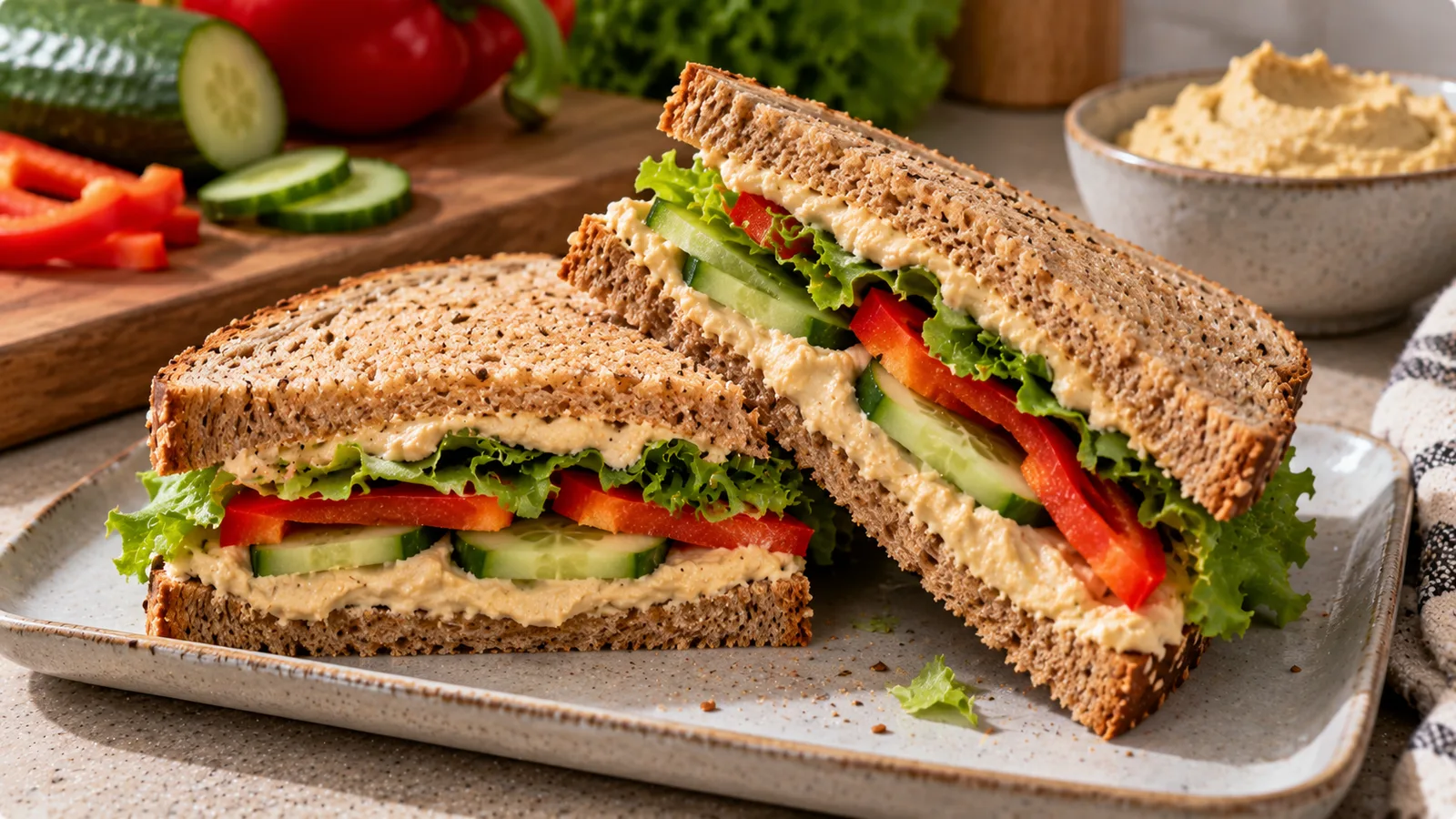
A hummus and vegetable sandwich is an easy way to turn everyday ingredients into a satisfying lunch without cooking.
Creamy hummus provides the spread, while cucumber, carrot, bell pepper and spinach add contrasting textures. Whole-grain bread holds everything together and makes the sandwich convenient to eat at home or pack for work.
This recipe takes approximately 10 minutes and makes one generously filled sandwich.
Recipe overview
| Detail | Amount |
|---|---|
| Preparation time | 10 minutes |
| Cooking time | None |
| Servings | 1 sandwich |
| Difficulty | Easy |
| Main ingredients | Hummus, whole-grain bread, fresh vegetables |
| Suitable for | Lunch, quick dinner, packed meal |
| Dietary style | Vegan when all ingredients are plant-based |
The recipe uses ready-to-eat hummus. If you prepare hummus at home, its ingredients and nutrition will depend on your recipe.
Ingredients for one sandwich
| Ingredient | Quantity |
|---|---|
| Whole-grain bread | 2 slices, approximately 90 g |
| Plain hummus | 70 g |
| Cucumber | 50 g |
| Red bell pepper | 40 g |
| Carrot | 40 g |
| Baby spinach | 20 g |
| Lemon juice | 5 ml |
| Black pepper | To taste |
| Optional fresh parsley | 5 g |
Choose bread with a firm crumb so it can support the vegetables without falling apart.
For a milder flavor, use plain hummus. Roasted pepper or garlic hummus also works, although the final nutrition may differ.
How to make the sandwich
1. Prepare the vegetables
Wash the cucumber, bell pepper, carrot and spinach.
Dry the spinach thoroughly.
Cut the cucumber into thin rounds, the bell pepper into narrow strips and the carrot into thin ribbons or fine shreds.
Thin vegetables are easier to layer and help the sandwich stay together.
2. Prepare the bread
Place the two bread slices on a clean cutting board.
If you prefer a firmer texture, toast them lightly.
Allow toasted bread to cool before spreading the hummus.
3. Spread the hummus
Divide the 70 g of hummus between the bread slices.
Spread it evenly, leaving a small border near the edges.
Hummus works as both a flavorful filling and a layer that helps hold the vegetables in place.
4. Add the spinach
Place the spinach on one slice.
Keep the leaves relatively flat rather than piling them into a loose mound.
5. Layer the remaining vegetables
Add the cucumber, carrot and bell pepper.
Alternate the vegetables rather than stacking all of one ingredient in a thick layer.
This distributes the textures more evenly.
6. Season and close
Add the lemon juice, black pepper and optional parsley.
Place the second bread slice on top and press gently.
Cut the sandwich diagonally if desired and serve.
Estimated nutrition per sandwich
The following numbers are illustrative estimates based on representative ingredient values, not laboratory-tested nutrition for the finished sandwich.
| Nutrient | Approximate amount |
|---|---|
| Energy | 440 kcal |
| Protein | 15 g |
| Carbohydrates | 57 g |
| Fat | 16 g |
| Fiber | 12 g |
The estimate assumes the ingredient quantities listed above and excludes optional parsley.
Actual values can differ substantially because whole-grain breads and commercial hummus products vary in energy, fat, protein and fiber.
For a more accurate calculation, use your product labels and a composition database such as USDA FoodData Central.
The EU food information regulation establishes the framework for nutrition declarations on prepacked foods in the European Union.
Why the ingredients work together
This sandwich combines several different food groups.
Whole-grain bread contributes carbohydrates and, depending on the product, dietary fiber.
Hummus usually contains chickpeas and tahini, although recipes vary. These ingredients contribute plant protein and fat.
The vegetables add volume, texture and a variety of micronutrients.
The World Health Organization's healthy diet guidance emphasizes dietary variety and the inclusion of vegetables, legumes and whole grains.
This does not mean that every hummus sandwich has the same nutritional value. The specific ingredients and portions matter.
How to choose the bread
Whole-grain bread is a practical starting point, but different products have different nutritional profiles.
Compare:
- Fiber per 100 g
- Protein per 100 g
- Salt content
- Actual slice weight
- Ingredient list
A thick slice can weigh considerably more than a thin slice.
If you are tracking calories, use the total weight of the bread rather than assuming every slice has the same energy value.
Rye bread, whole-wheat bread and seeded bread can all work.
Choose a variety with enough structure to hold the filling.
Choosing the hummus
Plain hummus is usually made with chickpeas, tahini, lemon juice and other seasonings.
However, commercial products can differ in the amounts of oil, tahini and water they contain.
That affects the nutrition per 100 g.
When comparing hummus products, check:
| Label information | Why it matters |
|---|---|
| Calories per 100 g | Helps calculate the sandwich total |
| Protein per 100 g | Shows the contribution from the spread |
| Fat per 100 g | Can vary with oil and tahini |
| Salt per 100 g | Useful when comparing brands |
| Ingredients | Helps identify allergens and preferred ingredients |
Hummus commonly contains sesame from tahini. People with a sesame allergy should choose a suitable alternative and check the allergen information.
How much hummus should you use?
For two medium bread slices, 50–80 g of hummus is a practical range.
Less hummus creates a lighter layer but may make the sandwich feel dry.
More hummus produces a creamier filling but increases the energy contribution.
Using a hypothetical hummus with 220 kcal per 100 g:
| Hummus quantity | Calories from hummus |
|---|---|
| 30 g | 66 kcal |
| 50 g | 110 kcal |
| 70 g | 154 kcal |
| 90 g | 198 kcal |
These values are calculations based on the example product, not universal hummus nutrition.
Five easy variations
Roasted vegetable version
Replace the raw pepper and carrot with roasted zucchini and bell pepper.
Cool the vegetables before assembly and remove excess moisture.
This version has a softer texture and works well with toasted bread.
Extra-protein version
Add baked tofu or another suitable plant-based protein.
For example, 75 g of prepared tofu can make the sandwich more substantial.
Recalculate the nutrition using the tofu product you actually use.
Spicy hummus sandwich
Use chili hummus or add a small amount of chili flakes.
Fresh cucumber helps balance the heat.
Mediterranean-style version
Add tomato, parsley and a few sliced olives.
Because olives and some hummus products contain salt, taste before adding extra seasoning.
Open-faced sandwich
Use one slice of bread and arrange the hummus and vegetables on top.
This can be convenient for a smaller meal, although the final calorie content depends on the amounts used.
How to keep the bread from getting soggy
Moist vegetables are the main reason a packed sandwich becomes soft.
To improve the texture:
- Dry washed vegetables thoroughly.
- Remove excess moisture from cucumber and tomato.
- Spread hummus evenly rather than creating a very thick layer in one spot.
- Place spinach between the bread and wetter vegetables when practical.
- Assemble close to serving time if possible.
Lightly toasted bread can also provide additional structure.
Can you prepare it the night before?
You can prepare the vegetables in advance and store them separately under appropriate refrigeration.
For the best texture, assemble the sandwich shortly before eating.
If you need to make it the night before, use dry vegetables and a sturdy bread.
Store the finished sandwich chilled.
Follow the hummus manufacturer's instructions after opening. Refrigerated ready-to-eat foods should be handled and stored safely; FoodSafety.gov provides general cold-storage guidance.
Avoid leaving a sandwich containing perishable ingredients unrefrigerated for extended periods.
What to serve with a hummus sandwich
A hummus and vegetable sandwich can be a complete light meal or part of a larger lunch.
Depending on your appetite, consider serving it with:
- A piece of fresh fruit
- A small vegetable soup
- Cherry tomatoes
- Plain yogurt or a plant-based alternative
- A side salad
If the sandwich is your main meal and you need more protein, consider adding a suitable protein-rich side rather than simply increasing the amount of bread.
Scaling the recipe
For two sandwiches:
| Ingredient | Quantity |
|---|---|
| Whole-grain bread | 180 g |
| Hummus | 140 g |
| Cucumber | 100 g |
| Bell pepper | 80 g |
| Carrot | 80 g |
| Spinach | 40 g |
| Lemon juice | 10 ml |
For four sandwiches, multiply the original quantities by four.
When making several sandwiches for different people, keep any allergen requirements and individual portion preferences in mind.
Common problems and fixes
| Problem | Solution |
|---|---|
| Sandwich falls apart | Use firmer bread and thinner vegetable slices |
| Bread becomes soggy | Dry vegetables and assemble later |
| Filling tastes bland | Add lemon juice, herbs or pepper |
| Too much filling | Reduce the vegetables slightly or use larger bread slices |
| Sandwich is too dry | Add a little more hummus |
| Difficult to pack | Wrap tightly and keep chilled |
A simple lunch worth repeating
The strength of this recipe is its flexibility.
You can use the vegetables already in your refrigerator, change the hummus flavor and choose the bread that suits your preferences.
For the original version, start with 90 g whole-grain bread, 70 g hummus and 150 g mixed vegetables.
The result is a fresh, crunchy hummus and vegetable sandwich that can be assembled in about 10 minutes.