
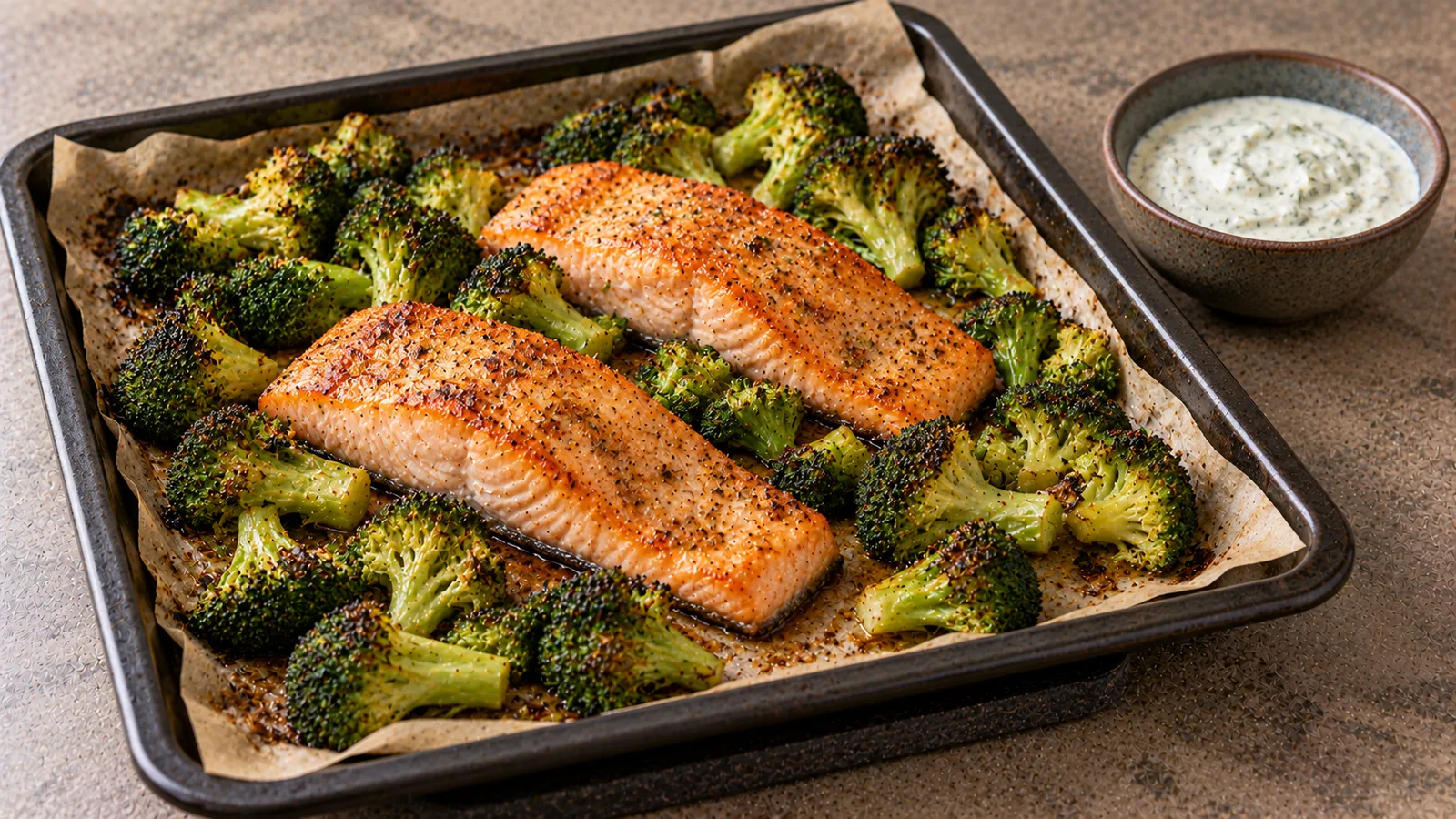
Salmon and broccoli can make a simple oven dinner, but the result depends on the details: the thickness of the fish, the moisture on the broccoli, the amount of oil, and when the cool yogurt sauce is added. This recipe is deliberately specific. It makes four portions from 480 g raw boneless salmon, 600 g trimmed broccoli, and a lemon-garlic yogurt sauce. It also shows how to log the meal when the ingredients lose water during cooking.
The nutritional figures below are a worked estimate, not a laboratory analysis or a guarantee for every salmon fillet. The salmon calculation uses the USDA profile for raw farmed Atlantic salmon, not wild salmon or an already cooked product. The broccoli and yogurt calculations use their own specified raw/plain reference states. Always substitute the figures on your actual packages when they differ.
Ingredients for four portions
- 480 g raw Atlantic salmon fillet, boneless, divided into four 120 g pieces; use skin-on or skinless but weigh the edible fish consistently.
- 600 g trimmed fresh broccoli florets and tender stalks, weighed before roasting.
- 20 g olive oil, measured on a scale; do not silently replace 20 g with 20 ml.
- 160 g plain unsweetened low-fat yogurt, kept refrigerated until serving.
- 40 g lemon juice, divided between the broccoli and the sauce.
- 10 g garlic, finely grated or minced.
- Black pepper, dried paprika and optional chopped herbs to taste; their small nutritional contributions are excluded from this teaching calculation.
- Salt to taste, measured separately if you track sodium. No nutritional or health claim assumes a salt-free recipe.
Use a large shallow baking tray and, if necessary, a second tray. Crowd the broccoli too tightly and its released moisture will steam the vegetables rather than brown their edges. A kitchen thermometer is more reliable than an exact minute count for the fish.
Reference nutrition per 100 g: the states matter
| Raw or plain ingredient | Energy | Protein | Fat | Carbohydrate | Fiber |
|---|---|---|---|---|---|
| Farmed Atlantic salmon, raw | 208 kcal | 20.42 g | 13.42 g | 0 g | 0 g |
| Broccoli, raw | 34 kcal | 2.82 g | 0.37 g | 6.64 g | 2.60 g |
| Plain low-fat yogurt | 63 kcal | 5.25 g | 1.55 g | 7.04 g | 0 g |
| Olive oil, model | 884 kcal | 0 g | 100 g | 0 g | 0 g |
| Lemon juice, model | 22 kcal | 0.35 g | 0.24 g | 6.90 g | 0.30 g |
| Garlic, raw, model | 149 kcal | 6.36 g | 0.50 g | 33.06 g | 2.10 g |
The salmon, broccoli and yogurt entries correspond to profiles in USDA FoodData Central for salmon, broccoli and plain yogurt. The oil, lemon and garlic values are ordinary food-composition modeling assumptions, not claims about a named retail package. The model is intentionally transparent so you can replace any row. Do not interpret the numbers as independently measured values for the finished dish.
Method: roast the broccoli first, add the salmon later
- Heat a conventional oven to 210°C (or 190°C fan). Line a shallow tray for easy cleanup. Arrange an oven rack with room for hot air to circulate.
- Dry the 600 g broccoli thoroughly after washing. Cut thick stems into smaller pieces, leaving florets a similar size. Toss the broccoli with 12 g of the oil, 20 g of lemon juice, a little paprika and pepper. Spread it in one layer.
- Roast the broccoli for about 12–15 minutes to get the surfaces drying and coloring. Timing is a starting point, not a food-safety standard. If the broccoli is releasing water, spread it farther apart instead of covering the tray.
- While it cooks, blot the salmon with kitchen paper, check for bones, and brush the four pieces with the remaining 8 g olive oil. Add pepper and a modest amount of salt if desired. Keep raw fish away from the yogurt and ready-to-eat ingredients.
- Move the broccoli aside or use a second tray. Add the salmon with space around each piece, then continue baking. Thickness, starting temperature and oven performance affect the time; begin checking after roughly 10 minutes rather than promising one universal baking time.
- Insert a clean food thermometer into the thickest part of the fish. For a conservative home food-safety target, bring the salmon to 63°C (145°F), consistent with the FDA's seafood handling guidance. Do not use browning of the vegetables to decide if the fish is safe.
- Stir the refrigerated yogurt with the remaining 20 g lemon juice and 10 g garlic in a clean bowl. Keep this sauce cold until serving; do not leave yogurt on the raw-fish preparation surface.
- Portion the salmon and broccoli onto four plates and divide the sauce equally. Each person gets the equivalent of 120 g raw salmon, 150 g raw broccoli and 40 g yogurt, plus their quarter of the oil, lemon and garlic.
A hot oven can produce tender fish and broccoli with browned tips, but it cannot compensate for oversized fillets or a tightly packed tray. If the broccoli becomes tender earlier, remove it and finish the salmon separately. Add cold sauce only after both are ready.
How the nutrition of each component is calculated
The formula is simple: ingredient mass ÷ 100 × nutrient value per 100 g. Multiply for every ingredient, add the contributions and divide by four. Do this with raw or package weights before cooking. It avoids confusing water loss with the disappearance of calories.
| Ingredient for the entire batch | Amount | Energy | Protein | Fiber |
|---|---|---|---|---|
| Raw Atlantic salmon | 480 g | 998.40 kcal | 98.02 g | 0 g |
| Raw broccoli | 600 g | 204.00 kcal | 16.92 g | 15.60 g |
| Plain low-fat yogurt | 160 g | 100.80 kcal | 8.40 g | 0 g |
| Olive oil | 20 g | 176.80 kcal | 0 g | 0 g |
| Lemon juice | 40 g | 8.80 kcal | 0.14 g | 0.12 g |
| Garlic | 10 g | 14.90 kcal | 0.64 g | 0.21 g |
| Total batch | 1,310 g before cooking | 1,503.70 kcal | 124.11 g | 15.93 g |
| One of four equal shares | ¼ batch | 375.93 kcal | 31.03 g | 3.98 g |
The modeled meal also has approximately 22.32 g fat and 14.29 g carbohydrate per quarter-batch portion. Energy need not equal exactly four times protein plus carbohydrate plus nine times fat: food composition tables and national calculation conventions include rounding and fiber-energy factors. The broccoli supplies essentially all of the dietary fiber; salmon and yogurt primarily contribute protein and fat or protein and dairy carbohydrate respectively.
Raw salmon weight versus cooked fish weight
A 120 g raw fillet does not necessarily weigh 120 g after baking. It can lose water and some fat during heating. If four raw 120 g fillets finish at, say, 400 g total cooked fish, that is an illustrative measured yield, not a promise. Under the simplifying assumption that all modeled nutrients are retained, the fish's 98.02 g batch protein divided by 400 g cooked fish would equal 24.50 g per 100 g cooked fish. The increase in concentration comes from the smaller denominator, not new protein.
That simplifying retention assumption is imperfect. Drippings may contain fat, juice and some soluble components; edible skin and trim also change what is actually eaten. If you discard oily liquid, do not pretend the lost fat was eaten. Conversely, do not remove all 20 g of added oil from your calorie log simply because the baking paper appears dry. For a tracking workflow, weigh the raw ingredients, record any substantial discarded portion and split the total among the people who actually eat the food.
If the finished tray weighs 1,110 g in a hypothetical kitchen test, logging 277.5 g as one quarter of the batch is consistent only when the food is well mixed or each plate receives its appropriate proportional components. A 277.5 g scoop made almost entirely of broccoli is not equivalent to one containing a full salmon fillet. For a mixed meal, portions should allocate protein foods, vegetables, oil and sauce rather than rely on finished weight alone. The distinction is expanded in Mealisa's portion size versus serving size guide.
Yogurt sauce: keep it cool and count it
The sauce is not optional in the stated nutrient total. Its 160 g yogurt, 20 g lemon juice and 10 g garlic contribute energy and protein as well as flavor. If you make an extra bowl, calculate it separately. Adding 100 g more of the selected yogurt reference would add 63 kcal and 5.25 g protein to the whole batch, or about 15.75 kcal and 1.31 g protein per serving if divided equally.
For a thicker sauce, choose strained plain yogurt and recheck the label; it may contain more protein per 100 g. For a dairy-free substitute, use an unsweetened product and its own verified label. Coconut-based yogurt can have a very different fat and protein profile; it is not nutritionally interchangeable merely because it is white and spoonable. Lemon and herbs add brightness without requiring a sugar-laden dressing. Chilled yogurt should remain cold while the fish cooks.
What if you add potatoes, rice or bread?
This recipe is a fish-and-vegetable meal, not a fixed carbohydrate target. A side of boiled potatoes, rice or bread increases the total energy and carbohydrate. Count the actual amount served, not the size of a generic side dish. For example, if the separate side has 150 kcal per person, the meal moves from about 376 to about 526 kcal per person before any extra butter or oil. This 150 kcal is a hypothetical add-on, not an assertion that every serving of potatoes contains that amount.
A small portion of potatoes works well for someone who wants a more substantial dinner. Mealisa also has a distinct salmon-and-potato tray-bake recipe; that is a separate meal with different ingredients and cooking sequence, not an interchangeable calorie listing. For help evaluating fish as an ingredient before toppings, see the salmon nutrition guide.
A realistic grocery-cost calculation
Ingredient-use cost is different from checkout cost. The prices here are an illustrative German supermarket scenario, not observed current offers or verified manufacturer prices. They are round assumptions to demonstrate the method. Real salmon and broccoli prices vary with season, origin, package and promotions.
| Ingredient | Assumed package and price | Amount used | Allocated cost |
|---|---|---|---|
| Salmon | 250 g for €4.50; buy 2 packs | 480 g | €8.64 |
| Broccoli | 500 g for €1.25; buy 2 packs | 600 g | €1.50 |
| Plain yogurt | 500 g for €1.39 | 160 g | €0.44 |
| Olive oil | 500 g for €4.00 | 20 g | €0.16 |
| Lemon juice / lemon | 100 g usable juice for €0.69 | 40 g | €0.28 |
| Garlic | 100 g for €0.99 | 10 g | €0.10 |
| Total ingredients used | Hypothetical prices | Four portions | €11.12 |
| Allocated cost per portion | €11.12 ÷ 4 | One plate | €2.78 |
Buying the whole hypothetical packs at once costs €18.57, not €11.12, and leaves usable ingredients. That difference matters when planning a shopping trip, but it should not be counted as additional food eaten in this recipe. If some leftovers spoil, their financial value becomes waste; if you use them later, their nutritional content belongs to the later meal. The same approach applies to a household budget grocery list.
Prices should not be used to imply that this recipe is necessarily cheaper than chicken, canned fish or a vegetarian dinner. It contains a relatively expensive fish ingredient; the point is to show a clear, reproducible cost per actual edible plate.
Food safety and leftovers
Keep uncooked salmon chilled, separate from ready-to-eat yogurt and herbs, and thaw frozen fish in the refrigerator rather than on the counter. The FDA seafood safety guidance gives selection, thawing and cooking advice. The 63°C target refers to the center of the fish. Wash utensils and hands after raw-fish contact, then use clean tools for the sauce. Do not put cooked salmon back on a plate that held raw fish.
Cool leftovers promptly in shallow containers. The USDA leftovers guidance describes a general refrigerator window of 3–4 days under appropriate storage and advises reheating leftovers to 74°C (165°F). For this fish recipe, a shorter personal quality window may be preferable because cooked salmon dries out and cold yogurt sauce is best stored separately. Do not repeatedly warm and cool the same tray. If leftovers sat out too long, discard them rather than relying on smell alone.
People with fish or milk allergies must avoid the relevant ingredients; sauce substitution does not make salmon safe for someone allergic to fish. For pregnancy and children, follow applicable local advice on choosing fish. Salmon appears among the FDA/EPA lower-mercury Best Choices, but variety, portion size and safe cooking still matter.
How to keep the fish moist and the broccoli crisp
Start with dry broccoli: surface moisture is the enemy of browning. Use enough space that florets contact hot air. Add fish later than vegetables because salmon needs less time than thick broccoli stalks. Check the thickest fish piece with a thermometer. A thinner tail piece may finish before a center-cut piece; remove finished pieces rather than overcook everything to match the largest fillet.
If the tray releases a lot of liquid, do not pour the liquid into the yogurt sauce without considering food safety and its fat content. If you prefer a slightly browned surface, briefly expose already safely cooked food to higher heat; watch continuously because hot oil can spit. Neither grill marks nor opaque color are as reliable as a measured safe internal temperature.
Avoid making the sauce hours ahead and keeping it warm next to the oven. Yogurt can separate when heated, especially with acid. The intended contrast is hot fish and broccoli with cool, tangy sauce. Herbs, chili flakes and lemon zest can change the taste without changing the fundamental structure of the recipe.
What the numbers can and cannot tell you
The calculated 375.93 kcal and 31.03 g protein per serving describe this precise modeled basket divided into four parts. Different salmon species, farmed versus wild production, skin, trimmed edible mass, yogurt fat level and added oil can materially alter the result. When the package gives a different 100 g value, use the package and redo the multiplication. A baked salmon label must not be substituted for the raw salmon entry unless the food state matches.
This recipe is not a promise of weight loss, a prescribed amount of omega-3 or a universal healthy-meal score. It is a practical method for cooking four portions and understanding where the nutrients and spending come from. When feeding more or fewer people, scale ingredient quantities directly, use enough tray space and still check the center temperature of each fish piece.
Sources
- USDA FoodData Central — raw farmed Atlantic salmon reference.
- USDA FoodData Central — raw broccoli reference.
- USDA FoodData Central — plain low-fat yogurt reference.
- FDA — selecting, storing and serving seafood safely.
- USDA Food Safety and Inspection Service — leftovers and food safety.
- FDA/EPA — advice about eating fish and species choices.