
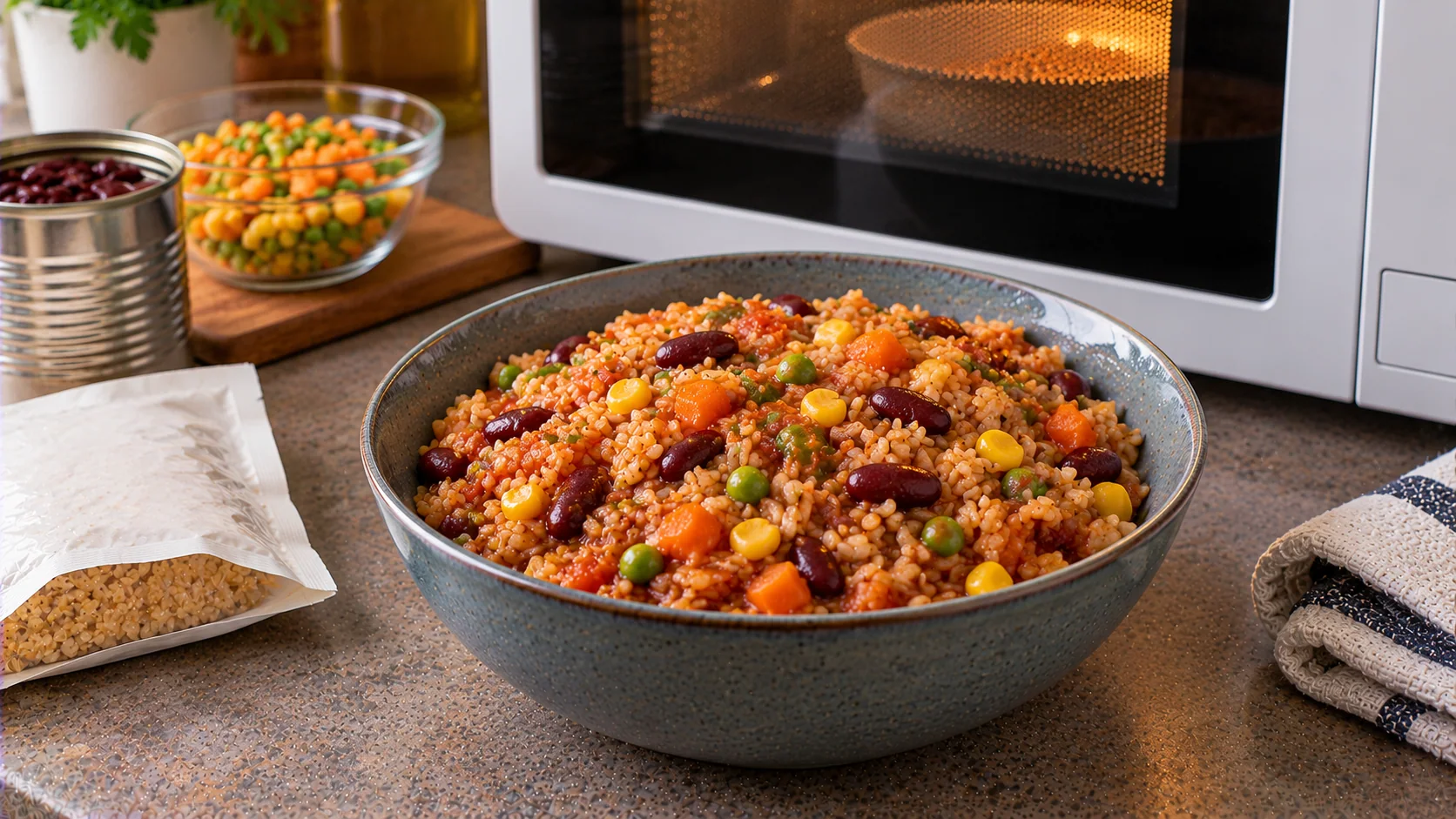
Budget Dinners for Students With Only a Microwave
What this five-dinner plan actually covers
A student with no hob or oven can still assemble satisfying dinners from beans, vegetables, ready-cooked grains and affordable staples. This plan is deliberately limited to five complete one-person dinners that use a microwave and microwave-safe utensils only. It is not a claim that every microwave can cook at the same speed.
Shopping list for one student
Buy one bag of frozen mixed vegetables (500 g), one bag frozen peas (300 g), one can chickpeas (240 g drained), one can kidney beans (240 g drained), one can black beans (240 g drained), one small can sweetcorn (160 g drained), one can ready-cooked lentils (240 g drained), two cans chopped tomatoes (about 400 g each), one 500 g bag potatoes, a 250 g instant couscous pack, one 250 g microwave rice pouch, wholegrain tortillas, plain yogurt, one egg, carrot, bell pepper, wholegrain bread, a little cheese, olive oil and lemon. Quantities are purchase sizes, not necessarily all consumed by these five meals.
Price assumptions and the full basket
For a planning example, assign grocery-pack prices rather than pretending this is a live German supermarket basket. Sample pack prices in euros: vegetables 1.59; peas 1.19; chickpeas 0.89; kidney beans 0.89; black beans 1.09; corn 0.79; lentils 1.19; tomatoes (two cans) 1.58; potatoes 1.29; couscous 0.99; rice pouch 1.49; tortillas 1.59; yogurt 0.99; six eggs 1.79; carrots 0.89; pepper 0.89; bread 1.39; cheese 1.49; oil and lemon allocated pantry allowance 1.00. The check-out total is not the same as the sum of ingredients consumed.
Five complete microwave-only dinners
The following dinners are based on fully cooked canned legumes, microwave-ready rice and instant couscous. Do not substitute dried beans or ordinary uncooked rice in the same timed method. Dried beans need an entirely different verified cooking process.
Bean and couscous bowl
1 portion; 10 minutes. Ingredients: 50 g dry instant couscous; 85 ml boiling water from a microwave-safe jug; 120 g drained canned chickpeas; 100 g frozen mixed vegetables; 5 g olive oil; lemon juice.
Method: Microwave the water in a heatproof jug until boiling; take care of steam. Pour over couscous in a covered bowl and stand for 5 minutes. In another covered vented bowl, heat frozen vegetables with 15 ml water for 3–5 minutes at 800 W, stirring halfway; continue until thoroughly hot. Stir in chickpeas and heat another 1–2 minutes, stirring. Let stand, combine with couscous, oil and lemon.
Illustrative ingredient cost: €1.33.
Jacket potato with beans and yogurt
1 portion; 12–18 minutes. Ingredients: 250 g potato; 120 g drained canned kidney beans; 80 g plain yogurt; 50 g shredded carrot; 5 g olive oil.
Method: Scrub potato and pierce the skin several times. Cook on a microwave-safe plate at 800 W for 5 minutes, turn over and continue in 2-minute intervals until soft all the way through; rest 2 minutes. In a separate vented bowl heat beans with a spoonful of water until steaming hot, stirring midway. Split potato and fill with beans, carrot, yogurt and oil. Do not microwave yogurt.
Illustrative ingredient cost: €1.43.
Rice, peas and egg mug bowl
1 portion; 8–11 minutes. Ingredients: 125 g ready-cooked microwave rice; 100 g frozen peas; 1 egg; 20 ml water; 5 g oil; 10 g grated cheese.
Method: In a deep microwave-safe bowl heat peas with water for 2–4 minutes at 800 W, stir and heat until thoroughly hot. Warm rice following its packet instructions. In a separate greased wide mug beat the egg; microwave at 50–70% power in short 20–30-second bursts, stirring each time, until completely set. Never microwave an intact egg in its shell. Mix cooked egg with rice and peas, add cheese, rest and check evenly hot.
Illustrative ingredient cost: €1.69.
Tomato lentil and spinach soup
1 portion; 9–12 minutes. Ingredients: 150 g drained ready-to-eat canned lentils; 150 g canned chopped tomatoes; 80 g frozen spinach; 100 ml water; 5 g olive oil; 25 g wholegrain bread.
Method: Combine lentils, tomatoes, spinach and water in a deep microwave-safe bowl that has space to bubble. Cover loosely with a vented lid; microwave at 800 W for 3 minutes, stir thoroughly and repeat in 1–2-minute intervals until bubbling and fully hot. Allow standing time, then add oil; eat with bread. Use canned lentils already cooked, not dry lentils.
Illustrative ingredient cost: €1.42.
Sweetcorn, black bean and tortilla plate
1 portion; 7–10 minutes. Ingredients: 120 g drained canned black beans; 80 g drained canned sweetcorn; 70 g chopped fresh bell pepper; 1 wholegrain tortilla (60 g); 40 g plain yogurt; 5 g olive oil.
Method: Place beans, sweetcorn and pepper in a covered vented microwave-safe bowl with 10 ml water. Microwave at 800 W for 2 minutes, stir and continue in 1-minute intervals until thoroughly hot. Warm tortilla separately for 15–25 seconds on a microwave-safe plate; fill with beans and vegetables. Add cold yogurt and oil after heating, fold and serve immediately.
Illustrative ingredient cost: €1.65.
Comparing portions, convenience and cost
| Dinner | Active + microwave time | Estimated ingredients used |
|---|---|---|
| Couscous with chickpeas | 10 min | €1.33 |
| Potato with kidney beans | 12–18 min | €1.43 |
| Rice, peas and egg | 8–11 min | €1.69 |
| Lentil and spinach soup | 9–12 min | €1.42 |
| Black bean tortilla | 7–10 min | €1.65 |
Microwave wattage and standing time
Power ratings describe output capacity, not a promise of identical cooking time. The examples assume approximately 800 W. At 600 W, begin with a longer interval, stir and continue in short steps; at 1000 W, start shorter. Heating depends on food shape, portion and starting temperature. Wait briefly after heating: standing time allows heat to distribute, but it is not a substitute for thorough cooking. USDA FSIS microwave guidance advises stirring, rotating and respecting standing time.
Containers and steam safety
Use only containers explicitly labeled microwave-safe, with adequate headroom for boiling. Vent lids: never seal a container tightly when heating. Do not place metal foil, ordinary metal pans, non-microwave plastic packaging or intact eggs in their shells inside. Avoid lifting lids toward your face; trapped steam burns. When checking temperatures, use a food thermometer after removing food from the oven.
Food safety, storage and reheating
Refrigerate perishable cooked food promptly in shallow containers; do not leave it at room temperature for more than two hours. USDA generally advises using refrigerated cooked leftovers within three to four days; heat leftovers throughout to 74°C (165°F). When reheating, cover, vent, stir and allow standing time. USDA leftovers guidance explains the distinctions between initial cooking and reheating. Rice pouches must follow their own label storage directions once opened.
Simple substitutions that keep the meals complete
Use frozen broccoli instead of mixed vegetables, canned white beans instead of kidney beans, or a wholegrain wrap instead of bread where appropriate. Always adjust timing for the actual mass. If you omit beans, egg or dairy, replace the lost protein source rather than calling a bowl of plain vegetables and rice a complete dinner. Compare the ingredient list with your allergies and intolerances.
Making this work in a shared kitchen
In shared accommodation, mark opened refrigerated products with a date, keep cold food cold during transport and check that the communal fridge works. Buy smaller packs if lack of refrigerator space makes oversized packs wasteful. If you only have a microwave and no refrigerator, use unopened shelf-stable packs immediately before eating and do not save cooked leftovers at room temperature.
How to avoid misleading price comparisons
The eight or nine euros represented by the five used-ingredient estimates is not a complete shopping receipt. You may have to buy the whole bag of rice, egg carton or yogurt tub; some items carry into later meals. Compare two figures: the cash paid today and the cost of food actually consumed. Local offers change and illustrative figures are not verified retail quotes.
What to do next
To extend this plan, use a practical low-cost lunch planning guide for portable lunches and more low-cost dinners without an oven for simple budget meal ideas. Choose recipes based on the equipment you actually possess, and verify the container and packet instructions before heating.
Sources
- USDA FSIS — Cooking with Microwave Ovens — containers, stirring, standing time and internal temperature.
- USDA FSIS — Leftovers and Food Safety — cooling, storage and reheating.