
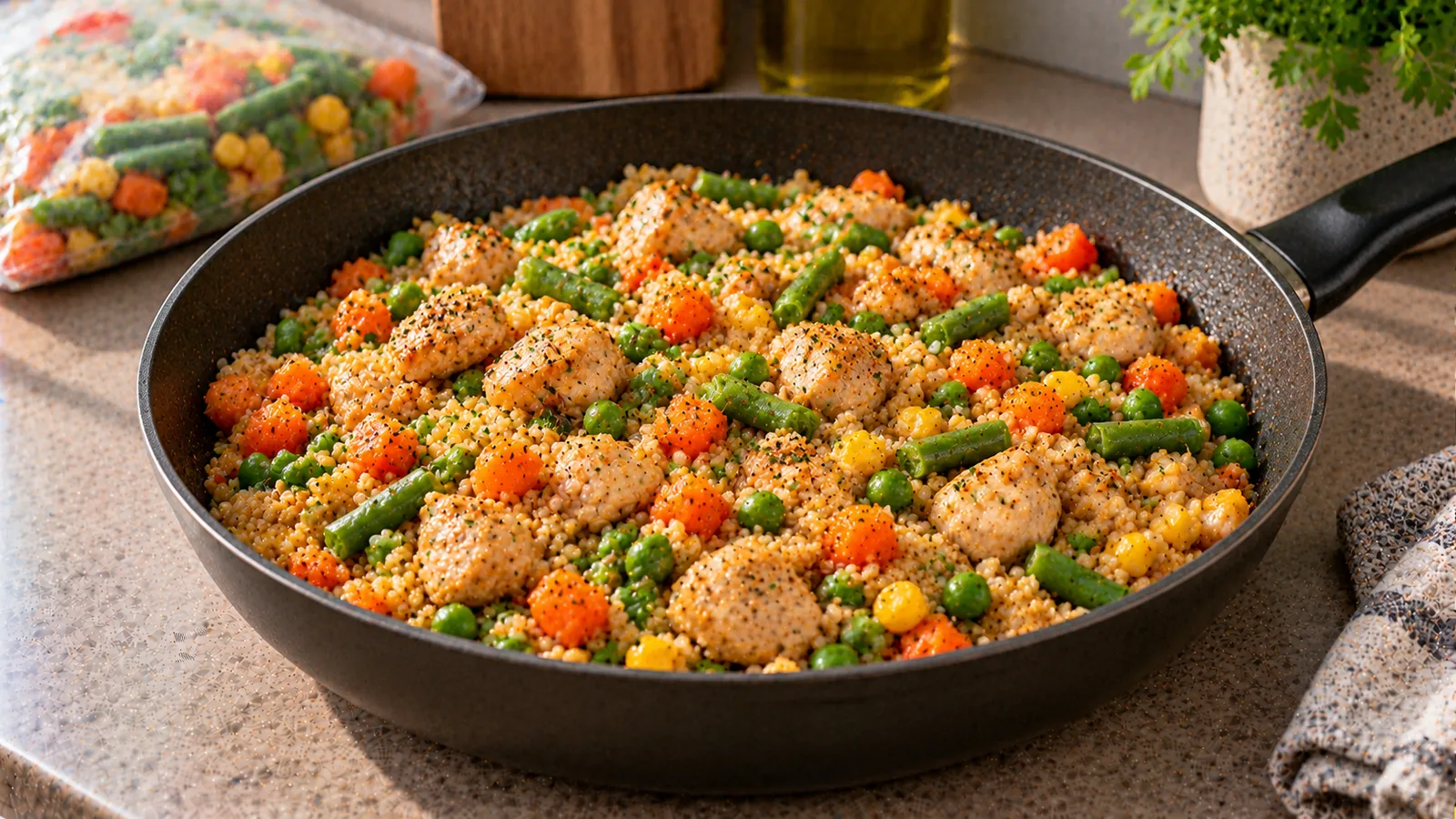
One bag of plain frozen mixed vegetables can contribute to five different dinners for two people without turning dinner into the same stir-fry every evening. The trick is to portion the vegetables while still frozen, change the grain or main protein, and buy other ingredients that can be used across the week. This five-day plan uses one 1 kg bag, 200 g per evening, with pasta, couscous, rice, potatoes, lentils, chickpeas, kidney beans, eggs and tofu. Each recipe serves two adults; adjust portions to appetite rather than treating them as a prescribed diet.
The sample grocery basket costs €22.98 when buying full packages at the illustrative German prices below. The ingredients actually consumed by these five dinners cost about €10.31 in the same example, or €1.03 per dinner serving across ten servings. These are planning assumptions, not verified current prices from a particular supermarket. The difference is important: you have leftover rice, pasta, lentils and other groceries after dinner five; you cannot usually purchase only the fractional amount costed to a recipe.
The five-night menu at a glance
The vegetable bag is a plain, unseasoned mixed blend, such as carrots, peas, green beans and sweetcorn. Check the actual ingredients and cooking instructions. Some mixes contain a sauce, butter or seasoning and therefore have different nutrition and pricing. The 200 g is the frozen weight removed from the bag, not an assertion about the final water-rich weight in the pan. The table gives exact quantities for two people together, never per person.
| Day | Dinner (two portions) | Frozen vegetables | Allocated cost, two | Per serving |
|---|---|---|---|---|
| Monday | Tomato lentil wholegrain pasta | 200 g | 1.61 € | 0.81 € |
| Tuesday | Chickpea-vegetable couscous | 200 g | 1.72 € | 0.86 € |
| Wednesday | Egg and vegetable fried rice | 200 g | 1.82 € | 0.91 € |
| Thursday | Paprika potatoes and kidney beans | 200 g | 2.21 € | 1.10 € |
| Friday | Tofu-tomato rice bowls | 200 g | 2.96 € | 1.48 € |
The variety comes from the main ingredients and cooking technique: tomato-based pasta on Monday, bright couscous on Tuesday, pan-fried rice on Wednesday, a crisp potato skillet on Thursday and a tofu-tomato bowl on Friday. Using the same vegetables does not make the meals nutritionally interchangeable. Legumes, eggs and tofu change the protein contribution; bread, fruit, dairy or a side salad can be added if the portion does not suit your needs.
One consolidated shopping list, not five separate lists
Here is the complete purchase plan. Prices are deliberately transparent hypothetical German grocery prices, not a catalogue of live retailer offers. We calculate what a full package costs, how much the five dinners use, and the proportional ingredient cost. For example, a 500 g pasta package costs €0.99 but the first dinner only uses 140 g; its cost allocation is €0.28, although the cashier still charges €0.99.
| Product | Buy a package | Price / package | Used in 5 dinners | Allocated cost |
|---|---|---|---|---|
| Plain frozen mixed vegetables | 1,000 g | 2.29 € | 1,000 g | 2.29 € |
| Wholegrain pasta, dry | 500 g | 0.99 € | 140 g | 0.28 € |
| Red lentils, dry | 500 g | 1.69 € | 120 g | 0.41 € |
| Tomato passata | 500 g | 0.89 € | 500 g | 0.89 € |
| Vegetable oil | 1,000 ml | 2.49 € | 50 ml | 0.12 € |
| Couscous, dry | 500 g | 1.49 € | 130 g | 0.39 € |
| Chickpeas, drained | 240 g | 0.85 € | 240 g | 0.85 € |
| Rice, dry | 1,000 g | 1.99 € | 260 g | 0.52 € |
| Eggs (count) | 6 pcs | 1.79 € | 3 pcs | 0.90 € |
| Soy sauce | 150 ml | 1.59 € | 15 ml | 0.16 € |
| Potatoes | 2,000 g | 2.79 € | 500 g | 0.70 € |
| Kidney beans, drained | 240 g | 0.85 € | 240 g | 0.85 € |
| Onions | 1,000 g | 1.49 € | 120 g | 0.18 € |
| Plain firm tofu | 200 g | 1.79 € | 200 g | 1.79 € |
| Total | — | 22.98 € | — | 10.31 € |
The totals are €22.98 to buy the packages and €10.31 of ingredients used. Individual meal and product amounts shown to two decimals may add to a cent or two more because the overall total is calculated before rounding. The estimated value remaining from the same purchase prices is €12.67, assuming the unused products stay usable. You should not interpret that remainder as cash refunded by the store or as a guaranteed saving. Pantry salt, pepper, dry herbs, garlic powder and water are not priced; any extras, electricity and shopping travel also lie outside this example.
All tinned beans in this plan are sold with liquid but counted by their drained edible weight of 240 g. If the label shows another drained weight, recalculate. Rice, pasta, lentils and couscous are weighed dry. Potatoes and onions are purchase weights before peeling; a small amount of trimming may reduce the amount served. Our explanation of portion size and serving size helps when the packaging presents a serving different from the quantity used here.
Monday: tomato-red-lentil wholegrain pasta
For two: 140 g dry wholegrain pasta; 120 g dry red lentils; 200 g frozen vegetables; 250 g passata; 10 ml vegetable oil; water and dry seasoning. Allocate about €1.61 for the entire two-person dinner under the basket model, or about €0.81 each. This price does not include optional cheese, which would add both cost and nutrition.
- Simmer the rinsed red lentils with enough fresh water for the package's recommended time, often around 10–15 minutes, until fully soft. These are split red lentils, not uncooked kidney beans; cooking times depend on the exact product.
- Boil the pasta in a separate pot. Keep a little cooking water for the sauce and drain the rest.
- Heat the oil in a wide pan, add the 200 g frozen vegetables directly from frozen and cook as directed on the packet until thoroughly hot and cooked. Stir in the passata, lentils and dried seasonings; simmer until the vegetables and sauce are evenly hot.
- Fold in the pasta. Divide into two bowls rather than estimating a serving from the original dry weights.
Lentils thicken the sauce so the dish does not depend on a costly meat substitute. The 250 g of passata is half the planned 500 g carton; refrigerate the other half immediately and use it on Friday only if its label permits that storage time. More conservatively, freeze Friday's 250 g portion promptly in a clean container and thaw it safely in the refrigerator before use.
Tuesday: chickpea and vegetable couscous bowls
For two: 130 g dry couscous; 240 g drained canned chickpeas; 200 g frozen vegetables; 10 ml oil; water, lemon if already on hand, paprika or dried herbs. Allocated cost: €1.72 for two, about €0.86 per person. Optional lemon is excluded from the budget; leave it out rather than treating it as a free ingredient purchased for this recipe.
Bring the amount of water specified on the couscous packet to a boil, pour it over the couscous and cover until hydrated. Cook the vegetables separately in the oil with a spoonful of water as needed, following the frozen packet's cooking guidance. Drain the chickpeas and rinse them if desired. Add the chickpeas to the hot pan until steaming throughout, mix with the vegetables and season. Fluff the couscous and divide between two bowls, topping it with the chickpea mixture.
A couscous bowl offers a different texture from Monday's pasta, even though the vegetable bag is unchanged. Check whether your couscous contains wheat and whether the chickpeas have added salt. If you prefer a cold lunch the next day, prepare a separate refrigerated portion rather than assuming this recipe automatically feeds four. The 130 g couscous and 240 g chickpeas here are for the stated two servings only.
Wednesday: egg-and-vegetable fried rice
For two: 140 g dry rice; three eggs; 200 g frozen vegetables; 10 ml oil; 15 ml soy sauce. Model cost: €1.82 for the pan, approximately €0.91 each. The rice quantity is part of the 260 g dry rice across Wednesday and Friday; do not buy and count 260 g twice.
Cook the rice according to its packaging. The simplest method is to make this meal with freshly cooked rice and cool any unused extra promptly; do not leave a pot of rice overnight on the hob. Heat oil in a wide pan and thoroughly cook the frozen vegetables. Push them aside, add the beaten eggs and stir until completely set. Add hot drained rice and soy sauce; toss everything together until the meal is steaming hot. Divide the pan into two servings.
Soy sauce is a flavour ingredient rather than a major protein source, and its salt content can be substantial. Check the product label and adjust the quantity if needed. Rice and eggs make this dinner different from the legume-heavy earlier meals. If using leftover rice instead, follow a strict cooling and refrigeration routine, and reheat thoroughly; never use unrefrigerated overnight rice.
Thursday: paprika potatoes with warm kidney beans
For two: 500 g potatoes; one can with 240 g drained kidney beans; 200 g frozen vegetables; 120 g onion; 10 ml oil; paprika and herbs from the pantry. Ingredient cost: €2.21 for both people, roughly €1.10 each. The potato figure is the raw purchase weight, not the roasted final weight.
Cut the washed potatoes into small, even pieces and cook until tender, either by boiling and draining or by roasting on an oiled tray. Slice the onion. Heat the oil in a wide frying pan, soften the onion, then add potatoes and paprika. Cook the frozen vegetables thoroughly according to their package instructions; combine them with the pan. Drain the canned kidney beans and heat them all the way through before serving. Split the finished dish into two plates.
The beans here are commercially canned and already heat-treated. They are not a substitute for undercooked dry kidney beans, which require a distinct safe boiling process. If a can has a different drained yield, the costs and portions will change. A pinch of smoked paprika makes this a savoury skillet rather than another tomato pasta, without changing the core shopping list.
Friday: tofu and tomato vegetable rice bowls
For two: 200 g plain tofu; 120 g dry rice; 200 g frozen vegetables; 250 g passata; 10 ml oil; seasoning. Model cost: €2.96 for the dinner, or €1.48 per serving. It is the most expensive meal in this particular model because it uses the full €1.79 tofu pack, not because tofu always costs more than every alternative.
Cook the rice as directed. Pat the tofu dry and cut it into cubes. Heat oil in a pan and brown the tofu on several sides. Add the frozen vegetables and cook until fully done, following the package directions; pour in the thawed or safely refrigerated passata and simmer until the sauce is hot throughout. Season and serve with the rice. If using a flavoured tofu product, check whether it includes extra sugar, salt or oil.
For a more substantial bowl, divide the rice and tofu in proportion to appetite, or pair the dish with vegetables already in your kitchen. The recipe does not secretly rely on an extra tomato, salad bag or sauce bottle. If you add those, record their purchase cost as well.
How the five dinners use the same bag without wasting it
A 1,000 g frozen bag divided into five × 200 g leaves zero grams of that frozen blend in the model. Separate the first 200 g directly into the cooking pan, close the package securely and return the remainder to the freezer immediately. Repeat for each meal. This is preferable to thawing the full kilogram on Monday and repeatedly holding it in the refrigerator for days.
A plain vegetable blend is a useful shortcut, but it is not necessarily ready-to-eat: the UK Food Standards Agency explains that frozen peas, sweetcorn and carrots can carry bacteria and that vegetables requiring cooking on the package must be thoroughly cooked before eating. Refer to the official frozen-vegetable cooking advice. Do not place frozen raw vegetables directly into a cold couscous salad just because they look precooked.
The German Federal Centre for Nutrition likewise notes that plain frozen vegetable mixtures without sauce can make everyday cooking easier. Our ingredient amounts are a practical illustration, not an official five-day meal plan. If the blend is mostly peas and sweetcorn, its carbohydrate and protein content differs from a carrot-and-green-bean mix; read your actual label rather than inventing a universal nutrient total.
Buying and using the rest of the basket
The €12.67 remaining ingredient value is tied up in unused packages: for example, about 360 g pasta, 380 g red lentils, 370 g couscous, 740 g dry rice, three eggs, potatoes, onions, oil and soy sauce remain. These should inform the next shopping week, not be counted as food wasted automatically. Check the product's storage instructions, best-before date and actual kitchen conditions.
You can build another week's meals around the leftover staples. Our budget grocery-list guide gives a general method for shopping with ingredients you already have, while the guide to meals from leftovers addresses how to repurpose cooked and unopened items. The weekly dinner-planning guide covers scheduling more broadly; this page has the narrower job of turning one specific frozen bag into five measured dinners for two.
If one partner eats a larger portion, splitting a dish equally is not mandatory. But if you change from two portions to three, divide that day's total cost by three rather than retaining the per-serving values above. Prices are not nutrition facts, and nutrition is not determined by an ingredient's price. These five dinners provide variety and useful sources of carbohydrate, vegetables and protein foods, but they are not a complete daily diet or personalised medical guidance.
Food safety and what to prepare ahead
Follow the frozen vegetable package, use clean utensils and keep the remaining bag frozen. If cooking enough for another day, move food into shallow containers, refrigerate promptly and check local guidance about how long it can be stored. The BZfE's home food-hygiene advice gives approximately two days for correctly cooled and packed cooked meals. That is a conservative planning rule, not an extension of a specific product's stated use-by date. Handle cooked rice especially carefully by cooling rapidly and refrigerating, rather than leaving it at room temperature.
For this menu, cooking each evening avoids a complicated batch-storage promise. Prepare seasoning and portion dry ingredients ahead if that saves time, but keep the frozen vegetable bag sealed in the freezer until a meal is ready to cook. The German consumer-centre weekly-planning guidance supports making a meal plan and shopping list before buying, which is exactly the purpose of the basket above.
How to adapt this plan: choose a plain frozen vegetable mixture you actually like; verify the packet's required cooking method; buy the packages you need; use 200 g from the same bag at each dinner; and write down the actual receipt and portion weights. Replace the hypothetical German prices with your receipts for a genuine household budget. The measured recipe quantities and single-bag constraint make the plan reproducible without claiming that every supermarket, family or frozen-vegetable blend is the same.