
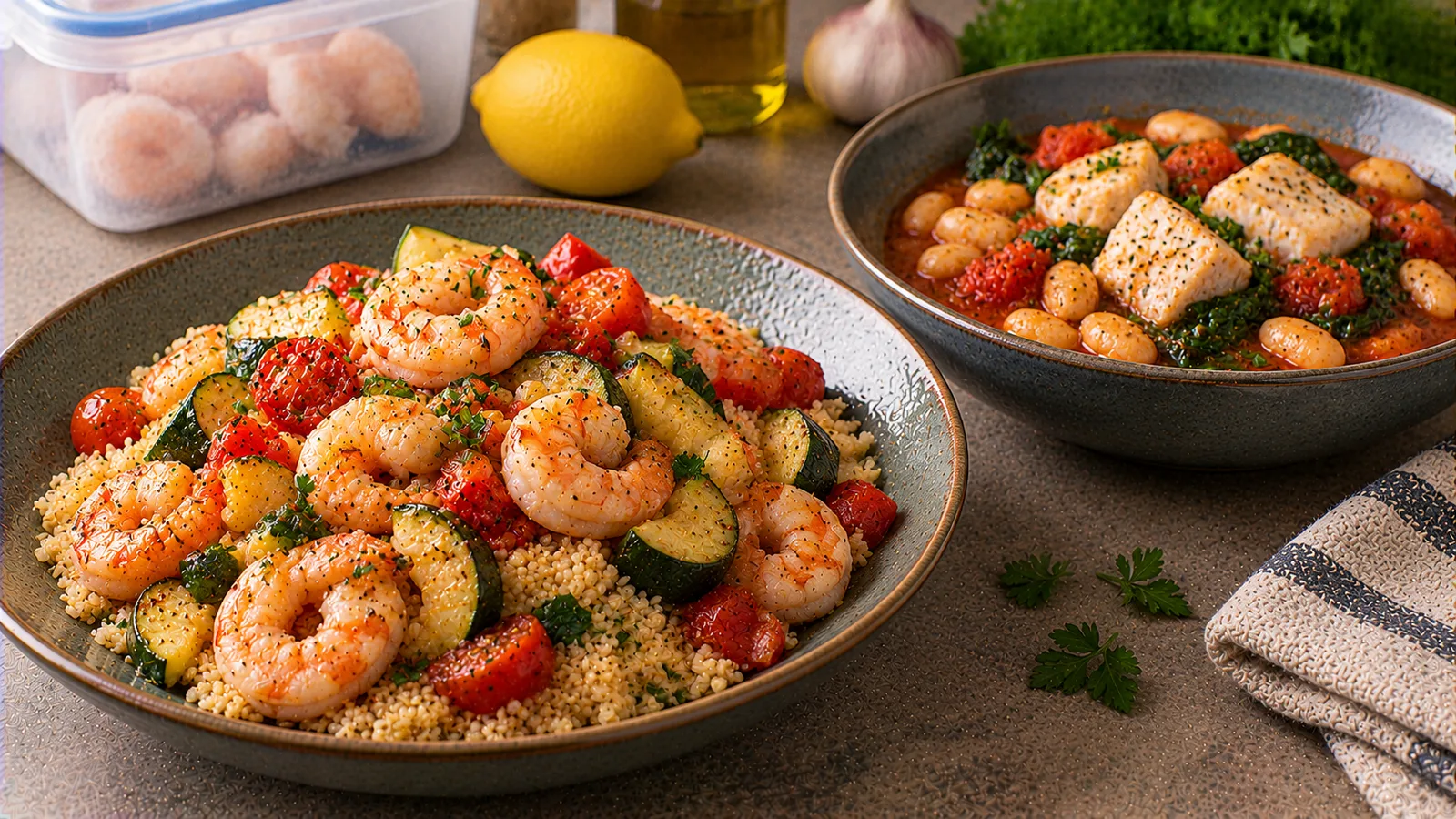
Frozen seafood is convenient when you want a Mediterranean-style dinner without buying fresh fish that must be cooked immediately. The tricky part is the phrase “15-minute dinner.” A hard-frozen salmon fillet, an icy block of prawns and a bag of already cooked mussel meat do not have the same cooking time. These five recipes each serve one adult and aim for about 15 minutes of active cooking plus short simultaneous tasks, but only when the seafood is safely thawed first, portions are thin or small enough and other ingredients are ready. Thawing overnight is advance preparation, not part of the 15-minute clock.
This is a choice of five alternative dinners, not advice to eat seafood five evenings each week. Germany's DGE suggests fish once or twice per week as part of a varied eating pattern, preferably from sustainable sources (DGE). Mix the options with vegetable-, legume- and egg-based dinners. For seafood handling, the FDA's frozen-seafood guidance takes priority over any optimistic recipe timer.
Before you start the 15-minute timer
The seafood must be ready for the pan. Defrost the day's portion in a covered container in the refrigerator, commonly overnight; thick portions may take longer. Alternatively, thaw sealed seafood in cold water and cook immediately. Never thaw it on the countertop, in warm water or next to a radiator. Pre-cooked frozen seafood is not automatically ready to eat cold: look at the package for whether it needs cooking or reheating. The fish and shellfish in these recipes start thawed, not rock hard. If the label specifically gives a short cook-from-frozen method, follow that method instead of our thawed timing.
Have the kettle boiled for couscous or fast-cooking bulgur; use a saucepan already at a rolling boil for orzo. Cut vegetables while water heats. A shallow non-stick pan is preferable to a crowded saucepan: overcrowding steams seafood and delays the finish. The 15 minutes begin when you turn on the heat with ingredients ready, not when you start defrosting, chopping a whole box of vegetables or finding your pan. Times are planning estimates, not safety tests. Use the thicker end of the stated ranges and extend cooking if necessary.
Five dinners at a glance
| Dinner, one serving | Frozen seafood to thaw | Main starch or pulse | Other measured vegetables | Pan-to-plate target |
|---|---|---|---|---|
| 1. Lemon-garlic prawn couscous | 150 g raw peeled prawns | 65 g dry quick couscous | 130 g tomatoes + 80 g spinach | About 12–15 min |
| 2. Hake and chickpea tomato skillet | 150 g raw thin hake fillet | 120 g drained chickpeas | 100 g pepper + 160 g passata | About 13–15 min if thin |
| 3. Mussel-and-spinach orzo | 160 g fully cooked mussel meat | 65 g dry quick-cooking orzo | 90 g spinach + 100 g tomatoes | About 13–15 min |
| 4. Lemon salmon with bulgur salad | 130 g raw thin salmon fillet | 60 g dry quick bulgur | 100 g cucumber + 120 g tomatoes | About 13–15 min if thin |
| 5. Squid and white-bean pepper pan | 150 g raw thin squid rings | 140 g drained white beans + 70 g bread | 100 g jarred peppers + 100 g tomatoes | About 10–15 min |
Weights for raw fish, prawns and squid mean the thawed, edible, drained weight before cooking. The mussels are already cooked and shelled. Canned bean weights are after draining; orzo, couscous and bulgur are dry weights. Each dinner also uses 10 ml olive oil (50 ml total across all five), herbs and either lemon or garlic as specified. The vegetable quantities are for one dinner, not a batch to divide five ways. No calorie, protein or cost numbers are fabricated: those depend on the actual packet and brand.
1. Lemon-garlic prawn couscous
Ingredients, one dinner: 150 g raw peeled thawed prawns; 65 g dry instant couscous; 130 g cherry tomatoes, halved; 80 g washed baby spinach; 10 ml olive oil; 1 small minced garlic clove; 20 ml lemon juice; 90 ml boiling water (or the precise amount on the couscous packet); black pepper and parsley. Use a pan and a heatproof bowl.
Minute-by-minute: At 0:00 pour boiling water over the couscous, cover and follow the packet's usual 5-minute stand. From 0:00–2:00 heat the oil with garlic very briefly and add the tomatoes; soften them while the grain absorbs water. At 2:00 add the 150 g prawns in one layer. Turn and cook for roughly 4–6 minutes depending on size, stirring the tomatoes; the prawns must become firm and pearly opaque throughout. At roughly 8:00 wilt in the spinach and add the lemon juice. Fluff the couscous, check the seafood is completely cooked and fold everything together by about 12:00–15:00. If prawns are large or still partly frozen, extend the time rather than serving translucent centres.
This is not only a prawn-and-tomato garnish: the measured couscous gives a starchy base and the spinach adds vegetables. Optional olives add a briny note, but check salt because prepared prawns can already contain it. Do not keep raw prawn drips near the salad ingredients. Swap couscous for similarly fast pre-cooked grains only if you follow the actual product instructions; raw dry brown rice will not cook in this timeframe.
2. Hake and chickpea tomato skillet
Ingredients: 150 g thawed, boneless raw hake in one thin piece (about 1–1.5 cm thick); 120 g drained, rinsed chickpeas; 160 g plain tomato passata; 100 g thinly sliced bell pepper; 10 ml olive oil; 1 minced garlic clove; dried oregano, sweet paprika and a squeeze of lemon. The fish can be another comparable thin white-fish fillet, but check its label and thickness.
Minute-by-minute: Heat oil and pepper from 0:00–3:00, add garlic and paprika for the last 20 seconds. Stir in passata and drained chickpeas; bring to a clear simmer around 3:00–5:00. Nestle the fish into the hot sauce and cover for approximately 6–9 further minutes, depending on thickness. At 11:00–14:00 test the thickest centre: most raw seafood, including finfish, needs 63 °C (145 °F), or another validated method permitted by its label. If the thermometer does not read 63 °C, keep cooking; it may run beyond 15 minutes. Finish with oregano and lemon. Spoon the chickpeas, sauce and fish into a deep plate.
The 120 g chickpeas make this an actual dinner without adding a second pot of rice. A 200 g raw frozen fish block cooked straight from frozen will not reliably match this timetable. Thin thawed fillets are essential. If it looks crowded, split the fillet into two smaller pieces before cooking and verify both are hot and safely cooked. The acidic tomato sauce suits white fish; if you prefer fewer pulses, reduce the chickpeas, but the nutritional and portion profile then changes.
3. Mussel-and-spinach orzo with tomatoes
Ingredients: 160 g fully cooked, shelled, safely thawed mussel meat with no shells; 65 g dry quick-cooking orzo labelled 8–10 minutes; 90 g spinach; 100 g chopped tomatoes; 10 ml olive oil; 1 small garlic clove; 20 ml lemon juice; parsley and pepper. Check for shell fragments even when the product is sold shelled. Follow the mussel packet's exact reheating instructions.
Minute-by-minute: At 0:00 put the orzo into fast-boiling water and set the timer to the package's 8–10 minutes. Meanwhile heat olive oil, garlic and tomatoes in a second small pan for 3 minutes, then wilt the spinach for 1–2 minutes. When the orzo is almost ready, add the already cooked mussel meat and heat thoroughly following its label. For reheated leftovers, the FDA gives 74 °C (165 °F); a commercial prepared product's directions must also be respected. Combine with drained orzo and lemon, then serve promptly. If orzo needs 12–14 minutes or mussels need prolonged heating according to their packet, do not claim a 15-minute result.
Why pre-cooked mussels? Live or raw shell-on mussels require separate sorting, cleaning and verified cooking, and are not interchangeable with a conveniently thawed cooked product. Never use damaged shellfish or an off-smelling pack. The spinach can be frozen only if it was heated completely beforehand; dropping a large frozen spinach block into a 15-minute pan can ruin both timing and temperature. This version uses fresh baby spinach alongside the purchased frozen seafood.
4. Lemon salmon with quick bulgur salad
Ingredients: 130 g thawed, skinless thin raw salmon fillet, ideally about 1 cm thick; 60 g dry quick-cooking fine bulgur; 100 g diced cucumber; 120 g diced tomato; 10 ml olive oil; 20 ml lemon juice; dill or parsley and black pepper. Use the amount of boiling water and standing time printed on your particular bulgur product, selecting a 5–10-minute type.
Minute-by-minute: Start bulgur with boiling water at 0:00 and cover it. Heat a non-stick pan with the olive oil and place the salmon in it at 1:00–2:00. Cook gently, turning once if practical. A thin piece may take around 7–10 minutes; verify 63 °C in its thickest part, and continue if below the safe mark. While it cooks, mix cucumber, tomato, lemon and herbs separately. Fluff the bulgur, plate it with the vegetables and add the fully cooked salmon. A thick salmon steak, large whole-grain bulgur or still-frozen centre takes longer.
Serve the cucumber salad away from any surface that touched raw fish. For a different Mediterranean profile, replace dill with parsley and a pinch of oregano, but keep the oil and lemon measured if tracking energy intake. Salmon may be higher in fat than white fish; it is not sensible to copy a generic calorie figure across products without their nutrient labels or a consistent nutrient database.
5. Squid and white-bean pepper pan with toast
Ingredients: 150 g safely thawed raw thin squid rings, drained and patted dry; 140 g drained rinsed cannellini beans; 100 g drained roasted red peppers from a jar, sliced; 100 g diced tomatoes; 70 g wholegrain bread; 10 ml olive oil; 1 small garlic clove; parsley, lemon and pepper. Check whether the frozen squid has been pre-cooked or seasoned; the method below assumes raw rings and no added coating.
Minute-by-minute: Toast the 70 g bread. Heat oil in a wide pan; soften chopped tomatoes and garlic for about 2 minutes, then add beans and jarred peppers for 2 minutes until hot. Move them aside or briefly remove them. Spread the 150 g squid in a single layer and cook quickly, approximately 2–4 minutes depending on ring thickness, turning until fully opaque and safely cooked; for raw seafood use 63 °C where measurable, plus the package method. Add back the beans and peppers, heat together briefly, finish with lemon and parsley and serve immediately with toast. A very watery pan will steam instead of sear, and thick unthawed rings will not meet the fast timetable.
Beans add fibre and make this more filling than a small seafood appetizer. Do not call the 2–4 minutes a safety guarantee: small rings are difficult to measure accurately with a thermometer, so the manufacturer's instructions, fully opaque texture and an adequately hot pan matter. If in doubt, cook longer. For people with shellfish or mollusc allergies, squid and mussels are not safe substitutes for one another; check all ingredients and contamination warnings rather than assuming seafood allergies are interchangeable.
What “15 minutes” includes—and what it does not
This timing is stove-to-plate after a safe thaw, not total elapsed work from a freezer bag. The parallel tasks are realistic only with a small portion, thin fish, boiling water on hand, pre-washed vegetables, quick starches and enough pan space. Shellfish size and equipment change the result. Some frozen products are specifically designed to be cooked from frozen; if the packet requires a longer process or different temperature, follow the packet. Freezer thawing time never counts as active dinner cooking, but it must be included in your personal planning.
The FDA explains safe thawing by refrigerator, or sealed cold-water thawing followed by immediate cooking; raw seafood is generally cooked to 63 °C. Reheated cooked leftovers should reach 74 °C, and raw and ready-to-eat foods should remain separate (FDA seafood; FDA safe handling). If you cannot ensure the safe result within 15 minutes, your meal is still successful when it takes 20–25 minutes. Food safety beats a headline.
Shopping, swaps and portions without false precision
For one of these dinners, buy the matching portion of frozen seafood and its listed vegetables; you do not have to purchase five different seafood packages at once. If you do prepare all five recipes on different occasions, the seafood totals are 150 g prawns + 150 g hake + 160 g cooked mussels + 130 g salmon + 150 g squid = 740 g seafood edible weight. You also use 50 ml olive oil. The dish totals cannot be interpreted as a weekly recommended seafood dose; they are only a five-recipe inventory.
Buy plain frozen seafood where practical and compare the net product weight, glaze, edible yield, added water, salt and ingredient list rather than treating package weight as cooked edible grams. A bag with heavy ice glaze may deliver less actual seafood than the front-of-pack number suggests. Nutrition changes with species, raw-versus-cooked state, bread, grain brand and seasonings. These are measured recipe amounts, not laboratory-calculated calorie or protein claims. If an ingredient is substituted, adjust the cooking time and the data accordingly.
The focus differs from six quick dinners based on frozen vegetables, which offers quick frozen-vegetable dinners, and Mediterranean lunches that use canned fish, which is about Mediterranean lunches using canned fish. Here the intended ingredient is frozen fish or shellfish, the meal is dinner, and food-safe thawing is central. This also means the article should not be used as an instruction to eat seafood for five consecutive nights. The DGE guidance is a useful reminder to rotate protein sources.
Storage and allergy safety
Keep seafood frozen until the planned thaw, then chilled at 4 °C or below. Prepare and eat thawed raw seafood promptly; the USDA seafood guidance gives 1–2 days refrigerated for raw fish and shellfish before cooking. Refrigerate cooked leftovers promptly within 2 hours and handle reheating safely. Use clean utensils between raw seafood and tomatoes, cucumbers or bread. Fish, crustaceans (prawns) and molluscs (mussels and squid) are distinct major allergen categories; people with relevant allergies need suitable alternatives and cross-contact controls. Pregnant people and other higher-risk groups should check local species-specific advice; this five-meal menu is not tailored medical guidance.
Sources
- FDA — Selecting and Serving Fresh and Frozen Seafood Safely — thawing and seafood preparation.
- FDA — Safe Food Handling — food temperatures, separation and leftovers.
- USDA FSIS — How can I prepare seafood? — refrigerated raw seafood storage.
- DGE — Food-Based Dietary Guidelines — balanced diet and fish frequency.