
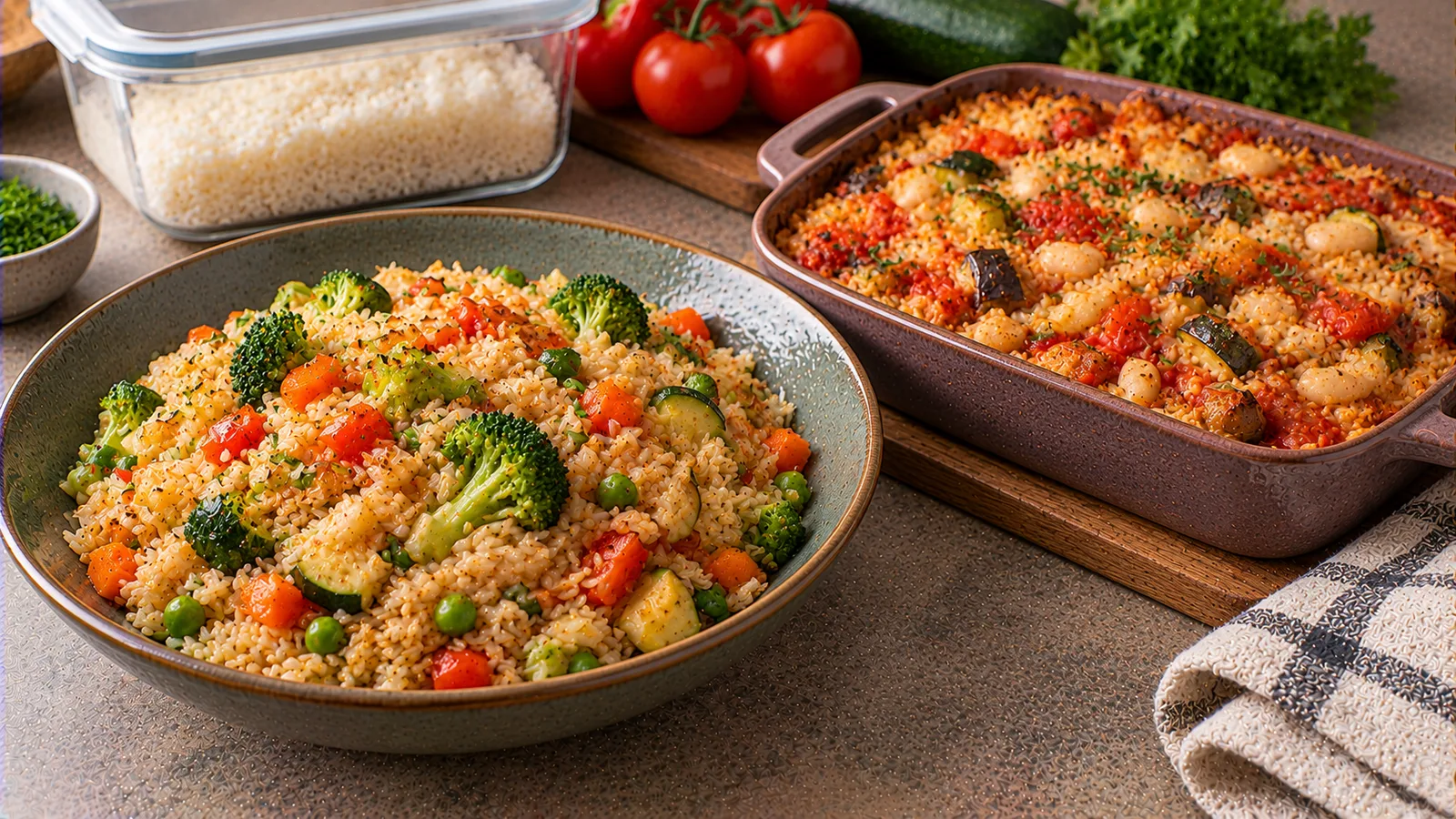
These are five different vegetable dinners for one adult, each using 150 g previously cooked rice plus vegetables and a substantial accompaniment. Unlike a basic fried-rice recipe, the methods change: a lemony chickpea skillet, ginger–sesame tofu, smoky beans and peppers, a mushroom–pea pan with yogurt, and tomato courgettes with white beans. Each includes exact starting amounts and an executable cooking sequence. They are not five nights of rice left in the refrigerator.
Safety comes before waste reduction. Only use rice that was cooled and stored properly immediately after its original cooking. https://www.foodstandards.gov.scot/consumer-advice/food-safety/food-safety-in-the-kitchen/food-storage recommends rapid cooling, ideally within 1 hour, refrigeration for no more than 24 hours, and no more than one reheating. The four portions for later days in this plan go into the freezer promptly, not into the fridge for a working week. Reheat each portion once until it is steaming hot throughout; use a food thermometer and aim for 74 °C (165 °F) for reheated leftovers following USDA guidance. Heating is not a remedy for rice kept warm too long.
Prepare the rice safely before choosing a dinner
- After cooking fresh rice, weigh 750 g of finished, edible cooked rice for these recipes. The amount of dry rice necessary varies with variety and water absorption; do not call 750 g cooked rice 750 g dry rice.
- Portion it immediately into five clean, shallow containers of 150 g each, spread thinly, and chill quickly. Do not leave a warm pot on a cooker or countertop to cool over several hours.
- Keep the first portion chilled and eat it within 24 hours. Promptly freeze the other four 150 g portions after rapid cooling, rather than extending their refrigerated life. Label the freezing date.
- Take out only the portion you need. You can heat frozen rice directly in the final dish with a little moisture, checking all parts are thoroughly hot; or thaw in the fridge and cook promptly. Never thaw on the countertop or reheat the rice a second time.
- If the original cooling history is unknown, or rice remained at room temperature for hours, discard it. It cannot be made reliably safe with an extra-long frying step.
Cooked rice can harbour Bacillus cereus spores that survive ordinary cooking. During poor storage the organism can multiply and in some cases create a heat-stable toxin. This is why Germany's BfR explains the temperature-control problem; reheating does not undo earlier unsafe holding. For the fuller science and handling rules, read how to cool and reheat cooked rice safely. This article instead concentrates on five complete dinners.
The five-dinner ingredient plan
The table below is ingredients actually used, not a checkout-price promise. Rice amounts refer to cooked weight, beans to drained weight, tofu to its unpacked weight, and frozen vegetables to their weight before cooking.
| Dinner | Cooked rice | Vegetables | Protein-rich addition | Oil |
|---|---|---|---|---|
| 1. Lemon chickpea and spinach | 150 g | spinach 100 g + tomato 120 g | chickpeas 120 g, drained | 10 ml |
| 2. Ginger tofu and broccoli | 150 g | broccoli 120 g + carrot 80 g | firm tofu 130 g | 10 ml |
| 3. Smoky pepper and black beans | 150 g | bell pepper 130 g + tomato passata 100 g | black beans 120 g, drained | 10 ml |
| 4. Mushroom–pea yogurt skillet | 150 g | mushrooms 150 g + peas 100 g + onion 50 g | plain yogurt 60 g | 10 ml |
| 5. Tomato courgette and white beans | 150 g | courgette 160 g + passata 120 g | white beans 120 g, drained | 10 ml |
Check the batch totals: 5 × 150 = 750 g cooked rice; 5 × 10 = 50 ml oil; drained beans total 360 g, divided among three different varieties. There are 220 g passata across dinners 3 and 5. These are five separate single-servings; if cooking for two, double each line and the rice allocation.
Keep a little water available for reheating and use pepper, herbs or spices to taste. Soy sauce, lemon and optional salt are accounted for separately below. No nutrient claim such as '30 g protein' is made without a complete brand-specific calculation.
Dinner 1 — Lemon chickpea and spinach rice
One serving. Use 150 g safely cooled cooked rice, 120 g drained chickpeas, 100 g frozen leaf spinach, 120 g diced tomato, 10 ml olive oil, 10 g lemon juice, and pepper or dried oregano. The spinach is weighed frozen; its water can become part of the sauce. If using canned chickpeas, check the label's drained weight, not the can's total net weight.
- Heat the oil in a wide pan and add chopped tomato; cook around 3 minutes to release liquid.
- Add frozen spinach and 2–3 tablespoons of water. Cover and cook until thawed and piping hot, breaking up any frozen clumps.
- Stir in the drained chickpeas. Let the mixture reach a lively simmer so the legumes warm all the way through.
- Add one 150 g rice portion, using a splash of water if it is frozen, and stir repeatedly. Heat the assembled dinner until the reheated rice and the centre of the pan reach 74 °C throughout.
- Take off the heat, add the 10 g lemon juice, season, and serve straight away.
The lemon is added last so the flavor stays bright; it is not a preservation step. This dinner is soft, saucy and easy to eat from a bowl. The chickpeas contribute substance without requiring raw meat or a second grain.
Dinner 2 — Ginger–sesame tofu rice with broccoli
One serving. Use 150 g safe cooked rice, 130 g firm tofu, 120 g frozen broccoli florets, 80 g carrot, 10 ml neutral oil, 10 ml reduced-salt soy sauce, and a small pinch of ginger. Sesame seeds are optional and would change allergens and nutrition. The intended dish is tofu-vegetable fried rice, not egg fried rice; the latter already has its own recipe in the separate vegetable and egg fried rice recipe.
- Drain tofu and blot dry; cut into roughly 2 cm pieces. Slice the carrot thinly enough to cook quickly.
- Heat half the oil in a nonstick pan; brown tofu pieces on both sides. Transfer to a clean plate.
- Add the remaining oil, carrot, broccoli and a little water. Cover briefly until broccoli is thawed and carrot can be pierced with a fork.
- Return tofu, add the soy sauce and ginger. Introduce 150 g cooked rice from its chilled or frozen portion and stir over heat; add water as necessary.
- Thoroughly heat the combined dish. Check for cold rice pockets and verify 74 °C at multiple points before eating.
Soy sauce is a source of salt even when described as reduced-salt. If you avoid soy, use a suitable alternative and read the label; this specific version contains soy and may contain wheat depending on sauce. Broccoli, carrot and tofu should stay recognizable rather than becoming a sticky mixed puree.
Dinner 3 — Smoky black beans and peppers over rice
One serving. Use 150 g cooked rice, 120 g drained black beans, 130 g red bell pepper, 100 g plain tomato passata, 10 ml olive oil, about 1 g smoked paprika, and pepper. A spoon of water is optional. Use beans already cooked and canned, not uncooked dry beans added straight to a quick skillet.
- Dice the pepper small so it softens evenly. Warm the oil in a saucepan and cook the pepper for approximately 5 minutes, stirring.
- Add smoked paprika briefly, then immediately pour in the 100 g passata to prevent scorching.
- Fold in drained beans and simmer about 4–5 minutes, adding water if needed. The pan should look like a spoonable, thick chili rather than a dry stir-fry.
- Add the 150 g rice to the hot sauce, separate its grains, and continue heating until fully hot at 74 °C throughout.
- Serve with chopped herbs if available. Do not put unused warm rice back into the refrigerator for another round of reheating.
A mild smoky sauce gives a noticeably different dinner from the lemon skillet. If you prefer more heat, use a little chili powder, but the recipe does not rely on it. Keep an eye on passata labels: seasoned sauces can have additional salt or sugar compared with plain tomatoes.
Dinner 4 — Creamy mushroom and pea rice without cream
One serving. Use 150 g cooked rice, 150 g mushrooms, 100 g frozen peas, 50 g onion, 60 g plain unsweetened yogurt, 10 ml olive oil, and black pepper. The yogurt is stirred in off the high heat to prevent splitting. For a dairy-free version, use an unsweetened alternative, but this changes protein and flavor.
- Cut the mushrooms into slices and mince the onion. Cook onion in the oil over medium heat for 2–3 minutes.
- Add mushrooms and cook until they release moisture and start to brown; keep cooking until thoroughly done. Add peas and a little water.
- Cover until frozen peas are fully hot. Add 150 g rice and stir carefully, breaking up clumps.
- Bring the rice mixture to 74 °C throughout. Remove from the hot burner and fold in the 60 g yogurt until creamy. Serve immediately; if adding cold yogurt cools the dish below safe serving temperature, reheat it gently and verify heat throughout without holding it warm for long.
- Finish with pepper, parsley or dill. Do not save partially reheated leftovers for another day.
This is a moist skillet rather than a risotto made with uncooked rice. The 150 g rice is already cooked; its starch helps the sauce feel creamy. Yogurt is an accompaniment, not a guaranteed high-protein addition; labels differ substantially.
Dinner 5 — Tomato courgette and white-bean rice
One serving. Use 150 g cooked rice, 160 g courgette, 120 g plain tomato passata, 120 g drained canned white beans, 10 ml olive oil, and a small pinch of dried basil or oregano. Fresh garlic can be added if desired. This is a thick tomato-vegetable skillet, not a casserole that requires an extra baking phase.
- Dice courgette into small cubes. Heat oil and cook the vegetable for 5–7 minutes until tender and lightly colored.
- Add 120 g passata, oregano and a spoonful of water; simmer briefly.
- Rinse and drain the white beans if preferred, then add 120 g of the edible beans and heat thoroughly.
- Stir in the saved 150 g rice, loosening with water. Heat the entire mixture to 74 °C, stirring and checking the coldest-looking section.
- Taste only after it is thoroughly heated, then serve immediately with fresh herbs.
The dish works well when courgettes are in season and canned white beans are on hand. If a can supplies more than 120 g drained, refrigerate remaining beans according to the packaging instructions; do not treat their storage limit as a reason to keep cooked rice longer.
Can these five meals really use one batch of rice?
Yes, if the portions were handled correctly. A meal prepared on Monday does not justify holding rice in a refrigerator until Friday. One practical sequence is: cook the rice, chill the portion for dinner 1 rapidly, and immediately freeze the portions labelled 2–5 after rapid cooling. Use individually frozen portions directly in the skillet or thaw safely in the fridge for prompt cooking. Do not leave rice thawing overnight on a counter. Do not repeatedly warm a single large rice box to serve portions.
The safe storage rule does not depend on whether the dish is called fried rice, risotto, salad or casserole. Cold rice is not automatically safe because it feels cold now; the cooking-and-cooling history matters. Conversely, properly frozen portions can make later dinners convenient without lengthening refrigerated storage.
Cooking steps above give indicative vegetable cooking times, not fixed guarantees for rice starting at different temperatures. A frozen 150 g rice block takes longer than chilled, loose grains. A lid, small amount of water, stirring and measuring the centre temperature help avoid uneven microwave or pan reheating.
Easy substitutions and portions to watch
If you want to use one kind of canned beans in all three bean dishes, you may substitute the same 120 g drained weight each time, but flavors, salt and nutrition labels can differ. Tofu can be exchanged for another cooked protein; this changes allergens and cooking safety rules. Frozen broccoli can replace the spinach if you dislike greens, although the saucy texture of dinner 1 will change.
Because the recipes use different sauces, do not combine all five dinners before freezing unless you intend to freeze complete, newly prepared and rapidly cooled meals. The simplest method is to freeze only the correctly cooled single-use rice portions and cook each dinner's vegetables fresh. Avoid estimating oil or sauce quantities by eye if you intend to track macros or calories.
For each finished plate, check that the vegetables are fully cooked, legumes are hot, and leftover rice has been reheated once only to a safe temperature. Wash chopping boards and hands, keep chilled foods cold, and do not use taste or smell as a test of safe rice.
Sources and practical boundary
- Food Standards Scotland — Food storage, including cooked rice: rapid cooling, ideally within one hour, at most 24 hours refrigerated, and reheat no more than once.
- German Federal Institute for Risk Assessment (BfR) — Bacillus cereus: spores survive cooking, and some toxins withstand reheating.
- USDA FSIS — Leftovers and Food Safety: small shallow containers, prompt chilling, and 74 °C / 165 °F for reheated leftovers.
These are proposed home recipes, not laboratory-tested nutrient specifications. Cooked weight is measured after the original rice cooking; safety depends on the rice's actual handling history. When that history is uncertain, replace it with newly cooked rice rather than risking food poisoning.