
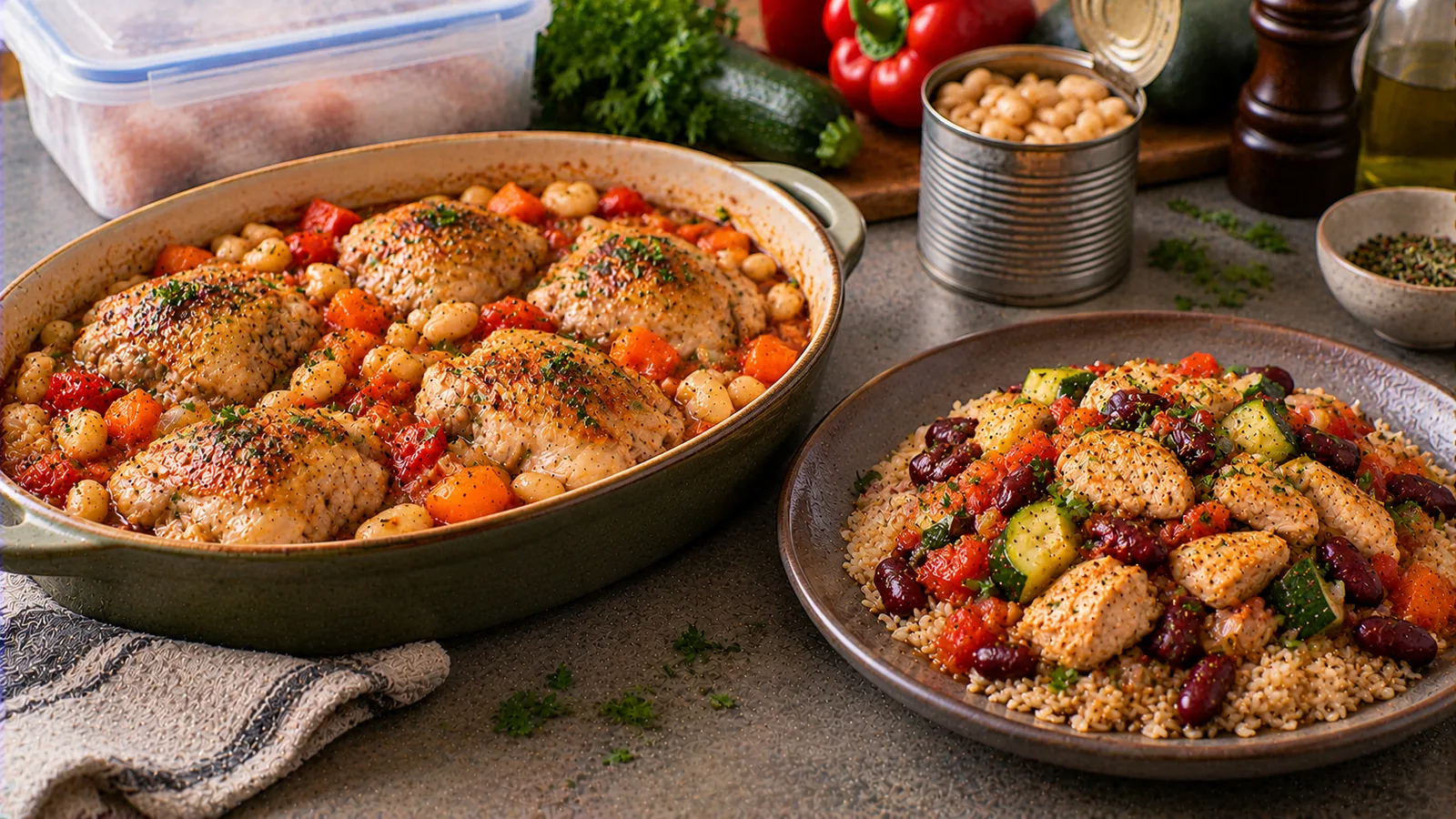
The useful part of freezing chicken in individual 150 g raw portions is not that the meat cooks instantly. It is that you can thaw only the portion required for tonight, open an affordable tin of beans, and build a complete dinner without repeatedly handling the whole frozen package. These are four different one-person dinners, not four variations on a pan of chicken and beans with no sides.
The four meals together use exactly 600 g boneless raw chicken, 240 g drained kidney beans, 240 g drained chickpeas, 40 ml olive oil, measured starches and vegetables. All chicken weights below are raw, boneless weights before cooking; beans are drained weights, while rice, pasta and couscous are weighed dry. None of the portions claim a fixed protein or calorie value: the exact numbers vary with chicken cut, bean label, oil absorption and the brands bought.
Four complete dinners at a glance
| Dinner for one adult | Chicken, raw | Canned pulses, drained | Starch or potatoes | Main vegetables |
|---|---|---|---|---|
| 1. Smoky kidney-bean tomato rice | 150 g | Kidney beans 120 g | Rice 70 g dry | Pepper 100 g, onion 50 g |
| 2. Lemon chickpea couscous skillet | 150 g | Chickpeas 120 g | Couscous 70 g dry | Courgette 150 g, carrot 70 g, onion 50 g |
| 3. Paprika chicken, chickpea and potato tray | 150 g | Chickpeas 120 g | Potatoes 220 g raw | Frozen broccoli 160 g, onion 50 g |
| 4. Tomato-spinach chicken pasta | 150 g | Kidney beans 120 g | Pasta 75 g dry | Frozen spinach 150 g, onion 50 g |
Each dinner also uses 10 ml oil; dinners 1 and 4 use 150 g and 180 g plain passata respectively. Salt, paprika, black pepper, dried herbs and a squeeze of lemon are optional seasonings to taste. If you count nutritional values or cost precisely, include any bought sauces, toppings and condiments that you actually use.
The single measured purchase-and-use list
| Ingredient | Quantity used across all four dinners | How to buy or measure it |
|---|---|---|
| Boneless chicken, raw | 600 g | Four separately frozen 150 g portions; verify weight without packaging |
| Canned kidney beans | 240 g drained | One tin with 240 g stated drained weight |
| Canned chickpeas | 240 g drained | One tin with 240 g stated drained weight |
| Dry rice | 70 g | Purchase a packet; use only 70 g |
| Dry couscous | 70 g | Check package cooking directions |
| Dry pasta | 75 g | Wheat or suitable alternative |
| Potatoes | 220 g raw | Edible weight after removing spoilage |
| Sweet pepper | 100 g | Chopped edible weight |
| Courgette | 150 g | Edible weight |
| Carrot | 70 g | Edible weight |
| Onion | 200 g | Four allocations of 50 g |
| Frozen broccoli | 160 g | Cook thoroughly following the bag instructions |
| Frozen spinach | 150 g | Cook thoroughly following the bag instructions |
| Plain passata | 330 g | 150 g + 180 g |
| Olive oil | 40 ml | 10 ml for each dinner |
For two 240 g drained tins, this plan uses every drained bean and chickpea gram, provided the particular cans really yield those amounts. The label's net weight including liquid is not the drained weight. Rinse the pulses in a strainer if you prefer less salty liquid, drain thoroughly and weigh them before dividing each tin into two 120 g servings. Rinsing may alter some sodium content, but the exact reduction cannot be inferred from the recipe. Once opened, put food into a clean covered container in the refrigerator rather than storing leftovers in an open tin.
First, thaw the chicken safely
Use four individually sealed 150 g portions rather than a solid block of 600 g. Move tonight's portion into a covered bowl on the lowest refrigerator shelf early enough for it to thaw fully. Refrigerator thawing time depends on thickness and fridge temperature; don't promise that every frozen piece will defrost overnight. Keep raw drips away from beans, vegetables and ready-to-eat ingredients.
The USDA FSIS chicken guidance and safe-thawing guidance describe three routes: refrigerator, cold water in a leak-proof bag with water changed every 30 minutes, or microwave defrosting. After cold-water or microwave thawing, cook immediately. Never leave chicken on the countertop to thaw, and do not wash raw poultry. Refrigerator-thawed chicken can generally be held another 1–2 days before cooking if it was handled and chilled correctly; use the shorter period if the package directions require it.
Cooking from frozen in an oven or pan can be possible, but USDA notes that it may take about 50% longer than cooking thawed chicken; thick or touching pieces can cook unevenly. These four recipes are written for fully thawed portions, making timing more predictable. Do not put frozen raw chicken into a slow cooker, or use the microwave as a shortcut without following the manufacturer's and USDA guidance. In every recipe, a food thermometer must show 74°C / 165°F in the thickest part before serving; colour and a recipe timer are not reliable tests.
Dinner 1 — smoky tomato chicken, kidney beans and rice
Ingredients for one: 150 g thawed boneless raw chicken; 120 g drained kidney beans; 70 g dry rice; 100 g diced pepper; 50 g onion; 150 g passata; 10 ml oil; optional smoked paprika and black pepper. The rice is a measured dry quantity, not 70 g of cooked rice. For brown rice or another variety, use the packet's water ratio and cooking time.
- Begin cooking the 70 g dry rice in water as directed on its pack. Chop the pepper and onion. Dry the thawed chicken's surface with disposable paper if needed, keeping the preparation area separate from ready-to-eat foods.
- Heat 10 ml oil in a pan and sauté the onion and pepper until softened. Add the diced chicken and stir to expose the pieces to heat; then add 150 g passata and a splash of water if the sauce thickens.
- Simmer until the chicken is properly cooked. Check 74°C / 165°F at the centre of the thickest piece. Add 120 g drained kidney beans and heat thoroughly; season gently.
- Serve over the finished rice. The beans are cooked commercially, but the chicken must still reach its safe target. A spoonful of cold yogurt is optional and not included in the measured shopping list.
The tomato sauce helps prevent the rice and cooked meat from feeling dry. There is no need to add cheese to call this a dinner: it already includes chicken, beans, vegetables and a grain. If a packaged smoky seasoning contains salt, check its label instead of assuming the dish is low-sodium.
Dinner 2 — lemon-style chicken, chickpeas and couscous
Ingredients for one: 150 g thawed chicken; 120 g drained chickpeas; 70 g dry couscous; 150 g courgette; 70 g carrot; 50 g onion; 10 ml olive oil; water and optional lemon juice, pepper and dried parsley.
- Weigh 70 g dry couscous into a heatproof bowl. Cover with the quantity of boiling water specified on the label, cover and allow it to hydrate. Check the package before assuming all couscous brands use the same water ratio.
- Dice the 150 g courgette, 70 g carrot and 50 g onion. Sauté in 10 ml oil, adding water if needed to soften the carrot without burning the onion.
- Add the diced thawed chicken. Cook until its thickest pieces measure 74°C / 165°F; use a thermometer, not just the light colour of the meat. Stir through 120 g drained chickpeas, heating them thoroughly.
- Fluff the couscous and fold in the pan mixture. Add lemon juice only at the end if wanted. Avoid leaving cooked couscous at room temperature; serve immediately or cool promptly for storage.
The lemon is a flavour adjustment, not a guarantee that this is a 'low-fat' or 'high-protein' meal. If chickpeas from the tin taste very salty, rinse and drain before weighing the 120 g. When using gluten-free grain instead of wheat couscous, follow that grain's directions and treat its nutritional numbers separately.
Dinner 3 — paprika chicken, chickpeas and potatoes on one tray
Ingredients for one: 150 g thawed boneless chicken; 120 g drained chickpeas; 220 g edible raw potatoes; 160 g frozen broccoli; 50 g onion; 10 ml oil; optional paprika, pepper and dried rosemary. This recipe makes one large plate rather than a family-sized baking tray.
- Preheat a conventional oven to approximately 200°C; adapt for fan ovens and your equipment. Cut the 220 g potatoes into similarly sized small wedges and slice the 50 g onion. Toss with the measured 10 ml oil and paprika.
- Roast the potatoes first for roughly 15–20 minutes, depending on wedge thickness. Then add the 150 g thawed chicken in one layer. Keep raw chicken utensils away from the cooked chickpeas and plate.
- Add 160 g frozen broccoli as directed by its packaging; if the packet requires a separate boil, cook it that way before serving. Add 120 g drained chickpeas near the end so they warm through without becoming unnecessarily dry.
- Continue cooking until the chicken's thickest point measures 74°C / 165°F. The full oven time varies and must not substitute for the thermometer. Check the potatoes are soft and broccoli is fully cooked before plating.
This tray illustrates why a timed recipe is not a poultry safety check: potatoes can be tender while a thick chicken piece remains undercooked. Spread the ingredients instead of stacking frozen broccoli on top of the chicken, and do not assume a golden surface means the centre is safe.
Dinner 4 — tomato-spinach chicken and kidney-bean pasta
Ingredients for one: 150 g thawed chicken; 120 g drained kidney beans; 75 g dry pasta; 150 g frozen spinach; 180 g passata; 50 g onion; 10 ml olive oil; optional garlic or black pepper.
- Cook the 75 g dry pasta according to the packet and reserve a little unsalted cooking water. Put the 150 g frozen spinach in a separate saucepan and cook it completely according to its package directions; avoid adding an uncooked frozen centre to a finished sauce.
- Sauté the 50 g onion in 10 ml olive oil. Add cut-up thawed chicken, taking care not to contaminate cooked pasta or other utensils; pour in 180 g passata and simmer as necessary.
- Probe the thickest piece of chicken; serve only after it reaches 74°C / 165°F. Stir in 120 g drained kidney beans and the cooked spinach; heat through, thinning with reserved pasta water if the sauce needs it.
- Toss with the finished pasta, season to taste and serve. For extra flavour choose dried herbs rather than an unmeasured salty sauce. The 75 g is the pasta's dry weight, so the cooked bowl will weigh more.
If you prefer a very thick sauce, reduce the passata before adding the beans. Do not leave the chicken exposed to prolonged heat after it reaches the safe temperature; that can make lean cuts tough. White pasta and whole-wheat pasta have different fibre values, so any nutritional calculation must specify which was used.
Plan the week without putting raw chicken at risk
You can freeze four raw portions, thaw one safely at a time and cook dinners on separate evenings. That is the lowest-effort plan if the goal is to vary flavours while avoiding repeated thawing of a large chicken pack. The beans can be apportioned differently: use 120 g kidney beans in dinner 1 and the other 120 g in dinner 4; use half the chickpeas in dinner 2 and the remainder in dinner 3. Because the same opened tin could otherwise sit in the fridge for several days, refrigerate promptly and freeze the second 120 g portion when opening it, then thaw it safely for the later dish. Do not use a tin that is swollen, leaking or badly damaged.
For batch cooking, prepare the rice, couscous and potato components, but keep the food-safety clock in mind. USDA FSIS guidance on leftovers advises prompt cooling in shallow containers, refrigeration within 2 hours, most cooked leftovers used within 3–4 days, and reheating leftovers to 74°C / 165°F. Freeze later servings promptly instead of relying on a four-night fridge schedule when you cannot be confident about cooling or storage. Keep the refrigerator at 4°C or below, and keep raw poultry separate from cooked foods. Source: USDA food-safety steps.
Common substitutions without changing the recipe's meaning
Chicken thighs can replace breast only if the recipe still measures 150 g raw boneless edible meat, not a 150 g bone-in portion. Their fat and cooking behaviour differ. If the frozen chicken is already cooked, it is a different product requiring its own reheating instructions; do not apply raw-chicken timing blindly.
Black beans or white beans can replace kidney beans or chickpeas by drained mass, but their fibre, protein, sodium and texture vary by brand. If the tin yields 220 g after draining rather than 240 g, use its real amount and revise portions instead of pretending the figures reconcile. Use frozen mixed vegetables where appropriate, but check the package for any required cooking; do not equate 'frozen' with 'ready to eat'.
For other quick vegetable-centred dinners see other quick healthy dinners with frozen vegetables. For a separate three-day family menu using frozen vegetables and beans, compare a three-day family menu using frozen vegetables and beans; this page instead gives four single-portion chicken-plus-canned-pulse recipes with the full shopping arithmetic and poultry-safety process.
Sources and calculation basis
- USDA FSIS: Chicken from Farm to Table — refrigerated, cold-water and microwave thawing; handling and cooked chicken.
- USDA FSIS: The Big Thaw — safe defrosting, immediate cooking after rapid thawing.
- USDA FSIS: Safe Minimum Internal Temperature Chart — poultry and leftovers at 165°F (approximately 74°C).
- USDA FSIS: Leftovers and Food Safety — cooling, storage and reheating.
- USDA FSIS: Keep Food Safe — clean, separate, cook and chill.
Measurement check: chicken 4 × 150 = 600 g raw; kidney beans 2 × 120 = 240 g drained; chickpeas 2 × 120 = 240 g drained; oil 4 × 10 = 40 ml; passata 150 + 180 = 330 g; onions 4 × 50 = 200 g. These are input weights and recipe estimates, not independently measured finished-bowl nutrition, prep times or market prices.