
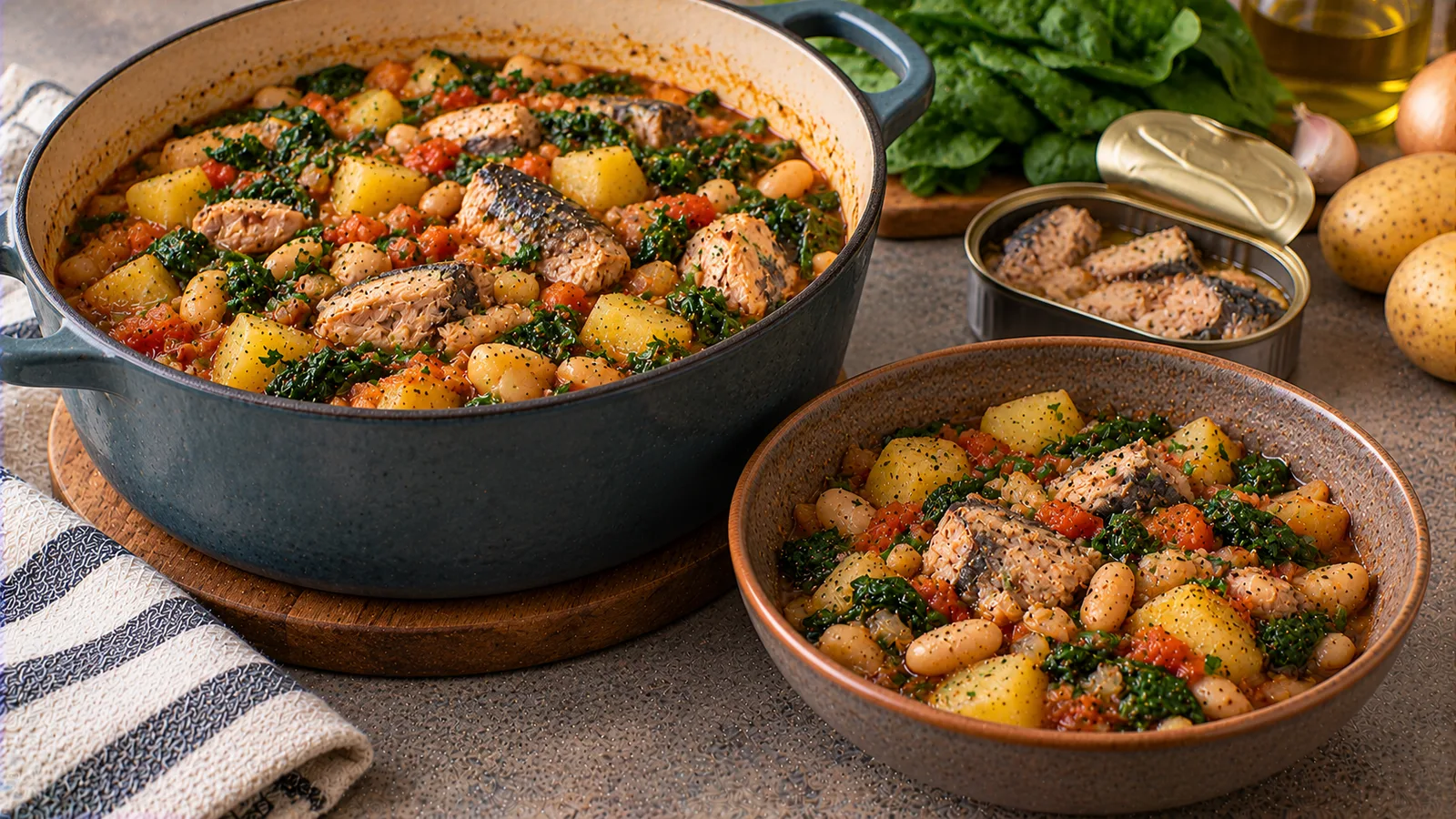
Frozen spinach and a tin of fish can become dinner, not just an emergency side dish. These four two-serving one-pot recipes use different starches, leafy greens and fish so that the results do not taste like the same stew four times. They are practical combinations rather than laboratory-tested nutrition profiles; the drained weight printed on your tin, water retained by the greens and the cooking time of your starch will change the result.
All ingredient weights below refer to edible amounts: frozen greens are weighed still frozen; rice, pasta and couscous are dry; beans, chickpeas and fish are drained; potatoes are weighed raw. A 140 g tin may contain far less than 140 g of drained fish. Use the drained amount specified, or adjust the recipe. Every recipe yields two adult dinner portions, not four small side portions.
Four dinners at a glance
| Dinner | Fish (drained) | Frozen leafy greens | Main filling ingredient | Approximate total time |
|---|---|---|---|---|
| Tomato mackerel, potato and white-bean pot | 125 g Atlantic mackerel | 250 g spinach | 400 g raw potatoes + 240 g drained white beans | 30–35 min |
| Lemon salmon, rice and kale pot | 150 g canned salmon | 250 g chopped kale | 140 g dry white rice | 25–35 min |
| Sardine, chard and chickpea couscous pot | 120 g sardines | 250 g chard or spinach | 120 g dry couscous + 240 g drained chickpeas | 20–25 min |
| Creamy light-tuna spinach pasta | 140 g canned light tuna | 200 g spinach | 160 g dry pasta | 25–30 min |
These time ranges are estimates, not safety guarantees. Follow your frozen vegetable label and test whether potatoes, rice or pasta are fully cooked. You need a deep saucepan with a lid, a stirring spoon, a sieve for cans and a can opener; there is no separate frying pan.
1. Tomato mackerel, spinach, potato and white-bean pot
Makes: 2 dinners. Time: approximately 30–35 minutes. This is the hearty tomato-based version pictured in the cover: soft potato pieces, white beans and visible mackerel flakes in a spinach-rich sauce.
| Ingredients for two | Amount and condition |
|---|---|
| Potatoes | 400 g, raw, cut into 2 cm cubes |
| Frozen chopped spinach | 250 g, weighed frozen |
| White beans | 240 g, canned, rinsed and drained |
| Atlantic mackerel in water or brine | 125 g drained |
| Chopped tomatoes | 400 g, canned |
| Onion | 100 g, diced |
| Olive oil | 10 ml |
| Water | 200 ml initially; add only if needed |
| Sweet or smoked paprika | 1 teaspoon; black pepper to taste |
- Warm the oil in the pot. Cook the onion over medium heat for about 4–5 minutes until softened; stir so it does not burn.
- Add potatoes, tomatoes, 200 ml water and paprika. Cover and simmer for about 15–20 minutes, stirring and checking the potatoes with a fork. Add small amounts of water if the base catches; cooking may take longer with larger cubes.
- Add 250 g frozen spinach and simmer following the pack instructions until completely cooked and hot throughout. Let excess water reduce with the lid partly open. Add the drained white beans and heat through.
- Fold in 125 g drained Atlantic mackerel for the final 1–2 minutes, just long enough to heat the fish throughout without breaking it into paste. Divide evenly between two bowls. Taste before salting: canned fish and beans may already provide salt.
Texture check: the finished stew should cling to the potatoes, not look like thin green soup. Simmer uncovered to reduce liquid; do not add flour by default. Use Atlantic mackerel, not king mackerel, when choosing a comparable low-mercury species.
2. Lemon salmon, rice and frozen-kale pot
Makes: 2 dinners. Time: approximately 25–35 minutes, depending on rice. This recipe is lighter in flavour and relies on lemon, rather than a tomato sauce.
| Ingredients for two | Amount and condition |
|---|---|
| White rice | 140 g dry; use the packet cooking time |
| Frozen chopped kale | 250 g weighed frozen |
| Canned salmon | 150 g drained; remove skin or bones if preferred |
| Frozen peas | 150 g weighed frozen |
| Onion | 100 g finely diced |
| Olive oil | 10 ml |
| Hot water or unsalted stock | Start with 450 ml; adjust to rice instructions |
| Lemon | Juice of 1/2 lemon, added at the end |
| Black pepper and dried dill | To taste |
- Soften the onion in oil for 4 minutes in a lidded saucepan. Stir in the 140 g dry rice and 450 ml hot water or stock. Bring to a gentle simmer.
- Cook covered according to the rice packet. Incorporate the frozen kale and peas early enough to cook them thoroughly as the rice finishes; allow at least the packet-stated vegetable cooking time, adding a splash of water if the pot dries out. Stir to prevent frozen clumps and cold pockets.
- When the rice is tender and the greens and peas are hot throughout, flake in 150 g drained salmon. Warm the mixture gently and season with lemon, dill and pepper.
- Rest covered for 2 minutes, stir once and serve. If using quick-cook rice, cook the frozen greens first before adding the rice so that the vegetables still receive their full required cooking time.
Liquid check: 450 ml is a starting amount for this combination, not a universal ratio. Some rice absorbs more; frozen kale can release water. Add hot water in 30–50 ml increments rather than filling the pan all at once.
3. Sardine, chard and chickpea couscous pot
Makes: 2 dinners. Time: approximately 20–25 minutes. This dish is spoonable but not soupy: couscous absorbs a little tomato broth while the sardines remain in recognisable pieces.
| Ingredients for two | Amount and condition |
|---|---|
| Frozen chopped chard (or spinach) | 250 g weighed frozen |
| Sardines in olive oil or water | 120 g drained |
| Chickpeas | 240 g canned, rinsed and drained |
| Plain couscous | 120 g dry |
| Chopped tomatoes | 400 g canned |
| Water | 150 ml to start; check couscous instructions |
| Garlic | 2 cloves, finely chopped |
| Olive oil | Up to 5 ml, only if needed |
| Lemon zest or parsley | Optional, to finish |
- In a lidded deep pan, gently warm the garlic in up to 5 ml oil for 30 seconds. Add the tomatoes, 150 ml water, 250 g frozen chard and 240 g drained chickpeas.
- Cover and simmer until the greens have reached the package-required cooking time and are hot throughout. Uncover for a few minutes if there is a great deal of liquid.
- Bring the tomato broth back to a gentle simmer, stir in 120 g dry couscous, turn off the heat and cover for 5 minutes or the package-specified hydration time. If the liquid is insufficient, add a measured splash of boiling water; if too wet, let stand uncovered for a minute.
- Fluff the couscous with a fork, fold in 120 g drained sardines, cover briefly to warm the fish through and serve with optional lemon zest. Check for bones according to the can and individual preference.
Why this order? The frozen greens cook properly before the couscous goes in. Adding dry couscous at the beginning would make it mushy while the greens defrosted. If replacing chard with spinach, keep the 250 g frozen weight and follow that product's instructions.
4. Creamy one-pot light-tuna spinach pasta
Makes: 2 dinners. Time: approximately 25–30 minutes. This version uses pasta cooking liquid and milk to create a sauce without a separate cream pan.
| Ingredients for two | Amount and condition |
|---|---|
| Short pasta | 160 g dry |
| Frozen chopped spinach | 200 g weighed frozen |
| Canned light tuna, preferably skipjack | 140 g drained |
| Onion | 100 g finely diced |
| Water | 500 ml initially; top up as needed |
| Milk | 150 ml |
| Hard grated cheese | 25 g, optional |
| Olive oil | 10 ml |
| Garlic | 1 clove; black pepper to taste |
- In a deep non-stick saucepan, soften the onion and garlic in 10 ml oil for 4 minutes. Add 500 ml water and bring to a boil.
- Stir in 160 g dry short pasta and 200 g frozen spinach. Keep at an active but controlled simmer and stir frequently, breaking up greens as they soften. Ensure the vegetables receive the full cooking treatment specified on the packet.
- Add hot water a little at a time if the pasta starts sticking. Cook until the pasta is tender and the spinach thoroughly cooked; this may outlast the package's standard pasta time when cooking both together.
- Reduce the heat and stir in 150 ml milk. Heat the mixture through, then fold in 140 g drained canned light tuna and the optional 25 g cheese. Bring everything back to steaming hot, season with pepper and divide between two bowls.
Sauce check: if watery, simmer briefly uncovered before adding fish. If dry, add small splashes of water. Tuna goes in late to retain its texture. Use canned light tuna rather than treating every type of tuna as interchangeable for mercury guidance.
Pantry planning and practical substitutions
Cooking all four recipes as written makes 8 dinner servings. The complete four-recipe purchase quantities are 950 g frozen leafy greens (450 g spinach, 250 g kale, 250 g chard), 535 g drained canned fish (125 g mackerel, 150 g salmon, 120 g sardines, 140 g light tuna), 800 g canned tomatoes, 240 g drained white beans and 240 g drained chickpeas. There are also 400 g raw potatoes, 140 g dry rice, 120 g dry couscous and 160 g dry pasta. These are shopping arithmetic, not nutrient totals; buy enough cans and packs to achieve the drained and frozen amounts.
For another complete freezer-first meal collection, see six other complete dinners using frozen vegetables. For a different use of tinned fish that is deliberately focused on lunches, see Mediterranean lunches built around canned fish. These articles complement the recipes here; neither is a replacement for the specific one-pot methods.
Do not substitute dry beans for 240 g drained canned beans without fully cooking them separately first; that would no longer be the stated one-pot method. For thicker sauces, reduce the liquid. For thinner stews, add a measured splash. For salt-sensitive diets, compare labels on fish, stock and canned vegetables before seasoning.
Frozen greens, canned fish and leftover safety
Frozen is not the same as ready-to-eat. Follow the product's cooking directions and heat non-ready-to-eat frozen greens thoroughly; do not assume that simply wilting a frozen clump is adequate. The Food Standards Agency cooking guidance and EFSA advice on non-ready-to-eat frozen vegetables explain why proper cooking matters.
Canned fish can be convenient, but species matters. The FDA/EPA fish guide lists Atlantic mackerel, salmon, sardines and canned light tuna among its best choices; king mackerel is a fish to avoid because of mercury. People who are pregnant, breastfeeding or feeding young children should use the age- and situation-specific portions in that guide instead of treating these adult recipe portions as personal advice. A leaking, swollen or badly damaged can should not be used.
Divide leftovers into shallow containers and refrigerate them within 2 hours (within 1 hour if exposed to temperatures above 32°C); keep the refrigerator at 4°C or colder. As a practical upper bound, eat promptly and use refrigerated stews within 3–4 days when handled correctly, according to the FoodSafety.gov safety steps and cold-storage chart. Reheat leftovers thoroughly and do not repeatedly leave the pot at room temperature. For rice dishes, cool rapidly and follow any stricter local or package storage advice.
Sources
- UK Food Standards Agency — Cooking your food (complete cooking and frozen-vegetable guidance).
- EFSA — Listeria and frozen vegetables (heat non-ready-to-eat frozen vegetables thoroughly).
- FDA/EPA — Advice about eating fish (species and mercury categories).
- FoodSafety.gov — Four steps to food safety (handling, refrigeration and time limits).
- FoodSafety.gov — Cold food storage chart (storage guidance).