
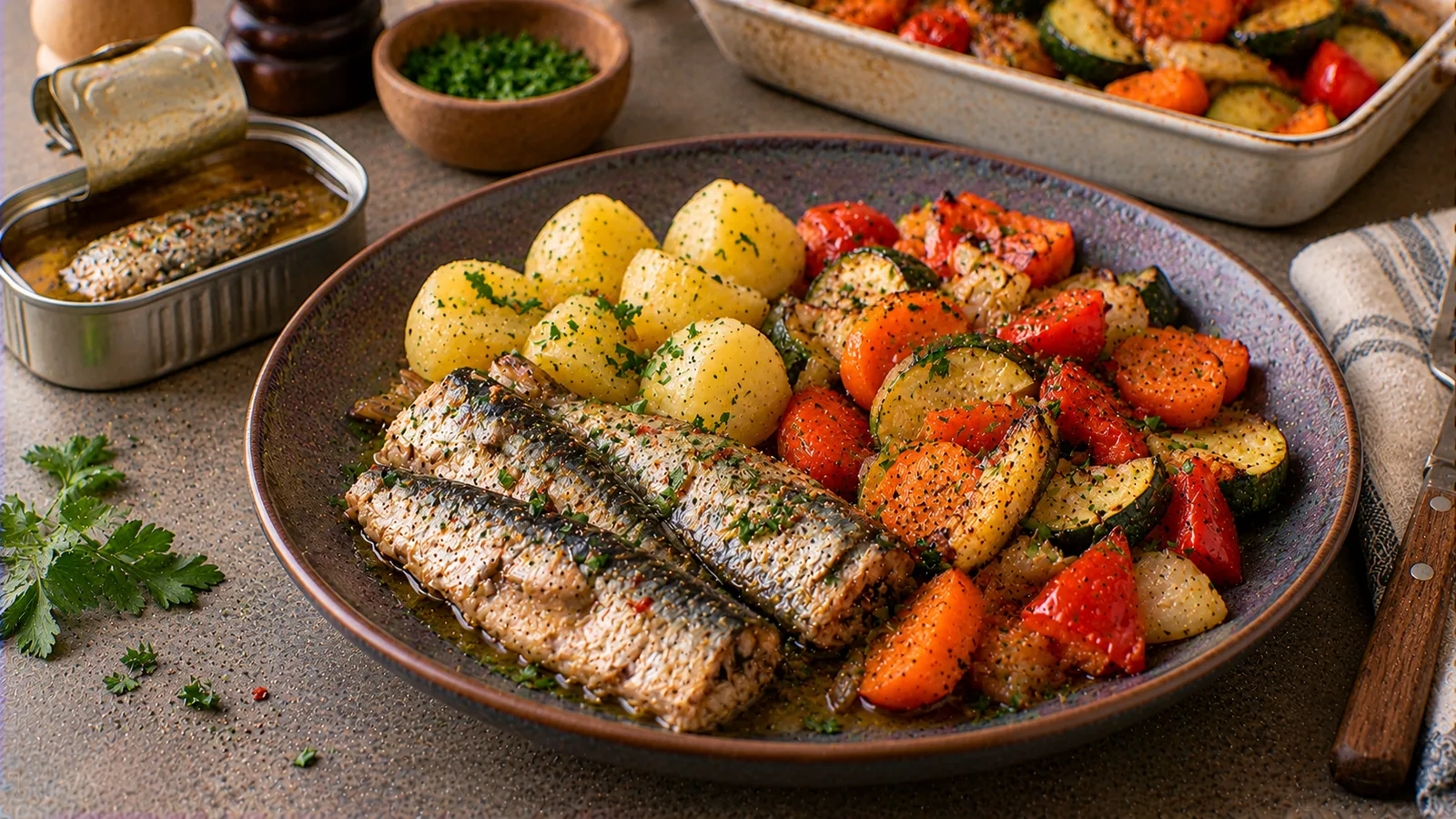
A tin of fish is the convenient part of dinner; choosing a vegetable side that turns it into a filling meal takes more thought. These five complete dinner pairings combine a specific portion of ready-to-eat canned fish with vegetables and either potatoes, grains or pulses. Each recipe serves one person, with weights listed so you can shop and repeat it. They are alternatives for different nights, not a recommendation to eat canned fish on five consecutive days.
The budget approach is practical rather than promotional: potatoes, seasonal cabbage, carrots, frozen greens and pulses are often useful low-waste bases. Fish prices vary markedly by species, drained weight, oil or sauce, retailer and promotion. The recipes do not promise a fixed euro cost; a transparent worked calculation appears below.
Five complete fish-and-vegetable dinners
| One-person pairing | Fish, edible amount | Measured vegetable side and filling base | Time |
|---|---|---|---|
| Warm cabbage-potato skillet + sardines | 100 g sardines | 180 g cabbage + 40 g onion + 250 g potatoes | 25 min |
| Lemon carrot couscous + light tuna | 100 g canned light tuna | 200 g carrots + 70 g dry couscous | 20 min |
| Tomato-courgette white beans + salmon | 100 g canned salmon | 180 g courgette + 150 g tomatoes + 130 g drained white beans | 20 min |
| Pea-spinach rice + Atlantic mackerel | 100 g mackerel | 180 g frozen spinach + 100 g frozen peas + 65 g dry rice | 25 min |
| Beetroot-cucumber lentils + herring | 100 g herring | 180 g cooked beetroot + 100 g cucumber + 150 g drained lentils | 15 min |
All fish amounts mean edible fish actually eaten, not the weight printed on the front of the tin when that includes oil, brine or sauce. Rice and couscous weights are dry before cooking; beans and canned lentils are drained; spinach and peas are weighed frozen; vegetables are weighed before cooking or as specified. The vegetable quantities are not nutrition targets, and there is no blanket claim that each plate has the same calories or protein.
1. Sardines with warm cabbage and potatoes
Ingredients for one: 100 g canned sardines (edible drained fish), 250 g potatoes, 180 g shredded cabbage, 40 g onion, 5 g oil, black pepper, a little vinegar or lemon if wanted. Approximately 25 minutes.
- Cut the potatoes into 2 cm pieces and simmer in water until tender, usually 12–18 minutes depending on size; drain.
- Thinly slice the cabbage and onion. Heat 5 g oil in a skillet; soften the onion, add cabbage and 2–3 tablespoons of water, cover and cook for 7–10 minutes until tender.
- Fold in the cooked potatoes, season, then place the drained sardines on top. Let the fish warm briefly if desired, without boiling it dry.
Why it works: cabbage provides bulk and crunch, potatoes make the fish serving a complete dinner, and the same cabbage can serve other meals. For a lower-salt version, compare the sodium on fish labels rather than assuming sardines are identical. If you have leftover cabbage, use it in a separate vegetable dish; you do not need an extra tin of fish.
2. Light tuna with lemon carrots and couscous
Ingredients for one: 100 g drained canned light tuna (ideally skipjack), 200 g carrots, 70 g dry couscous, 15 g lemon juice, 5 g oil, parsley and pepper. Approximately 20 minutes.
- Cut carrots into thin half-moons. Cook in a covered pan with a little water for 8–12 minutes until soft; allow water to evaporate, then stir in the oil.
- Put the 70 g dry couscous in a heatproof bowl. Cover with the amount of boiling water specified on its packet, rest covered, then fluff with a fork.
- Fold in carrots, lemon and parsley; add the drained tuna just before serving. Taste before salting, because the fish may be salted already.
Budget swap: use bulgur if it costs less per dry 70 g portion; follow its longer cooking instructions. Safety distinction: “canned light” tuna and albacore/white tuna are not equivalent mercury choices. The FDA/EPA fish guide places canned light tuna among “Best Choices”, albacore among “Good Choices”, and bigeye tuna among fish to avoid for groups covered by that advice. Do not silently substitute a different species.
3. Salmon with courgette, tomato and white beans
Ingredients for one: 100 g canned salmon, 180 g courgette, 150 g fresh or canned chopped tomatoes, 130 g rinsed drained canned white beans, 5 g oil, oregano and pepper. Approximately 20 minutes.
- Dice the courgette and heat it in the oil for about 5 minutes, turning until it begins to soften.
- Add tomatoes and a splash of water. Simmer 6–8 minutes; stir in the drained white beans and heat them through.
- Drain the canned salmon if needed and flake it gently into the warm vegetables. Serve as a substantial bowl, with any edible soft bones handled according to the label and your preference.
Budget reality: salmon may be the expensive component. Check the drained-weight price per 100 g; substitute sardines if salmon is disproportionately costly. These beans are part of this particular fish dinner, not a reworking of the general legume-side collection the separate collection of five vegetable sides with legumes.
4. Atlantic mackerel with pea-spinach rice
Ingredients for one: 100 g ready-to-eat canned Atlantic mackerel, if the species is identified on the label; 180 g frozen spinach; 100 g frozen peas; 65 g dry rice; 5 g oil; lemon zest or pepper. Approximately 25 minutes.
- Cook the 65 g dry rice according to its packet, draining any excess water.
- Separately cook the 180 g spinach and 100 g peas thoroughly according to their packaging; do not treat frozen vegetables as ready-to-eat by merely thawing them. Drain excess liquid.
- Mix vegetables with rice and oil. Top with flaked ready-to-eat mackerel; warm gently and serve straight away.
Species check: the label matters. Atlantic mackerel is a lower-mercury “Best Choice” in the FDA/EPA guide; king mackerel is a “Choice to Avoid” for the groups addressed by that advice. If the species is unclear, choose a clearly labelled sardine or salmon product instead. Frozen spinach compresses dramatically when cooked, so 180 g frozen is the actual shopping weight, not a measure of the cooked mound.
5. Herring with beetroot, cucumber and lentils
Ingredients for one: 100 g ready-to-eat canned herring fillets (edible fish), 180 g pre-cooked beetroot, 100 g cucumber, 150 g rinsed drained canned lentils, 10 g vinegar, dill and black pepper. Approximately 15 minutes.
- Dice the cooked beetroot and cucumber; rinse the drained lentils and let excess water run off.
- Toss the lentils, beetroot and cucumber with vinegar and dill. If using herring in tomato sauce, taste that sauce before adding dressing.
- Arrange the fish alongside the lentil salad rather than mixing it in early; serve immediately.
Practical swap: use canned salmon or sardines if herring is not offered at a sensible price. Check whether the product is packed in oil or sauce, and whether 100 g of edible fish is actually available. A jar of plain cooked beetroot is convenient; raw beetroot takes much longer and must be cooked separately.
One practical shopping checklist
These are the amounts used if you cook each of the five different plates once, not the number of whole packages you must buy. Fresh vegetables: 250 g potatoes, 180 g cabbage, 40 g onion, 200 g carrots, 180 g courgette, 150 g tomatoes, 180 g cooked beetroot and 100 g cucumber. Frozen vegetables: 180 g spinach and 100 g peas. Dry grains: 70 g couscous and 65 g rice. Canned pulses: 130 g drained white beans and 150 g drained lentils. Fish: 100 g edible each of sardines, canned light tuna, canned salmon, labelled Atlantic mackerel and herring. Oil: 20 g total (5 g in each of recipes 1–4). Also allow 15 g lemon juice, 10 g vinegar and a little seasoning.
Buy tins by drained weight. A 120 g can may contain noticeably less fish once its liquid is removed; use the actual label or weighed yield, not an assumption that gross and edible weights coincide. If you want easier meals from fish tins without vegetable-side recipes, see the distinct Mediterranean canned-fish lunches lunch collection.
How to calculate cost without inventing store prices
Use the receipt price and the edible amount actually used, separating the checkout total from the ingredient cost on your plate. For example, suppose a tin costs €1.79 and contains exactly 100 g edible fish; potatoes cost €1.29/kg, cabbage €1.49/kg and onion €1.19/kg. Then the illustrative cost of pairing 1 before oil and seasonings is:
| Example component | Hypothetical purchase price | Used quantity | Cost used |
|---|---|---|---|
| Sardines | €1.79 per 100 g edible | 100 g | €1.79 |
| Potatoes | €1.29/kg | 250 g | €0.32 |
| Cabbage | €1.49/kg | 180 g | €0.27 |
| Onion | €1.19/kg | 40 g | €0.05 |
| Total before oil and seasoning | €2.43 |
Arithmetic: 1.79 + (0.250 × 1.29) + (0.180 × 1.49) + (0.040 × 1.19) = €2.4283, rounded to €2.43. These inputs are invented for a worked example, not observed October 2026 shop prices, a price guarantee or a total checkout bill. A whole cabbage or potato bag may cost more at checkout; that is inventory left over, not necessarily ingredient cost of tonight's plate. The full tin's cost belongs to this plate only if the whole edible quantity is consumed. To compare two tins, divide their prices by actual drained grams, not total can weight.
Fish selection, storage and rotation
These recipes include fish and, in the couscous version, wheat/gluten; check pack labels for additional allergens. Fish tins often contain substantial salt or oil: draining can change the edible weight and nutritional values. There is no universal promise that all canned fish is inexpensive, low sodium or high in omega-3.
For people who are pregnant, breastfeeding, may become pregnant or serving young children, follow the FDA/EPA species-specific advice, including portion and frequency guidance. Its “Best Choices” include sardines, salmon, herring, Atlantic mackerel and canned light tuna, but different tuna and mackerel species belong in different categories. The five dishes are a menu of options, not a five-day fish consumption target.
Open a tin only when ready to use it. Refrigerate anything you do not eat promptly in a covered food-safe container according to the manufacturer's instructions. Cooked sides and leftovers should be chilled promptly; the German BfR advises using cooked refrigerated dishes within 2–3 days, or freezing them. For safe reheating, the BfR advises heating food throughout to at least 70 °C for two minutes. If you plan a cold salad, chill its components separately and do not leave opened fish at room temperature. Anyone with an impaired immune system should take extra care with cold preparations.
Sources
- FDA/EPA — Advice About Eating Fish: species-specific mercury categories and guidance for higher-risk groups.
- BfR — Pre-cooking for several days: chilling, hygiene, reheating and 2–3 day refrigerator guidance.
- FoodSafety.gov — Cold food storage: independent reference on refrigeration; product labels may require stricter handling.