
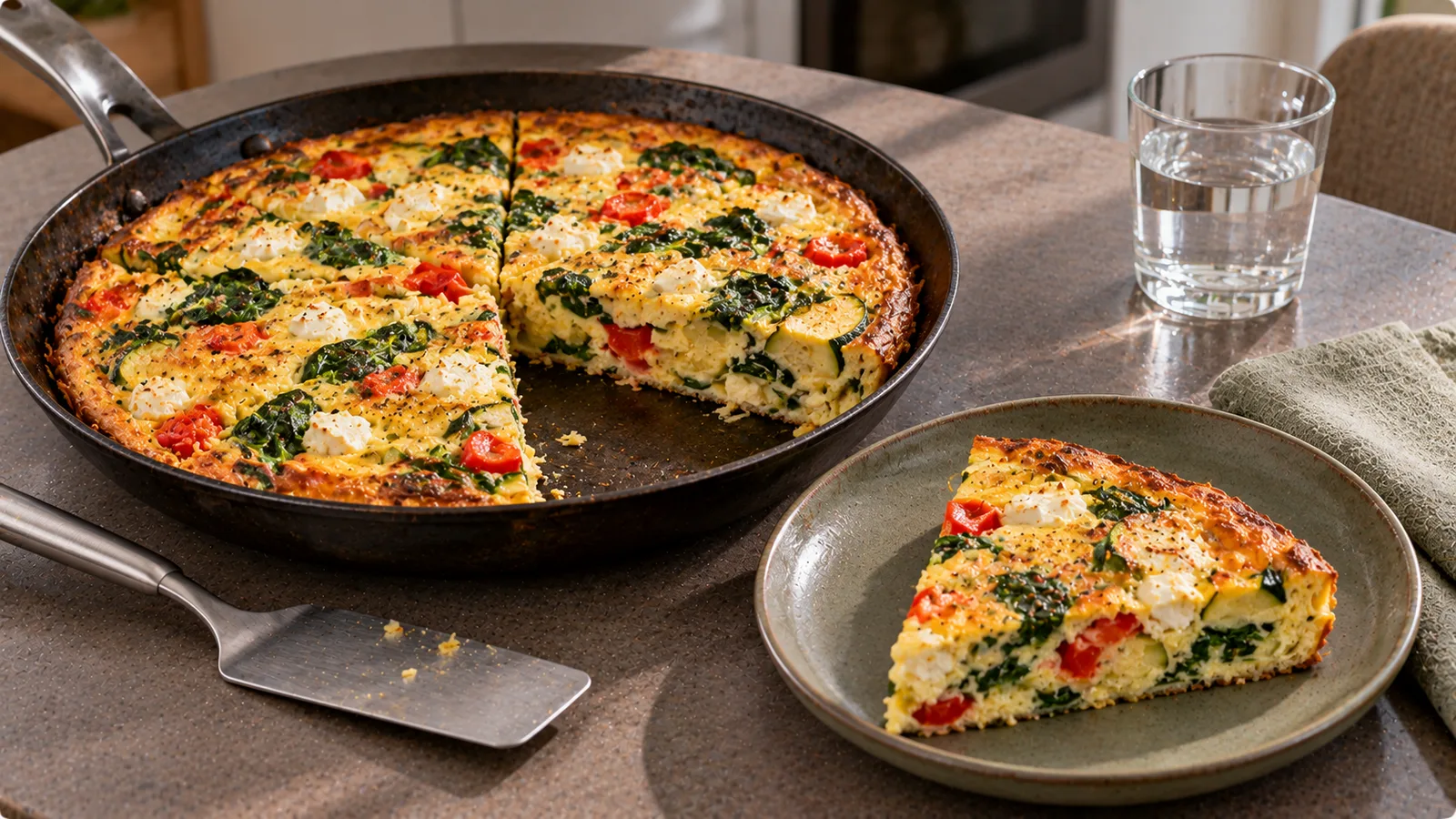
This vegetable and feta frittata is an easy oven-baked egg dish with tender vegetables, creamy pockets of feta and a lightly golden top.
It works for breakfast, lunch or a simple dinner. You can serve it warm straight from the oven or enjoy a chilled portion later.
The recipe uses spinach, red pepper, tomatoes and onion, but the method also works with other vegetables when you adjust their moisture content and cooking time.
Recipe at a glance
| Servings | 4 |
| Preparation | 15 minutes |
| Cooking | 25–30 minutes |
| Total time | About 40–45 minutes |
| Oven temperature | 190°C conventional / 170°C fan |
| Equipment | Ovenproof frying pan or baking dish, approximately 22–24 cm |
| Main ingredients | Eggs, feta, spinach, pepper, tomatoes |
Ingredients
For four servings:
- 8 large eggs
- 120 g feta cheese
- 150 g fresh spinach
- 1 medium red bell pepper, approximately 150 g
- 150 g cherry tomatoes
- 1 small onion, approximately 100 g
- 2 tablespoons milk, approximately 30 ml, optional
- 1 tablespoon olive oil, approximately 15 ml
- 1 small garlic clove, minced
- 1 teaspoon dried oregano
- ¼ teaspoon freshly ground black pepper
- A small pinch of salt, optional
- Fresh parsley or basil, optional, for serving
Feta is already salty, so taste the finished dish before adding more salt at the table.
How to make vegetable and feta frittata
1. Prepare the oven and vegetables
Preheat the oven to 190°C conventional or 170°C fan.
Dice the onion and red pepper. Halve the cherry tomatoes. Wash the spinach and drain it thoroughly.
If using a baking dish rather than an ovenproof frying pan, lightly oil the dish.
2. Soften the onion and pepper
Heat the olive oil in a frying pan over medium heat.
Add the onion and pepper. Cook for approximately 5–6 minutes, stirring occasionally, until they begin to soften.
Add the garlic and cook for another 30 seconds.
3. Wilt the spinach
Add the spinach in batches and stir until wilted, approximately 1–2 minutes.
If the vegetables release a noticeable amount of liquid, cook briefly until the excess moisture evaporates.
This matters because too much water can make the finished frittata loose rather than tender and sliceable.
4. Mix the eggs
Crack the eggs into a bowl.
Add the optional milk, oregano and black pepper. Whisk until the yolks and whites are combined.
Avoid whipping in excessive air; the goal is a smooth mixture rather than a foamy one.
5. Assemble
If using an ovenproof frying pan, spread the cooked vegetables evenly in the pan.
If using a baking dish, transfer the vegetables into it.
Pour the egg mixture over the vegetables.
Scatter the halved tomatoes across the surface and crumble the feta evenly on top.
6. Bake until set
Place the pan or dish in the preheated oven.
Bake for approximately 25–30 minutes, depending on the depth of the mixture and the oven.
The centre should be set rather than visibly liquid. For a reliable food-safety check, the centre of an egg dish should reach 71°C (160°F), as recommended by the US FDA for dishes containing eggs. FDA — What You Need to Know About Egg Safety.
If the top browns before the centre is cooked, cover it loosely with foil.
7. Rest and slice
Let the frittata rest for 5 minutes.
Cut it into four portions and garnish with parsley or basil if desired.
Resting makes it easier to cut clean slices.
Estimated nutrition per serving
The following values are rough estimates, calculated for one-quarter of the recipe using typical ingredient values. They are not laboratory-tested nutrition data.
| Nutrient | Approximate amount |
|---|---|
| Calories | 290 kcal |
| Protein | 21 g |
| Fat | 21 g |
| Carbohydrates | 7 g |
| Fibre | 2 g |
Actual nutrition varies with egg size, feta brand, oil quantity and vegetable weights.
The optional milk contributes only a small amount to the total. For precise tracking, enter the exact ingredients and amounts used.
Food composition data for individual ingredients can be checked through USDA FoodData Central.
How to avoid a watery frittata
Vegetables release moisture as they cook. Spinach, mushrooms, courgette and tomatoes can be especially important.
Three adjustments help:
- Cook high-moisture vegetables first. Let excess liquid evaporate before adding the eggs.
- Drain washed spinach well. Water clinging to the leaves adds unnecessary liquid.
- Do not overload the egg mixture. If you add significantly more vegetables, increase the number of eggs or use a wider baking dish.
For frozen spinach, thaw it completely and squeeze out excess water before adding it.
Ingredient substitutions
Different vegetables
You can replace the red pepper or spinach with:
- mushrooms, sautéed until their liquid evaporates;
- courgette, diced and cooked before baking;
- broccoli, cut into small pieces and briefly steamed;
- asparagus, cut into short lengths and lightly cooked.
Keep the total vegetable quantity reasonably close to the original recipe for a similar texture.
Different cheese
Goat cheese or a suitable hard cheese can replace feta, but the flavour, salt content and melting behaviour will change.
Without milk
Simply omit the optional milk. The eggs will still set properly.
More substantial meal
Serve a slice with wholegrain bread, roasted potatoes or a bean salad.
These additions change the total calories and nutrients of the meal, but not those of the frittata itself.
Can you make it in a frying pan?
Yes, provided the pan is oven-safe and has no components that cannot tolerate the baking temperature.
An ovenproof frying pan allows you to cook the vegetables and bake the eggs in the same vessel.
If your pan is not oven-safe, transfer the vegetables to a lightly oiled baking dish before adding the egg mixture.
Do not place a pan with an unsuitable plastic or wooden handle in the oven.
Storage and reheating
Allow the cooked frittata to cool promptly, then refrigerate it in a covered container.
For a practical home-cooking guideline, use refrigerated leftovers within 3–4 days, following applicable food-safety recommendations. USDA FSIS — Leftovers and Food Safety.
Reheat individual portions until thoroughly hot throughout.
You can also eat properly stored frittata cold, provided it was fully cooked and kept refrigerated.
For longer storage, freeze individual portions. The texture may become softer or release some moisture after thawing.
Serving ideas
For breakfast, pair the frittata with a slice of toasted wholegrain bread and fresh tomatoes.
For lunch, serve it with a green salad and a simple lemon dressing.
For dinner, add roasted potatoes or a lentil salad to make the meal more substantial.
The frittata is also convenient for preparing several portions at once because it can be divided after baking.
Recipe notes
- Use a dish approximately 22–24 cm wide. A smaller, deeper dish may require longer baking.
- Cook vegetables before adding the eggs to control moisture.
- Add feta in small pieces so each portion gets some cheese.
- Check the centre rather than judging doneness only by the colour of the top.
- For an exact nutritional calculation, use the quantities and product labels from your own kitchen.