
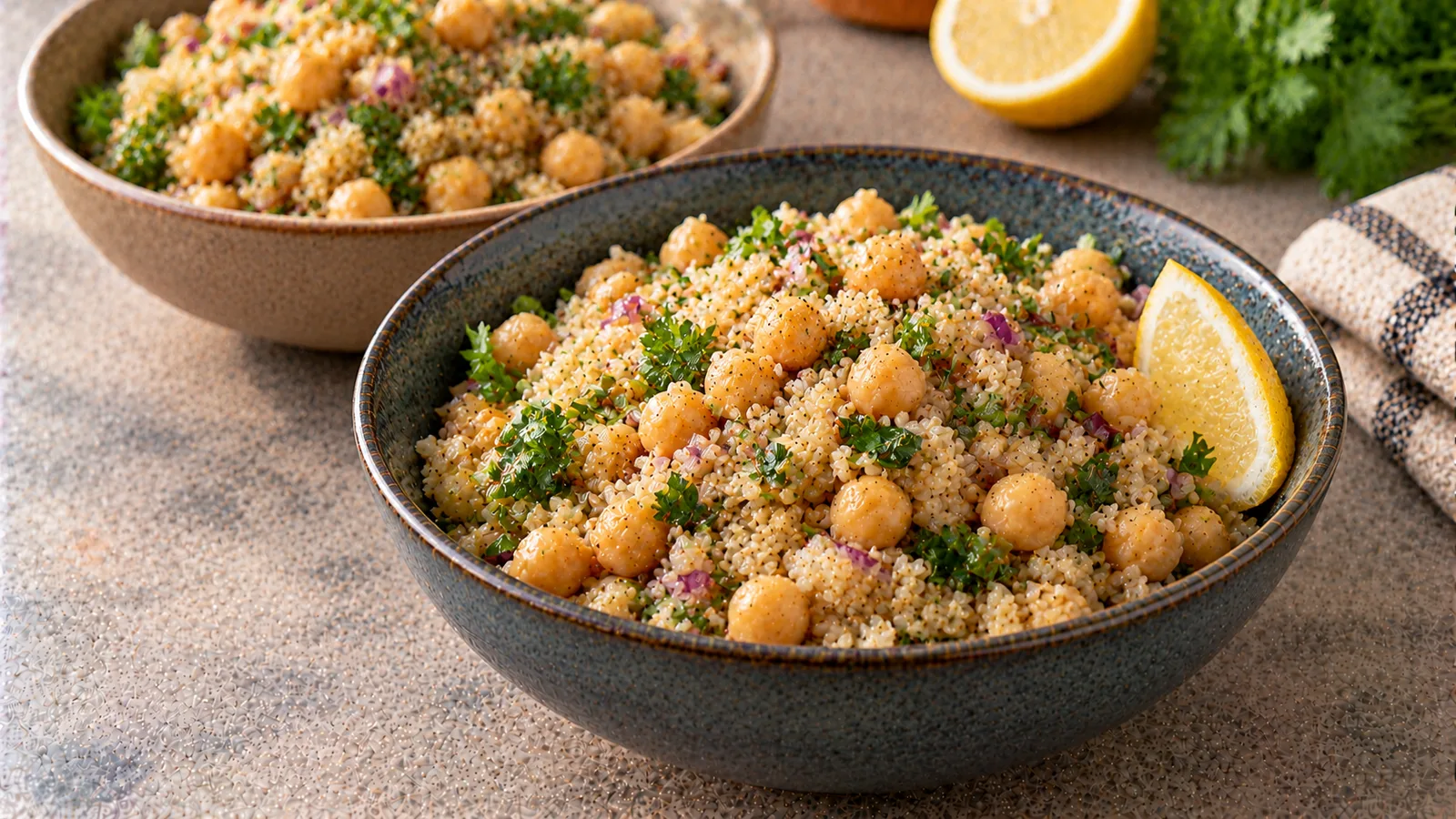
Why these lunch bowls work
Two substantial, lemony lunch bowls combine cooked bulgur, drained chickpeas, crisp cucumber, juicy tomato, chopped parsley, red onion and a light olive-oil dressing. The dish is plant-based and can be packed chilled; it is not a quinoa bowl or a roasted-pepper salad. The grain contributes texture, chickpeas add body, and fresh lemon keeps the dressing bright. This is one coherent recipe for two people, not a collection of unrelated toppings. No oven or blender is needed. Allow about 25 minutes of hands-on and cooking time, followed by cooling if packing ahead.
The key is to measure the ingredients in the correct state. Weigh 120 g dry bulgur before adding water, then use all of its cooked yield. Weigh 240 g canned chickpeas after draining; a can's total printed weight includes liquid and is not interchangeable with its drained weight. This distinction changes nutrition and cost calculations substantially. The bowls are flexible, but the numbers below apply only to the stated recipe.
Ingredients for two bowls
| Ingredient | Whole recipe | Preparation |
|---|---|---|
| Dry bulgur wheat | 120 g | Weigh dry; cook according to packet |
| Canned chickpeas | 240 g drained | Drain and rinse |
| Tomatoes | 160 g | Dice and drain excess juice |
| Cucumber | 150 g | Dice finely |
| Red onion | 60 g | Finely chop |
| Flat-leaf parsley | 20 g | Chop, including tender stems |
| Olive oil | 20 g | Weigh or measure carefully |
| Lemon juice | 40 g | Fresh or unsweetened bottled |
Use black pepper to taste and, if desired, a modest pinch of salt. A fresh lemon wedge beside each bowl is optional and is not included in the nutrition model. The dressing is lemon juice and oil rather than a mayonnaise-based sauce. Bulgur contains wheat and therefore gluten; chickpeas do not make this a gluten-free lunch. The EU allergen rules list cereals containing gluten among the allergens that must be declared in food information. Consult EU Regulation 1169/2011 for the labeling framework.
Prepare the bulgur without confusing raw and cooked weights
Place the dry bulgur in a small pan and follow its packet's water ratio and simmering directions. Fine bulgur may need only soaking; coarse bulgur generally needs cooking. Drain any excess water and fluff with a fork. The cooked mass can vary with grain size, water uptake and draining. A hypothetical 120 g dry portion may end up near 300 g cooked, but that is not a guaranteed yield or a second ingredient. Do not add the cooked mass to the dry weight in a calorie calculation; it is the same bulgur plus water. Spread it in a shallow container if you intend to chill it.
Seasoning while the grain is warm helps spread lemon flavor, but wait until it is no longer steaming before mixing with delicate cucumber and parsley if making a cold salad. Use a food-safe bowl; avoid keeping moist cooked grains on the counter during a long afternoon of meal preparation. The NHS advice on starches and grains explains that cooked grains require rapid cooling and appropriate refrigeration.
Make the chickpeas and vegetables ready
Tip the canned chickpeas into a sieve. Drain thoroughly and rinse; shake off surface water before weighing 240 g. A can might say 400 g net and around 240 g drained, but labels differ by brand. If your can yields only 220 g, use 220 g and adjust the calculation rather than pretending you used 240 g. Dried chickpeas are also possible, but cook them fully first and weigh the edible cooked amount. A dry-to-cooked conversion is not a one-to-one swap.
Dice tomato and cucumber to roughly the same size as the chickpeas. Chop the onion very fine so it does not dominate every forkful. If the onion is aggressive, rinse the chopped pieces briefly and dry them. Fold in freshly chopped parsley shortly before serving; dried parsley will taste different and cannot be substituted gram for gram. Keep tomato liquid out of the dressing so the bulgur stays fluffy rather than soggy.
Mix a restrained lemon dressing
Whisk 20 g olive oil with 40 g lemon juice and black pepper until lightly combined. Taste a drop with chickpea or bulgur rather than neat, because acidity tastes stronger on its own. For a gentler bowl, start with two thirds of the dressing, mix, taste, then add the rest. If the lemon is particularly sharp, do not automatically add sugar; let the grain absorb some dressing first. The olive oil contributes most of the added fat, so pouring extra from the bottle changes the numbers quickly.
A useful method is to toss bulgur and chickpeas with a little dressing, then fold through the vegetables and herbs. Divide between two bowls by weight for a closer match to the calculation. Put a small lemon wedge on the side, not buried under wet ingredients. For office lunches, pack lemon separately so the herbs stay fresh. The finished bowl should look like a grain-and-legume lunch, not a soup or a heavily sauced pasta dish.
Step-by-step assembly
- Weigh 120 g dry bulgur and prepare it using the package's cooking guidance. Fluff and cool promptly if it will be served cold.
- Drain and rinse the canned chickpeas; weigh 240 g after draining, not before.
- Dice 160 g tomato and 150 g cucumber. Finely cut 60 g red onion and chop 20 g parsley.
- Whisk 20 g olive oil with 40 g lemon juice and pepper. Taste before adding optional salt.
- Toss bulgur with chickpeas and part of the dressing; fold in tomato, cucumber, onion and parsley.
- Add remaining dressing to taste, divide into two comparable portions and serve with optional lemon wedges.
Cooking times depend on the bulgur grade and brand; a packet instruction is more reliable than a universal boil time. The recipe contains no raw meat, eggs or dairy, but the cooked grain still needs careful handling. Do not add a fried egg, cheese or a creamy dressing and keep quoting the same nutrition numbers.
Nutrition: whole recipe versus one bowl
| Estimated component | Whole recipe | One of 2 equal bowls |
|---|---|---|
| Energy | 967 kcal | 483 kcal |
| Protein | 34.3 g | 17.1 g |
| Fat | 27.6 g | 13.8 g |
| Carbohydrate | 148.8 g | 74.4 g |
| Fibre | 32.7 g | 16.3 g |
These are illustrative calculations, not laboratory results or a verified nutrition label for a finished bowl. They use generic per-100-g ingredient assumptions and the stated edible masses. Brands vary, especially for canned chickpeas. The dry bulgur is counted once, even after it has absorbed water. The model excludes salt, optional lemon wedges and any extra toppings. The USDA FoodData Central food search is a useful starting point to check the exact raw, cooked or canned entry you choose; do not treat entries with different preparation states as identical.
For more context about how a starchy base, legumes and vegetables fit together, see Mealisa's balanced meal guide. If your two bowls are unequal, halve neither estimate blindly: weigh the finished food and use your actual serving proportion. The portion size versus serving size explanation clarifies the difference.
Cost: amount used, not the shopping receipt
| Illustrative ingredient group | Cost used in two bowls | Cost per bowl |
|---|---|---|
| Bulgur, 120 g dry | €0.42 | €0.21 |
| Chickpeas, 240 g drained | €0.95 | €0.48 |
| Tomato, cucumber, onion and parsley | €1.56 | €0.78 |
| Olive oil and lemon juice | €0.54 | €0.27 |
| Total estimated used cost | €3.47 | €1.74 |
The €3.47 calculation is a hypothetical worked example, not a verified supermarket quote or a guarantee of what groceries cost in Germany today. It counts amounts used, not whole purchased packs. Checkout spending could be higher because you may buy a full bottle of oil, a bunch of parsley and a larger bag of bulgur. Keep checkout cost separate from recipe-used cost. If substituting dried chickpeas, include the dry purchase quantity and cooking yield rather than treating 240 g drained canned chickpeas as 240 g dry beans.
A practical packing plan
For a cold office lunch, prepare the grain first so it has time to cool, then pack chilled vegetables and chickpeas in two clean containers. Keep the dressing in a tight separate cup if the bowls will travel for several hours. Fold in parsley just before closing or eating. A chilled transport bag helps keep food cold during a commute. Add a fork; these ingredients are not designed to be eaten as a handheld wrap.
For a warmer lunch, reheat only the bulgur and chickpeas until thoroughly hot, then add the raw cucumber, tomato, parsley and lemon dressing after heating. Heating the entire completed salad softens the vegetables and dulls its fresh texture. Avoid repeated cycles of cooling and warming. A thermos can hold hot food, but it is not a shortcut around proper initial cooking or handling temperatures.
Storage and food safety
Cooked grains should be cooled promptly and refrigerated, ideally within an hour as recommended by the NHS for cooked rice and grains. Its conservative rice-and-grain guidance recommends consuming refrigerated cooked grains within 24 hours. For this make-ahead grain bowl, plan to eat the prepared bulgur within 24 hours rather than relying on the longer generic leftovers window. Keep refrigerated at 5 °C or colder where possible, and discard food left out overnight.
USDA guidance for leftovers more generally allows 3–4 days in the refrigerator when handled correctly, but that is not a reason to ignore the stricter grain-specific advice used for this recipe. See the USDA leftovers guidance. If reheating, heat thoroughly and avoid reheating again. When in doubt about a lunch that has been warm in a bag, discard it rather than using smell as a safety test.
Changes that genuinely alter the recipe
A handful of additional leaves is a small change in flavor, but it is not included in the numbers. Adding feta, chicken, avocado, nuts or more oil produces a different nutritional profile and may introduce allergens. Replacing bulgur with quinoa also changes the wheat/gluten question, cooking method, weights and nutrient calculations; it should not be represented as the same exact recipe. For an explanation of chickpeas as an ingredient, consult Mealisa's chickpea calorie guide, while still checking the preparation state you actually used.
If the bowl seems dry, first add a teaspoon of water or lemon juice and fluff the grain. If it seems soggy, drain the tomato well and add dressing after assembly next time. If it tastes flat, add pepper, chopped parsley or a small squeeze of fresh lemon before automatically increasing salt. If it tastes too sharp, mix in more of the existing bulgur rather than pouring in another tablespoon of oil and pretending the original cost remains accurate.