
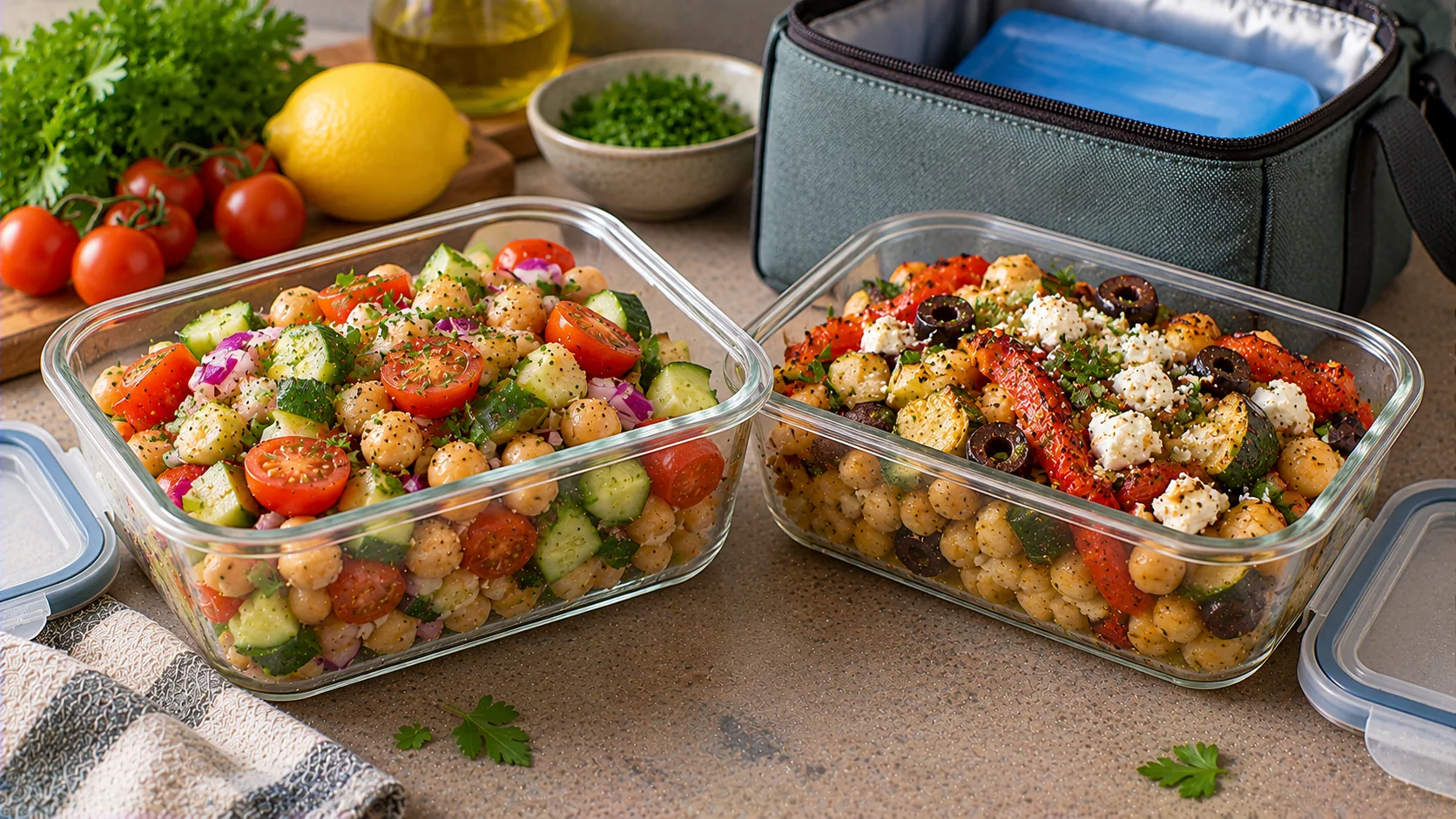
Three Mediterranean chickpea lunches you can eat cold
A lunch that needs no reheating is useful at work, on campus and while travelling, but no reheating does not mean no refrigeration. These three distinct recipes use canned chickpeas as a convenient base, paired with different vegetables, starches and dressings. They are intended to taste good chilled, not to be kept unrefrigerated for a whole day. If a refrigerator is unavailable, use an insulated carrier with frozen ice packs and check that perishable food remains cold.
This is not another lemon-and-bulgur chickpea bowl. our lemon chickpea and bulgur bowl recipe is the dedicated recipe for that combination. Here the three approaches are a crunchy pita pocket, a jar of roasted pepper and chickpeas, and a herbed potato salad. Each stands alone with its own ingredient list and packing instructions.
Before you start: weight and cost conventions
All chickpea weights below refer to drained and rinsed chickpeas, not the total weight of the can including liquid. A can marked 400 g net weight may contain only about 240 g drained chickpeas; read the actual label. Rinse in a colander, drain well and pat dry so that dressing does not pool in the box. Our our guide to drained canned chickpea weight explains the distinction between net and drained weight.
Prices are hypothetical euro examples, not verified current offers. Nutrition figures are approximate calculations from typical ingredients; brands and final drained weights vary. For reliable figures use the nutritional declarations on your purchased products and USDA FoodData Central as an ingredient reference.
| Lunch | Servings | Chickpeas (drained) | Other defining ingredient | Estimated ingredient cost per serving |
|---|---|---|---|---|
| Crunchy pita pockets | 2 | 200 g | Wholegrain pita and carrot | €1.55 |
| Roasted-pepper couscous jars | 2 | 200 g | Jarred peppers and couscous | €1.85 |
| Herbed potato and chickpea salad | 2 | 200 g | Boiled potatoes and green beans | €1.70 |
Lunch 1: crunchy chickpea and carrot pita pockets
Makes two lunches. Ingredients: 200 g drained chickpeas; two wholegrain pita breads (approximately 70 g each); 100 g grated carrot; 100 g cucumber, diced; 60 g thick plain yogurt; 10 g lemon juice; 8 g chopped parsley; 5 g olive oil; black pepper. If using yogurt, keep this lunch cold until eating.
- Drain, rinse and dry the chickpeas. Lightly crush half with a fork and leave half whole; this helps the filling hold together without becoming a paste.
- Mix yogurt, lemon juice, parsley, olive oil and pepper in a small lidded cup. Do not mix the dressing into the vegetables the night before.
- Place carrot and chickpeas in a sealed container, with cucumber in a second compartment if possible. Keep the pita breads dry in their own wrapper.
- When ready to eat, open each pita, divide the filling between the two breads and spoon over the dressing. Add cucumber last for crunch.
Why it travels well: pita is more practical to fill just before eating than an already assembled wet sandwich. The grated carrot stays crisp when kept away from dressing. For a dairy-free version use an unsweetened plant-based yogurt, checking its label because protein and price can differ substantially.
Lunch 2: roasted pepper and couscous lunch jars
Makes two lunches. Ingredients: 200 g drained chickpeas; 100 g dry wholewheat couscous; 150 g jarred roasted peppers, drained and sliced; 80 g cherry tomatoes, halved; 40 g red onion, finely sliced; 15 g olive oil; 15 g red wine vinegar; 5 g dried oregano; a little black pepper. Check whether the peppers already contain oil or significant salt.
- Pour the quantity of freshly boiled water specified on the couscous packet over 100 g couscous. Cover until hydrated, fluff with a fork, and cool promptly in a shallow container. Do not leave cooked grains warm on the counter for hours.
- Whisk the oil, vinegar and oregano. Divide this dressing between two leakproof jars.
- Add peppers and chickpeas to the bottom, then cooled couscous, onion and tomatoes. Leave space at the top for shaking.
- Seal and refrigerate. To eat, shake or tip into a bowl. If tomatoes have released liquid, drain a small amount before mixing.
Why it travels well: the oil-and-vinegar dressing contains no dairy, but the prepared grains and vegetables still need refrigeration. Unlike a bulgur-and-lemon bowl, this recipe deliberately relies on the quick hydration of couscous and a stronger roasted-pepper flavour.
Lunch 3: herbed potato, green bean and chickpea salad
Makes two lunches. Ingredients: 200 g drained chickpeas; 300 g potatoes, weighed raw; 160 g trimmed green beans (fresh or frozen); 60 g finely chopped celery; 15 g olive oil; 12 g lemon juice; 8 g Dijon mustard; 10 g chopped dill or parsley; black pepper.
- Wash and cut the potatoes into even pieces. Boil in water until fork-tender, then drain. Cook green beans separately until fully cooked according to the pack if frozen, then drain.
- Spread the cooked potato and beans in shallow containers, let excess steam escape briefly and refrigerate promptly. Never add warm components directly to a tightly closed, deep lunch box.
- Whisk oil, lemon, mustard, herbs and pepper. Toss with cold potatoes, green beans and chickpeas, or pack the dressing separately for firmer texture.
- Divide between two sealed lunch containers and keep refrigerated until departure and during transport.
Why it travels well: unlike delicate lettuce, cooked potato and green beans hold their structure after chilling. Mustard can contain salt; taste before adding more. Potatoes are a starchy component, so this is a lunch rather than a low-carbohydrate snack.
Example shopping arithmetic
If a 400 g can costs €0.89 and delivers 240 g drained chickpeas, the usable cost is €0.89 ÷ 240 × 100 = €0.37 per 100 g, not €0.22 per 100 g calculated from the total can weight. Using 200 g drained chickpeas costs approximately €0.74 and leaves 40 g from the illustrative can. Two cans at this yield supply enough for two recipes (400 g), while all three recipes require 600 g drained, or approximately three cans. Verify your own pack's drained weight; some brands differ.
For a lunch costing €3.10 in total ingredients and yielding two portions, the consumed-ingredient estimate is €1.55 per portion. Buying whole packages may require a larger cash outlay. If you use 15 g from a 500 ml olive oil bottle, charge only those 15 g to the recipe; do not divide the entire bottle price between two lunches. The table above illustrates plausible basket arithmetic, not supermarket quotes.
Packing: texture and food safety are separate questions
| Ingredient | Pack separately? | Reason |
|---|---|---|
| Pita bread | Yes | Prevents a soggy pocket |
| Yogurt dressing | Yes, chilled | Retains texture and food safety |
| Couscous | Cool quickly before sealing | Reduces time in the temperature danger zone |
| Tomatoes | Prefer an upper layer | Less liquid soaking grains |
| Cooked potatoes and beans | Refrigerate after prompt cooling | Cooked food is perishable |
Keep refrigerators at 4 °C or below. Perishable prepared lunches should not sit at room temperature for more than two hours, or one hour when ambient temperatures exceed 32 °C. These are safety limits, not a target holding time. Follow the USDA guidance on keeping food safe. Consume prepared leftovers within 3–4 days when continuously refrigerated; if making these for several days, consider assembling delicate components on the day of eating. An insulated bag is not a substitute for evidence that the contents stay properly chilled.
Canned chickpeas are usually ready to eat after draining, but inspect the label and container. Discard cans that are bulging, leaking or otherwise damaged. Wash fresh vegetables and hands, use clean boards and containers, and do not put prepared food into a bag that previously held raw poultry without cleaning.
Which of the three lunches should you choose?
Choose the pita pockets when you want something handheld and can assemble it at lunch. Choose the pepper-and-couscous jars when you have a kettle and like a grain-based salad with tangy dressing. Choose potato and green beans when you prefer a hearty, fork-friendly lunch that does not rely on bread. All three can be made without a microwave at the time of eating, but they are not shelf-stable meals.