
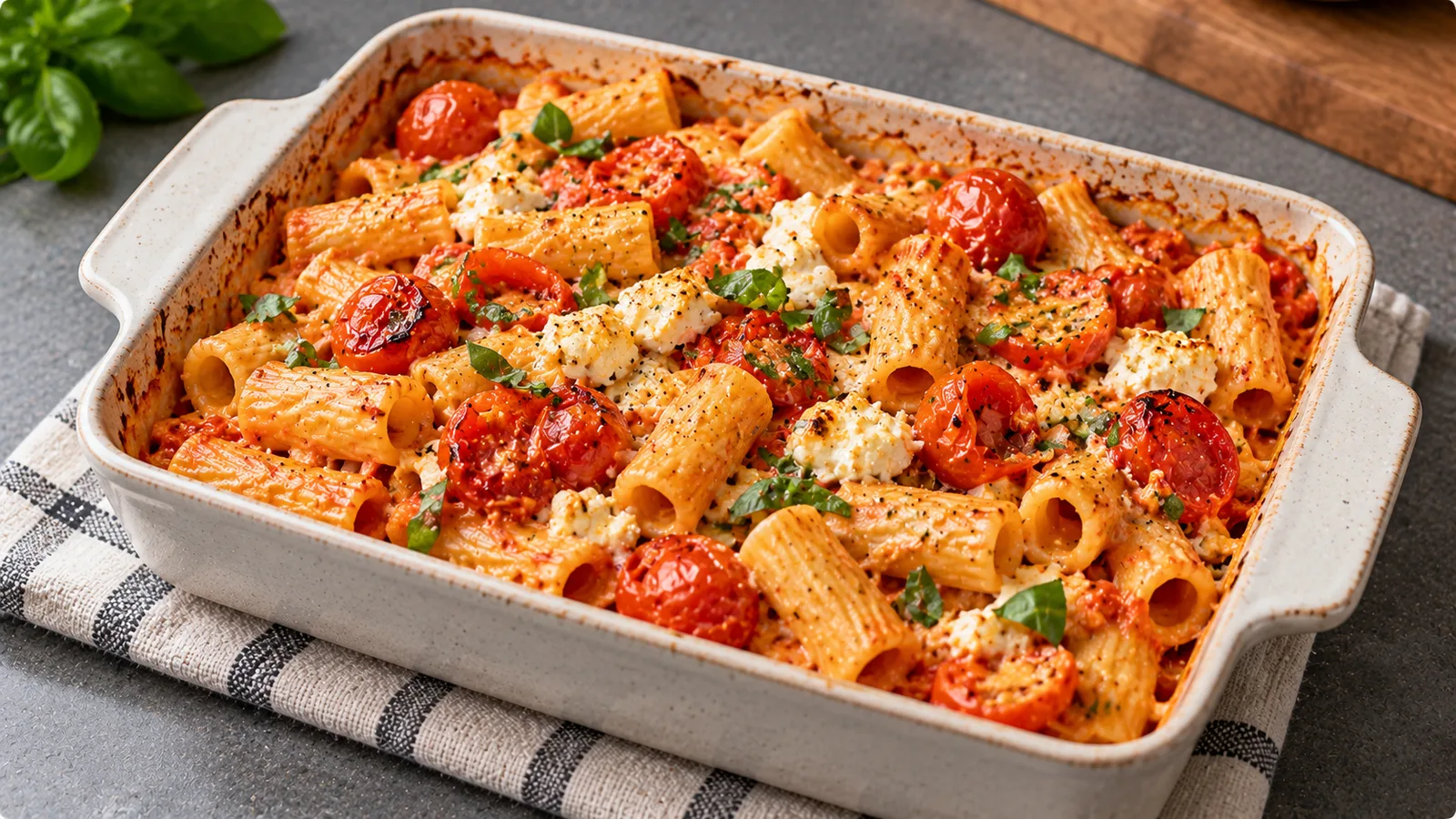
Baked feta and tomato pasta combines roasted cherry tomatoes, a block of feta, garlic and pasta into a creamy sauce without needing cream. The tomatoes soften in the oven, the feta becomes easy to mix, and a little starchy pasta water helps bring everything together.
This version uses 300 g dry pasta, 200 g feta and 600 g cherry tomatoes for four main-course portions. Keeping the ingredient weights consistent makes the recipe easier to reproduce and its nutrition easier to estimate.
Recipe at a glance
| Detail | Amount |
|---|---|
| Servings | 4 |
| Preparation | 10 minutes |
| Oven time | 30–35 minutes |
| Pasta cooking | About 10–12 minutes, according to package |
| Total elapsed time | About 45 minutes |
| Oven temperature | 200°C conventional / 180°C fan |
| Baking dish | Approximately 25 × 20 cm |
| Main ingredients | Pasta, feta, cherry tomatoes |
The cooking times are practical estimates. Tomatoes and feta vary in moisture, and oven performance differs. Look for burst, softened tomatoes and a hot, softened cheese block rather than relying on the timer alone.
Ingredients for four servings
| Ingredient | Amount | Notes |
|---|---|---|
| Dry pasta | 300 g | Penne, fusilli or another short pasta |
| Feta | 200 g | One block, preferably in brine and drained |
| Cherry tomatoes | 600 g | Whole, washed |
| Olive oil | 20 g | Approximately 1½ tablespoons, depending on measuring spoon |
| Garlic | 12 g | About 3 medium cloves, finely chopped |
| Fresh basil | 15 g | Leaves, roughly torn |
| Black pepper | To taste | Add after baking if preferred |
| Chili flakes | Optional | A small pinch |
| Pasta cooking water | 60–120 ml as needed | Not an additional calorie source of significance |
No extra salt is included in the ingredient calculation because feta is already salty. Taste the finished sauce before deciding whether it needs any.
Ingredient basis: Pasta is weighed dry. Tomatoes and garlic are weighed before cooking. Feta is weighed after draining. Olive oil is weighed rather than estimated by eye.
Step-by-step method
1. Prepare the oven and baking dish
Preheat the oven to 200°C with conventional heat or 180°C with a fan.
Choose a baking dish large enough for the tomatoes to sit mostly in a single layer around the feta. A dish of approximately 25 × 20 cm works for this quantity.
Wash the cherry tomatoes and drain the feta.
2. Arrange the feta and tomatoes
Place the feta block in the middle of the dish and spread the 600 g cherry tomatoes around it.
Drizzle the 20 g olive oil over the tomatoes and cheese. Turn the tomatoes gently to distribute the oil.
Add black pepper and optional chili flakes.
Keep the garlic aside initially if you prefer a milder roasted garlic flavour and want to avoid burning finely chopped pieces.
3. Bake until the tomatoes soften
Bake for approximately 25 minutes.
Add the chopped garlic, gently stir it into the hot tomato juices and continue baking for another 5–10 minutes.
The tomatoes should have burst or become easy to crush with a spoon. The feta should be hot and soft enough to mix.
If the surface starts browning too quickly, reduce the temperature slightly or loosely cover the dish.
4. Cook the pasta
While the tomatoes bake, bring a large pot of water to a boil.
Cook the 300 g dry pasta according to the package instructions until al dente.
Before draining, reserve at least 120 ml of the pasta cooking water.
Drain the pasta. Do not rinse it.
5. Make the tomato-feta sauce
Remove the baking dish from the oven and place it on a heat-resistant surface.
Mash the softened feta and tomatoes with a spoon or fork until they form a rustic sauce.
Add about 60 ml of reserved pasta water and stir. Add more gradually if the mixture is too thick.
The sauce should coat pasta rather than resemble a thin soup.
6. Combine and serve
Add the cooked pasta to the sauce.
Fold everything together until evenly coated. Stir in the 15 g fresh basil.
Taste before adding salt. Divide into four approximately equal portions and serve hot.
How much does one serving weigh?
The recipe begins with 300 g dry pasta, but cooked pasta absorbs water. Tomatoes also release moisture during baking, some of which evaporates.
Consequently, the final dish weight cannot be determined accurately from raw ingredient weights alone.
For reliable portion tracking:
- Weigh the empty serving container or note the empty pan weight.
- Weigh the finished edible dish after mixing.
- Divide the final weight by four for four equal portions.
For example, if the finished pasta weighs 1,600 g, each quarter weighs approximately 400 g.
The 1,600 g yield is an illustration, not a measured result for this recipe. Actual yield depends on pasta water absorption, evaporation and how much pasta water is added.
If you serve different-sized portions, allocate the recipe nutrition in proportion to the finished weight.
Estimated calories and macros
The following estimates use the exact ingredient weights above and representative food-composition values. Seasonings and reserved pasta water are excluded because their energy contribution is negligible at the amounts used.
| Nutrient | Whole recipe | Per serving, ¼ recipe |
|---|---|---|
| Energy | 1886 kcal | 472 kcal |
| Protein | 70.6 g | 17.7 g |
| Fat | 67.9 g | 17 g |
| Carbohydrates | 248.8 g | 62.2 g |
| Fibre | 16.7 g | 4.2 g |
These figures are calculated estimates, not laboratory measurements. Feta and pasta brands can differ significantly. For the most accurate result, replace the reference values with the nutrition information from your own packages.
The calculation includes all 20 g olive oil and assumes that the sauce and pasta are divided equally.
Why the sauce becomes creamy
The feta softens during baking and mixes with the liquid released by the tomatoes. Olive oil contributes richness, while starch in the reserved pasta water helps the mixture coat the pasta.
The result is creamy in texture without requiring heavy cream.
Feta does not melt into a perfectly smooth liquid like some processed cheeses. A slightly grainy or rustic sauce is normal.
Common problems and how to fix them
| Problem | Likely reason | Practical adjustment |
|---|---|---|
| Sauce is too thick | Not enough tomato liquid or pasta water | Add reserved pasta water gradually |
| Sauce is watery | Too much added water | Mix thoroughly and let stand briefly |
| Garlic tastes bitter | Small pieces burned | Add garlic near the end of baking |
| Dish tastes too salty | Feta and pasta water already contain salt | Avoid adding salt until after tasting |
| Tomatoes remain firm | Insufficient roasting | Bake until softened and easy to crush |
| Pasta becomes soft | Overcooked before mixing | Drain at al dente |
Ingredient substitutions
Whole-wheat pasta: Use the same dry weight, but follow its own cooking instructions. Fibre and calorie values may change.
Reduced-fat feta: It can lower the recipe's fat and energy content, but texture and salt levels vary. Recalculate nutrition from the package.
Larger tomatoes: Cut them into smaller pieces to encourage even roasting. Their moisture release may differ from cherry tomatoes.
Dried basil: It can provide flavour, but it does not replicate the freshness of basil leaves added at the end.
Additional vegetables: Spinach or roasted peppers can be mixed into the finished sauce. Record the extra ingredients if calculating nutrition.
This recipe contains wheat and milk when prepared with conventional pasta and feta. Check labels if allergies or intolerances are relevant.
Storage and reheating
Cool leftovers promptly and refrigerate in a covered container.
As a conservative practical approach, use refrigerated leftovers within 3–4 days, provided they were cooled and stored safely.
Reheat until steaming hot throughout. A splash of water can loosen the sauce.
Avoid leaving cooked pasta at room temperature for extended periods. Cooked starchy foods can present food-safety risks if improperly cooled or stored.
For general food-storage advice, consult USDA Food Safety and Inspection Service.
How to record the recipe in a food diary
For accurate nutrition tracking, enter each ingredient in its original measured amount:
- 300 g dry pasta.
- 200 g drained feta.
- 600 g cherry tomatoes.
- 20 g olive oil.
- 12 g garlic.
- 15 g fresh basil.
Set the recipe yield to four servings, or enter the actual final cooked weight if your tracking system supports weight-based portions.
Do not enter the pasta again as cooked pasta after already counting its dry weight; that would double-count the same ingredient.
Sources and calculation notes
Reference ingredient values can be checked through USDA FoodData Central. Food-safety guidance is available from USDA FSIS.
The recipe quantities, preparation sequence and nutritional calculation are provided as a reproducible home-cooking method. The final cooked yield and sensory results are estimates rather than claims of a laboratory or independently verified kitchen test.