
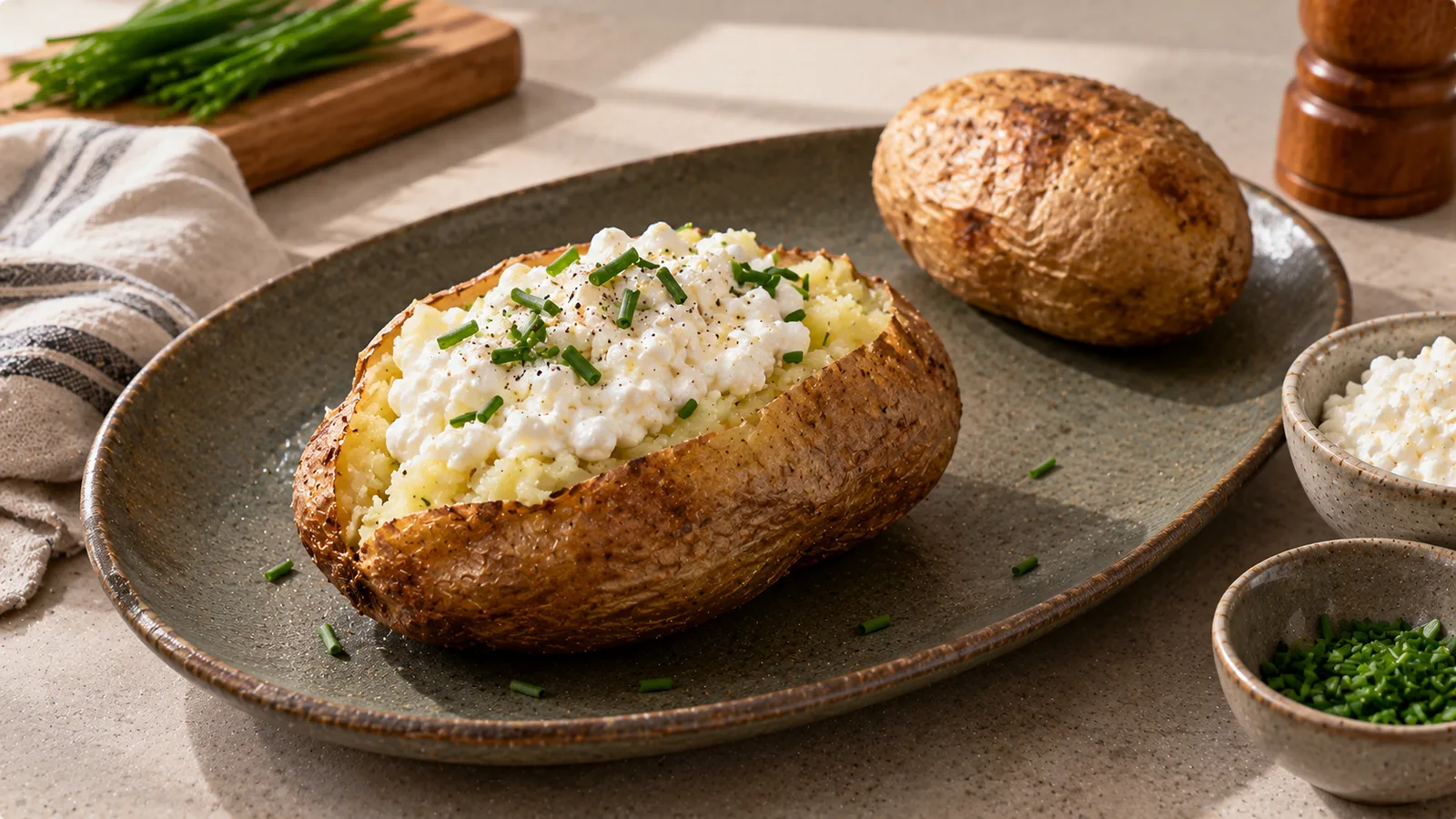
A baked potato with cottage cheese is one of the simplest ways to turn everyday ingredients into a satisfying meal. The potato provides a soft, fluffy base, while cottage cheese adds a creamy topping and a substantial amount of protein.
This version uses chives, lemon, garlic and a little olive oil. The ingredients are easy to find, and the recipe works for lunch, dinner or a filling meal after a busy day.
Unlike a heavily loaded baked potato, this recipe keeps the topping fresh and relatively light without sacrificing flavour.
Recipe at a glance
| Detail | Amount |
|---|---|
| Servings | 2 |
| Preparation time | 10 minutes |
| Baking time | 50–65 minutes |
| Total time | About 60–75 minutes |
| Difficulty | Easy |
| Diet | Vegetarian, if using suitable cottage cheese |
The baking time depends on potato size and oven performance.
Ingredients
For two generous servings:
| Ingredient | Quantity |
|---|---|
| Large baking potatoes | 2, approximately 600 g total |
| Cottage cheese | 300 g |
| Olive oil | 10 g |
| Fresh chives | 15 g |
| Lemon juice | 15 ml |
| Garlic | 1 small clove |
| Salt | To taste |
| Black pepper | To taste |
| Smoked paprika | 1/2 teaspoon, optional |
Choose similarly sized potatoes so they finish cooking at approximately the same time.
A floury or all-purpose potato usually produces a pleasantly fluffy interior.
Choosing the cottage cheese
Plain cottage cheese is the easiest option.
Different brands vary in fat, protein, salt and moisture content. Some are quite thick, while others contain more liquid.
For a creamy topping, use cottage cheese as it comes or stir it briefly with a spoon.
For a smoother texture, blend part of the cottage cheese and fold it back into the rest.
You do not need to blend the entire mixture.
How to make baked potatoes with cottage cheese
1. Heat the oven
Preheat the oven to 220°C conventional heat or approximately 200°C fan.
Line a baking tray with parchment paper if desired.
2. Prepare the potatoes
Scrub the potatoes thoroughly under running water and dry them.
Pierce each potato several times with a fork.
Rub the skins with the olive oil and a small pinch of salt.
Place them directly on the baking tray.
3. Bake until tender
Bake for approximately 50–65 minutes, depending on size.
The potatoes are ready when a knife or skewer slides easily into the centre.
The skin should feel slightly crisp and the inside should be soft.
Very large potatoes may need longer.
Avoid judging doneness by time alone.
4. Prepare the cottage cheese topping
While the potatoes bake:
- Finely chop the chives.
- Crush or finely grate the garlic.
- Combine cottage cheese, lemon juice, garlic and most of the chives.
- Add black pepper and a little salt if needed.
- Mix gently.
Taste before adding much salt because cottage cheese may already contain a significant amount.
Keep a little chopped chive for serving.
5. Open the potatoes
Remove the cooked potatoes from the oven.
Cut a lengthwise slit in each potato and gently press the ends to open the fluffy centre.
Loosen the flesh slightly with a fork.
Be careful: hot steam will escape.
6. Add the topping
Spoon half of the cottage cheese mixture onto each potato.
Finish with the remaining chives, black pepper and optional smoked paprika.
Serve immediately.
How to get fluffy potatoes and crisp skins
A good baked potato needs enough time for the centre to become tender.
These small details make a difference:
- Dry the potatoes after washing. Excess surface moisture slows browning.
- Use a hot oven.
- Avoid wrapping potatoes tightly in foil if you want crisp skins.
- Choose potatoes of similar size.
- Bake until the centre is fully tender, even if that takes longer than expected.
- Open the potatoes soon after baking to release steam.
If you prefer a softer skin, you can wrap the potatoes in foil, but the result will be more steamed than crisp.
Estimated nutrition per serving
The following estimate assumes two servings made with 600 g potatoes, 300 g plain cottage cheese, 10 g olive oil and the remaining ingredients.
Actual nutrition depends on the potato variety and cottage cheese brand.
| Nutrient | Approximate amount per serving |
|---|---|
| Calories | 410–470 kcal |
| Protein | 23–29 g |
| Fat | 9–14 g |
| Carbohydrates | 56–65 g |
| Fibre | 6–8 g |
These are approximate values, not laboratory measurements.
For more precise tracking, use the nutrition label of your cottage cheese and the actual weight of the potatoes.
Where the protein comes from
Most of the protein in this recipe comes from cottage cheese.
Potatoes also contribute some protein, although they are primarily a source of carbohydrates.
If your cottage cheese contains 12 g protein per 100 g, the full 300 g portion provides:
12 × 3 = 36 g protein
Divided between two people, that is 18 g protein from cottage cheese alone, before counting the potatoes.
Can you make it higher in protein?
Yes.
A straightforward option is to increase the cottage cheese from 300 g to 400 g for the full recipe.
That adds 50 g cottage cheese per serving.
If the product contains 12 g protein per 100 g, this increases protein by approximately 6 g per serving.
Other options include:
- Serving the potatoes with a boiled egg.
- Adding a side of cooked lentils.
- Mixing chopped cooked chicken into the topping for a non-vegetarian version.
- Using a higher-protein cottage cheese, if available.
Keep in mind that additional ingredients also change calories and other nutrients.
Easy variations
Tomato and basil
Replace the chives with fresh basil and add diced tomatoes.
Remove excess tomato liquid before mixing so the topping does not become watery.
Cucumber and dill
Add finely diced cucumber, dill and a little lemon zest.
This creates a fresh, cool topping that contrasts with the hot potato.
Spinach and garlic
Wilt a handful of spinach in a pan, squeeze out excess moisture and fold it into the cottage cheese.
Use a little extra black pepper.
Spicy paprika
Mix smoked paprika, chilli flakes and chopped spring onion into the topping.
Start with a small amount of chilli and adjust to taste.
Roasted mushrooms
Top the finished potato with mushrooms sautéed until their moisture has evaporated.
Add the cottage cheese just before serving.
What to serve with cottage cheese baked potatoes
The recipe can stand alone as a simple meal.
For more vegetables, serve it with:
- A green salad with lemon dressing.
- Roasted broccoli.
- Cucumber and tomato salad.
- Steamed green beans.
- Carrot and cabbage slaw.
If you want a more substantial meal, add a portion of beans, lentils or another protein source.
Choose accompaniments according to your appetite and overall dietary goals.
Can you use sweet potatoes?
Yes, but the result will taste different.
Sweet potatoes are naturally sweeter and may have a softer texture.
Bake them until tender, then add the same cottage cheese topping.
Because sweet potatoes vary in size and composition, calculate their nutrition separately rather than reusing the estimate for regular potatoes.
Can you make this recipe in an air fryer?
Yes, if the potatoes fit comfortably in the basket.
A practical starting point is 190–200°C for approximately 35–55 minutes, depending on potato size and air-fryer model.
Turn them halfway through if necessary.
Check the centre with a knife before serving.
Prepare the topping while the potatoes cook.
Do not overcrowd the basket.
Can you microwave the potatoes?
A microwave can shorten preparation time.
Pierce the potatoes and cook them on a microwave-safe plate until tender, turning them partway through.
Cooking time depends heavily on microwave power and potato size.
For crisper skins, finish the cooked potatoes in a hot oven or air fryer.
Microwave-cooked potatoes will generally have softer skins than oven-baked ones.
Make-ahead and storage
You can prepare parts of the recipe in advance.
Baked potatoes: Cool promptly, refrigerate in a covered container and use within 3–4 days when handled and stored safely.
Cottage cheese topping: Keep refrigerated in a covered container and follow the product's storage instructions and use-by date. For best quality, prepare it shortly before serving or use it within 1–2 days.
Store the potatoes and topping separately.
Do not leave cooked potatoes at room temperature for extended periods.
Reheat the potatoes until thoroughly hot, then add the cold topping.
If potatoes were baked in foil, remove the foil before cooling and refrigerating.
For general storage guidance, see USDA FoodSafety.gov.
Common problems and fixes
| Problem | Likely cause | Solution |
|---|---|---|
| Potato is hard in the centre | Not baked long enough | Continue baking and test again |
| Skin is soft | Moisture or foil wrapping | Dry thoroughly and bake uncovered |
| Cottage cheese topping is watery | High-moisture cheese or vegetables | Drain excess liquid before mixing |
| Topping tastes bland | Insufficient seasoning | Add lemon, herbs and pepper |
| Garlic tastes too strong | Too much raw garlic | Use less or briefly cook it first |
| Potato cools too quickly | Topping added too early | Prepare everything before opening the potato |
How to log this recipe in a nutrition app
For accurate tracking, enter the ingredients separately or save the complete recipe.
Use:
- 600 g potatoes.
- 300 g cottage cheese.
- 10 g olive oil.
- 15 g chives.
- 15 ml lemon juice.
- One small garlic clove.
- Any additional toppings.
Set the recipe to two servings.
If you use a different amount of cottage cheese or oil, update the recipe instead of relying on the original estimate.
When logging by cooked weight, remember that baking removes water. The total calories do not disappear, but the weight of the finished potatoes changes.
Final serving tip
For the best texture, serve the potatoes hot and add the cottage cheese topping at the last moment.
The contrast between fluffy potato, crisp skin and cool, herby cottage cheese is what makes this simple recipe particularly satisfying.
It is an easy way to prepare a filling vegetarian meal without complicated ingredients or lengthy hands-on cooking.