
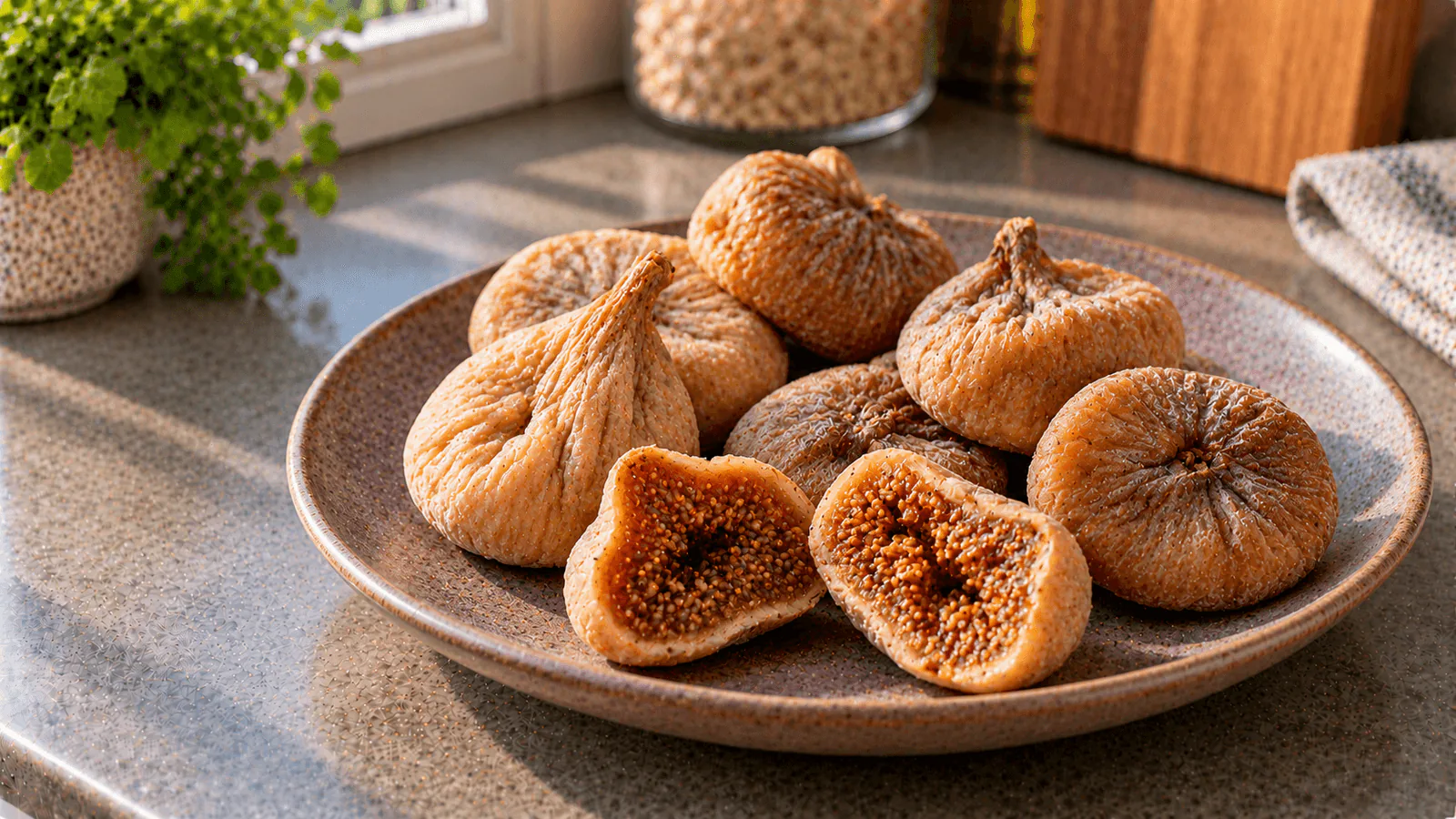
Dried figs provide approximately 249 calories per 100 g of edible fruit, according to USDA FoodData Central. They are a concentrated source of carbohydrate because much of the water present in fresh figs has been removed. A smaller, weighed portion can fit into a snack or meal, but counting individual figs without considering their size can be misleading.
This guide uses the USDA record “Figs, dried, uncooked” (FDC 174665) for plain dried figs. It distinguishes the dried fruit from fresh figs, figs soaked in water and commercial products made with additional ingredients.
Dried fig nutrition per 100 g
| Nutrient | Per 100 g dried figs |
|---|---|
| Energy | 249 kcal |
| Protein | 3.30 g |
| Total carbohydrate | 63.87 g |
| Total sugars | 47.92 g |
| Dietary fibre | 9.80 g |
| Total fat | 0.93 g |
| Potassium | 680 mg |
| Calcium | 162 mg |
| Water | 30.05 g |
Source: USDA FoodData Central — Figs, dried, uncooked. Values are food-composition reference figures, not a guarantee for every brand. The US total-carbohydrate definition includes dietary fibre, while European labels typically display available carbohydrate separately from fibre. Avoid subtracting fibre twice when comparing the two systems.
How many calories are in 15, 30, 50 or 100 g?
The most useful calculation is based on the edible weight you actually eat, rather than a supposed standard number of figs.
| Edible weight | Calories | Total sugars | Fibre |
|---|---|---|---|
| 15 g | 37 kcal | 7.2 g | 1.5 g |
| 25 g | 62 kcal | 12.0 g | 2.5 g |
| 30 g | 75 kcal | 14.4 g | 2.9 g |
| 40 g | 100 kcal | 19.2 g | 3.9 g |
| 50 g | 125 kcal | 24.0 g | 4.9 g |
| 75 g | 187 kcal | 35.9 g | 7.4 g |
| 100 g | 249 kcal | 47.9 g | 9.8 g |
The table multiplies the 100 g reference values by the portion weight and rounds them for readability. It does not assume that all figs have identical size or moisture content.
Portion calories = edible grams × 249 ÷ 100. For instance, 35 g contributes approximately 87 kcal. If the package lists a different value, use its label for the product you bought.
Calories in one dried fig: why counting pieces is unreliable
Dried figs vary in variety, ripeness, drying method and size. A small piece and a large soft fig can weigh very different amounts. Rather than calling one fig a fixed-calorie serving, use these purely illustrative weights: a 10 g fig provides about 25 kcal; a 20 g fig provides about 50 kcal; and a 30 g fig provides about 75 kcal.
These are mathematical examples, not official definitions of small, medium and large dried figs. If you eat four figs weighing 72 g altogether, their estimated energy is about 179 kcal. Weigh the batch once and divide only if you need a rough per-piece estimate. Remove any inedible stems before calculating the consumed weight.
Dried figs versus fresh figs
Fresh and dried figs are the same general fruit category but have markedly different water contents. The USDA reference for raw fresh figs (FDC 173021) provides approximately 74 kcal and 2.9 g fibre per 100 g, compared with 249 kcal and 9.8 g fibre for the dried reference. USDA — Figs, raw.
That does not mean drying manufactures new calories or fibre. Removing water makes a smaller mass contain more fruit solids. A 100 g comparison therefore contrasts different concentrations, not equal numbers of figs or equal quantities of original fruit.
Choose fresh figs if you prefer a larger water-rich portion; choose dried figs for convenient storage and a more concentrated portion. Neither choice automatically makes a complete snack.
What changes when dried figs are soaked?
Soaking in plain water can make dried figs softer and heavier as they absorb moisture. The total calories of the figs do not increase just because water is absorbed. However, their calories per 100 g of re-hydrated weight may fall because some of that weight is water.
Suppose 40 g of dried figs starts at about 100 kcal. After soaking, the drained figs might weigh 60 g; if no meaningful edible solids were lost, the figs still contain roughly 100 kcal in total, not 149 kcal calculated from 60 g of dry-food values. This 60 g outcome is a hypothetical illustration, not a measured rehydration ratio.
If sugar or syrup is added to the soaking liquid and consumed, count it separately. For commercially stewed figs, use a matching cooked-product entry or label, not this dry reference.
Fibre, natural sugars and the whole-food context
Dried figs provide almost 10 g of fibre per 100 g, but a realistic 30 g portion supplies closer to 2.9 g. Their naturally occurring sugars are also concentrated: around 14.4 g in that same serving, without necessarily having any added sugar.
A food's natural sugar content is not, by itself, proof that the product contains added sugar. Look at the ingredients: figs alone describes a different product from figs in glucose syrup, chocolate-coated figs or a sweetened fig bar.
Fibre intake is best built from varied foods. Dried figs can complement beans, vegetables and whole grains rather than replace them. Large sudden increases in fibre can cause digestive discomfort in some people; personal tolerance and portion size matter.
How dried figs compare with other dried fruit
Different dried fruits are not identical in calories, fibre, sugars or serving size. Our guides to dried apricots, raisins and dates use product-specific references. Compare them at the same edible gram weight, rather than contrasting two pieces of one fruit with two pieces of another.
For a trail mix or breakfast bowl, the extra ingredients often matter more than tiny differences between dried fruits. Nuts and seeds may add substantial fat and energy; flavoured cereals may add sugar. Record each ingredient by weight if you want a reliable total.
Practical snack and recipe examples
A 30 g portion of plain dried figs contributes about 75 kcal, 14.4 g total sugars and 2.9 g fibre. Pairing it with plain yogurt adds the yogurt's own nutrients and calories; do not log the full snack as figs alone. For porridge, add the fig weight to the oats, milk and any nuts or sweeteners.
A hypothetical recipe containing 60 g dried figs provides roughly 149 kcal from the figs. If the recipe serves three people evenly, that is about 50 kcal of figs per serving before the other ingredients. Baking, blending or chopping does not create additional energy, although evaporation changes final weight. If a sweet fig paste contains added honey, include that honey explicitly.
For packaged fig rolls and energy bars, use the product-specific label: their recipe may include flour, oil and added sweeteners.
Portions, labels and grocery cost
Packaging may state calories per 100 g, per serving or per piece. These are not interchangeable. If the serving weight differs from what you ate, calculate from grams. The distinction between a manufacturer's serving and your actual portion is explained in our portion size versus serving size guide.
Price comparisons should also be weight-based. For example, if a 200 g pack costs €3.20, its price is €1.60 per 100 g. A 30 g portion then costs €0.48. These are illustrative prices, not current supermarket price observations. Check whether a pack contains syrup, coatings or inedible packaging before making a like-for-like comparison.
Dried figs should be kept according to their packaging instructions in a clean, dry environment. Discard fruit showing visible mould or signs of spoilage rather than assuming it is safe because it is dried.
Quick way to log dried figs accurately
- Select plain dried figs, uncooked if that matches the food.
- Weigh the edible portion; do not rely on a universal calories-per-fig estimate.
- Use the package label when it differs from the database reference.
- Add yogurt, nuts, honey, pastry or other ingredients separately.
- For soaked, stewed or syrup-packed figs, choose the preparation that matches what was eaten.
Sources: USDA SR Legacy: dried figs, FDC 174665 and USDA SR Legacy: fresh figs, FDC 173021. All portion figures are calculated estimates rounded from those reference values.