
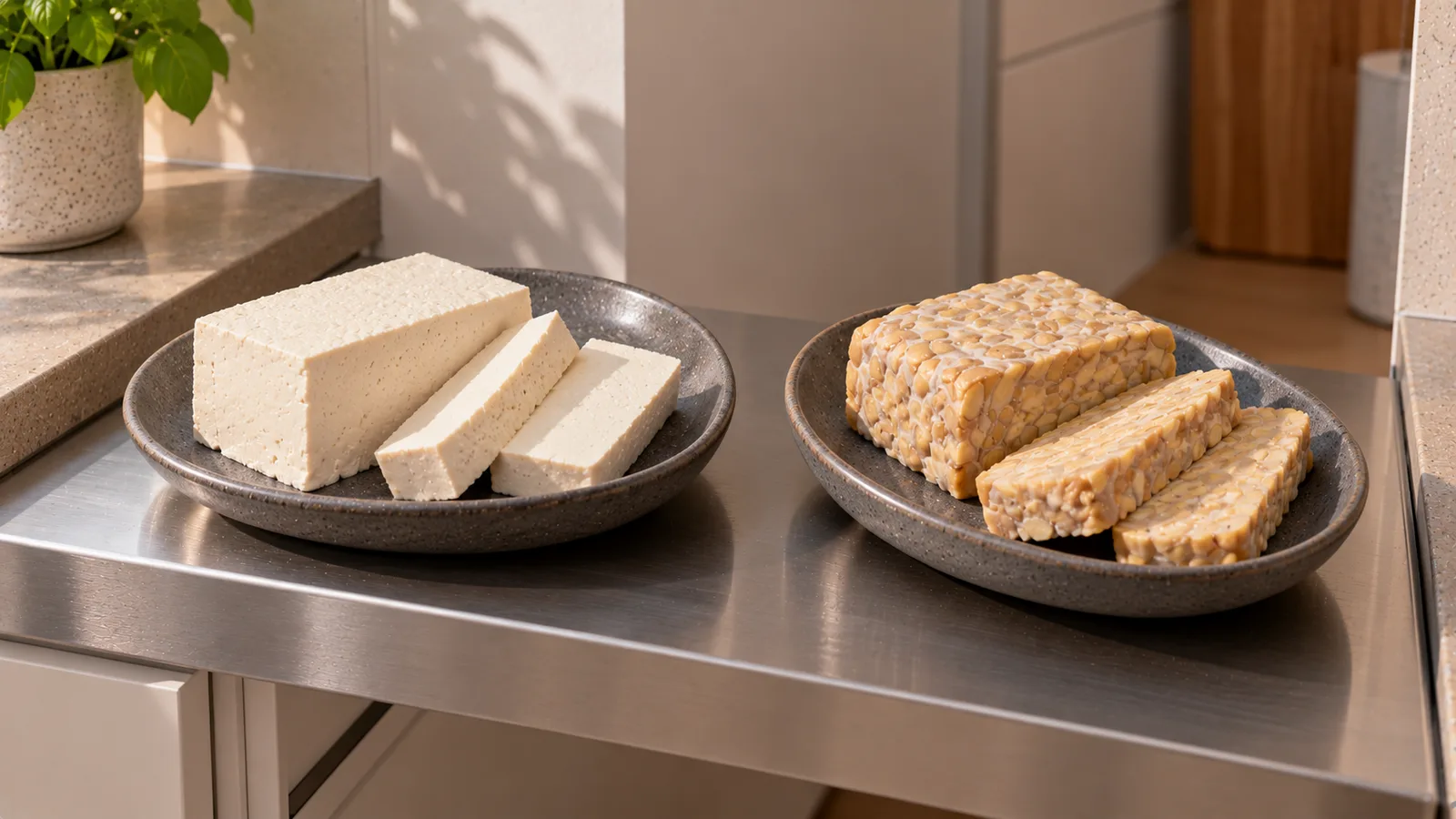
Tofu and tempeh are both soy-based foods, but they are not nutritionally identical.
Tempeh is usually denser, firmer and higher in calories and protein per 100 g. Tofu generally contains more water, which tends to make it lower in calories per 100 g.
Neither is automatically the better choice.
The more useful question is which one fits the meal, portion and nutritional goal you have.
Tofu vs tempeh at a glance
Nutrition varies by brand and type, so the following figures are practical approximate references rather than universal values.
| Per 100 g | Firm tofu | Tempeh |
|---|---|---|
| Calories | ~145 kcal | ~190 kcal |
| Protein | ~17 g | ~20 g |
| Carbohydrates | ~3 g | ~8 g |
| Fat | ~9 g | ~11 g |
| Fiber | ~2 g | ~4–7 g |
The biggest practical difference is food density.
Tempeh is a compact fermented soybean product. Tofu contains substantially more water, although tofu values can vary considerably depending on firmness and manufacturing method.
Which has more protein?
Per 100 g, tempeh commonly provides somewhat more protein than firm tofu.
Using the example values above:
- 100 g firm tofu: about 17 g protein;
- 100 g tempeh: about 20 g protein.
The difference becomes larger with bigger portions, but serving size matters.
A 150 g portion would provide approximately:
- tofu: ~25.5 g protein;
- tempeh: ~30 g protein.
Both can therefore make a meaningful contribution to the protein content of a meal.
Which has fewer calories?
Firm tofu will often contain fewer calories per 100 g than tempeh.
Using the reference values:
- tofu: ~145 kcal per 100 g;
- tempeh: ~190 kcal per 100 g.
That does not mean tofu is always preferable when calories matter.
You may use different serving sizes, and cooking oil, sauces, grains and other ingredients can change the total meal much more than the difference between the two foods.
Protein per calorie
One useful comparison is how much protein each food provides relative to its calories.
Using the example values:
Firm tofu
17 g protein ÷ 145 kcal × 100 = about 11.7 g protein per 100 kcal
Tempeh
20 g protein ÷ 190 kcal × 100 = about 10.5 g protein per 100 kcal
With these particular values, tofu provides slightly more protein per calorie even though tempeh provides more protein per 100 g. Another way to compare soy foods is by protein, fibre and portion cost; see tofu versus edamame.
This illustrates why “more protein per 100 g” and “more protein per calorie” are not the same question.
Product labels can produce different results, so use the specific package when accuracy matters.
Why tempeh is more calorie-dense
Tempeh is made from fermented soybeans that remain largely intact in a compact cake.
Tofu is produced from soy milk that is coagulated and pressed.
Because tofu usually contains more water, 100 g of tofu often represents less dry soybean material than 100 g of tempeh.
That helps explain why tempeh generally has more:
- calories;
- protein;
- carbohydrates;
- fiber;
- fat
per 100 g.
Carbohydrates and fiber
Tempeh generally contains more carbohydrate and fiber than tofu.
The actual amount depends on the product.
Traditional tempeh made primarily from soybeans differs from products containing additional grains or other ingredients.
Firm tofu usually contains relatively little carbohydrate.
If fiber is an important consideration in the meal, tempeh may contribute more, but vegetables, legumes, whole grains, fruit, nuts and seeds can also provide fiber.
Fat content
Both tofu and tempeh naturally contain fat from soybeans.
Using the example values:
- firm tofu: ~9 g fat per 100 g;
- tempeh: ~11 g fat per 100 g.
Again, brand and preparation matter.
The amount of cooking oil can easily become as important as the natural difference between tofu and tempeh.
For example, 10 g of oil contributes about 90 kcal.
If tofu absorbs substantial oil during frying, a low-calorie comparison based only on the uncooked food can become misleading.
A 150 g serving comparison
A meal-sized comparison can be more useful than looking only at 100 g.
Using the approximate reference values:
| 150 g serving | Firm tofu | Tempeh |
|---|---|---|
| Calories | ~218 kcal | ~285 kcal |
| Protein | ~25.5 g | ~30 g |
| Carbohydrates | ~4.5 g | ~12 g |
| Fat | ~13.5 g | ~16.5 g |
The tempeh portion provides more protein, but also more total calories.
Whether that is useful depends on the rest of the meal.
Which is better for weight loss?
Either can fit into a diet intended for weight management.
Weight loss depends on the overall energy balance over time, not on choosing tofu instead of tempeh in isolation.
Tofu can be useful when you want:
- a larger food volume for fewer calories;
- a relatively lean protein-to-calorie ratio;
- a neutral ingredient that takes on other flavors.
Tempeh can be useful when you want:
- a denser portion;
- somewhat more protein per 100 g;
- more texture;
- more fiber than many tofu products.
The total meal remains important.
A tofu dish with large amounts of oil and a calorie-dense sauce can contain more calories than a simply prepared tempeh meal.
Which is better for protein?
If your question is strictly protein per 100 g, tempeh often wins.
If your question is protein relative to calories, firm tofu can be competitive and may sometimes provide more protein per calorie.
If your question is how much protein your actual meal contains, portion size matters most.
For example:
- 200 g tofu at 17 g protein per 100 g = 34 g protein;
- 120 g tempeh at 20 g protein per 100 g = 24 g protein.
The food with the higher protein concentration does not necessarily provide more protein in the portion you actually eat.
Texture and cooking are very different
Nutrition is only part of the comparison.
Tofu is typically softer and has a mild flavor.
Depending on type, it works well in:
- stir-fries;
- curries;
- soups;
- bowls;
- sandwiches;
- blended sauces;
- desserts.
Tempeh is firmer, chewier and has a more pronounced flavor.
It works well in:
- stir-fries;
- grain bowls;
- sandwiches;
- wraps;
- salads;
- baked or pan-cooked dishes.
If you dislike the texture of one, its theoretical nutritional advantage is not very useful.
Tofu type matters
“Tofu” is a broad category.
Silken, soft, firm and extra-firm tofu can have different water contents and nutritional values.
A very water-rich silken tofu may contain substantially fewer calories and less protein per 100 g than a dense extra-firm tofu.
Therefore, generic tofu values should not replace the package label when you are tracking a specific product.
Tempeh products can differ too
Traditional tempeh is usually based primarily on soybeans, but commercial products can contain:
- other legumes;
- grains;
- seeds;
- marinades;
- sauces;
- added oil.
Flavored tempeh can therefore have a different nutritional profile from plain tempeh.
Check the label before assuming every package contains about 190 kcal and 20 g protein per 100 g.
Plain food vs prepared dish
A common tracking mistake is comparing plain tofu with a fully prepared tempeh product, or the reverse.
For a useful comparison, compare similar states:
plain tofu vs plain tempeh
or compare the actual finished meals.
Suppose one meal contains:
- 150 g tofu;
- vegetables;
- 15 g oil;
- sauce;
- rice.
Another contains:
- 150 g tempeh;
- vegetables;
- 5 g oil;
- lighter sauce;
- less rice.
The tofu itself may be lower in calories, while the finished tofu meal could still contain more calories.
Example: two simple bowls
Tofu bowl
- 150 g firm tofu: ~218 kcal
- 200 g mixed vegetables: ~80 kcal
- 150 g cooked rice: ~195 kcal
- 10 g oil: ~90 kcal
Approximate total: 583 kcal
Tempeh bowl
- 120 g tempeh: ~228 kcal
- 200 g mixed vegetables: ~80 kcal
- 120 g cooked rice: ~156 kcal
- 5 g oil: ~45 kcal
Approximate total: 509 kcal
Despite tempeh being more calorie-dense, the second meal is lower in calories because its portions and added oil differ.
This is why whole-meal structure matters more than judging one ingredient in isolation.
Sodium depends heavily on the product
Plain tofu and plain tempeh may contain modest amounts of sodium, but packaged flavored versions can contain much more.
Marinades and sauces are especially important.
If sodium matters to you, compare product labels rather than relying on a generic tofu-versus-tempeh rule.
Fermentation is a difference, not an automatic verdict
Tempeh is fermented, while standard tofu is not produced in the same way.
That is a genuine processing difference.
However, the word “fermented” by itself does not make tempeh universally healthier than tofu.
Both foods can be useful components of a varied diet.
The better choice depends on the nutritional context, the rest of the meal, personal preference and any individual dietary requirements.
Which is more filling?
There is no universal answer.
Tempeh is denser and usually provides more protein and fiber per 100 g.
Tofu may allow a larger portion for the same calories.
Satiety also depends on the complete meal, including:
- total protein;
- fiber;
- vegetables;
- carbohydrate source;
- fat;
- meal volume;
- individual appetite.
Instead of choosing based on one nutrient, consider what the entire meal provides.
Which should you buy?
Choose tofu when you want:
- a milder flavor;
- a softer or more adaptable texture;
- generally fewer calories per 100 g;
- flexibility across many recipes.
Choose tempeh when you want:
- a firmer texture;
- a stronger flavor;
- more protein per 100 g;
- generally more fiber;
- a dense ingredient that holds its shape.
Or simply use both.
They do not need to compete for the same role in every meal.
How to track tofu and tempeh accurately
For either food:
- Check the product label.
- Weigh the amount you actually use.
- Log the specific product when possible.
- Include cooking oil, marinades and sauces.
- If part of a mixed recipe, calculate the complete recipe and your portion.
The label becomes especially important for tofu because water content varies considerably between types.
Quick comparison
If you want a simple practical summary:
Tempeh usually has more protein per 100 g.
Firm tofu is usually lower in calories per 100 g.
Tempeh generally provides more fiber.
Both naturally contain soy protein and fat.
Preparation can change the calorie difference substantially.
For everyday meal planning, the best choice is the one that fits your portion, nutritional target, recipe and preferences rather than the food that wins a single nutrient comparison.